



India’s manufacturers are facing an inflation shock that consumers have so far been spared to some extent. At a broader level, this relief may persist, but consumers of several products could also feel the pain more acutely in the coming weeks.
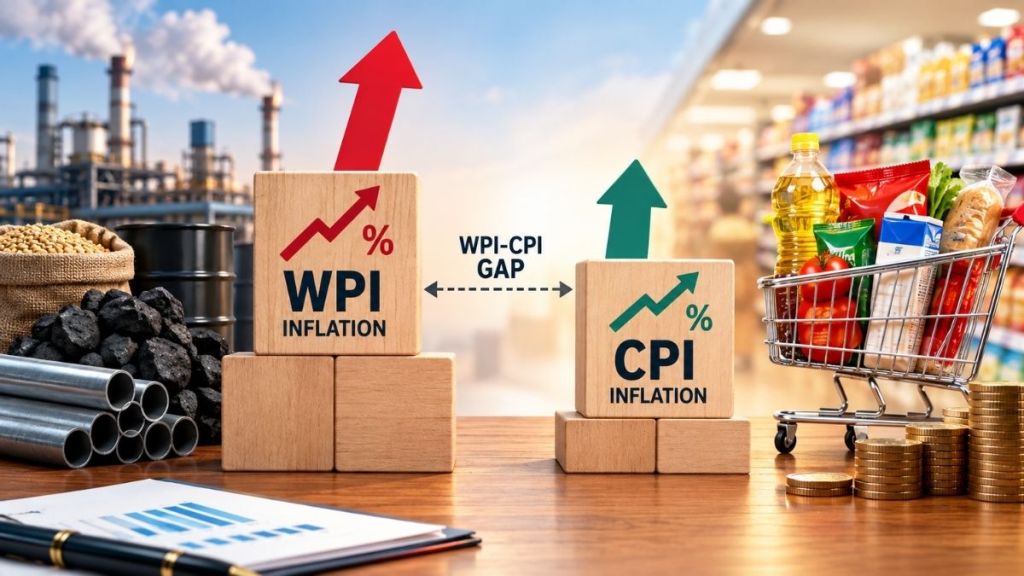
Wholesale price inflation climbed to 9.92% in August, while retail inflation rose to 4.82%, leaving companies with a nearly five-percentage-point gap between the cost environment they face and the prices they can charge consumers.
The divergence is testing corporate pricing power. Companies are absorbing part of the increase in energy, commodities and other inputs, while selectively raising prices in categories where demand can withstand it. The strategy reflects a simple calculation: protect volumes now and recover margins gradually.
That calculation is particularly evident in consumer-facing sectors such as fast-moving consumer goods (FMCG) and automobiles, where demand has gained momentum following last year’s GST rationalisation. A broad-based price reset could risk reversing that recovery, experts said. Companies such as HUL, for instance, passed on 2-5% price hikes in the June quarter, even as inflationary pressures were closer to 10%. Dabur undertook a 4% price hike and is expected to stick to that roadmap in the foreseeable future.
Company executives and experts say Indian consumers have generally remained relatively insulated compared with consumers in several other emerging markets. “During periods of supply chain uncertainty, larger players also tend to be better positioned than smaller competitors,” said Saugata Gupta, MD & CEO, Marico. The maker of Parachute and Saffola delivered 11% volume growth in Q1 despite inflationary pressures and hopes to sustain that momentum through FY27.
In contrast, segments such as restaurants, hotels, mobile phones, laptops, electronic goods, air conditioners, tyres and tubes saw sharper price increases. Air-conditioner prices, for instance, rose 12-13% between January and June as changes in energy-rating norms and input-cost pressures forced manufacturers to raise prices in two rounds. Restaurants and hotels raised menu prices amid an LPG crisis and inflation in commodities such as edible oil. Mobile phones and laptops have faced a chip shortage, sharply pushing up prices over the past 6-8 months.
“We will continue to take calibrated pricing into the (September) quarter, depending on how inflation pans out,” said Priya Nair, CEO & MD, Hindustan Unilever (HUL). HUL said it would continue taking measured pricing action in the range of 2-5% while protecting volume-led growth across its categories.
Dabur is following a similar playbook. Global CEO Mohit Malhotra said the company had postponed some inflation-related price hikes during the GST transition and would now implement them selectively. At the same time, he expects growth to remain volume-led.
“Revenue growth this year (FY27) will be a mix of volume and price. We don’t want to compromise our volume market share. We will be driving volumes through rural markets, premiumisation, e-commerce and modern trade,” Malhotra said.
The automotive sector offers another example of partial rather than complete pass-through of costs. Tata Motors Passenger Vehicles raised prices by up to Rs 25,000 from September 1, but said it continues to absorb a significant portion of the increase in costs. “This price revision is being undertaken to partially offset the impact of rising input costs and sustained inflationary pressures,” the company said in a statement.
Mahindra, too, has raised prices—by an average 2.7% for SUVs and 2% for commercial vehicles from July—citing higher commodity costs. Maruti Suzuki announced in July that it would raise prices across its portfolio by up to Rs 30,000 from August, while Hyundai Motor India has indicated a hike of up to 1% from September.
Brokerage Kotak Institutional Equities said in its latest report on the auto sector that demand momentum remained steady, but persistent commodity costs could weigh on margins.
The actual difference between producer-level and wholesale prices and the prices paid by retail consumers may not be as large as the indices suggest, yet the current divergence is unusually wide and persistent. This is partly because the indices are constructed differently, but the delayed and incomplete pass-through plays a role. The Wholesale Price Index (WPI) has a much greater exposure to commodities and producer prices, while the Consumer Price Index (CPI) captures the final prices paid by consumers and includes services. WPI and output producer price index capture changes in commodity prices, which were very low last year but are now near double-digit levels.
Core WPI inflation remained elevated at 8.1% in August, even after easing marginally from July, with seven of 21 manufacturing sub-sectors recording double-digit inflation, according to ICRA principal economist Rahul Agrawal. ICRA expects food inflation to harden further in September-October, while global commodity prices are likely to keep fuel and core WPI pressures elevated.
CRISIL has also flagged the margin squeeze. Its August assessment said higher input costs were beginning to feed through to consumer prices, leaving corporate profitability vulnerable as companies gradually pass on costs. A CRISIL analysis found that corporate profitability had already declined by 75-100 basis points year-on-year in the first quarter of FY27 as companies faced higher input costs.
So far this year, companies have absorbed these higher costs but there are signs of increasing pass-through to consumers. “There are some products where we are seeing a pass-through to CPI inflation with a lag,” said Sakshi Gupta, principal economist at HDFC Bank.
Gaura Sen Gupta, chief economist at IDFC FIRST Bank, said the transmission was still limited. Companies, she noted, have supplier contracts that can run for around six months, shielding consumers from an immediate jump in prices. Once those contracts are renegotiated, however, retail prices could rise further, she said.
Despite this, the gap between WPI and CPI inflation is not expected to narrow materially over the next two quarters. Economists project CPI inflation to average around 5% in FY27, while wholesale inflation is seen at around 9-10%.