


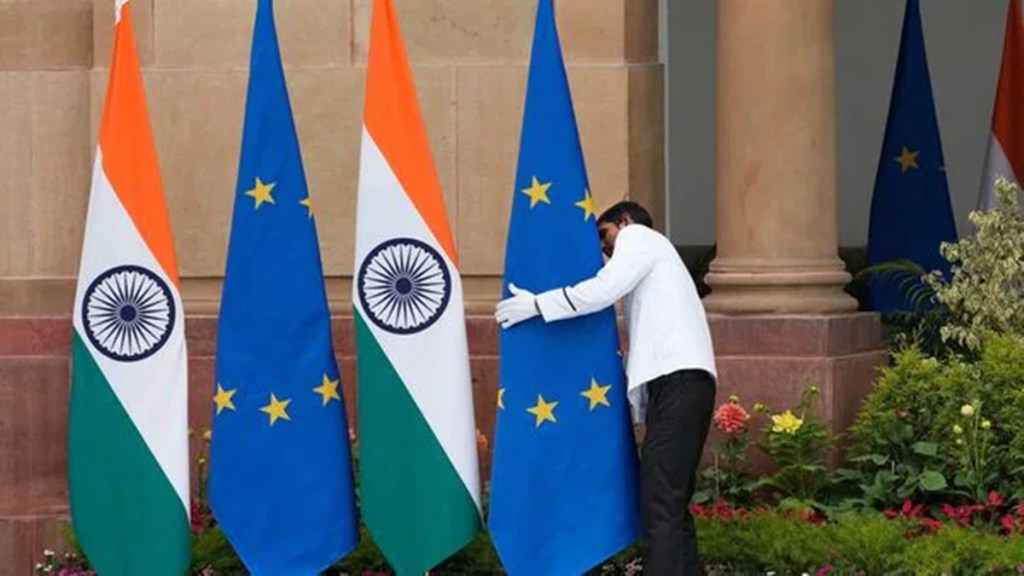

The India-European Union free trade agreement (FTA) has moved another step towards becoming operational, with the European Commission (EC) proposing a formal European Council (EC) decision authorising the signing of the pact and a separate decision for its conclusion.
The commission is the main executive body of the European Union (EU) and proposes new laws, while the council sets the overall political direction of the 27-member body. The heads of state or government of all EU member countries, plus its own president and the President of the European Commission are part of the council.
The proposal, issued on Friday, takes the agreement beyond the political finalisation reached at the 16th EU-India Summit on January 27 and sets in motion the formal EU approval process required before the pact can be signed and eventually enter into force.
Officials say that the FTA could be signed by the end of this year and become operational by the Jan-March quarter of 2027.
The Council will have to adopt the decision before the agreement can be formally signed. Then, it will go before the European Parliament before it is operationalised.
The FTA covers almost the entire bilateral goods trade between India and the EU. India has secured market access for more than 99% of its exports by trade value to the EU. Beyond goods, it unlocks high-value commitments in services complemented by a comprehensive mobility framework enabling seamless movement of skilled Indian professionals.
Overall, India is offering 92.1% of its tariff lines, which covers 97.5% of the EU exports.
The agreement goes well beyond tariff concessions, covering technical barriers to trade, customs, services and other areas.
EU-India goods trade reached €118 billion in 2025, while services trade stood at €67 billion. The EU is India’s largest trading partner in goods among individual blocs, while India ranks as the EU’s ninth-largest goods trading partner globally and sixth in services.