


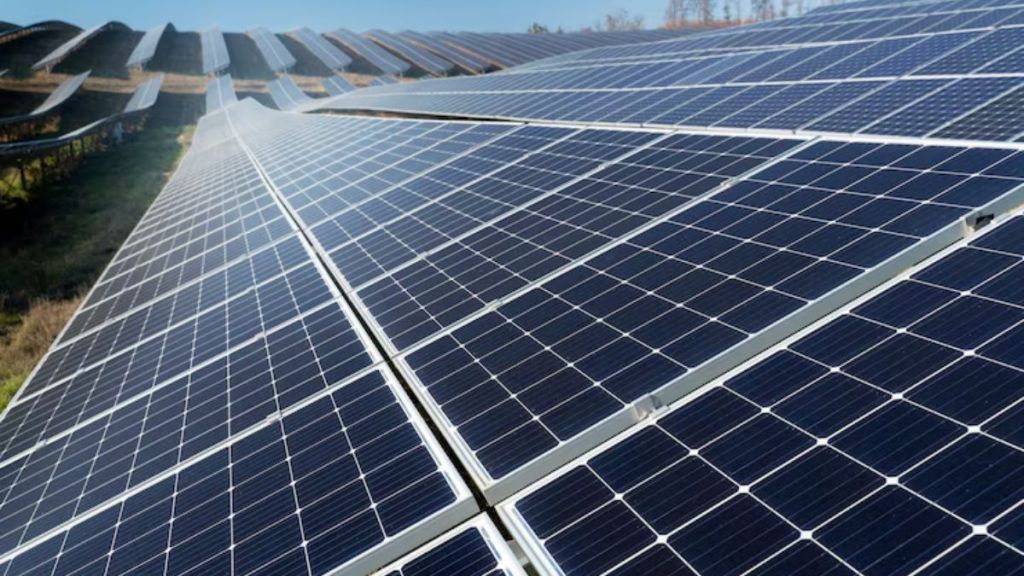

Growing rooftop solar installations are raising fresh challenges for electricity grid management, prompting Kerala and Maharashtra to explore battery storage systems, while Uttar Pradesh has issued a tender for similar installations on government buildings to help manage the gap between daytime solar generation and evening power demand.
The Central Electricity Authority (CEA) had also suggested that power distribution companies (discoms) could make two hours of battery storage mandatory alongside rooftop solar installations.
The challenge is that households with solar panels often generate more electricity than they need during the day and send the surplus to the grid. However, after sunset, when electricity demand rises and solar generation stops, these households again depend on power supplied by discoms. As installations increase, this gap becomes harder for the grid to manage.
The study identified Kerala, Gujarat and Maharashtra among the states more likely to face grid-balancing challenges as rooftop solar capacity increases.
Kerala’s installed rooftop solar capacity reached 2.3 gigawatts (GW) in July 2026, equivalent to 35% of the state’s highest recorded evening electricity demand of 6.48 GW during April-July. The corresponding share stood at 26% in Gujarat and 18% in Maharashtra, compared with the national average of 11%.
While these installations significantly reduce electricity drawn from the grid during the day, they cannot directly meet evening demand without storage, the report noted.
According to a report by energy think tank Ember, batteries could help households store unused solar electricity during the day and use it after sunset, reducing their dependence on the grid during evening hours. Adding a 5-kilowatt-hour battery to a typical 3-kW rooftop solar system could cut daytime electricity exports to the grid by 85-90%, shifting around 1,600-1,800 units annually towards evening consumption.
“India’s rooftop solar boom is an opportunity to get ahead of the grid challenge, rather than wait for it to arrive. With more than 5 million households already adopting rooftop solar under PM Surya Ghar, we should be building storage alongside that capacity, not years later,” said Ruchita Shah, energy analyst, Asia, at Ember.
Uttar Pradesh has emerged as the third-largest contributor to residential rooftop solar capacity under PM Surya Ghar, accounting for 16.5% of installations, behind Gujarat at 19.6% and Maharashtra at 17.5%.
The study also found that households account for more than half of total rooftop solar capacity in Uttar Pradesh, Kerala and Andhra Pradesh. Nearly 88% of residential capacity installed under the scheme is concentrated in just 10 states.
India’s rooftop solar capacity reached 30.7 GW by July 2026, accounting for 19% of the country’s total installed solar capacity of 164.6 GW. Residential installations under PM Surya Ghar stood at 14.9 GW across five million households.
“The experience of markets like Australia and the US shows that as rooftop solar scales, its value increasingly depends on when its electricity is used, not just how much it generates,” Shah said.