


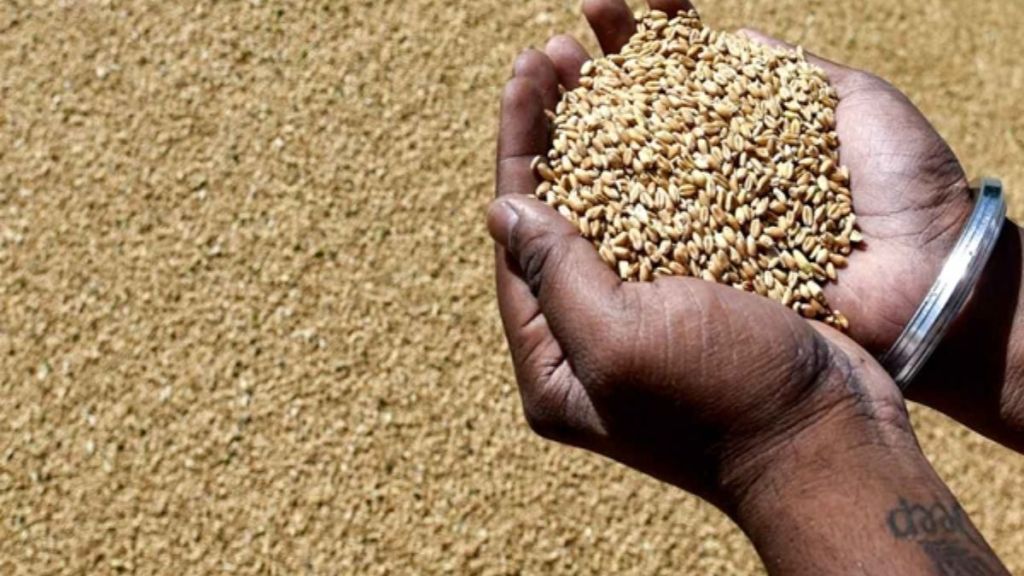

With the Food Corporation of India (FCI) holding 84.38 million tonnes (MT) of foodgrains, nearly three times the prescribed buffer stock, rising costs of carrying the surplus could push the Centre’s food subsidy expenditure beyond the budgeted amount in 2026-27. The finance ministry has released Rs 83,000 crore, or 54% of the Rs 1.52 lakh crore budgeted for food subsidy through FCI, while a Rs 50,000-crore “ways and means” advance has provided temporary working capital.
However, sources said the advance would be adjusted against FCI’s allocation by the end of the current fiscal, requiring the finance ministry to provide additional funds to meet the rising costs of carrying the surplus stocks.
FCI currently holds 84.38 MT of foodgrains, comprising 38.1 MT of rice and 46.1 MT of wheat, against the prescribed buffer stock of 30.77 MT for October 1. This excludes 19 MT of rice receivable from millers.
With the minimum support price (MSP), carrying, storage and other costs rising, FCI’s economic cost of rice and wheat is estimated to increase to Rs 43.91 per kg and Rs 31.45 per kg, respectively, in 2026-27, from Rs 42.11 per kg and Rs 29.68 per kg in FY26.
Sources said that against the budget estimate of Rs 2.27 lakh crore for food subsidy in FY27, including allocations to FCI and states that have opted for the decentralised procurement system, the actual outgo could exceed Rs 2.47 lakh crore if central pool grain stocks continue to mount.
In FY26, food subsidy expenditure stood at Rs 2.27 lakh crore, of which Rs 1.69 lakh crore was routed through FCI.
The finance ministry has released food subsidy funds in a timely manner over the past couple of fiscal years, ensuring that FCI does not have to rely heavily on short-term loans and cash credit limits, as provided for in its financing arrangements. More than 70% of the annual food subsidy budget is routed through FCI.
The allocation is largely used to supply free rice and wheat to more than 800 million people under the Pradhan Mantri Garib Kalyan Anna Yojana (PMGKAY), or the free ration scheme, and to maintain a buffer stock.
Under PMGKAY, 810 million people are currently being provided 5 kg each of specified grains per month free of cost. The scheme has been extended until the end of 2028, at an estimated cost of Rs 11.8 trillion to the exchequer.
FCI annually supplies around 36-38 MT of rice and 18-20 MT of wheat under the free ration scheme, while procurement has remained in the range of 80-85 MT for several years, leading to a build-up of stocks.
To bridge cash-flow mismatches, FCI can avail itself of short-term loans of up to Rs 1 lakh crore at any given time, with a tenure of 90 days. The annual interest rates charged by designated banks range from 5.55% to 7.4%. In terms of debt, FCI has issued bonds worth Rs 36,700 crore so far, repayable during 2028-2031.