


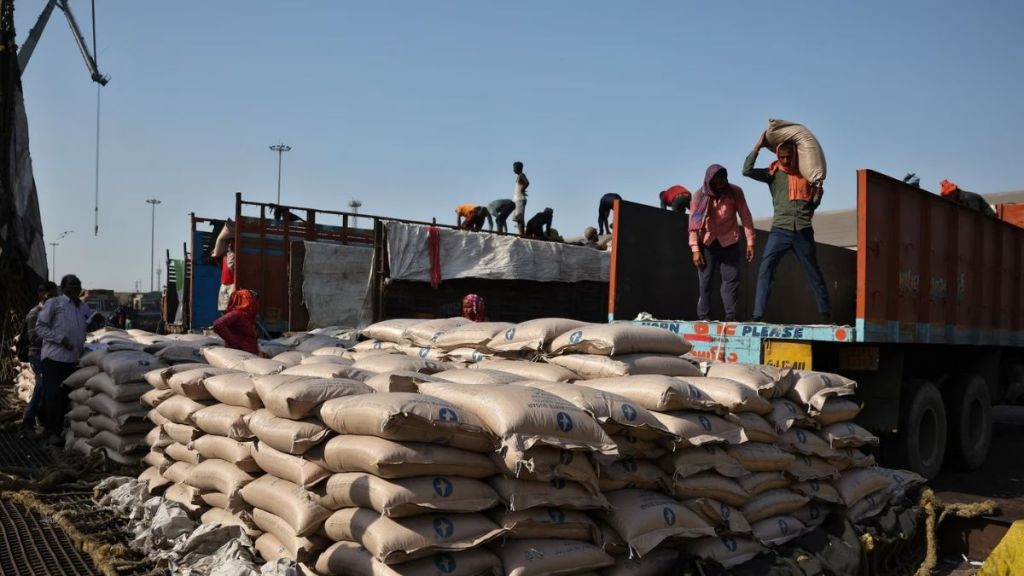

With prospects of a decline in sugar production looming large because of rainfall deficiency in key growing regions, the government is likely to disallow the diversion of sugarcane juice and B-heavy molasses for ethanol production from the 2026-27 ethanol supply year (ESY), which commences from November 1.
Sources told FE the measure aims to stop mills from diverting sugar for ethanol production to ensure adequate domestic supplies of the sweetener in the 2026-27 season (October-September). The move comes as around 3 million tonnes (MT) of sugar or 10% of the total output, was diverted for ethanol production in the current ESY.
Sugar mills will likely be allowed to use ethanol from C-heavy molasses, which contains less sugar content than other sugarcane feedstock. A formal notification by the Food Ministry is likely to issue a formal notification soon. The ministry annually specifies the quantity of sugarcane juice or syrup and B-heavy molasses that can be diverted for ethanol production to meet the 20% blending target with petrol.
“With the restriction on diverting sugarcane juice and B-heavy molasses for ethanol production, the share of sugar-based feedstock in ethanol manufacturing in the next ESY may fall sharply to around 10% – 12% from the current year’s level of 26%,” a source said.
Industry sources estimate that only 2,750 million litres of ethanol, about 26% of the total requirement, was sourced from sugar-based feedstocks for the 2025–26 ESY, compared to 7,610 million litres (74%) from grain-based sources—5,180 million litres from maize (47%) and 3,050 million litres from rice (27%).
There is a possibility of a fall in sugarcane output in the 2026-27 season, as major growing areas in Maharashtra and Karnataka have been hit by deficient monsoon rains, which is likely to affect the yield. Sugar production, excluding diversion for ethanol, declined by 27% to around 28.1 MT in the 2025-26 season from 35.8 MT in 2021-22. Consumption increased marginally, according to industry estimates, to 28.7 MT from 27.3 MT in the last five seasons.
The average retail price of sugar stood at Rs 55.28 a kg on Monday, up 20% year-over-year. However, prices declined by 10% month-on-month, according to the Department of Consumer Affairs’ price monitoring cell. An official said prices could fall to Rs 52/kg as sugarcane crushing is set to commence across key growing states including Uttar Pradesh, Maharashtra and Karnataka, in the next two weeks.
In the last five years, the quantity of sugar diverted towards ethanol production has seen a nearly four-fold increase from 0.8 MT in 2019-20 to around 3 MT in 2025-26 sugar season, according to analysis by Crisil. “The resultant supply tightness, along with rising cane costs driven by higher fair and remunerative price (FRP) and state advisory price (SAP), supported a sharp increase in sugar prices,” Crisil stated.
The opening stock of sugar with mills at the beginning of the 2026-27 season has declined to 3.75 MT, the lowest in over a decade, due to lower production, industry sources said. This heightens the prospect of re-imposition of a ban on sugar exports; the ban imposed on overseas shipments of the sweetener in May expired on September 30.
In August, the government allowed duty-free imports of 1 MT of raw sugar for the first time in the last decade to augment supplies, alongside initiating a wider crackdown on hoarding and a move to cap sugar inventories held by bulk industries.