



India’s retail inflation, as measured by the Consumer Price Index (CPI), rose to a 23-month high of 5.54% in September primarily driven by higher food prices, data released by the statistics ministry on Monday showed. The spike was largely on expected lines, yet analysts said it increased expectations of more interest rate hikes.
Economists polled by FE estimated September CPI inflation at 5.6%, up from 4.82% in August.
CPI inflation has now stayed above the Reserve Bank of India’s (RBI) medium-term target of 4% for four consecutive months. September was also the 11th straight month retail inflation has risen.
“We continue to see the inflation trajectory trending higher above 6% through the next few months as adverse base effects and food price shocks play out,” said Upasna Bhardwaj, chief economist at Kotak Mahindra Bank. “RBI’s revised inflation estimates remain realistic,” Bhardwaj said.
To control rising inflation, the RBI’s Monetary Policy Committee last week raised interest rates for the first time in nearly four years, hiking the repo rate by 25 basis points to 5.50%. Economists expect the RBI’s rate-setting panel to raise interest rates further, by as much as 75 basis points over the next few months.
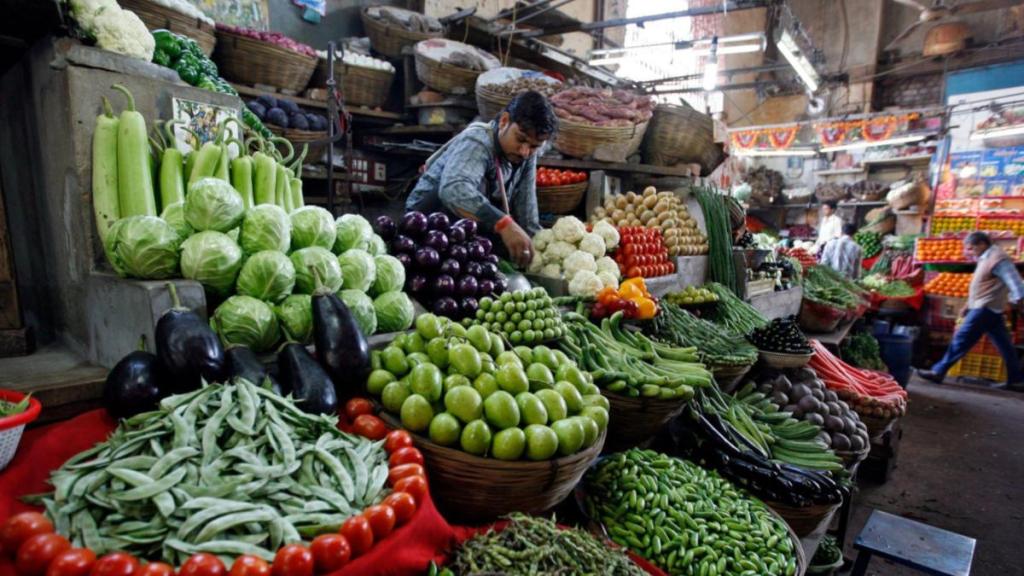
The rise in the headline rate in September was led by higher food inflation, which rose to a series high of 7.74% from 5.97% in August. Onion inflation more than doubled to 108.09% last month from 48.78% in August. Items such as ginger, garlic, lemon, and sugar also saw double-digit inflation in September.
“An unfavourable base and weak monsoon rainfall due to El Nino weather conditions point to further rises in food inflation over the coming months,” said Shilan Shah, deputy chief emerging markets economist at Capital Economics. According to some economists, retail inflation is seen rising above 6% in October.
Sequentially, retail food prices rose 1.3% in September, leading to a 0.7% month-on-month rise in the headline index from August. Eating out continued to become more expensive, with food and beverage serving services inflation rising to 9.39% in September from 8.41% in August.
Fuel price inflation was high in September but remained steady from the previous month. Inflation in fuels and lubricants for personal use was up slightly to 7.59% last month compared with 7.57% in August.
While state-owned oil marketing companies have kept retail fuel prices steady since May, persistently high global crude oil prices could lead to pump price hikes in the coming months, economists said. Private fuel retailers Jio-bp and Nayara Energy have already raised pump prices this month.
Transport services for goods remained high at 14.73% in September, compared with 14.64% in August. Transport services for goods mainly track price changes in postage, couriers, and money orders.
Core inflation, which strips out food and fuel items, inched higher in September, suggesting that inflationary pressures are becoming broad-based, even if at a slower pace than food prices.
Core inflation rose to a series high of 4.3% in September, only marginally higher than 4.2% in August. The RBI projects core inflation to average 4.4% in the current financial year, indicating price pressures might build up across the board in the coming months.
Eleven of the 12 major CPI divisions showed higher inflation in September compared to August. According to CareEdge Ratings’ CPI diffusion index, which measures the share of items witnessing an increase in inflation compared to last month, the index rose to 82 from 72 in August, implying that inflationary pressures are becoming much more broad-based.
Gold, diamond, platinum jewellery inflation came down in September to 30.92% from 35.52% in August. Silver jewellery inflation fell sharply from 106.81% in August but remained high at 87.80% last month.
Inflation was also higher in the information and communication equipment category, driven by a surge in mobile phones, computers, and memory storage devices.
Mobile inflation rose to 5.82% in September from 3.49% in the previous month, while inflation for computers, laptops and tablets increased to 6.47% from 4.48% in August.
Inflation in the pen-drive and external hard disk category was 19.26% in September, up from 16.80%, in August, reflecting the surge in global memory and chip prices due to demand from artificial intelligence companies.
For the July-September quarter, CPI inflation averaged 4.9%, which was in line with the RBI’s projection.
The central bank last week raised its retail inflation projection for FY27 to 5.2% from 5.0% earlier, with price increases seen hitting a peak in the October-December quarter at 6%.
“Going forward, headline inflation is likely to rise above the critical 6% level by November and stay above that mark for at least 3-4 months,” said Gaurav Kapur, chief economist at IndusInd Bank.
“If, however, the positive price momentum seen in recent months persists, on account of food and fuel price pressures or due to the second-round effects of supply side pressures on generalised inflation from strong demand, then the headline CPI inflation can stay above the 6% level for a longer period of time,” Kapur said.