



By Tanvi Praveen & Vishishth Malhotra
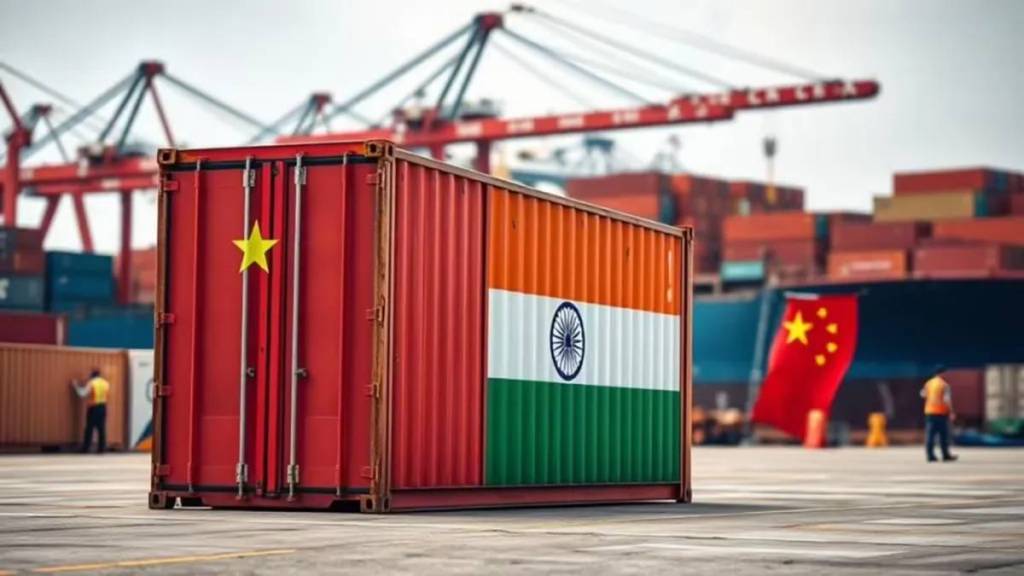
While exporters face regulatory hurdles in accessing the Chinese market, the Indian industry is dependent on China for raw materials & intermediate inputs. China’s non-tariff barriers have brought these vulnerabilities into focus, write Tanvi Praveen & Vishishth Malhotra, raising concerns over India’s trade imbalance.
What are non-tariff barriers & how do they restrict trade?
NON-TARIFF BARRIERS (NTB) refer to policy measures aside from tariffs that may have a potential economic impact on international trade. These play an important role in the conduct of trade by regulating who trades, what is traded and in what quantities. These measures include mandatory product standards, certification and conformity assessment procedures, sanitary and phytosanitary requirements, labelling and packaging requirements, customs procedures, pre-shipment inspections, and export prohibitions or restrictions.
Although non-tariff measures are often introduced to achieve legitimate policy objectives, such as safeguarding national security, preventing deceptive practices, protecting human health and the environment, they can in various ways act as barriers to international trade by increasing compliance costs, restricting market access, and creating additional regulatory burdens for exporters.
How are these impacting trade between India and China?
RECENTLY, FINANCE MINISTER Nirmala Sitharaman said that non-tariff barriers (NTB) are the biggest hurdle in trade between India and China, noting that India’s requests for market access in various sectors have made limited progress despite years of bilateral engagement. The concern is not only a widening trade imbalance but also restricting access to China’s market. China’s non-tariff barriers expose an asymmetry in India-China trade as India seeks access to the Chinese market. The asymmetry becomes particularly significant in the context of China’s export controls over critical minerals and related materials.
Impact on Indian industry
CHINA’S DOMINANCE IN critical minerals, including its processing and refining capabilities, gives it huge influence over the supply of inputs, machinery, etc., essential for electric vehicles, renewable energy and other emerging green industries. Its export controls and licensing requirements on critical minerals and related technologies, including germanium, gallium and certain lithium-battery materials, create supply-chain vulnerabilities for India, which may impact procurement costs, extend delivery timelines and complicate the development of domestic capabilities in semiconductors, solar cells and electric-vehicle batteries.
Other barriers on exports
IN the cosmetics sector, China’s supervision and administration rules have been a challenge due to non-acceptance of internationally validated test reports from laboratories outside China, resulting in duplication of tests and higher compliance costs. China-specific labelling and packaging norms and safeguarding confidential business information and intellectual property are other concerns. Exporters have also previously faced SPS-related market-access barriers concerning bovine meat and shrimp exports. These measures have been questioned for their lack of sufficient scientific justification, risk assessment, and burdensome nature.
How can India address these barriers?
THESE CHALLENGES UNDERSCORE the importance of India’s multi-pronged strategy for critical minerals, including international partnerships through KABIL — the National Critical Mineral Mission to strengthen domestic exploration, processing and recycling, and the S&T-PRISM initiative to promote research and innovation among startups and MSMEs to bridge the gap between R&D and commercialisation. This can help build more resilient and diversified critical-mineral supply chains. India may prioritise sustained talks with China to pursue solutions, complemented by robust domestic capabilities and diversified global partnerships, to navigate this complex landscape. Exporters and industry associations could support these by providing specific, evidence-based inputs on trade impacts to facilitate targeted negotiations and improve market access.
Praveen is a consultant while Malhotra is an associate at Centre for Trade and Investment Law.
Disclaimer: The views expressed are the author’s own and do not reflect the official policy or position of Financial Express.