


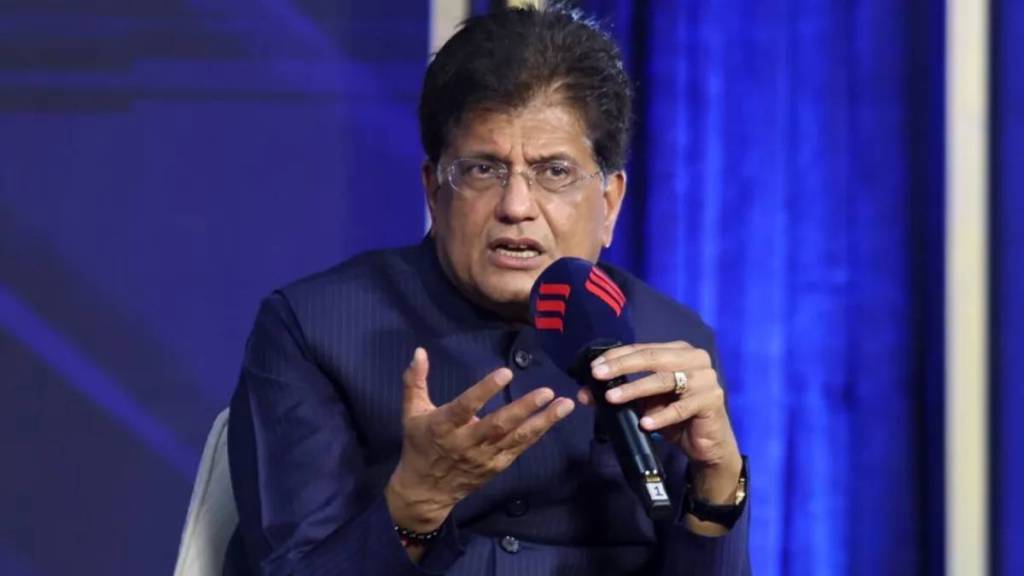

India is examining the details of the new US legislation that gives President Donald Trump the power to impose tariffs of up to 100% on countries buying Russian oil and gas, Commerce and Industry Minister Piyush Goyal said on Monday.
Asked about the government’s backup plan in case Washington imposes additional tariffs on Indian exports, Goyal said, “Details are currently coming; once we have studied them, and at an appropriate time, we will discuss with you.” Trump signed the Lindsey O Graham Sanctioning Russia and Iran Act of 2026 on September 18, giving his administration a new, Congress-backed instrument to impose tariffs of up to 100% on goods from major buyers of Russian energy.
India and China, among the largest buyers of Russian crude, are potentially exposed to the measure. The law does not automatically impose a 100% tariff on India; it gives the US President authority to determine the countries targeted and the level of tariffs.
The law will take effect within 30 days, during which the US Trade Representative (USTR) will identify countries to be targeted and recommend tariff rates. The countries would normally get 180 days to reduce Russian energy purchases or negotiate with Washington, but Trump can shorten the period and impose tariffs sooner.
The legislation has added another layer of uncertainty for Indian exporters at a time when New Delhi and Washington are also seeking to resolve outstanding issues in their bilateral trade relationship.
The legislation also provides waiver authority under specified conditions, including where a waiver is considered to be in the US national interest.
The significance for India is heightened by its continued dependence on Russian crude. India has repeatedly maintained that its energy sourcing decisions are guided by energy security and market conditions. Following the passage of the legislation in Congress, the Ministry of External Affairs said India remained committed to ensuring energy security for its 1.4 billion people and would continue diversified sourcing based on evolving market dynamics.
The new US tariff authority also differs from some of the earlier tariff measures pursued by the Trump administration because it has been enacted through legislation passed by Congress, giving the administration a statutory basis for action.