


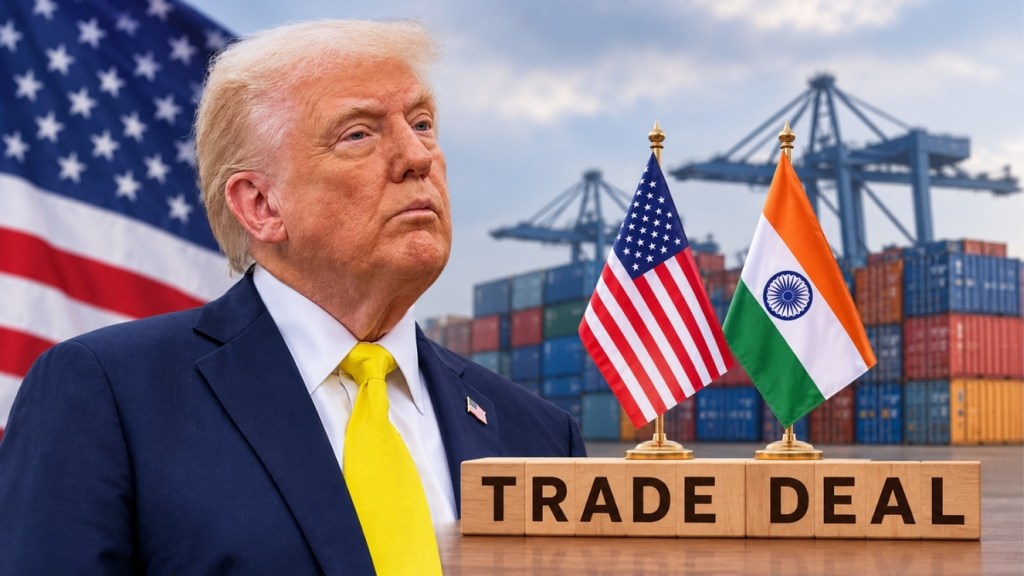

The Democratic Party’s sweeping victory in the US mid-term elections, which wrested control of both the House of Representatives and the Senate from Republicans, is unlikely to bring any significant change in President Donald Trump’s trade policy or ease pressure on India to conclude a bilateral trade agreement, according to trade experts and industry representatives.
The new Democratic majorities will have greater powers to scrutinise the administration, block legislative proposals and initiate investigations.
However, the outcome is unlikely to fundamentally alter Washington’s protectionist trade orientation, said Ajay Srivastava, founder of the Global Trade Research Initiative (GTRI). Both Democrats and Republicans increasingly favour economic nationalism, domestic manufacturing and stronger supply chains, with Democratic lawmakers also supporting protective tariffs to safeguard American workers and industries.
Srivastava said Trump would continue to rely on executive powers, including Section 232 and Section 301 investigations, as well as Treasury sanctions and US Trade Representative rules, to pursue unilateral trade measures without depending on Congress.
He also expects Washington to intensify pressure on India to conclude a trade agreement, with Trump seeking a quick foreign policy and economic win to demonstrate American leverage.
Srivastava argued that the proposed India-US trade agreement remains fundamentally different from India’s other free trade agreements. Under the emerging framework, India is expected to reduce or eliminate most-favoured-nation (MFN) duties on a wide range of American industrial and agricultural products, while the US has not offered comparable reductions in its regular MFN tariffs.
The February 6 joint statement also envisaged India purchasing $500 billion worth of American goods over five years and aligning certain economic and security policies with Washington. Srivastava said the arrangement risks becoming one-sided, particularly as the US could retain additional tariff measures even after an agreement.
Separately, Chandrima Chatterjee, secretary general of the Confederation of Indian Textile Industry (CITI), said the election outcome could eventually contribute to greater predictability and a more process-driven approach to trade and tariff decisions. However, she does not expect any significant immediate impact on ongoing negotiations or existing trade flows.
She said exporters exposed to the US market had already begun diversifying destinations in response to policy uncertainty, a trend likely to continue as businesses strengthen supply-chain resilience.
Kirit Bhansali, chairman of the Gems and Jewellery Export Promotion Council, also expressed hope that momentum towards the proposed India-US Bilateral Trade Agreement would continue, noting that the US remains one of India’s leading markets for the sector.
The change in congressional control could increase political scrutiny of Trump’s trade measures, but the administration retains substantial executive authority over tariffs. Consequently, the immediate implications for India’s trade negotiations may be limited.