


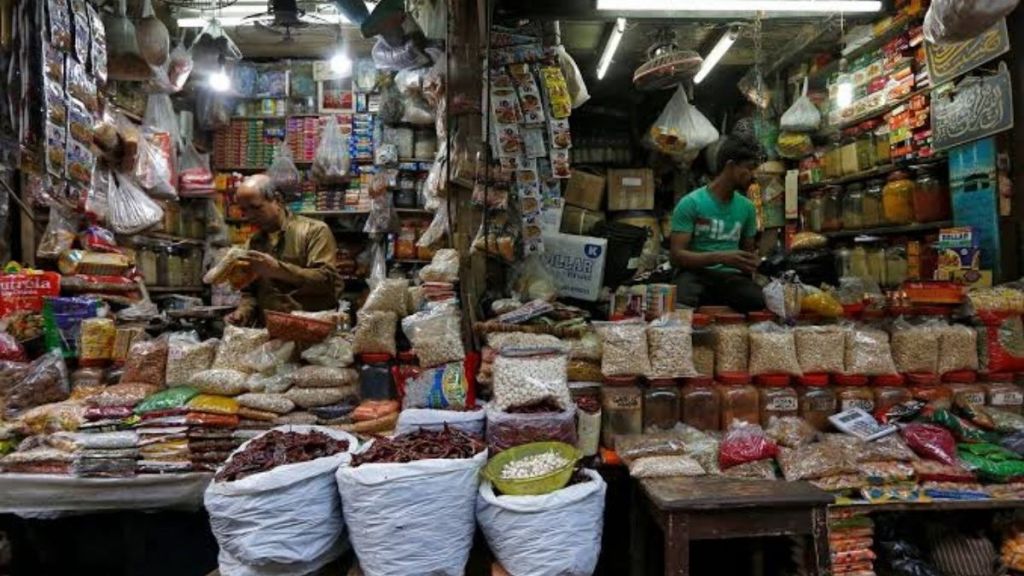

Retail inflation, as measured by the Consumer Price Index (CPI), rose to a 20-month high of 4.82% in August due to a broad-based rise in prices. However, the spike stemmed primarily from elevated prices of several food items including edible oils and sugar, according to data released by the statistics ministry on Monday.
With the inflation outlook turning slightly more vulnerable due to the recent bout of volatility in prices of crude oil and assorted metals, expectations have risen that the Reserve Bank of India‘s Monetary Policy Committee will raise interest rates as soon as October. The threat to kharif crops from uneven monsoon distribution has clouded the outlook on food inflation.
August marked the third consecutive month of CPI inflation staying above the RBI’s medium-term target of 4%. It was also the 10th month in a row that retail inflation has risen.
Higher food and fuel prices led the rise in prices in August and are expected to push inflation higher during the rest of the year.
CPI inflation in August was higher than the 4.45% in July but was in line with the 4.8% estimated by economists in an FE poll.
The renewed surge in oil prices is a “stark reminder that the risks are heavily stacked to the upside”, said Shilan Shah, economist at Capital Economics. “As such, we remain comfortable with our view that the RBI will begin hiking interest rates in October.”
In August, retail food inflation to 5.95% from 5.52% in July. Food inflation rose was driven by higher prices of onion, sugar, and cereals.
Fuel inflation remained high in August, reflecting the impact of the fuel price hikes in May. Transport inflation rose to 4.60% in August from 4.43% in July. Notably, transport services for goods jumped to 14.64% in August from 7.77% in July. Transport services for goods mainly track price changes in postage, couriers, and money orders.
While fuel price inflation held steady last month, the recent surge in global oil prices “leaves open the prospect of further pump price hikes”, Shah said.
Core inflation, which strips out food and fuel items, rose above 4% in August, indicating signs of broadening price pressures. Core inflation rose to a series high of 4.2% in August, after staying at 3.9% for three consecutive months. This is the first time in 2026 that core inflation has risen past 4%. But core inflation estimates varied among economists depending on the items included for index construction. CareEdge Ratings estimate it at 4.4% in August.
Gold, diamond, platinum jewellery inflation rose further in August to 35.53% from 32.98% in July, which pushed core inflation higher.
Inflation in the information and communication category rose sharply in August to 2.01% from 0.63%. “This could be partly attributed to robust global demand for memory chips amid the AI boom, which is gradually feeding through into domestic retail prices,” said Rajani Sinha, chief economist at CareEdge Ratings.
Within information and communication, inflation was highest in the pen-drive and external hard disk category at 16.78%, up from 14.50% in July. Telephone charges inflation also rose in August after some telecom companies raised tariff charges.
A rise in WPI inflation to 9.92% in August from 9.78% in July with high prints across segments “is an indication of core inflation rising well above 4% in CPI in the next couple of months,” said Madan Sabnavis, chief economist, Bank of Baroda.
“Recent CPI releases suggest that price pressures are broadening beyond energy-related sectors, albeit in a measured and non-disruptive manner,” ANZ Bank economists said in a report. “However, the combination of firmer core inflation alongside higher food and fuel inflation could keep headline inflation above target for longer and become a source of policy discomfort.”
While the RBI projects CPI inflation to average 5% in FY27, risks are rising from higher prices of cereals, sugar, and crude oil prices, economists said. “Rising oil prices and the upcoming US Federal Reserve meeting are set to test the RBI’s patient stance,” ANZ Bank said.
Inflation, according to the RBI’s projection, is seen peaking in the October-December quarter at 5.9%, just below the upper bound of the central bank’s 2-6% comfort band.
Members of the MPC have already hinted at the prospect to raising interest rates to control inflation. RBI Deputy Governor Poonam Gupta in the minutes of the August MPC meeting had said that “a case for a hike may emerge during the course of the year” given that the headline inflation is projected to peak at 5.9% in Q3YF27.
Most economists see the MPC raising the repo rate by 50-75 basis points from the current 5.25% in FY27, with a 25 basis point rate hike now seen possible in October.