


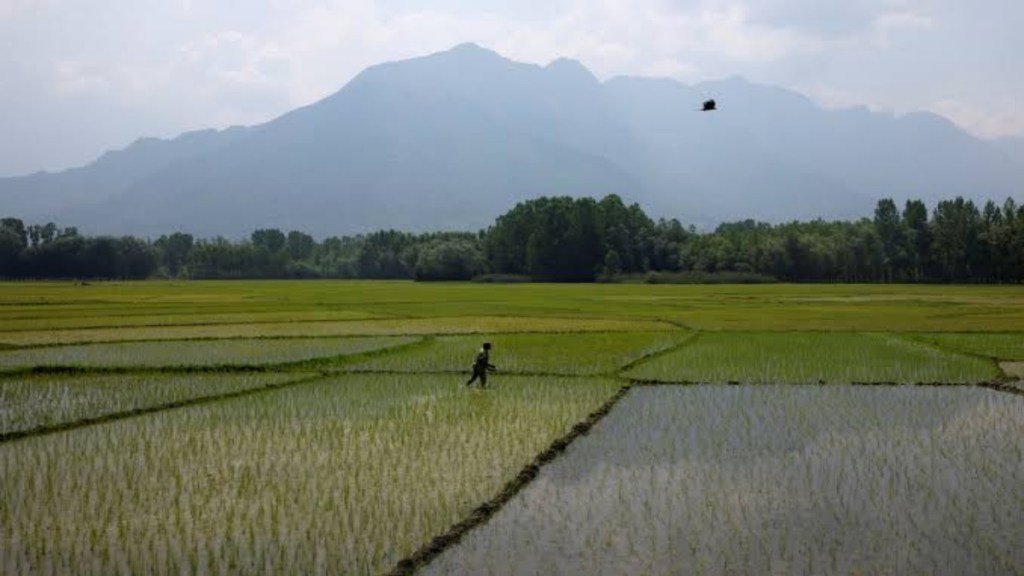

The uneven and deficient monsoon rainfall is likely to dampen foodgrain production in the upcoming rabi, or winter, season — after kharif cultivation was affected in vast swathes of the country, particularly in Maharashtra and Karnataka.
The central government is sending teams to Maharashtra and Karnataka — the two states that have declared a chunk of their cultivated areas as “drought hit” — to assess the impact on kharif crops, Union Agriculture and Farmers Welfare Minister Shivraj Singh Chouhan said on Monday.
Insufficient rainfall has impacted kharif crops in some other states, including Telangana and Andhra Pradesh, as well, he said. “Crops have certainly been affected in places, though they have not failed everywhere,” Chouhan said responding to a question from FE on the sidelines of a conference on the rabi cultivation.
Sowing of major rabi crops such as wheat, chana and mustard is scheduled to commence in October. The rabi output is likely to be impacted in the rainfed region because of lack of soil moisture due to erratic and skewed distribution of monsoon rains, Union Agriculture Secretary Atish Chandra said at the conference.
In the 2025-26 rabi season (October-March), grain output stood at 180.5 million tonne, or 48% of the total. Wheat accounted for 66% of last season’s rabi output and chana 7%.
“The kharif season has been challenging in the rainfed areas while irrigated areas’ untimely and excessive rainfall have an impact on crop health. We are seeing that in the coming season, production is likely to be affected,” Chandra said.
While some states faced challenges during kharif sowing itself, others are finding it difficult to maintain crop health due to deficient monsoon. Though the total area of 109.49 million hectare (Mha) sown under kharif crops — paddy, pulses, oilseeds, cotton, sugarcane and coarse cereals — stood just 1.2% below last season’s level, yield would be impacted by erratic and skewed distribution of monsoon.
The impact has been particularly severe in parts of Maharashtra. Following poor rainfall in the Marathwada and Vidarbha regions, the state government has declared drought in 265 of its 358 taluks, or 74% of the state. Similarly, the Karnataka government has declared 23 additional taluks drought-affected for the kharif season, taking the total number of drought-hit taluks in the state to 124.
With a monsoon deficit of 12.1% against the benchmark till Monday, overall rainfall this season is likely to be “deficient” — below 90% of the benchmark-long period average. This season’s rainfall is likely to be the lowest since 2014. Region-wise, central India saw precipitation in the normal range, while northwest India (-5.9%), east and north-east (-25.1%) and southern peninsula (-23.9%) received below-normal rainfall.
The minister also called for separate strategies in rabi season for rainfed and irrigated regions for timely sowing of crops. Delayed sowing, he cautioned, can affect germination as well as productivity.
He expressed concern that some states neither place seed demands in time nor lift the required quantities, resulting in delays in timely distribution. In some cases, valuable seed varieties reach farmers after the sowing window is closed and subsequently sold at prices comparable to ordinary grain, the minister added.