


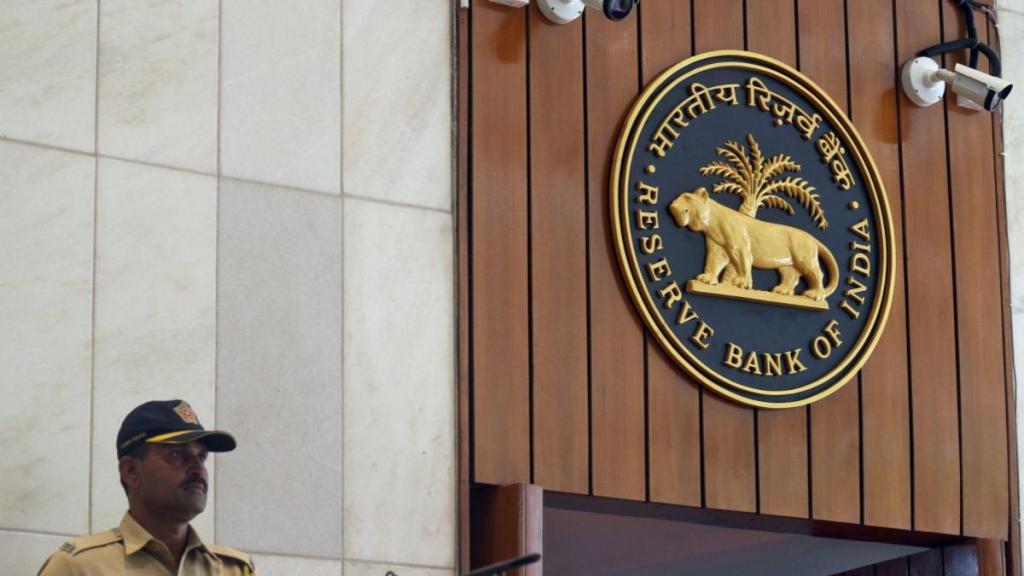

When the Reserve Bank of India (RBI) announced measures on June 5 to mobilise US dollars through three different swap schemes, it sparked widespread speculation over how much foreign currency could it mobilise, and whether those should be enough to meet its set objectives. Since there was no clarity on these objectives, many analysts believed the immediate aim was at least to arrest the persistent slide in the exchange rate and buy some time to put the house in order. The focus, therefore, was on the foreign currency non-resident (bank) [FCNR(B)] scheme, the star performer during the 2013 taper-tantrum episode, to gather the maximum dollar inflows by September 30. While market modal projections ranged between $50-60 billion, banks managed to raise $127.2 billion, forcing the central bank to close the scheme a month early, on August 31. A further $9.1 billion was mobilised through the still-open overseas foreign currency borrowings and external commercial borrowings schemes, taking total inflows raised to $136.4 billion — much above what the RBI was looking for.
As the inflow of dollars turned from a trickle to a deluge within weeks, analysts began to worry about the humongous cost it could impose on the central bank — both in terms of fully covering exchange-rate risk and any sterilisation cost to suck out nearly `13 trillion additional liquidity in the system to avoid a premature monetary policy reset. In addition, one wondered if mobilising those high-cost foreign currency deposits made much business sense for banks, even after the RBI fully covered the exchange rate risk on the principal amount, and regulatory exemptions on the cash reserve ratio and statutory liquidity ratio. With fresh three-five-year FCNR(B) deposits carrying interest rates of 6-7.5%, forward cover cost on the interest amount, and potential credit risks, one is not sure if banks will make much money from mobilising `12.5 lakh crore deposits.
However, this piece focuses not on the cost and risks of the RBI’s strategic policy action but on how much room policymakers have to restore India’s external house back in order. Let’s place the issue at hand in its proper context: After the 2013 taper-tantrum crisis, it was held that the house — the economy — had begun renovation, namely repairing the cracks and strengthening the columns to fortify the building and make it more resilient to external shocks. For example, the government opened debt markets to greater foreign portfolio investor (FPI) participation and liberalised FDI rules to attract capital inflows while the RBI absorbed those inflows to build foreign currency reserves of $700 billion. These measures were meant to reduce seepages and reinforce the columns to withstand any tremor. But unfortunately, they have not been enough.
Some have argued that India’s foreign exchange reserves should be increased to $1 trillion or more to match the scale of its growing economy. Sure, but how? With the RBI having sold more than a $100 billion in the forwards market, the crack appeared in the column itself. That justified mobilising a costly $136 billion to buy some precious time for repairs. However, the central bank must be mindful of the tempting risk-free returns it has promised to pay to affluent NRIs under the 9x-19x framework, whose repayment time schedule began ticking the moment these liabilities were credited to its balance sheet and FX reserves.
Unlike 2013, generating a balance-of-payments surplus large enough to repay $236 billion in FX liabilities — $100 billion in outstanding forwards and $136 billion in fresh liabilities — over the next three to five years will be extremely challenging in an increasingly uncertain world. Therefore, it is essential that both the central bank and the government start the repair work with urgency and professional diligence. The real risk is that these borrowed resources lull both policymakers into procrastination.
For the RBI, at the heart of the repair work lies the most critical question: what should be a fair value of the rupee? We believe the central bank’s policy guidance should shift from the estimated real effective exchange rate to how the capital account is trending: If robust capital inflows resume, it could stay with its current strategy of maintaining a stable exchange rate. On the contrary, if global capital — both FDI and FPI — remain indifferent to the economy’s growth claims, the currency must be allowed to depreciate in an orderly manner. Therefore, the central bank is expected to be judicious in its interventions in the spot or forwards market to prop up the rupee.
An irrational defence of the currency has rarely worked — the RBI should have learnt its lessons from its excessive intervention since October 2024, which eventually snowballed into a crisis-like situation and the scamper for FCNR(B) deposit cover in June 2026. The policy maxim needs to be simple: If the capital account cannot pay for the current account deficit, then the current account itself must turn positive. A depreciating currency over time should be able to create the condition for a turnaround, slowly squeezing out imports and pushing up exports. It is needless to emphasise that it would take time to break through the constraints posed by differential product elasticities.
For the government though, the task is much harder: It cannot stop at easy remedies like opening debt markets, tax exemptions, steps to facilitate inclusion in any bond index, announcing a few more FDI relaxation measures, or even exempting capital gains taxation on equity investments. Given that the cracks are wide open, these could be band-aiding palliatives. Instead, it must carry out deep structural reforms to attract long-term global capital. Needless to say, there are several areas of structural reforms that would require political capital. But there are also several other critical areas where constraints are being posed in the guise of “Make in India” — these have resulted in policy flop-flops, disincentivising global investment, and triggering the flight of domestic capital.
Disclaimer: The views expressed are the author’s own and do not reflect the official policy or position of Financial Express.