



For a very long time, it has been obvious to me (and no doubt countless others) that commercial markets misprice value. By what measure, for instance, could a derivatives trader be paid $1.5 million a year while a social worker earns just $30,000. To be sure, the derivatives trader earns many multiples of what s/he is paid for her/his bank and, it could be argued, that generates both profits for shareholders and also enables the bank’s customers to create jobs, which, in turn, provide value to a large number of members of society. The social worker directly supports, say, a few hundred people for most of whom s/he creates value. The arithmetic is difficult to square, but it seems incomprehensible that the value the derivatives trader creates (indirectly) is around 50 times what the social worker creates.
While this may be a clumsy example, the point is that commercial markets deal only with what can be directly converted into money in the immediate term, rather than the total or real value of an activity, factoring in the cost of environmental degradation, for instance. And this is even more evident when considering what is generally called “women’s work”.
Stay-at-home moms give birth to children, who, in the majority of cases, add to economic growth, more so in an environment of declining birth rates; assuming they provide a nurturing environment, mothers also reduce the likelihood of their children turning delinquent, saving the state incarceration and social support costs. And, of course, wives provide the “man of the house” the backstop to be able to go about his commercial life earning his livelihood.
Yet wives/mothers get no commercial compensation from the vaunted free market. At best, they get plaudits from their husbands and occasional recognition as a significant contributor; at worst, they are traded in for a newer model and have to fight for crumbs. Again, while this example, too, may be clumsy, I feel it may hit closer to home to most people. I have thought about this a lot, and have long believed that this misallocation between value delivered and acknowledgement, recognition and, yes, commercial value must come unstuck at some point in time—call it a belief in natural justice.
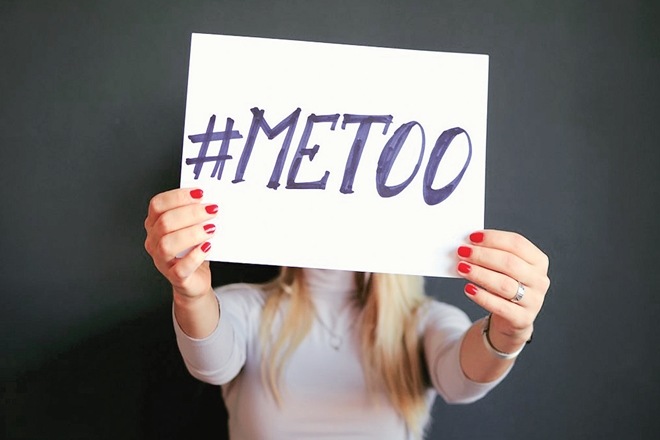
And, it appears, that with the #MeToo movement, that point in time is starting now. While I acknowledge that the movement is, perhaps, too undiscriminating in these early days, it has a life force that is much bigger than just sexual harassment. To quote Steve Bannon, a right wing American nationalist guru, “I think it’s going to unfold like the Tea Party, only bigger … It’s not Me Too. It’s not just sexual harassment. It’s an anti-patriarchy movement. Time’s up on 10,000 years of recorded history. This is coming. This is real.” On the other side of the political spectrum, Vandana Shiva, a physicist, points out that the world we live in today where we have let “the water systems and food systems and planetary climate systems get destroyed,” is the result of “the stupidity which rules us.” Like Bannon, she believes that fundamental change—the overturning of patriarchy—is an evolutionary imperative.
The world, with its completely broken allocation between value and recognition I spoke of before, was “set up by powerful men, where going to war and killing was considered important; making profits at the cost of others was considered important.” The “unimportant” things were left to women—“real things: provide the water, provide the food, take care of family … how to live with nature … We need knowledge of how to care … We need knowledge of how to share.” These are “capacity(ies) we will need more and more in the future … so women … will be the teachers of how to be human in the future.”
In this context, #MeToo is merely one strand of the ongoing evolution of humankind. A critical mass of disgust with our stupidity (an excellent word) has been reached—Donald Trump’s election was clearly the pinnacle—and the movement is accelerating through society touching many sacred cows and bringing them back to humanity. Indeed, change is visible all over the world, even in Islamic countries, which comprise 20% of the world’s population. The ratio of girls enrolled in science, technology and maths in the Muslim world is much higher than in the US and the UK, for instance, and while I would argue that it is more important for men to learn how to nurture than for women to learn how to code, it is best for both to do both.
Of course, women in poorer countries, like India, are in the most difficult place. Poverty and lack of education not only allow the patriarchy to thrive, but has enabled Narendra Modi’s backward government, complete with stupid comments by multiple state chief ministers and senior party officials, to turn a blind (supportive?) eye to the daily denigration of women. But here, too, the flame has been lit—evidenced by the Pink Chaddi campaign, the spontaneous protests against the murders of Nirbhaya and Gauri Lankesh, or even the chatterati discussing “the evils of patriarchy” at sundry litfests.
Mindsets are being upturned, change is coming, the revolution is upon us. Love and joy, more than money and power, will be the most valuable tradables in the new world!
Author is CEO, Mecklai Financial