




By Dr Badri Narayanan Gopalakrishnan and Dr Sarika Rachuri
The economic world order that we witness is a product of trade regimes that nations adopt. They have a defining influence on growth and development. In the early nineties, a large number of countries witnessed higher growth trajectories, as they navigated the emerging labyrinth of free trade. Institutional frameworks supported their growth.
The rise of the WTO (World Trade Organisation), and granting of MFN (Most Favoured Nation) status to member countries encouraged them to deepen and refine their comparative advantage. These shaped trade baskets and destinations. An epitome of success was China, with its focus on export-led manufacturing and embedding itself in global supply chains. Soon, it became a dominant player in global trade, and a superpower (defined as greater than 15% share of global trade). This cooperative spirit of free trade was the hallmark for many years. After Great Britain during the Industrial Revolution, and the U.S., post World War II, China became the manufacturing powerhouse and factory of the world.
Post that, however, a spatial-temporal analysis revealed that several economic events such as the Global Financial Crisis (GFC – 2008), Brexit (2016), and the surprise election of the 1st Trump Presidency led a battening down of the hatches, and going inward. This created a tectonic shift in policy towards protectionism.
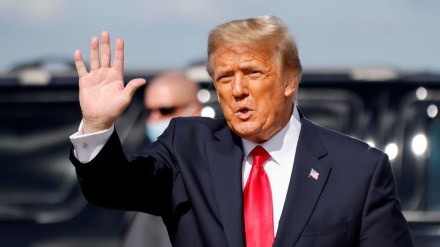
The rise of protectionism was personified by the ascent of President Donald Trump of the U.S., whose policies prioritised national interest over global trade. The decisive victory of President Trump was driven by a mandate to raise tariffs and promote domestic industry and trade.
The U.S., in its version of the economic model, has pulled up the drawbridges, withdrawing inwards, and also partly away from the roles and responsibilities of maintaining global order as the other superpower, in this epic battle of the Thucydides Trap (the natural, inevitable discombobulation that occurs when a rising power threatens to displace a ruling power…[and] when a rising power threatens to displace a ruling power, the resulting structural stress makes a violent clash the rule, not the exception – as per Graham Ellison). In the process, it is moving on 3 axes:-
- Trying to control the narcotics and drug abuse supply (fentanyl),
- Trying to move high end and heavy manufacturing back into the U.S. (especially semiconductors, but also pharmaceuticals, molecules, rare earths and minerals), and
- Moving to “Fair Trade”, also sometimes called “Beggar thy neighbour Policy”
President Trump has highlighted 3 strata of countries / regions unfairly taking advantage of the U.S., – China, other BRICS countries including India and Brazil, and USMCA neighbours and allies – Mexico, Canada, EU. In this backdrop, India has to deftly manoeuvre itself between the 2 superpowers, in the new trade tech, Cold War 2.0, including transmission of these impulses through the currency and trade mechanisms. India’s Union budget 2025 has made tentative first steps in this looming Trump tariffs threat.
India, under Atmanirbharta, had increased import tariffs across the spectrum to one of the highest in the world, earning President Trump’s ire, even in his earlier presidency. In order to ameliorate these concerns, in the current budget, India has done strategic reductions in tariff in certain sectors and areas which could be a win-win for both countries.
Tariff reductions have occurred in the following areas:
- Drugs
- Lithium-ion battery
- Textiles
- Seafood
- Shipping
- Telecom
- Electronic Goods
- Leather
These have been primarily done to flatten the inverted duty structure, promote competitiveness in Indian exports, and also reflects an astute response to veer away from protectionism. This budget serves as a masterstroke in moving away from protectionism by reducing tariffs on key sectors like electronics that benefit our trade partners, and boosts their exports while simultaneously strengthening India’s domestic manufacturing through strategic imports to enhance domestic production.
In effect, India turns the “Beggar thy neighbour” policy challenge into an opportunity to adapt trade openness with tariff cuts and fostering trade partnerships that strengthen our manufacturing heft. This strategic move is to address U.S. concern and signal that India is not the “King of Tariffs”, but wants to be a key player complementing the U.S. trade landscape. This sets the base for being amenable to sector-specific, and strategic item-specific tariffs being reduced in response to President Trump’s tariff threats. Prime Minister Modi, along with a delegation is poised to visit the U.S. to iron out the perceived infirmities.
(The authors: Dr Badri Narayanan Gopalakrishnan is Fellow at NITI Aayog and Dr Sarika Rachuri is Faculty Member, ICFAI Business School Mumbai. Views are personal and not of NITI Aayog, ICFAI or financialexpress.com.)


