By Amitendu Palit,
India is electing a new government that will assume office within a few weeks. External trade and economic engagement will be a high priority for the new government. India must keep increasing its commercial presence in global markets for becoming the third largest economy by 2030. Capturing greater shares of global markets is also necessary for increasing geopolitical influence. India’s external trade policy is of great significance in this regard. The policy will need to be crafted after noting the key developments that would impact global trade in the foreseeable future.
Re-globalisation has gathered momentum and will impact global trade. Some views suggest globalisation is over and the world economy is reorganising into a structure reflecting divisive fault lines of the Cold War era. Globalisation, though, is far from over. The economic globalisation the world witnessed from 1980s onwards is making way for a new process. This re-globalisation is transformative and characterised by new actors. The latter comprise a bunch of economies that are becoming the new hubs of global production. These include emerging market economies like Mexico, Vietnam, Malaysia, and Nigeria. The global significance of these countries arises from the re-allocation of global investments devoted to manufacturing. The US-China major power rivalry and reciprocal restrictions on bilateral flows of goods, technology, and data, are major drivers of the relocation. The process is likely to intensify if Donald Trump is elected as the next US President.
India is a beneficiary of the reallocation of capital and industrial production. It is poised to become a global industrial hub and contribute significantly to the growth of several critical industries. As one of the world’s largest economies, India contributes to global output growth through both consumption and production. Till now, in most parts of industrial manufacturing, it is a bigger consumer than a producer. But this orientation will change once Indian businesses embed deeper in strategic industrial production like semiconductors, defence, hi-tech electronics, and clean energy. The goal requires India’s trade policy to be guided by specific interests aiming to play meaningful roles in strategic industrial supply chains. It is not possible to host these supply chains entirely within the country. Rather than using subsidies for building long-term selective supply chain capacities, more benefits can be obtained from a focused free trade agreement (FTA) strategy. India’s FTA engagements should be driven by the objective of integrating closer with economies that are becoming new global hubs and can support India’s quest for etching deeper footprints in strategic supply chains. Linking deeper with these economies through structured FTAs can facilitate India’s efforts to gain prominence in the newly evolving landscape of global production.
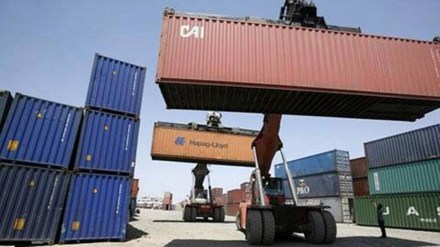
Global trade will continue to be hit by disruptions from conflicts and persistence of geopolitical disturbances. Social and political cracks generated by ongoing geopolitical tussles, particularly the Israel-Palestine conflict, are too deep to heal soon. Their impact on global trade will be felt through multiple models. Shipping has already been affected by erratic container schedules and escalating freight rates. India is at the receiving end of these disruptions as it doesn’t have home-grown shipping lines with capacities to influence global vessel supplies. This is an issue that requires long-term policy attention. The most efficient option in the short term will be to choose routes that provide secure passage to goods being shipped. The multi-modal India-Middle East-Europe Economic Corridor should be taken up for implementation on a fast track. Geopolitical conflicts have also increased insurance premiums for commercial shipments. Indian export insurance providers need to work closely with exporters in this regard. They also need to collaborate with external insurers for expanding choices for Indian exporters.
A couple of other factors will decisively impact global trade. The first of these is the irreversible shift to “clean” trade. Environmental standards will be announced exogenously by countries based on their independent assessments of managing climate concerns. The inevitable outcome will be growth of more Carbon Border Adjustment Mechanism-like border measures. These rules and other norms will manifest regionally across the Indo-Pacific, Southeast Asia, Latin America, and the Middle East, and won’t be limited to OECD markets. Indian businesses need to figure out ways for maintaining cross-border trade notwithstanding these measures. India’s imperatives are high in this respect as without increasing exports and external trade, it will fall short of the high growth rates it aspires to achieve.
India must start looking at itself as a rule-setter on environmental standards in trade. The rule-setting can begin at home from ”clean” regulations, like carbon pricing. A set of purposeful emission-discouraging domestic regulations will enable local producers to align faster to emerging global clean standards. The home-grown regulations can be discussed with other countries for shaping wider bilateral, or regional, clean trade frameworks.
Engaging in environment rules frameworks with other countries connects to the other major factor that will impact global trade. Countries are beginning to move away from engaging in comprehensive FTAs. These exhaustive frameworks have become tedious pursuits as they involve prolonged deployment of scarce negotiating resources. Negotiations are often fruitless, or at best yield suboptimal outcomes, given the difficulty of negotiating parties reaching agreements on various issues. Comprehensive FTA talks are frequently impacted by domestic politics in specific areas, as seen for India’s ongoing FTA talks with the UK and Canada, stalling negotiating progress achieved elsewhere.
Global preference is increasingly shifting to negotiating issue-specific frameworks, particularly on new-generation issues like digital trade. India must be open to engaging proactively in these agreements. In many areas, such as environment, supply chains, digital trade, and labour mobility, these agreements can bring far-reaching benefits than comprehensive FTAs can.
The author is a senior research fellow and research lead (trade and economics), Institute of South Asian Studies, NUS.
Disclaimer: Views expressed are personal and do not reflect the official position or policy of Financial Express Online. Reproducing this content without permission is prohibited.