



By Jash Panchamia
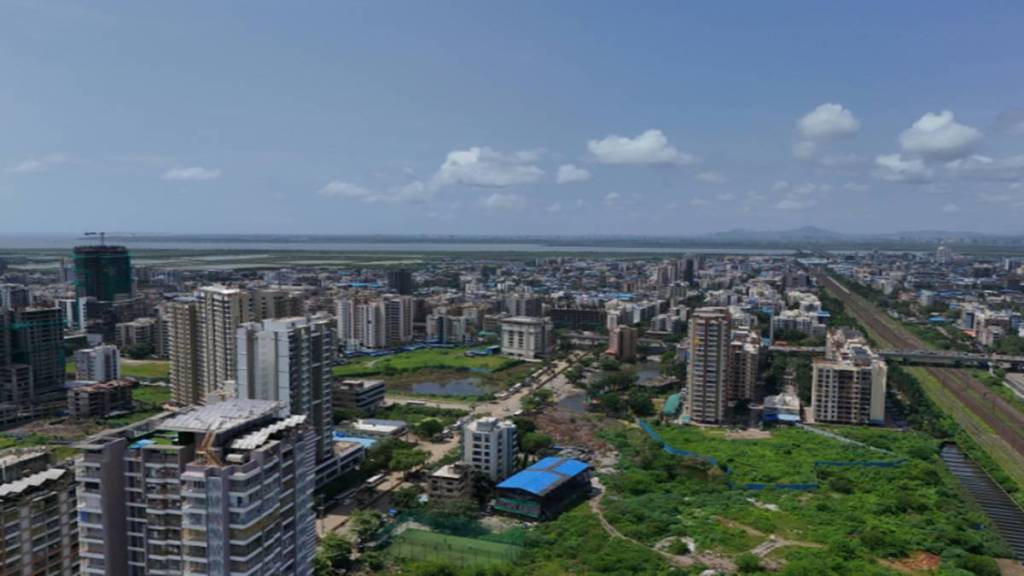
In Mumbai, the convergence of infrastructure investment, improved transport connectivity, changing demographics and developing urban economics are giving shape to the city’s expansion in identifiable directions. As the island city expanded into the western suburbs, the eastern corridor emerged through industrialization expanding further toward Thane. Navi Mumbai came up as a planned counterweight to congestion. Today, another urban transition is quietly taking shape in Vasai, once considered a peripheral suburb. Although located further north and at the edge of the Mumbai Metropolitan Region, Vasai has steadily turned to become Mumbai’s fourth growth corridor.
The significance that this transformation holds is not driven by speculative real estate enthusiasm. On the contrary, real estate in Vasai now reflects an evolution creating a strategic urban frontier with the potential to reshape the metropolitan region’s future. It is no longer simply an affordable spillover market for Mumbai’s middle class but a strategic urban pocket with the capacity to reshape the metropolitan region’s future.
The most compelling reason behind Vasai’s rise is geography reinforced by connectivity. Historically, distance and travel time kept the region at the margins of metropolitan growth. But that is an equation which is rapidly changing today. The expansion of the Western Railway network, the proposed Vasai-Diva-Panvel rail link, upgrades to the Mumbai-Ahmedabad corridor, and the planned Virar-Alibaug multimodal corridor will bring Vasai closer to Mumbai’s economic core. The Mumbai-Ahmedabad Bullet Train project, with major infrastructure planned around Vasai, is further expected to redefine regional accessibility. These projects are cumulatively transforming Vasai from a distant suburb into a practical extension of Mumbai’s commuter and logistics ecosystem.
Equally transformative is the role of metro and mass transit infrastructure that is coming up. Metro corridors will improve feeder connectivity and significantly reduce commuting time, bringing Vasai within a smaller daily travel radius for thousands of working professionals. Once travel time declines, residential patterns inevitably shift. What was earlier seen as ‘too far’ begins to feel ‘well connected.’
Why this matters is because Mumbai’s traditional housing markets are reaching a breaking point. Land scarcity, soaring property prices and redevelopment constraints in central locations have made home ownership increasingly unattainable for many middle-income families. In contrast, Vasai still offers relatively large and contiguous land parcels capable of supporting integrated development at scale.
That advantage is rare in the Mumbai Metropolitan Region. While redevelopment dominates the urban core, Vasai offers the possibility of master-planned growth through townships that can combine housing, retail, employment clusters, schools and public amenities within a single urban ecosystem. Developers now increasingly recognise that long-term value creation lies not just in isolated residential towers, but in building complete communities.
Affordability remains central to this story. Vasai offers a pricing differential that is drawing not only young households but also small entrepreneurs, logistics operators and manufacturing businesses. Anyone seeking cost-efficient space without disconnecting from Mumbai’s economic network sees potential in Vasai. Proximity to emerging infrastructure projects, including the proposed Vadhavan Port and potential airport-linked development, positions Vasai advantageously within the broader economic geography of western India. Warehousing, logistics and decentralised industrial activity are likely to become major growth engines for the region in the coming decade.
For Vasai to evolve sustainably, coordinated planning between municipal authorities, regional agencies and private developers will be essential. Water supply, sewage systems, drainage networks, healthcare, schools and public transport are being expanded simultaneously with housing development. Initiatives such as the Surya Regional Water Supply Scheme will ensure that long-term needs are addressed.
Sustainable urban planning that prioritises flood resilience, ecological preservation, green corridors and responsible industrial practices alongside development ambitions needs to be implemented. Policy intervention can further shape the corridor’s evolution in more equitable ways. Affordable housing mandates, incentives for mixed-use development and support for small business clusters can ensure that Vasai’s growth remains socially balanced rather than becoming purely speculative. Infrastructure-led phased development, supported by patient capital rather than short-term land banking, will ultimately create stronger and more durable urban value for this micro-market.
Finally, the rise of Vasai reflects a larger reality confronting Mumbai today. The city can no longer depend exclusively on densification within its traditional core. Its future lies in creating well-connected growth corridors capable of distributing economic activity, housing demand and infrastructure load more evenly across the metropolitan region. Vasai presents precisely that opportunity. If the future is planned intelligently, it can absorb growth pressures that would otherwise overwhelm Mumbai’s already strained urban systems while simultaneously creating new economic and residential nodes. The challenge now is not whether Vasai will grow, but whether that growth will produce integrated communities instead of a fragmented sprawl. As Mumbai enters another phase of metropolitan evolution, the frontier lies to the north and Vasai may well become the defining urban story of Mumbai’s next decade.
The author is promoter at Suraksha Smart City.
Disclaimer: The views expressed are the author’s own and do not reflect the official policy or position of Financial Express.