


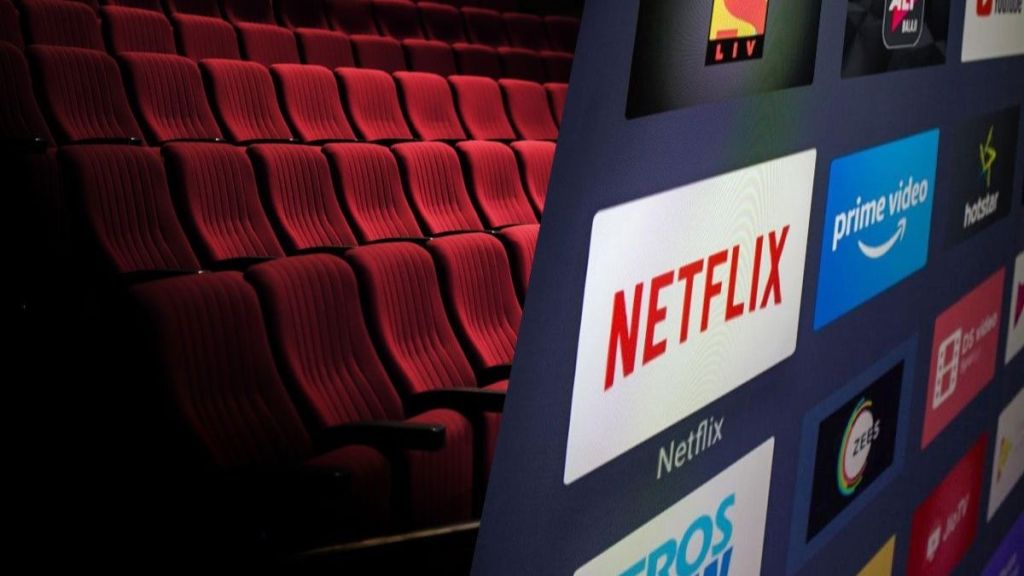

For much of the last five years, the economics of Indian cinema were shaped by an unusual safety net. The pandemic accelerated OTT adoption just as global and domestic streaming platforms were competing aggressively for subscribers. Films became an important customer-acquisition tool, and platforms were willing to pay accordingly. Producers suddenly had another large buyer for their content, sometimes covering a significant portion of a film’s economics before the audience had bought a single cinema ticket.
That phase is ending.
In 2025, Indian filmed-entertainment revenues reached approximately Rs 20,500 crore. Domestic theatrical contributed around Rs 13,000 crore, or 63%, while digital and OTT rights fell to roughly Rs 2,900 crore, or 14%.
This is more than streaming platforms simply becoming “disciplined”.
OTT was once a land-grab. Platforms needed content to acquire subscribers and establish themselves in India, creating bidding intensity for films. Today, the market is more established and consolidated. Streaming platforms no longer need to buy their way into the consumer’s home at almost any price. The value of content is increasingly being measured against the audience and engagement it actually delivers. The implications for filmmakers are significant.
For several years, the OTT deal could partly insulate a producer from theatrical risk. Increasingly, theatrical performance is becoming a form of price discovery for what follows. Digital deals are becoming more selective, and some incorporate bonuses or downside protections linked to box-office performance.
That raises a question worth asking rather than answering prematurely: has the industry fully adjusted from making films with an OTT buyer in mind to making them again for a cinema-going consumer?
The distinction matters. Theatrical films remain extremely valuable to streaming platforms. But that arguably makes theatrical success more important, not less. A film that creates awareness, conversation, and fandom in cinemas arrives on streaming with an audience already primed for it. The box office, therefore, is not merely another monetisation window. It is increasingly part of the signalling mechanism for the windows that follow.
But cinemas have their own problem. India recorded its highest-ever gross box office of Rs 13,395 crore in 2025. Yet footfalls declined 6% to 83.2 crore. Average ticket prices increased 20% to Rs 161. Record revenue generated from fewer admissions and substantially higher pricing cannot be the industry’s only long-term growth model.
Exhibitors have responded by investing significantly in the cinema experience — premium formats, better sound and projection, recliners, improved food and beverage, and increasingly sophisticated theatres. These investments are necessary. But we should distinguish infrastructure from eventisation.
A better seat makes the cinema better. It does not make one film more compelling than another. Once premium infrastructure becomes widely available, it becomes the baseline. Consumers ultimately do not choose which film to watch because the recliner changed. The film still has to become the event.
And this exposes the industry’s deeper problem. For too long, different parts of the ecosystem have been optimising their own pieces independently. Producers optimised budgets, stars, and OTT deals. Distributors optimised release economics. Exhibitors optimised ticket pricing, premiumisation, and food and beverage. But the consumer does not experience these businesses separately. The consumer experiences one product: going to the movies. That is why the next phase of Indian cinema cannot be solved by producers or exhibitors independently.
As OTT economics rationalise, their interests are converging again. Producers need theatrical success to maximise the value of their IP. Cinemas need compelling films to increase frequency and rebuild admissions. The next question, therefore, is not whether cinema can survive streaming. It is whether the film and exhibition industries can finally start behaving like partners in growing the same consumer market.
The authors are the EVP at Elara Capital and the Founder of Starfish Stories, respectively.
Disclaimer: The views expressed are the author’s own and do not reflect the official policy or position of Financial Express.