


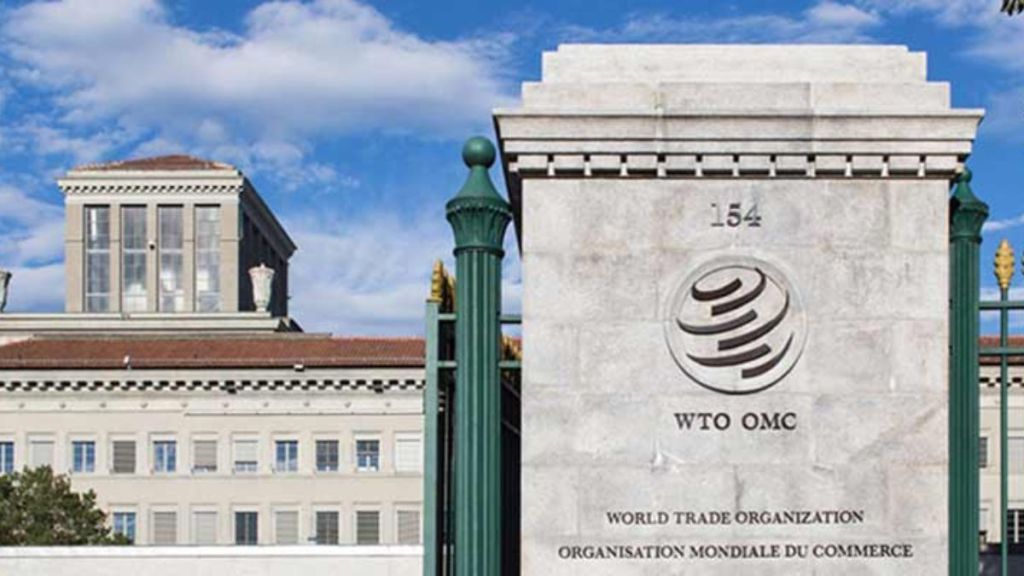

There has been a buzz around the World Trade Organization’s (WTO) reform in the past few years. The good news is that the reform talks have begun in earnest within the normal institutional machinery of the WTO at Geneva. Two rounds of meetings have already been held before the August summer break, and a third is scheduled this month.
The intensive exchanges held at Geneva so far have led to the identification of four workstreams (alternatively referred to as pillars or tracks) for future discussions on WTO reform, namely decision-making, development, foundational issues, and level playing field issues.
Decision-making
Decision-making is on the top of the agenda. Difficulty in decision-making has been a cause of frustration to members throughout the three decades of WTO’s existence. The root cause of trouble is the practice of taking decisions by consensus. The Marrakesh Agreement, which can be deemed to represent the constitution of the WTO, provides for voting when a decision cannot be arrived by consensus. But fear of new obligations being imposed on them has led members to insist on consensus for all decisions.
The reality is that a diverse membership makes consensus hard to achieve and renders decision-making difficult. Deadlocks are a frequent occurrence. There is discomfiture at the fact that decisions are not being taken even to take on board developments of great consequence for the world economy, such as climate change, and the WTO Agreement is sliding into irrelevance. Nevertheless, the WTO members remain steadfast on adherence to the consensus rule.
One idea to resolve the issue is to allow dissenting members to make use of procedures such as opt-outs, abstentions, or reservations so that decisions can go ahead even without their consent. The more significant suggestion is that of plurilateral agreements. Here, a coalition of WTO members constituting a critical mass and ready to take new commitments are permitted to go ahead, while others are allowed to join later, whenever they are ready.
In the meantime, the coalition extends benefits on a most-favoured nation (MFN) basis to WTO members that are not parties to the plurilateral agreement in question. The proposal for MFN plurilateral agreements has promise of convergence because it is based on the existing practice in the WTO and the past practice in General Agreement on Tariffs and Trade, 1947.
But the US has thrown a spanner in the works by insisting on plurilateral agreements in which benefits are limited to parties and not extended to other WTO members on an MFN basis. The EU is prepared to accept plurilateral agreements of both MFN and non-MFN varieties. So far, India has rejected plurilateral agreements altogether.
Foundational issues
Traditionally, MFN treatment and non-discrimination, transparency, and predictability have been regarded as the core principles of the WTO Agreement. In the current reform talks, some members have proposed an expansion of the list to include consensus-based decision-making, binding dispute settlement, special and differential treatment, and the balance of rights and obligations as foundational issues. The debate has reflected a difference in view on whether the foundational issues should be regarded as sacrosanct or they may be revisited and checked against current realities.
To start with, the MFN principle is at the centre of debate. The US has underscored its view that the MFN principle was adopted in an era in which all countries believed in and followed market-oriented policies. It argues that currently, when some members are maintaining non-market-oriented economic systems, other members need flexibility to deal with different trading partners. It is not difficult to guess that the main target for the proposed non-MFN treatment is China.
Development
The preamble of the Marrakesh Agreement, which recognises the need for positive efforts to ensure developing countries and less developed countries (LDCs) secure a share in the growth in international trade, has provided the starting point for discussions on development.
The debate on development has reflected a radical difference in perspectives between developing and developed countries. Developing countries stress the need to enhance the development benefits by making the special and differential treatment (S&DT) provisions of the WTO Agreement more precise, effective, and operational. On the other hand, developed countries seem to be aiming at chipping away at these benefits. They have strongly suggested moving away from the existing practice of self-election for designating developing countries and narrowing down eligibility for S&DT to countries that meet a set of transparent criteria for determining the development status of individual countries.
Level playing field issues
In this track, members have chosen to give focused attention to industrial subsidies, state interventions in industry, and state-owned enterprises. In their assessment, the shortcomings in the multilateral rulebook in these areas are the main cause of current global trade tensions. Since it is acknowledged that subsidies can and do make a positive contribution in the development of industry, the debate has dwelt more on the negative trade effects caused by excessive subsidies that lead to overcapacity and competitive subsidisation. The view is generally shared that the relevant rules and disciplines need to be reviewed and strengthened mainly to allow members to deal with negative spillovers. Members have also expressed concerns about the lack of transparency in the subsidy practices of a large number of WTO members.
Transparency is an independent issue in this track because of gaps in compliance with notification obligations over the entire range of multilateral agreements on trade in goods. Members have emphasised that transparency is central to ensure the faithful implementation of WTO rules.
A smooth start in the talks on WTO reform is a welcome development. Defining the workstreams is already in progress and the debate is set on identifying issues. But the next stage of obtaining agreement on the issues will not be easy. The developed-developing divide may get sharper and the development debate more challenging if developed countries try to limit S&DT benefits to LDCs. The contest for supremacy between the US and China has already given an edge to the discussions. The US and EU proposals on imposing stricter disciplines on industrial subsidies with focus on state-owned enterprises and for permitting departures from the MFN principle both flow out from the US-China rivalry. The debate on WTO reform will continue longer, until the sticking points are resolved. Ambiguity in the US support for a rules-based multilateral trading system will be an overriding problem in the talks.
Disclaimer: The views expressed are the author’s own and do not reflect the official policy or position of Financial Express.