



By Ashok Gulati & Ritika Juneja
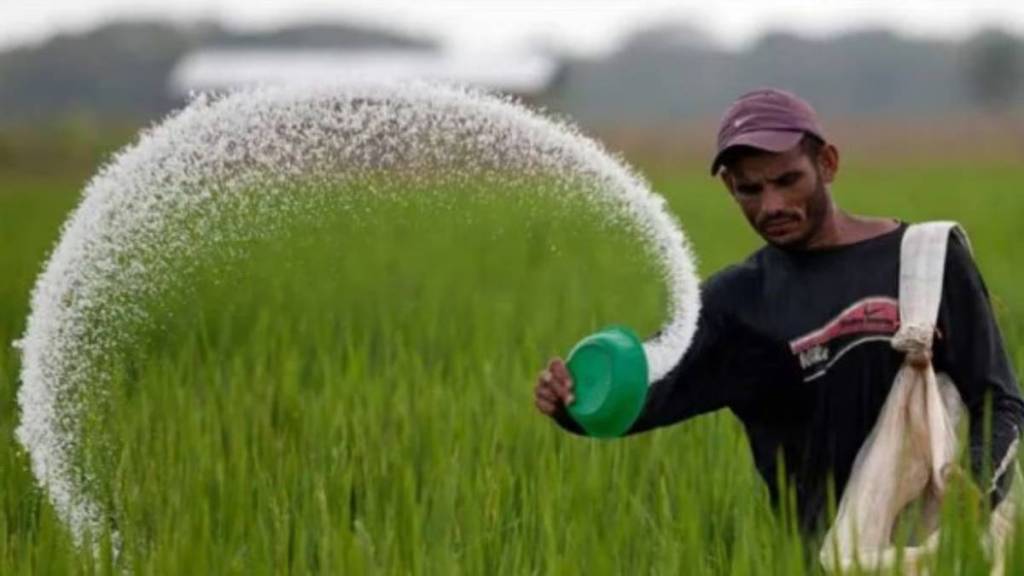
On October 22, Union Agriculture Minister Shivraj Singh Chouhan launched his “Khet Bachao Abhiyan” (Save the Farm Campaign) for the rabi season in Karnal, Haryana. His focus is on correcting the disproportionate use of chemical fertilisers, which is harming the soil and underground water and polluting air. He is appealing to farmers to use chemical fertilisers in line with the doses recommended by state agricultural universities for major crops. He is well aware of the problem, but the question is whether the farmers will heed his advice, especially when the pricing policy on urea, diammonium phosphate (DAP), and muriate of potash (MOP) is sending them the wrong signals. Sixteen years after the Nutrient-Based Subsidy (NBS) scheme was introduced in 2010, the imbalance in the use of nitrogen (N), phosphate (P), and potash (K) has gotten worse.
Crops, like humans, need a balanced meal. A recent ICRIER policy brief, “Repurposing India’s Fertiliser Policy towards Nutrient Optimisation”, by Chand et al compares actual nutrient use in 20 major states with crop- and irrigation-specific norms in the triennium ending 2009-10 and 2024-25, neatly bracketing the NBS reform of 2010.
The results are sobering. The national nitrogen use has shot up from 7% below its recommended dose to 6% above it. The phosphorus deficit has narrowed only from 29 to 22%, while the potassium deficit has deepened from 48 to 72%: farmers apply 9 kg of potash per hectare against a need of 32 kg. The NPK ratio stands at 10.5:4.1:1, against a derived normative 2.8:1.5:1. Eleven of the 20 major states overuse nitrogen, led by Jharkhand (72%) and Punjab (65%). Every state underuses potash—Haryana and Jharkhand utilise barely a tenth of what their crops need.
Why has a reform meant to fix the imbalance made it worse? Simple economics. The NBS let the prices of phosphatic and potassic fertilisers float with world markets, but kept urea out at a fixed price. Between 2010-11 and 2024-25, DAP prices nearly trebled to 54/kg and MOP rose six-fold to52/kg, while the price of nitrogen in urea rose by just 1%. Farmers respond to relative prices. Nitrogen also makes the crop look green, while the damage from missing potash shows up later, and quietly. So, nitrogen’s share in NPK use is back to about 67%, where it was in 1970-71.
The damage runs from the soil to the plate. Of the 96 lakh samples tested under the Soil Health Card scheme in 2025-26, 72% were low in nitrogen, 52% in organic carbon, 42% in boron, and 37% in zinc. Low nitrogen, despite its overuse, is no paradox: carbon-starved soils cannot hold what is poured on them, and crops take up only 30-40% of the nitrogen applied. A part of the rest escapes into the air as nitrous oxide, a greenhouse gas 273 times as potent as carbon dioxide; Punjab’s fertiliser-related emissions are nearly double the national average. A portion leaches into groundwater: nitrate above safe limits has been found in parts of 502 districts, carrying the risk of “blue baby syndrome” in infants and chronic illness in adults.
Next, the crops. Potassium deficiency weakens resistance to drought and disease and lowers grain quality; phosphorus shortage delays flowering. A crop that looks lush green on urea may be weak within. Then, our health: soils short of zinc and other micronutrients produce grain short of them too, feeding the hidden hunger that afflicts millions.
All this comes at a steep fiscal price. Against a subsidy of 1.71 lakh crore budgeted for 2026-27, the disruption in the Strait of Hormuz could push the subsidy bill to anywhere between2.5 lakh crore to 3 lakh crore, with urea accounting for about two-thirds. The benefits are skewed too: Punjab gets about25,700 of nitrogen subsidy per hectare, ten times what Kerala gets. Add MSP-based procurement and subsidised power, and the rice-wheat rotation gets locked in, whatever it does to the aquifers.
What then is the way out? Four steps can improve the situation.
One, move from input price subsidy to a direct benefit transfer on per hectare basis, neutral across nutrients and crops, so that farmers face the market price of each nutrient and urea loses its artificial edge. AgriStack is creating digital farmer IDs linked to land records and crops sown, and the Framework for Fertiliser Sale ties each purchase at the point of sale to that identity. But identifying tenants remains a challenge. If this seems too abrupt, bring urea under the NBS while lowering DAP and MOP prices in step, keeping the overall subsidy budget at around Rs 2 lakh crore.
Two, reward balance where decisions are made. The PM-PRANAM was supposed to reward states for cutting total fertiliser use, regardless of which nutrient. But so far nothing was disbursed in three years. This scheme needs to be fixed and implemented.
Three, plough the savings in fertiliser subsidy back into drip irrigation, fertigation, and back-product innovation: customised and coated fertilisers, triple super phosphate in place of DAP, biofertilisers, nano fertilisers, and gene-edited seeds using nitrogen more efficiently.
Four, follow the 4Rs—right source, right rate, right time, and right place—with plot-level advice based on soil tests. Rotating cereals with pulses can cut the next crop’s nitrogen need by 20-30%. But none of this will stick in Punjab and Haryana unless power pricing and procurement are reformed alongside.
The yardstick of success must change from total fertilisers used to balanced nutrients. India’s soils have been quietly underwriting our food security for decades; that account is now overdrawn. The real question is whether the government will bite the bullet before the soils give way. The cost of waiting is rising with every season.
Thre writers are respectively Distinguished Professor and Senior Fellow at ICRIER.
Disclaimer: The views expressed are the author’s own and do not reflect the official policy or position of Financial Express.