



By Janak Raj
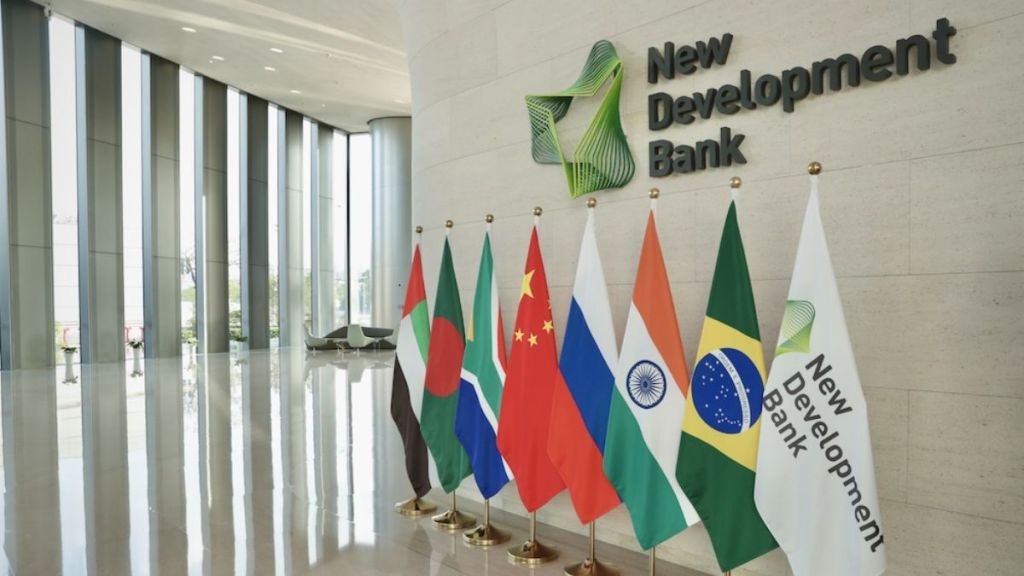
As BRICS leaders meet for their forthcoming summit, the role of the New Development Bank (NDB) will again be in focus. Created as an alternative development finance institution for the Global South, the NDB has completed a decade. It has a big role to play in financing sustainable infrastructure in BRICS countries. But to remain relevant for climate action, it must make a crucial shift in its focus — from green finance to transition finance.
So far, the focus of climate mitigation globally has been on energy transition — financing solar, wind, and electric vehicles (EVs). This is important, but it is not enough. To achieve net zero, we must finance the decarbonisation of eight hard-to-abate sectors: steel, cement, aluminium, chemicals, fertilisers, aviation, shipping, and long-haul trucking. These sectors account for over 40% of global CO2 emissions and are difficult to decarbonise, especially because of their production processes.
Hard-to-abate sectors need special attention in emerging economies for three reasons. First, they are growing fast. For instance, in India both steel and cement production are projected to increase by nearly 80% by 2030. Similar growth trajectories are expected in other sectors and in other BRICS economies, barring China. Second, hard-to-abate sectors need much more funding than energy transition. A recent CSEP study suggests that steel and cement sectors need ten times more funding than energy transition. Third, financing for these sectors is not easy to come by. The established multilateral development banks (MDBs) like the World Bank and the Asian Development Bank (ADB) have limited appetite for them, as they are seen as high-emission and high-risk. Private capital avoids them because they are first-of-a-kind, high-cost, and high-risk not because they are scientifically unproven. Carbon capture and storage technology is proven but expensive to deploy.
It is precisely for these reasons that the NDB must step in. If the NDB does not finance the transition of these sectors, no one else will. Green finance funds the already green; transition finance funds the brown to become green. It is time the NDB moved decisively in this direction.
However, the NDB in its present form cannot finance this transition at scale as its lending capacity is severely constrained. It, therefore, needs to move on four fronts.
First, the NDB must improve its capital efficiency. Currently, its equity-to-loan ratio is conservative, with a leverage of less than 2.5. In contrast, the World Bank and the ADB operate with a leverage of 4-5 times. The NDB, therefore, under-utilises its capital. With better risk management, portfolio diversification, and a stronger credit rating process, the NDB can safely lend much more from the same capital base. The recent reforms in World Bank’s Capital Adequacy Framework show that higher leverage is possible without jeopardising AAA or AA+ ratings.
Second, its capital base itself needs to be augmented. The NDB’s paid-in capital is only $10.5 billion against a subscribed capital of $50 billion and authorised capital of $100 billion. It is difficult for member countries to contribute fresh capital as most of them are fiscally constrained. Once the NDB has achieved capital efficiency of the level of World Bank/ADB, it must explore other options to augment its lending capacity. This is where the re-channelling of special drawing rights (SDRs) becomes relevant.
Just as the African Development Bank and the Inter-American Development Bank are now allowed to use re-channelled SDRs as hybrid capital, the NDB should explore the same route. SDRs lying idle on central bank balance sheets can be re-channelled to the NDB as hybrid capital. This would not require budgetary outgo, nor will such assets cease to be reserve assets as per the IMF, but would significantly enhance the NDB’s capital adequacy and borrowing capacity.
Third, it must treat transition finance for hard-to-abate sectors as a public good and change who it lends to. This is because most of these are in the private sector — be it steel in India, cement in Brazil, or chemicals in South Africa — while over 85% of NDB lending has historically gone to the public sector. If the NDB has to finance transition, it must develop instruments to lend directly to the private sector — through blended finance, guarantees, first-loss covers, and equity.
Fourth, there has also been an emphasis on local currency lending. While local currency lending is welcome as it shields unhedged borrowers from forex volatility, its value depends on whether the capital is sourced domestically or mobilised from savings-surplus economies. To be additional, capital must be mobilised from savings-surplus economies and converted into local currency. For a capital-importing, investment-starved economy like India, rupee loans raised in the domestic market merely recycle the same pool of domestic savings tapped by banks, development finance institutions (DFIs), and the capital market. The benefit then is structural, not quantitative — extending maturities to 20-25 years where domestic banks/DFIs face asset-liability constraints — but it does not augment overall investible resources for transition.
India has a major stake in this reform. India is one of the largest beneficiaries of NDB lending and has the most to gain from its enhanced lending capacity. With its rapidly growing steel, cement, and other hard-to-abate sectors, India needs transition finance much more than any other BRICS member. The NDB can fill this gap, provided it reorients its strategy.
The forthcoming BRICS summit is the right occasion to reorient its focus. The NDB’s next decade should not be about doing more of the same green projects that other MDBs are doing. It should be about doing what others aren’t — financing the difficult transition of hard-to-abate sectors. For that, member countries must empower the NDB with more efficient capital use, more capital through SDR re-channelling, and a mandate to lend to the private sector.
The writer is a senior fellow, Centre for Social and Economic Progress (CSEP), New Delhi.
Disclaimer: The views expressed are the author’s own and do not reflect the official policy or position of Financial Express.