


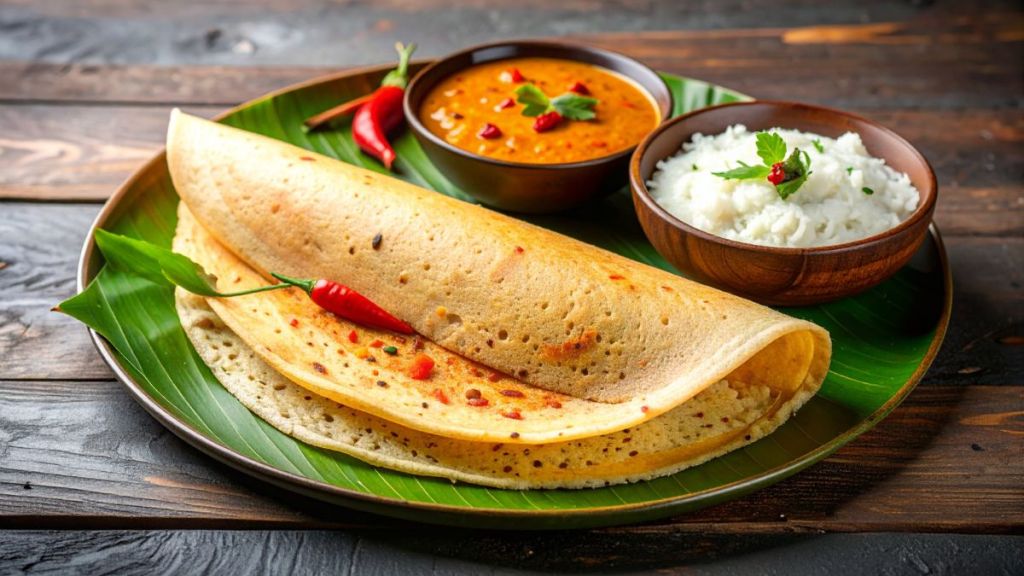

For a city whose benne dosa has taken the country by storm and earned it global recognition as well, Bengaluru is basking in some culinary spotlight right now. Time Out’s ranking of our desi Silicon Valley as the 13th best city globally for food, the only Indian contender in the top 20, is worth raising a toast to — with a filter coffee, or a kokum cocktail. Flavour-rich in its diversity that balances tradition with novelty, Bengaluru is joined on the list by destinations that have embraced multicultural influences equally, such as Lima, Ho Chi Minh City, Lisbon, Cape Town, and Osaka.
With other expected A-listers such as New York, London, Bangkok, and Hong Kong, it is clear that cosmopolitanism and diversity unite all these cities. Food today is no longer just about traditional flavours or iconic dishes. It is also hugely about excitement, experience, and novelty. It is about an accepted common vocabulary where an American knows what palak is and an Indian knows what ceviche is. Palates are no longer restricted to regions or nations; flavours on a plate can be a beautiful amalgamation of ingredients and influences, as shown by the wildly popular Nikkei — a fusion of Japanese and Peruvian cuisines.
Traditional Tiffin Rooms
Home to well-travelled tech yuppies and numerous startup founders, Bengaluru today speaks that global language, which is amply reflected in its numerous bars and cafes. It balances nostalgia and modernity with aplomb with its decades-old tiffin rooms where you can eat to your fill in less than Rs 200, or have a farm-to-fork haute cuisine experience priced at tidy thousands. For any brand targeting millennials or Gen Z, a presence in Bengaluru is imperative. This includes exciting new restaurant and hotel launches, giving the city a vibrant dining-out culture where the cocktails are creative, the coffee is strong, the pizzas are unique, and the biryani is as donne as the dose is benne.
The city is also unique in being a melting pot of culinary influences from neighbouring states of Andhra Pradesh, Tamil Nadu, and Kerala, not just the world. In Delhi, a hot contender for one of India’s favourite food destinations, the longest queues currently are for the benne dosa, Bengaluru’s best-known culinary export. Restaurants offering cuisine from the southern part of the country boldly advertise the availability of this particular dosa to attract crowds.
A food startup with the same name as the dosa variety became a huge hit when it launched in Mumbai and later Delhi, with serpentine waiting lines reminiscent of people lined up for a US visa. So hectic is business that they don’t even offer seating, lest customers get too comfortable. When a popular Bengaluru cafe opened its doors in Pune a few months back, the crowd resembled a mini stampede.
Importantly, a global recognition for an Indian city not known for its orange curries and tandoori items — dishes most synonymous with Indian food worldwide — is also a recognition of India’s culinary diversity. It is an acknowledgment that India is more than butter chicken and biryani, and that there are myriad flavours that remain to be explored. And that should be enough to silence the social media flutter questioning the choice over Delhi, Lucknow, Kolkata, or Amritsar.
Much unpalatable outrage has been posted over ignoring the culinary riches of other cities famous for their iconic dishes and choosing Bengaluru instead. The naysayers can step aside with their chaat, chole bhature, kebabs, puchkas, and kulchas. It is time to move beyond food parochialism and add a new gastronomic gem to India’s acknowledged hotspots. Let Bengaluru have its culinary moment. It might be Bhubaneswar next with its dahibara aloo dum, Shillong with its jadoh, or Benaras with its tamatar ki chaat. That is some promising food for thought.