


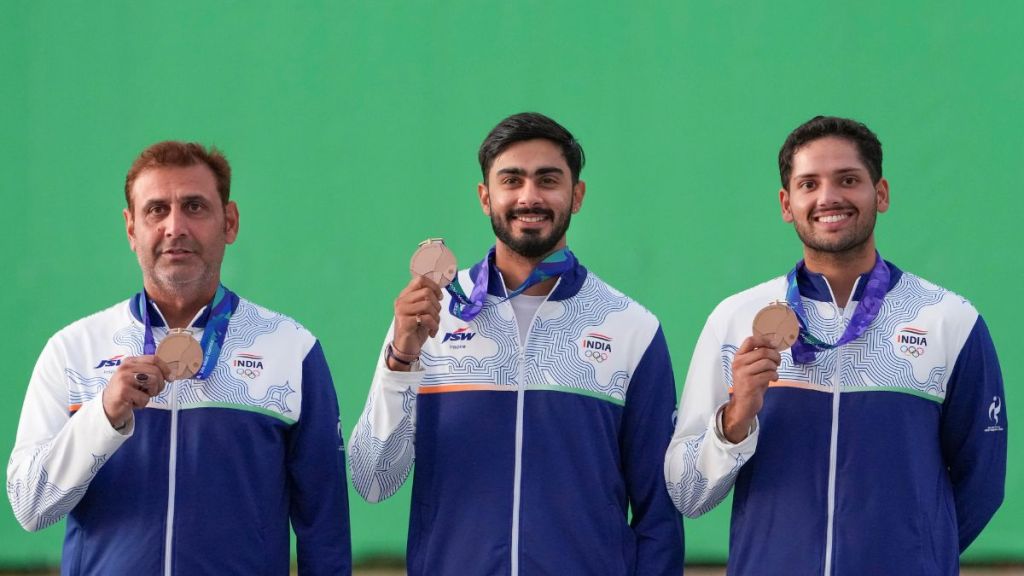

The Asian Games concluded earlier this month with India finishing strongly after a late burst from its athletes who were duly celebrated. A second-highest haul and fourth position for India gave good reasons for the typical nationalistic fervour that competitive sports inspire.
But India’s encouraging performance in another event that coincided with the Asiad barely received any media attention. You may not have even heard about it.
The WorldSkills is the vocational skills equivalent of the Olympics and is held every two years. At this edition of the “Skills Olympics”, held in Shanghai, India achieved its best-ever performance with 10th place, winning six silver medals and 20 medals for excellence. More than 1,400 contestants from 68 countries and regions took part in the four-day event that tested them for 64 skills.
WorldSkills International, a charity earlier known as the International Vocational Training Organization, was founded in the wake of World War II that also resulted in a huge skills shortage in the ravaged economies of Europe. What started off in Spain has over time expanded to include 90 member nations and regions.
The nature of competition explains its anonymity. Becoming a world champion is perhaps the last thought for anyone starting a mundane skill like bricklaying, welding, plumbing and heating, or wall and floor tiling. Yet, the WorldSkills tournament offers a platform that breaks the taboo against vocational trades and is central to the organisation’s vision of a world where skills are valued.
Vocational skills are arguably unappealing for spectators, which is why the WorldSkills tournament does not generate much interest. That is however not the case in China. As The Economist points out, although the event finds little coverage elsewhere, “China has poured more resources into it than anyone else” and “sees benefits beyond the arena”. The manufacturing superpower, which debuted at the tournament only in 2011 (India did in 2007), now leads the rest of the world by a mile, having topped the medal tally for five consecutive competitions since 2017.
A recent report by WorldSkills suggests that China’s success has catalysed improvements in the country’s technical and vocational education and training, which has also found a useful global benchmark in the tournament. Through its WorldSkills membership, China has not only been able to create more vocational opportunities for its youths but also widen the scope for its educators and trainers.
Of course, it takes a strong ecosystem—led by the government in identifying talent drawn from a wide pool and funnelled through multi-tier competitions—to achieve dominance at the global stage. But China’s efforts to rally public support also signals a proactive bid to address a skilled worker shortage by adding an element of prestige. China too is in need of vocational reforms that ensure its schools have the right curricula as well as bright youths in sufficient numbers to drive its next generation of high-tech manufacturing.
The bias against blue-collar jobs is only deeper in India, which will do well to take a leaf out of China’s book. Glamorising skills competitions and incentivising participation in them, aided by greater corporate involvement, could help infuse more pride in vocational trades. Along with upgrades in training institutes that keep pace with rapidly-evolving industry demands, a change in mindset is much needed in India where class and caste divides deepen the hierarchy of jobs.
However, aspirations to win medals alone won’t bring about such a shift. Various government schemes recognise the need for skilling youths and public investment is growing but the percentage of education budget that goes to vocational training remains meagre. India, where only 5% of its workforce in the 15-29 age-group receive formal skill training, is projected to have a deficit of 29 million workers by the end of this decade, according to ILO estimates. To eliminate the poor perception of blue-collar jobs, the quality of training as well as working conditions and wages must be more attractive. Championing skilling will naturally produce skill champions.