



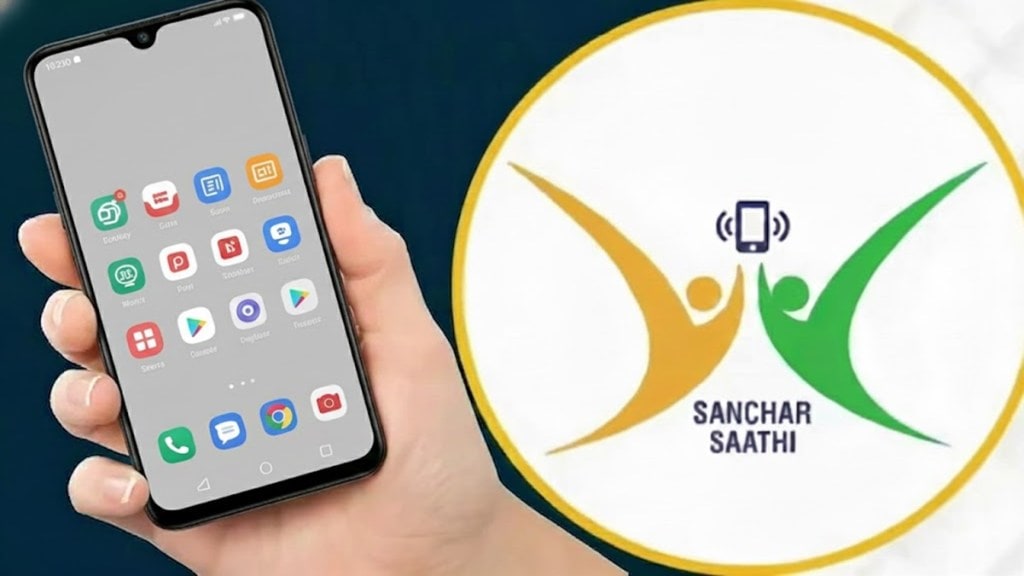
The Centre has directed mobile phone manufacturers to ensure that its fraud reporting app ‘Sanchar Saathi‘ is pre-installed in all handsets within 90 days, triggering a concern among many about privacy. The counter view may be that having such an app by default can actually strengthen user safety at a time when mobile-based financial fraud and counterfeit devices are quite common.
“The Department of Telecommunications (DoT) has developed Sanchar Saathi portal & App which enables citizens to check genuineness of a mobile handset through the IMEI number along with other facilities like reporting suspected fraud communications, lost/ stolen mobile handsets, check mobile connections in their name, trusted contact details of banks/ financial institutions” the Ministry of Communications said in a release.
In today’s times, our mobile phones are much more than just communication devices — they also hold a large part of our financial life. From UPI payments and eKYC for various services to online Aadhaar updates and checking mutual fund statements, almost everything can now be done on a phone. This means the safety of the device itself has quietly become a part of our overall financial security.
In this backdrop, the Department of Telecommunications (DoT) has directed all mobile manufacturers to pre-install the Sanchar Saathi app on every handset meant for sale in India.
The government says the move is aimed at helping users verify whether a handset is genuine, block a stolen phone, and report any suspected misuse of their mobile number.
Manufacturers have been asked to make the app visible and functional during first-time setup, with no option to disable its key features. The implementation must be completed in 90 days.
Why this matters for your money
For most Indians, the phone is now the single point of access to their bank accounts, UPI apps, Aadhaar app, investment portals, loan accounts and insurance dashboards. This also means that if the device is stolen, tampered with or turns out to be a counterfeit, the financial impact can be immediate and severe.
The DoT notes that duplicate or spoofed IMEI numbers allow the same identity to run on different devices at the same time.
Such phones are often used in cyber frauds, making it difficult to block a stolen handset or trace suspicious activity. A large second-hand smartphone market also increases the risk — many buyers unknowingly end up purchasing blacklisted or stolen phones, often losing money in the process.
The Sanchar Saathi app aims to act as a first line of defence. It links your device’s IMEI to a central database of legitimate phones.
You can use it to check if a handset is genuine, whether the IMEI has been tampered with, and whether there are multiple mobile connections issued in your name — all common entry points for financial fraud. If your phone is lost or stolen, the app allows you to file a block request that disables the device across all mobile networks, even if the SIM is removed or replaced.
In simple terms, verifying your phone is becoming as important as verifying a financial product before investing in it.
Privacy concerns being raised
However, the mandatory nature of the pre-installation has triggered concerns among some political groups and digital rights advocates. Their worry is that any government-directed app on a personal device — especially one that interacts with a central telecom database — raises questions around user consent, data access and how the collected information will be handled.
The government maintains that the app’s purpose is limited to preventing misuse of telecom resources and helping citizens protect themselves from fraud. Still, experts say transparency on data storage and usage will be important to maintain user trust, especially when the smartphone is now the centre of one’s financial life.
A new part of financial hygiene
From checking the IMEI of a phone before buying it to blocking a lost device instantly, the Sanchar Saathi app can be seen as another layer of financial hygiene — much like doing KYC or enabling two-factor authentication. As our digital financial activity grows, keeping the device itself secure is becoming the first and most basic step in protecting our money.