


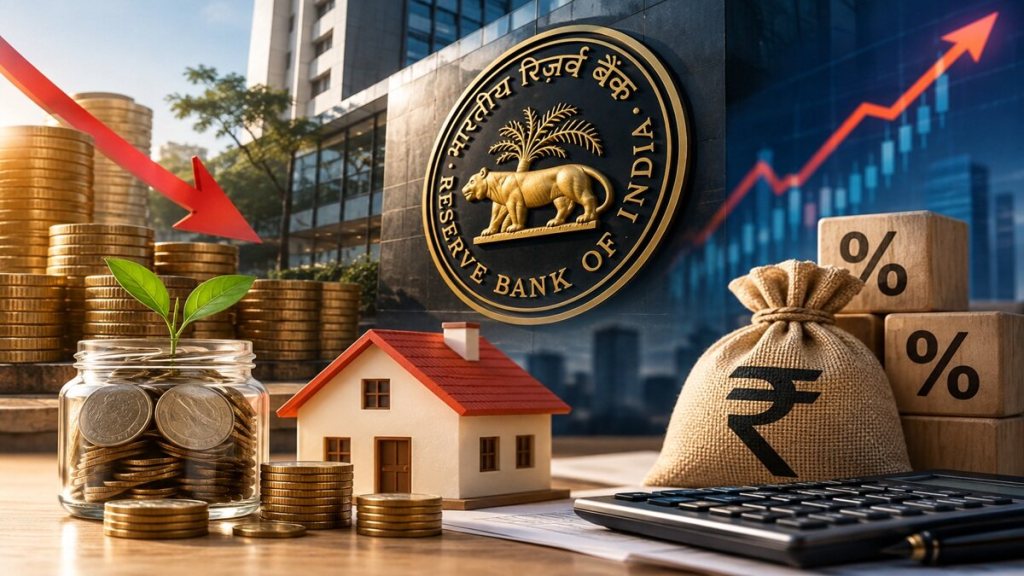

For most bank customers, a change in liquidity sounds like something that happens far away from their savings account or home loan. But this time, the RBI’s aggressive liquidity management could have a bearing on the interest rates that savers and borrowers see in the coming months.
The Reserve Bank of India (RBI) has absorbed more than Rs 6 lakh crore from the banking system through Variable Rate Reverse Repo auctions this month. The move came after excess liquidity in the banking system surged to a near five-year high of Rs 11.16 lakh crore in early September.
The immediate objective was not to raise borrowing costs or cut FD rates. The RBI was trying to prevent overnight money-market rates from falling too far below its policy repo rate of 5.25%. The banking system surplus has since fallen sharply. It was around Rs 4.45 lakh crore as of September 22, according to market estimates.
But there is a bigger question for ordinary investors. What happens next to FD rates, home loan EMIs and debt mutual funds if liquidity becomes tighter and the RBI possibly starts raising interest rates again?
The answer is different for each of these products.
First, what exactly is happening to liquidity?
Banks suddenly had a lot more money available in the system.
A major reason was the large foreign-currency inflow following the RBI’s special forex mobilisation measures. The measures mobilised $136.38 billion by August 31, including $127.23 billion through FCNR(B) deposits. The foreign-currency inflows and related transactions added substantial rupee liquidity to the banking system.
By September 6, the banking system’s liquidity surplus had reached Rs 11.16 lakh crore. That meant banks had much more cash than they immediately needed.
When banks have excess money, short-term interest rates can fall because banks have less need to borrow from one another. In early September, the weighted average call rate fell well below the RBI’s 5.25% repo rate.
That is where the RBI stepped in. Through VRRR auctions, banks were invited to park their excess funds with the central bank for a specified period. The RBI accepted more than Rs 6 lakh crore through two auctions on September 7. The cut-off rate was 5.24%.
Importantly, this should not be read as the RBI permanently removing Rs 6 lakh crore from the economy.
VRRR is a temporary liquidity-management tool. The money can return to the banking system when the operations mature. The RBI is essentially trying to keep short-term rates aligned with its policy stance.
And the liquidity surplus has already come down significantly.
Why the RBI’s liquidity move matters now
The timing is important because the interest-rate environment has changed dramatically over the past two and a half years.
The repo rate was at 6.50% from February 2023 after a series of rate hikes. It remained there for an extended period before the RBI started cutting rates in 2025. The repo rate was reduced to 6.25% in February 2025, to 6% in April and then to 5.50% in June. It is now at 5.25%.
This rate cycle affected both borrowers and savers. When rates were high, banks raised lending rates and deposit rates. FD investors benefited from relatively attractive deposit rates, while home loan borrowers faced higher EMIs or longer loan tenures.
The subsequent rate-cut cycle started changing that equation. Borrowing costs came down, while banks gradually had less reason to keep increasing deposit rates.
Now the situation is changing again. Liquidity is being absorbed. Bond yields have moved higher. Oil prices have risen sharply. The rupee has come under pressure. Global bond yields have also climbed.
All these factors have increased market attention on what the RBI might do at its October monetary policy meeting.
There is no certainty that the RBI will raise the repo rate in October. But market expectations of a possible hike have increased. Some economists expect a hike because of inflation risks, higher crude prices, the rupee and global rate pressures, while others expect the RBI to wait for more evidence of persistent domestic inflation.
That distinction is important for retail investors. The Rs 6 lakh crore liquidity absorption does not itself mean that your FD rate or home loan rate will immediately change. The bigger trigger would be a change in the RBI’s policy rate.
What happens to FD rates?
For FD investors, tighter liquidity can eventually become important because banks need deposits to fund their lending. But there is unlikely to be an immediate jump in FD rates merely because the RBI has absorbed Rs 6 lakh crore.
Adhil Shetty, CEO, BankBazaar, said: “Liquidity has eased from its record high, but the banking system still has a surplus of about ₹4.45 lakh crore as of September 22. With banks still holding surplus funds, there may not be an immediate need to raise deposit rates aggressively. FD rates may therefore remain relatively stable in the near term. Savers should watch the repo rate and banks’ deposit requirements, both of which have a greater bearing on FD pricing.”
This is an important point for savers. Banks still have surplus liquidity. So there is no immediate reason for banks to enter an aggressive competition for deposits.
However, the situation could change if the RBI raises rates. A rate hike would generally push the broader interest-rate environment higher. Banks could then start offering better deposit rates if they need more funds.
For someone whose FD is maturing in the next few months, therefore, the question is not simply whether the RBI has absorbed liquidity. The bigger question is where interest rates are headed when the money needs to be reinvested. This is also why investors may want to avoid putting all their money into one long-duration FD at the same time.
Shetty said: “The current liquidity conditions may not yet warrant a change in strategy. Investors should focus on when they need the money and choose the tenure accordingly. For FDs, spreading investments across one, two and three-year maturities can stagger reinvestment and reduce the risk of locking the entire amount into one interest-rate cycle. The same principle may also apply to debt investments. The key is to match the duration to your goal and time horizon rather than short-term liquidity movements.”
What about home loan EMIs?
For home loan borrowers, the liquidity story is slightly different. A common assumption is that if the RBI removes liquidity, loan rates will immediately rise.
That is not how it works. For borrowers whose floating-rate loans are linked to an external benchmark such as the repo rate, the key factor is the benchmark rate itself. A VRRR auction does not automatically increase the repo rate.
So someone paying an EMI today should not expect an immediate jump simply because the RBI absorbed Rs 6 lakh crore.
Shetty explains: “Not immediately. Absorbing excess liquidity is a liquidity management measure and does not by itself change the repo rate. For repo-linked floating-rate home loans, the interest rate changes when the benchmark changes, subject to the lender’s reset mechanism. For example, a Rs 50 lakh loan over 20 years at 8.5% has an EMI of about Rs 43,400. A 25 bps change would alter the EMI by roughly Rs 800, assuming the tenure is unchanged. The impact on EMIs would therefore depend on a change in the benchmark rate.”
So the real risk for borrowers is not the liquidity withdrawal itself. It is a possible change in the rate cycle. If the RBI starts raising the repo rate after its long period of cuts, floating-rate borrowers could eventually see their loan rates move higher, depending on how their loans are benchmarked and when their reset takes place.
Rising bond yields add another layer
There is another part of the story that debt-fund investors need to watch.
Bond yields have been rising in India. The 10-year government bond yield was around 7.18% on September 28, its highest level in more than two years. Rising US Treasury yields, higher crude prices and concerns over inflation have all added pressure to Indian bond yields.
The global bond market has also been under pressure. The US 10-year Treasury yield has moved above 5%, while the 30-year US yield has climbed to levels not seen in more than two decades. Higher energy prices, inflation concerns, government borrowing and expectations of higher-for-longer interest rates have contributed to the global bond sell-off.
Why does this matter in India?
Because Indian bond yields do not move in isolation. When yields rise globally, particularly in the US, Indian bonds can also face pressure as investors reassess the relative attractiveness of Indian debt. That can affect debt mutual funds.
Debt funds: rising yields can hurt bond prices
The basic relationship is simple. Bond prices and yields generally move in opposite directions. If yields rise, prices of existing bonds can fall. That means a debt mutual fund holding those bonds can see its NAV come under pressure in the short term.
The impact is not the same across all debt funds. Long-duration funds are generally more sensitive to changes in yields because their portfolios contain bonds with longer maturities.
Short-duration funds are usually less sensitive to the same movement in yields.
Shetty said: “Bond prices and yields generally move in opposite directions. When yields rise, prices of existing bonds could fall. Long-duration funds may be more sensitive as they hold bonds with longer maturities, while short-duration funds may see a smaller impact from a given rise in yields. Interest income from the bonds could partly cushion the impact over time. The extent of the impact would depend on how much yields move and how long the fund holds its underlying bonds.”
This does not mean debt funds automatically become unattractive when yields rise. In fact, higher yields can eventually mean better reinvestment returns for funds as existing bonds mature and the money is invested in newer bonds offering higher yields. The problem is the transition period.
An investor who enters a long-duration debt fund just before a sharp rise in yields can see short-term mark-to-market losses. That is why duration matters more in the current environment.
So, should investors lock into FDs now?
There is no single answer for everyone. For a person who needs predictable returns and knows that the money will be required on a specific date, an FD can continue to serve that purpose.
But the current environment argues against making the decision based only on the highest rate available today. If rates rise further, locking the entire corpus into a long-term FD today could mean missing out on potentially higher rates later.
On the other hand, if rates remain stable or eventually fall again, locking in an attractive rate could prove useful. This is where laddering can help.
Instead of putting Rs 10 lakh into one three-year FD, for example, an investor could divide the money across different maturities. The exact split should depend on cash-flow needs.
This creates multiple maturity dates and gives the investor opportunities to reinvest at different points in the interest-rate cycle. The same principle can be applied to debt investments. Match the duration of the investment with when the money will actually be needed.
The bigger message for investors
The Rs 6 lakh crore liquidity absorption is important, but it should not be viewed in isolation. The sequence is more important.
First came a huge liquidity surplus. The RBI then started absorbing the excess cash. Short-term rates moved closer to the repo rate. At the same time, global bond yields rose, Indian bond yields moved higher and inflation and crude oil became bigger concerns. Now markets are watching whether the RBI’s October policy marks a shift from the recent rate-cut cycle towards a more cautious or even tightening stance.
That is the chain investors need to understand. For FD investors, the immediate impact is likely to be limited because banks still have surplus funds. For home loan borrowers, the liquidity operation itself does not change EMIs. The bigger issue is whether the repo rate changes.
For debt-fund investors, rising bond yields are already more relevant because they can affect bond prices and therefore fund NAVs, particularly in longer-duration categories.
In other words, the Rs 6 lakh crore move is less about an immediate shock to your personal finances and more about a possible change in the interest-rate environment ahead.
For savers and borrowers, the next RBI policy meeting therefore matters more than the liquidity number alone. And for anyone making a fresh investment decision today, the safest approach is to look beyond the headline rate and ask a simpler question: When will I need this money, and what happens if interest rates move in the opposite direction from what I expect?
Note: RBI data and recent market reports. The current repo rate is 5.25%, while recent RBI operations have focused on bringing short-term rates closer to the policy rate.
Disclaimer: This story is for informational purposes only and does not constitute investment, financial or tax advice. Interest rates, bond yields and market conditions can change. Investors should assess their financial goals, risk appetite and investment horizon before making any investment decision. Past performance does not guarantee future returns.
Every financial journey has a turning point. What’s yours?
Financial Express is launching a new series highlighting real experiences with money, investments, and the taxman. Did a sudden tax rule catch you off guard? Did a piece of financial advice change your life? Your story could provide invaluable, practical lessons for thousands of fellow taxpayers. Share your experience with us. We respect your privacy: no stories will be featured without a direct conversation and your full consent. Thank you.