




On September 25, 2026, the Ministry of Labour and Employment announced an amendment to the Employees’ Pension Scheme (EPS), 2026, creating a new category of employees eligible to enroll in EPS. The change followed the government’s increase of the monthly wage ceiling for the Employees’ Provident Fund (EPF) from Rs. 15,000 to Rs. 25,000.
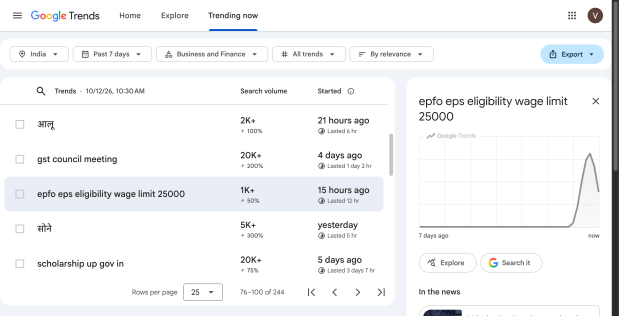
Via its social media handle X, EPFO said that “If your monthly salary is Rs 25,000 or less, EPS membership is mandatory as per eligibility. If your monthly salary is more than Rs 25,000, EPS membership is not mandatory.”
In accordance with EPFO guidelines, the employer must verify the employee’s previous EPS membership in the UAN if wages surpass Rs 25,000. If wages are less than Rs 25,000, EPS pension contributions must be deducted. To put it simply, if an employee’s salary is less than Rs 25,000, they can now be placed under EPS if they were previously covered by EPF but not EPS.
According to EPFO, an employee must make a contribution to EPS if they were previously an EPS member; otherwise, they are not required to make a contribution.
A minimum of ten years of eligible employment and active membership in the Employees’ Provident Fund Organization (EPFO) are criteria for eligibility for the Employees’ Pension Scheme (EPS) under the EPFO.
According to EPFO regulations, EPS membership is required for eligible employees, usually those who have an EPF membership, and it lasts until age 58, death, or pension settlement.
12% of wages are contributed by the employer to EPF-related contributions under the basic contribution framework. 8.33% of pensionable wages are allotted to EPS. For example, the employer’s 12% contribution is equal to Rs 3,000 if the eligible pensionable wage is Rs 25,000 per month. At 8.33%, the EPS allocation equals Rs 2,082.50, with the remaining Rs 917.50 going to the EPF.