


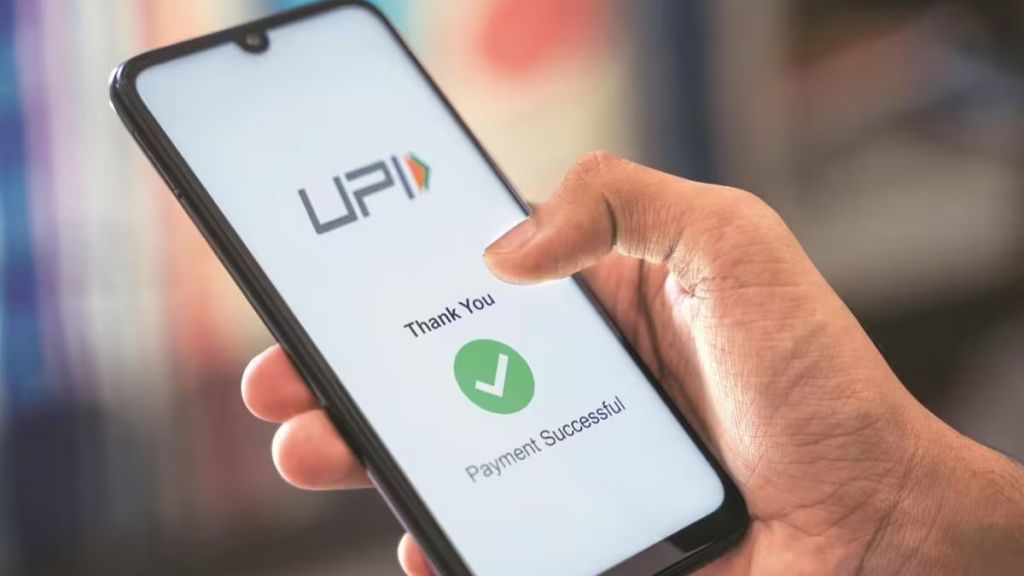

The new merchant discount rate for capital-market transactions via the Unified Payments Interface (UPI) has been kept at 0.02% against the baseline fee of 0.04% on other merchant transactions. The rate is intentionally modest, but its significance extends beyond the headline number, writes Ranadurjay Talukdar
l Why will a lower MDR apply on capital-market transactions?
CAPITAL-MARKET PAYMENTS differ fundamentally from ordinary merchant purchases. Ticket sizes are substantially higher, while the recipient may earn only a small brokerage or platform fee, and at times no revenue at all. Applying the standard 0.4% UPI merchant discount rate (MDR) would have been disproportionate and could have discouraged digital investing. The 0.02% rate reflects a policy compromise: capital-market intermediaries contribute towards payment infrastructure, cybersecurity, fraud controls and service delivery, but at one-twentieth of the standard rate.
The Rs 300 cap further protects high-value investments. The stated policy objective is to support UPI’s sustainability while preserving retail participation in formal financial markets. It introduces commercial pricing into investment-account funding, creating a recurring cost for brokers and platforms while testing whether payment-rail sustainability can be achieved without discouraging retail participation or reducing digital convenience.
l Which capital-market transactions will attract the 0.02% MDR?
THE CONCESSIONAL RATE covers eligible UPI payments relating to mutual funds, securities, stockbrokers, securities dealers and investment platforms. Public explanations indicate this includes fund transfers for equity and debt investments, one-time mutual-fund purchases and additions to broker trading balances. The important distinction is between a merchant payment made to a regulated capital-market entity and a person-to-person bank transfer, which remains free.
UPI AutoPay mandates, including recurring systematic investment plans (SIP) payments, are reported to remain outside the new framework. Implementation will depend on correct merchant-category coding, particularly where a platform offers multiple services or routes collections through payment aggregators and sponsor banks.
l Impact on high-value transactions
THE PERCENTAGE APPEARS small, but the cumulative cost can be meaningful for large, high-frequency platforms. A Rs 1 lakh transfer would generate MDR of Rs 20, and the Rs 300 cap would be reached at Rs 15 lakh. The concern is that funding a brokerage account is not necessarily a completed investment, and is hence not a completed transaction on which MDR is typically payable. Funds may remain unused, be returned under settlement norms and subsequently be transferred back, creating repeated payment costs without corresponding brokerage income. Discount brokers with low revenue per client and frequent account-funding activity are thus more exposed than asset managers receiving stable investments or recurring mandate-based contributions.
l Will it raise the cost of investing?
THE FRAMEWORK TREATS MDR as an intermediary-side payment cost, not a fee charged directly to investors. Banks have been advised to prevent merchants from passing it on, while UPI apps can’t impose hidden fees. Investors should therefore not see a separate UPI charge at checkout. In practice, larger intermediaries are likely to absorb the cost initially because convenience, customer acquisition and competitive pricing are important. However, sustained costs may be recovered indirectly via revised subscription plans, lower promotional benefits or more emphasis on revenue-generating clients. We might see greater adoption of SIPs, as it is free of MDR. Smaller brokers could nudge users to consolidate fund transfers or adopt lower-cost account-funding channels.
l Will investors avoid UPI route?
UPI IS UNLIKELY to lose its position for immediate, convenient funding since investors do not pay the MDR directly. However, intermediaries now have a reason to reduce avoidable transaction frequency. Platforms may encourage investors to make fewer, consolidated transfers, retain appropriate trading balances or use recurring mandates for systematic investments. Brokers could promote direct bank transfers or other account-to-account rails for very large deposits. Product design may also shift towards seamless “pay and invest” journeys rather than open-ended wallet top-ups. The long-term effect should be optimisation of funding behaviour, not a broad retreat from digital capital-market payments.
l l How other countries do it
INDIA’S APPROACH IS unusual because it establishes a nationally differentiated rate for capital-market payments. In the US, brokerage funding via automated clearing house is free for customers, although processing can be slower, while wire transfers may attract bank fees. In the UK, investors face platform, custody and dealing charges on each bank-account funding transaction. Brazil’s Pix is free for individuals, but FIs can determine charges for businesses. At 0.02%, India’s rate is globally competitive, though its application to repeated transfers of uninvested customer money is distinctive.
The writer is partner and payments sector leader, EY India.
Disclaimer: This article is for informational purposes only and should not be construed as investment advice. Investors should assess their financial goals, risk appetite and consult a qualified financial advisor before making investment decisions.
Every financial journey has a turning point. What’s yours?
Financial Express is launching a new series highlighting real experiences with money, investments, and the taxman. Did a sudden tax rule catch you off guard? Did a piece of financial advice change your life? Your story could provide invaluable, practical lessons for thousands of fellow taxpayers. Share your experience with us. We respect your privacy: no stories will be featured without a direct conversation and your full consent. Thank you.