





Credit score-based interest rates are the rates at which banks and financial institutions lend money for home purchases, and these rates are determined, in part, by the borrower’s credit score. The credit score, as calculated by credit bureaus, is a numerical representation of an individual’s creditworthiness. It reflects their financial history, including how they’ve managed previous loans, credit cards, and other financial commitments.
Here’s what you should know:
Credit Score Tiers
Lenders categorise credit scores into different tiers. While the specific categorisation may vary from one lender to another, a common classification is as follows:
Excellent: 750 and above
Good: 700-749
Fair: 650-699
Poor: 600-649
Very Poor: Below 600
Lenders also check other criteria when they lend you. Like your income, employment, age and everything else is taken into consideration when you borrow from financial institutions.
Also Read: 5 things to avoid while planning for your kids’ higher education
Impact on Interest Rates
The interest rate on your home loan is directly linked to your credit score. The higher your credit score, the more likely you are to secure a lower interest rate. For individuals with excellent credit scores, lenders offer the most favourable rates, while those with lower scores might face higher interest rates or even loan rejections.
Rate Differential
The interest rate differential between borrowers with excellent and poor credit scores can be substantial. A borrower with an excellent credit score may enjoy interest rates several percentage points lower than someone with a very poor credit score. This differential can have a significant impact on the overall cost of the home loan.
EMI
The interest rate on your home loan directly affects your Equated Monthly Installment (EMI). A lower interest rate results in a more affordable EMI, making it easier for borrowers to manage their monthly expenses.
Loan Eligibility
Your credit score can also influence the maximum loan amount you are eligible for. A higher credit score may allow you to borrow a larger sum, increasing your purchasing power in the real estate market.
Loans for Co-Borrowers
If you are applying for a home loan with a co-borrower, the credit scores of all applicants are considered. In such cases, the lowest credit score among the co-borrowers can impact the interest rate offered.
The table below helps you compare the interest rates of about 10 banks offering home loans based on your credit scores. You can compare and make a decision based on your financial requirements and credit score.
Home Loan Interest Rates Corresponding to Different Levels of Credit Score

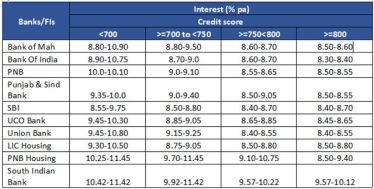
Note: The table consists of home loan interest rate data of banks and NBFCs that shows their home loan rates linked to credit score on their website. Interest rates are indicative and in actual situation the rates may vary depending on various factors and bank’s T&C. Data as on 10th Oct 2023.
Compiled by BankBazaar.com


