




If you have Rs 10 lakh now, how would you invest it?
In our quarterly feature, we speak to some of India’s top fund managers to answer this very question. The global headwinds continue to exacerbate globally. The US Yield has spiked to multi-decade highs and crude continues to remain elevated.
They explain the changing dynamics in the past 9 months and what continues to be status quo for investors from the allocations undertaken in July quarter–
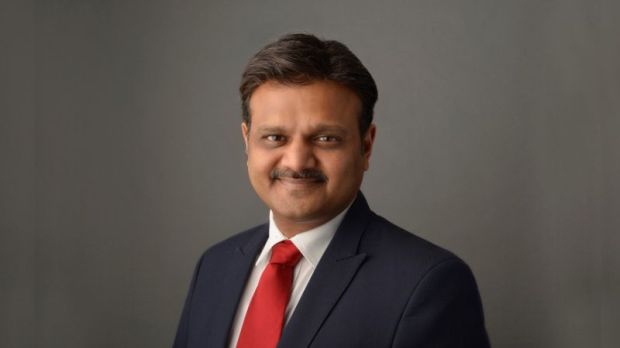
Anand Shah, CIO PMS & AIF – ICICI Prudential AMC
Anand Shah listed out his asset allocation table and highlighted the top bets and one contrarian call for this quarter.
# The Allocation Table
(A Rupee-based breakdown of Rs 1,000,000 across asset classes)
| Asset Class | Allocation (% of Total) | Change from July Quarter |
| Largecap | 45% | Decreased |
| Midcap | 10% | Unchanged |
| Smallcap | 20% | Increased |
| Gold | 15% | Unchanged |
| Debt | 10% | Unchanged |
# The Core Thesis
Anand Shah explained that their “asset allocation remains constructive on Indian equities over the long term, while recognising that the near-term investment environment is likely to remain more volatile and selective.”
They believe India’s structural growth drivers remain intact, “however, geopolitical risks, elevated energy prices, currency depreciation and global liquidity conditions warrant a more balanced approach.”
“This, along with FPI selling and rising global bond yields, have further contributed to market volatility. The weak monsoon also creates risks for rural incomes, food inflation, and consumption,” he added.
Against this backdrop, they prefer businesses with strong balance sheets, healthy cash generation, pricing power, and visible earnings growth.
According to him, “within equities, large caps form the portfolio anchor given their balance sheet strength, earnings visibility and resilience. We retain selective exposure to mid and small caps where structural growth, competitive advantages, and improving profitability can support long-term compounding.”
Gold provides diversification against geopolitical, inflation and currency risks, while debt provides stability and, importantly, dry powder to deploy when market dislocations create attractive opportunities.
He considers, “his gives the portfolio a balance between participation and resilience—participating in India’s structural growth while retaining the flexibility to navigate a potentially volatile 12-month period.”
#The ‘Watchlist Five’: 5 specific sectors on the radar
2. Financial Services
3. Manufacturing & Industrial Capex
4. Power & Energy Ecosystem
5. Consumer Services
# The Contrarian View
Anand Shah highlighted that “the next phase of alpha could emerge from businesses that are quietly benefiting from India’s structural transformation but are yet to receive broad investor recognition. Our contrarian view would be on select manufacturing and industrial businesses where the capacity has already been created, but the earnings inflection is still ahead.”
“As utilisation improves, operating leverage can lead to a meaningful acceleration in earnings and cash flows. We see this opportunity across select industrial, metals and manufacturing businesses,” he added.
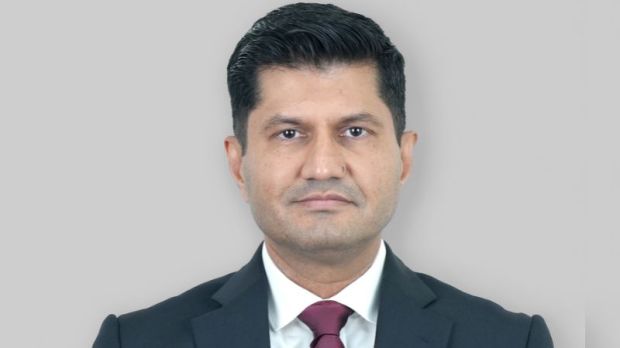
Brijesh Ved, Head-PMS, Kotak Mahindra AMC
Brijesh Ved listed October quarter asset allocation and highlighted the top bets.
The Allocation Table
(A Rupee-based breakdown of Rs 1,000,000 across asset classes)
| Asset Class | % of Total | Amount (₹) | Increase/Decrease from July Qtr |
| Large Cap | 35% | 3,50,000 | ↓ Reduced |
| Mid Cap | 20% | 2,00,000 | ↑ Increased |
| Small Cap | 20% | 2,00,000 | ↑ Increased |
| Debt | 15% | 1,50,000 | ↓ Reduced |
| Gold & Silver (Kotak Gold Silver Passive FOF) | 10% | 1,00,000 | No Change |
# The Core Thesis
Brijesh Ved pointed out that rising crude oil prices, weather-related pressures on agricultural output, and persistent food inflation create risks to the disinflationary trend seen earlier in the year.
Overall, India continues to stand out as one of the fastest-growing major economies globally.
“We remain constructive on the medium-term outlook, supported by strong domestic demand, an ongoing capex cycle and improving export momentum. However, investors should increasingly focus on companies with pricing power, strong balance sheets and exposure to structural investment themes, while remaining selective in sectors vulnerable to rising input costs, higher interest rates and a slower rural recovery.” he added.
From an asset allocation perspective, “the current macro backdrop supports a balanced yet growth-oriented strategy for Indian investors, with equities remaining central given the strength of domestic economic drivers and long-term earnings growth.” he explained.
According to him, “within equities, an increase in allocation towards high growth companies in mid & small cap segment, as these are likely to benefit disproportionately from India’s relatively stable positioning, easing commodity and oil prices, and improving domestic growth momentum, alongside more reasonable valuations following recent corrections.”
#The ‘Watchlist Five’: 5 specific sectors on the radar
1) Banking & Financial Services
2) Auto
3) Capital Goods
4) Healthcare
5) Select Consumption
# The Contrarian View
Brijesh’s key contrarian bets include auto and auto components. According to him, “collectively, domestic demand, EV adoption, exports and component localisation create one of the strongest long-term growth opportunities within the Indian market.”
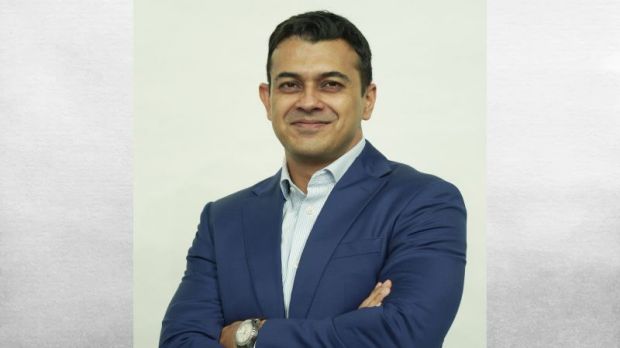
Sandipan Roy, CIO – Motilal Oswal Private Wealth
Sandipan Roy listed out his asset allocation rationale and the contrarian call at the moment.
# The Allocation Table
(A Rupee-based breakdown of Rs 1,000,000 across asset classes)
| Asset Class | % of total | Increase/decrease from July qtr |
| Large cap | 0% | Unchanged |
| Mid- and small-cap | 15% | Decreased |
| Hybrid Funds | 25% | Increased |
| Emerging Market | 10% | Decreased |
| US Equities | 10% | Fresh addition |
| High Yield Credit | 30% | Unchanged |
| Commodities | 10% | Unchanged |
# The Core Thesis
Sandipan Roy said that, “the market is consequently being pulled by two opposing forces. On one side are strong domestic growth, improving earnings and structural domestic liquidity. On the other are elevated crude prices, higher global yields, fiscal concerns and increasing equity supply. The balance between these opposing forces is likely to determine the market’s direction over the next 6–12 months.”
Considering the current environment and recent outperformance of mid & small caps vs large caps, “we believe that tide may turn as large caps valuation seems more appealing. Hence we book some profits from SMID and reduce allocation by 10%. This will get added to hybrid funds as a proxy for large cap play,” he added. .
On the global side as well, rise in the global yields and sustenance of that, may lead to some profit booking in the emerging markets after the rally over the last 18-20 months. “Hence we reduce our allocation to the EM segment and add that exposure to US equities.” he pointed out.
According to him, in fixed income, “higher yields increasingly appear to be the new normal with renewed inflation concerns and hawkish stance by major central banks. Hence we continue to prefer accrual-oriented strategies, with allocation towards private credit, high-yield NCDs, income-generating assets like InvITs.”
Sandipan stated that they are maintaining their “allocation to commodities given supply chain disruptions, deglobalisation trends and higher inflation. In precious metals with preference for Gold over Silver.”
Additionally, he believes that Indian private banks remain well positioned to benefit from a strong credit cycle, with robust credit growth, supported by healthy retail, MSME and services demand. Asset quality remains high, while healthy capitalisation and improving credit costs provide visibility to earnings.
#The ‘Watchlist Five’: 5 specific sectors on the radar
1. Private Banks
3. Metals & mining – industrials (non-ferrous & ferrous both)
4. China Fund
5. Defence
# The Contrarian View
Sandipan Roy pointed out that FMCG is one contrarian theme they want to bet on in the current scenario.
Ajay Bagga, Market Veteran
Ajay Bagga shared his model portfolio, outlining his asset allocation, macro outlook, sector preferences, and one contrarian call.

The Allocation Table
(A Rupee-based breakdown of Rs 1,000,000 across asset classes)
| Asset Class | Amount | % of Total | Status from July Qtr |
| Large-Cap (India) | Rs 3,00,000 | 30% | Unchanged |
| Mid-Cap (India) | Rs 1,50,000 | 15% | Unchanged |
| Small-Cap (India) | Rs 1,50,000 | 15% | Unchanged |
| US ETF (Broad Market) | Rs 1,00,000 | 10% | Unchanged |
| China ETF | Rs 1,00,000 | 10% | Unchanged |
| Silver | Rs 1,00,000 | 10% | Unchanged |
| Gold | Rs 50,000 | 5% | Unchanged |
| US Magnificent 7 (AI Focus) | Rs 50,000 | 5% | Unchanged |
# The Core Thesis
The core thesis driving Ajay Bagga’s highlighted how “the macro narrative entering late 2026 has shifted from a transient geopolitical disruption to a sticky, high-cost capital environment.”
He pointed out that “persistent supply-side shocks and energy pressures have kept global inflation elevated. In response, major central banks—including the US Federal Reserve and the Reserve Bank of India—have resumed or extended policy tightening by raising interest rates to temper inflationary expectations.This has pushed global bond yields to multi-decade highs, with the US 10-year Treasury yield crossing 5.3%.”
The high crude oil prices and structural strength in US corporate earnings are other key factors.
In contrast, he highlighted how “Indian domestic equities continue to underperform on a relative basis. A combination of widening global rate differentials, persistent FII capital outflows toward higher yield environments abroad, and tightening domestic monetary conditions has kept Indian equities range-bound and cooling.”
Furthermore, Gold and Silver continue to underperform as surging real yields across sovereign bond markets act as a strong competitive drag against non-yielding hard assets in the short term.
Despite these headwinds, “this model portfolio retains its structural discipline without altering asset allocation weights. The 60% domestic Indian equity core remains firmly intact, maintaining a high-conviction stance on an eventual large cap valuation mean-reversion catch-up.”
According to him, “the 15% allocation to Gold and Silver continues to function as essential structural insurance against currency volatility and industrial deficits. Meanwhile, the 25% global exposure directly captures resilient US corporate profitability, AI infrastructure growth, and deep-value recovery opportunities in Chinese equities.”
The ‘Watchlist Five’: Sectors on the Radar
Ajay Bagga believes that five sectors and themes that remain positioned to drive relative alpha over the coming quarters are –US Technology (Hyperscalers & Core Infrastructure
-Indian Banking & Financials (large cap commercial banks and systemic NBFCs benefiting from strong balance sheets)
-Industrial Commodities (Silver)
-Chinese AI & Consumer Tech Alternates
-India Power, Infrastructure & Defence (capitalizing on long-term national energy security imperatives)
The Contrarian View
Ajay Bagga outlined that the most deliberately contrarian stance in this allocation remains the “5% tactical exposure to the US magnificent 7 megacaps.” Despite elevated global bond yields and widespread consensus anxiety regarding high valuations, he elaborated that “mega cap AI leaders continue to demonstrate superior earnings power, fortress balance sheets, and strong cash generation.”
“We view short-term yield-driven market drawdowns as attractive windows to accumulate structural growth leaders at more reasonable multiples,” he added.
Deven R Choksey, Founder and MD of DRChoksey Finserv
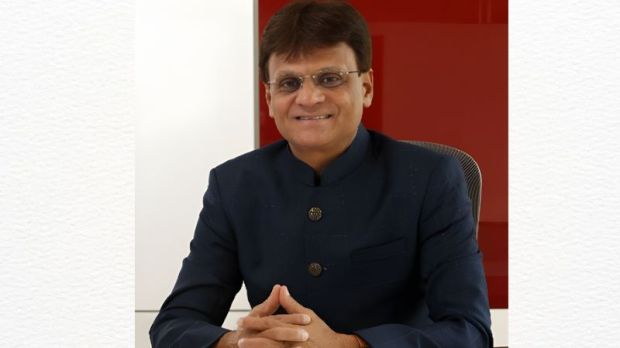
Unlike the previous 3 quarters, Deven has not offered an allocation table. He pointed out that the key question is, “why should global investors allocate to India when US assets
offer higher yields and global markets provide alternative growth opportunities?”
According to him, “India’s answer has to be superior earnings growth + structural economic growth +policy stability + improving corporate balance sheets.”
He believes that investors must watch out for this investment matrix-
The Investment Matrix
| Variable | Current direction |
|---|---|
| GDP growth & liquidity | Strong |
| DII flows | Very strong |
| Corporate earnings | Resilient |
| Capex cycle | Strong |
| Consumption | Healthy |
| Crude oil | Elevated and volatile |
| Inflation | Rising |
| RBI rates | Hawkish risk |
| Rupee | Weak |
| FII flows | Negative |
| West Asia | Uncertain |
| El Niño | Inflation risk |
| Global yields | Elevated |
#The Core Thesis
According to Deven R Choksey, India’s structural growth story remains intact, supported by domestic demand, capex, financialisation and manufacturing.
He pointed out that “H1 FY27 earnings are providing comfort, but the market now needs earnings upgrades rather than simply strong headline growth. The biggest near-term macro risk is the crude–inflation–interest-rate–rupee feedback loop arising from West Asia.”
He added that “FII selling is a headwind, but strong DII flows and domestic liquidity have materially reduced India's dependence on foreign capital for marginal demand. We therefore favour a barbell of financials + India capex/manufacturing + selective
consumption/healthcare, while remaining cautious on highly valued pockets where earnings do not justify the multiple.”
The key equation for the next 6–12 months, he explained is –
India Growth + Earnings Recovery + Domestic Liquidity
vs.
Crude + Inflation + Rates + Rupee + FII Outflows
“The market’s next sustained move higher is likely to require one of two things: either a moderation in crude/geopolitical risk or continued earnings upgrades that can absorb the macro headwinds,” he added.
At present, they would remain invested rather than defensive, “but with a strong bias towards quality, cash flows, earnings visibility and reasonable valuations.”
#The ‘Watchlist’: Specific sectors on the radar
He listed the key sectors to watch –
Energy transition
-Renewable energy
-Power equipment & Grid/ transmission
-Storage ecosystem
Financialisation
-Banks & NBFCs
-Asset managers
India capex
-Capital goods & Engineering
-Infrastructure & Defence
-Power & Transmission
Structural healthcare
Pharma
-Hospitals & Diagnostics
#Contrarian View
Deven does not have a contrarian view. However, he advises investors to avoid highly leveraged businesses and businesses with weak pricing power.
Conclusion
Most fund managers still believe that the highest allocation should go towards Indian equities. However the verdict on large caps vs small and midcaps is split right in the middle. While some are gung-ho about large caps and see long-term value, many others are systematically increasing allocation in small and midcaps. The sharp spike in US yield has led to fresh allocation advice across global equities and other assets.
Disclaimer: This article provides factual analysis only and is not, and should not be construed as, an offer, solicitation, or recommendation to buy or sell securities. Investors must conduct their own independent due diligence and seek advice from a SEBI-registered financial advisor.