




Promoter stake sales through block deals usually catch investors’ attention. The obvious question that comes to investors’ minds is: why is one who owns and knows the business best selling? But three block deals in September tell a slightly different story.
In Jamna Auto Industries, Gland Pharma, and Granules India, promoters sold sizeable stakes. At the same time, marquee institutional investors including DSP Mutual Fund, Kotak Mahindra Mutual Fund, ICICI Prudential AMC, and Capital Group’s Smallcap World Fund bought the shares.
The interesting part is not who sold and bought the shares. It is when these transactions happened. All three companies reported strong quarterly numbers, with visible improvement in revenue, profitability, and business mix.
So, were institutions simply providing liquidity to large sellers, or were they using the opportunity to build positions in businesses where fundamentals are starting to look better? Let’s look deeper.
Jamna Auto Industries: Moving Beyond the OEM Cycle
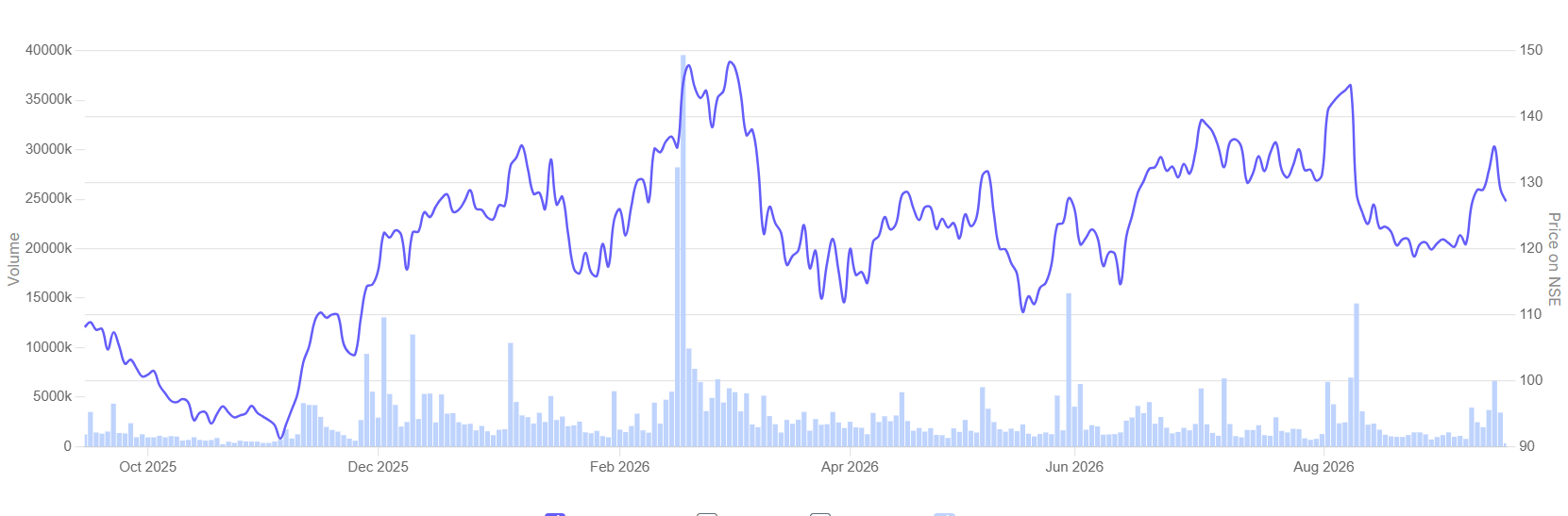
On September 11th, promoter Pradeep Singh Jauhar and Randeep Singh Jauhar together sold a 5% stake through a block deal at ₹128 per share. The shares were bought by DSP Mutual Fund, 360 ONE Asset Management, and Abu Dhabi Investment Authority (ADIA).
The timing of the deal is quite interesting. Jamna Auto’s Q1FY27 revenue increased 7% YoY to ₹612 crore, while Earnings Before Interest, Tax, Depreciation, Amortisation (EBITDA) grew by 12.8% during the same period to ₹88 crore. The larger story is where the company wants to take the business from here.
Jamna Auto Financial Performance
| Period | Q1FY26 | Q1FY27 | YoY Growth (%) |
| Net Sales (₹ crore) | 573 | 612 | 6.8% |
| EBITDA | 78 | 88 | 12.8% |
| EBITDA Margin (%) | 13.6% | 14.4% | 80 bps |
| Net Profit (₹ crore) | 49 | 87 | 77.6% |
Source: Company Presentation
Accelerating Growth
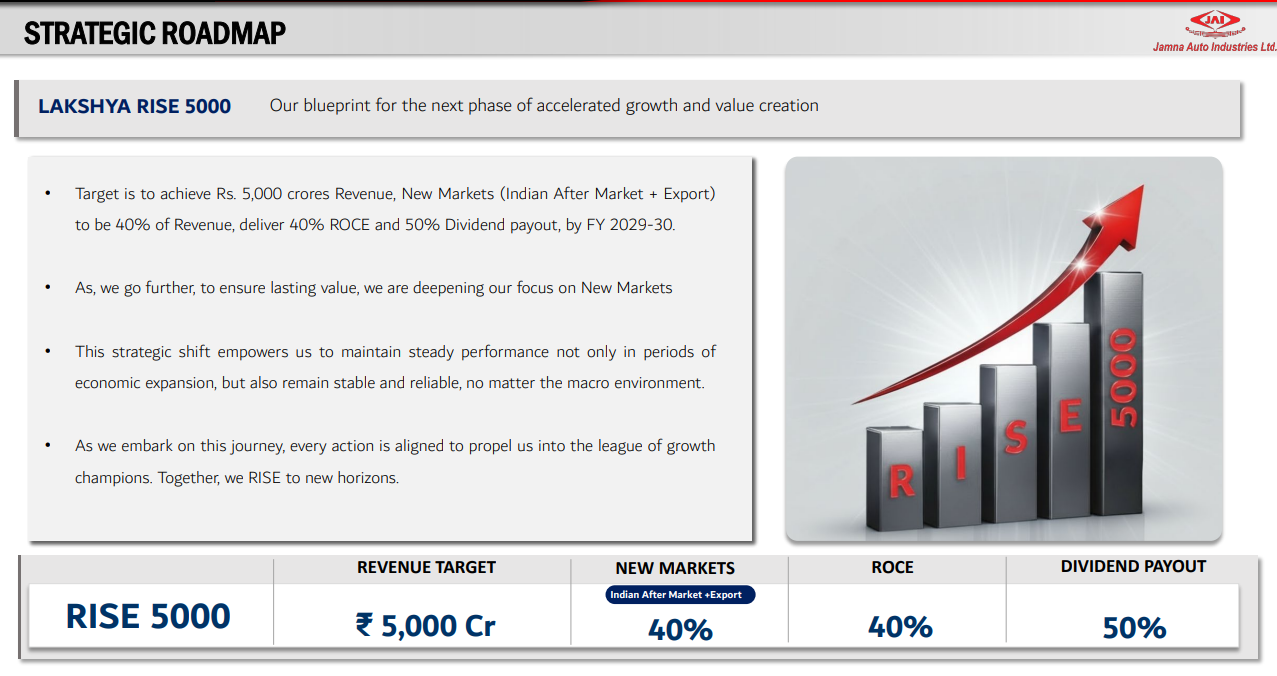
Between FY23 and FY26, Jamna Auto’s revenue grew from ₹2,325 crore to ₹2,612 crore, a CAGR of just under 4%. The company is now targeting ₹5,000 crore in revenue by FY30, implying a significantly faster growth trajectory over the next four years.
Jamna Auto FY30 Strategic Roadmap
Source: Company Presentation
But the bigger question is how Jamna Auto can grow faster from here. Jamna Auto has historically been heavily dependent on commercial vehicle OEMs, making its business closely linked to the domestic CV cycle. The company is now trying to build new growth engines through exports, the aftermarket, and higher-value suspension products.
One of the biggest steps came in July 2026, when Jamna Auto approved the acquisition of UK-based Owen Springs for £2 million, or around ₹25 crore. The acquisition gives Jamna access to a company with around an 8% share of the UK aftermarket spring market and a distribution network of around 250 distributors and retailers.
It is also moving beyond conventional leaf springs. Jamna Auto has started supplying higher-value slipper suspensions and drop axles to Ashok Leyland and is expanding stabilizer bar supplies to Mahindra & Mahindra. Additionally, the company is undertaking brownfield expansion at its Adityapur facility.
The strategic roadmap calls for new markets, aftermarket, and exports to contribute 40% of revenue by FY30, compared with 23% in Q1FY27. Jamna Auto is also targeting a 40% return on capital employed (ROCE) and a 50% dividend payout. For institutions, the attraction may not lie in the current numbers but more in what the business could become.
Jamna Auto: 1 Year Share Price
Source: Screener.in
Gland Pharma: A Changing Business Mix
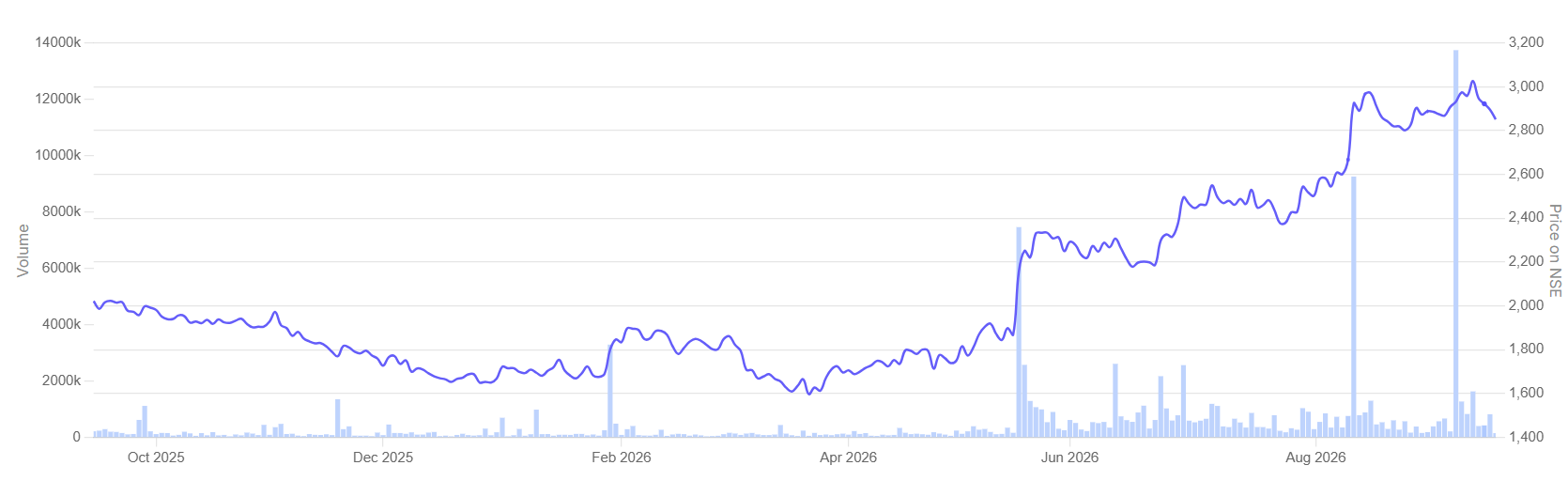
On September 4th, Gland Pharma’s Chinese promoter Fosun Pharma sold a 6% stake in the company, bringing its holding below 50%. The deal size was roughly ₹2,800 crore.
Several institutions bought the shares, and the single biggest buyer was Kotak Mutual Fund, picking up shares worth close to ₹790 crore. Axis Mutual Fund and ICICI Pru AMC also bought the shares.
Again, the timing stands out. Gland Pharma’s Q1FY27 revenue from operations rose nearly 20% YoY to ₹1,800 crore. Net profit jumped 47.9% to ₹317 crore, while EBITDA margins expanded by around 300 bps to 27.4% during the period. But the more important change may be happening below the headline numbers.
Gland Pharma Financial Performance
| Period | Q1FY26 | Q1FY27 | YoY Growth (%) |
| Revenue from Operations(₹ crore) | 1,506 | 1,800 | 19.6% |
| EBITDA | 367.8 | 493 | 34.0% |
| EBITDA Margin (%) | 24.4% | 27.4% | 300 bps |
| Net Profit (₹ crore) | 216 | 317 | 47.8% |
Source: Company Presentation
Moving Into High-Entry Barrier Opportunities
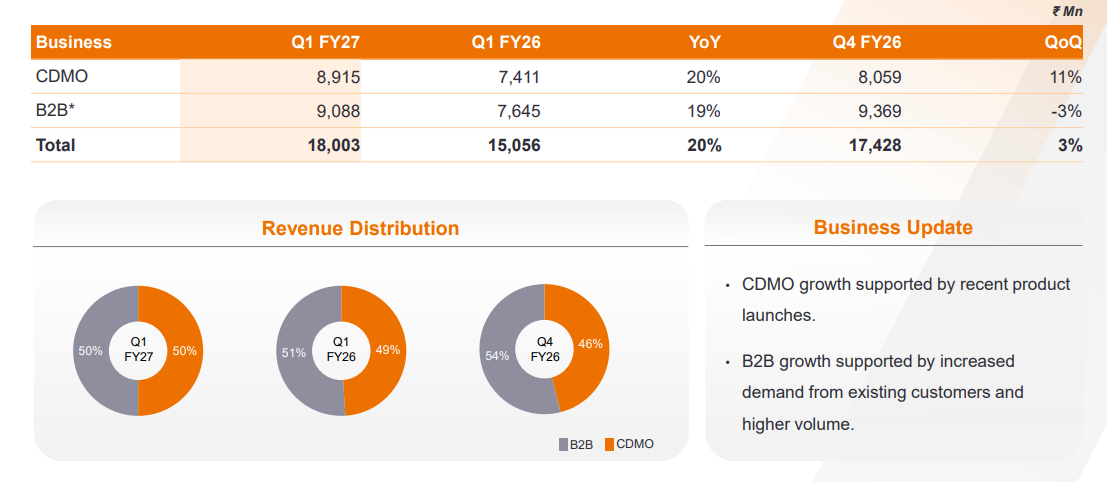
Gland Pharma is gradually moving beyond its traditional injectable business towards higher-entry-barrier CDMO opportunities. The company’s CDMO business contributed nearly 50% of sales and is one of its high-growth areas.
Gland Pharma Business Mix
Source: Company Presentation
The company is also building a pipeline beyond conventional injectables. It has signed a technology transfer agreement with a global specialty pharmaceutical company to supply 55 oncology and non-oncology injectable products. The commercial supplies are expected to begin in CY2029, with an estimated peak annual revenue potential of $90-100 million.
It has expanded its GLP-1 engagements to include semaglutide and tirzepatide for the US and European markets. To support these opportunities, the company has planned a capex of around ₹550 crore in FY27.
For institutions, therefore, the bet goes beyond the sharp improvement in Q1 earnings. If Gland succeeds in increasing its CDMO revenue share and strengthens its portfolio around complex and high-entry-barrier products, the business could become less dependent on conventional generics and build a more diversified earnings profile.
Gland Pharma: 1 Year Share Price
Source: Screener.in
Granules India: Growth, Margins, and a Cleaner Balance Sheet
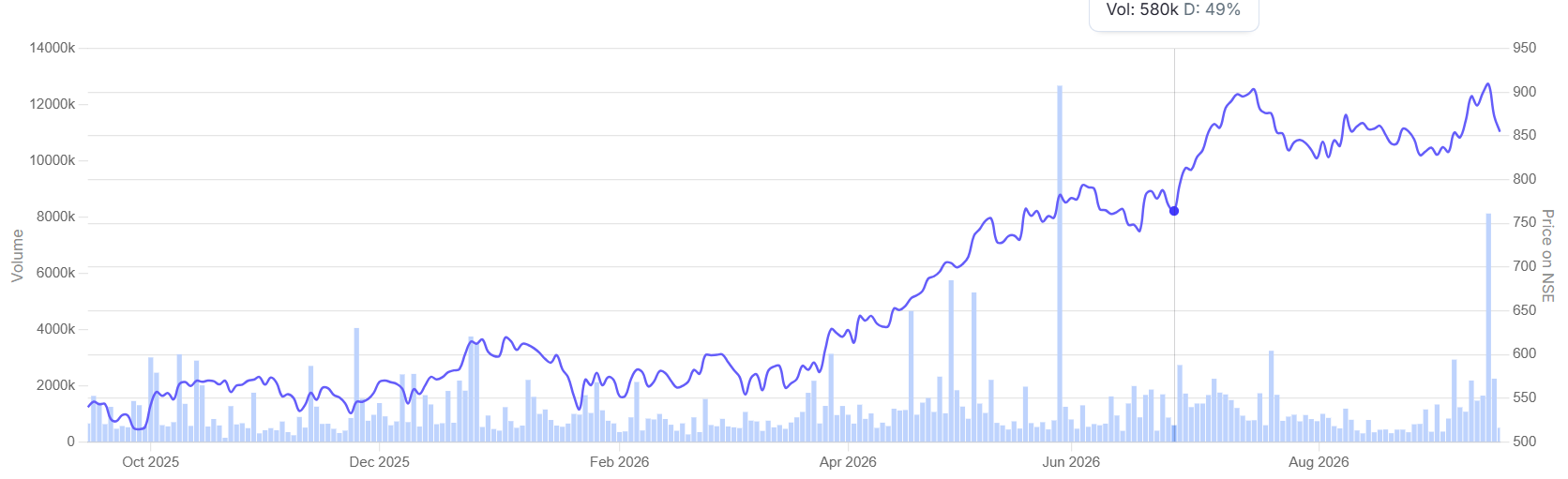
On September 11th, Chairman Krishna Prasad Chigirupati sold a nearly 7% stake for around ₹1,509 crore. The stake sale happened as the stock was trading close to a decade high at the time.
Capital Group’s Smallcap World Fund, BNP Paribas, Goldman Sachs, and Kotak Mahindra Life Insurance bought shares in the block deal. The transaction came only weeks after Granules reported its strongest quarter on record.
Granules India Financial Performance
| Period | Q1FY26 | Q1FY27 | YoY Growth (%) |
| Revenue (₹ crore) | 1,210 | 1,477 | 22.0% |
| Gross Margin (%) | 64.9% | 65.6% | 70bps |
| EBITDA | 246.7 | 338.9 | 37.4% |
| EBITDA Margin (%) | 20.4% | 22.9% | 250 bps |
| Net Profit (₹ crore) | 113 | 180 | 59.3% |
Source: Company Presentation
Q1FY27 revenue increased 22% YoY to ₹1,477 crore. EBITDA grew 37% to ₹339 crore, while profit after tax jumped 59.3% to ₹180 crore. Margins improved as well. Gross margin reached 65.6%, indicating the company’s pricing power. Net debt during the quarter fell to ₹101 crore.
Strengthening Complex Generics Business
Complex generics accounted for 50% of finished-dosage revenue in Q1FY27, up from 39% a year earlier. The company is also building a peptide CDMO business through its Senn Chemicals acquisition, with revenue from the segment more than doubling YoY to ₹60 crore.
Management is targeting PAT profitability for the peptide subsidiary in FY27 and a $50 million revenue run rate with 30%+ EBITDA margins over the next three years.
For institutions, therefore, the bet goes beyond the sharp improvement in Q1 earnings. It is whether Granules can sustain its shift towards complex generics and peptide CDMO while maintaining stronger margins.
Granules India: 1 Year Share Price
Source: Screener.in
Valuations: What are Investors Paying For?
The valuation contrast is clear. Jamna Auto trades at 20.7x earnings, below its five-year median of 24.4x. Gland Pharma, at 40.9x, is slightly above its 38.2x median, while Granules India at 32.7x is significantly above its 24.4x median.
Valuation Trend
| Metrics | Trailing P/E | 5-yr Median |
| Jamna Auto | 20.7 | 24.4 |
| Gland Pharma | 40.9 | 38.2 |
| Granules India | 32.7 | 24.4 |
Source: Screener.in (Data as of 16th September 2026)
This suggests the three institutional bets are not the same. Jamna combines improving fundamentals with a valuation below its historical median. Gland and Granules, however, are already trading above their historical multiples.
In other words, for Gland and Granules, institutional buying is less about buying at a low valuation and more about backing a longer-term improvement in earnings and business quality. The numbers will ultimately have to catch up if the momentum sustains.
Don’t Blindly Follow the Institutions
Institutional buying should not be treated as a signal to buy at whatever price. Each of these companies presents a different set of risks.
Gland Pharma’s US business has seen periods of volatility because of product launches and timing. Jamna Auto’s expansion into exports and the aftermarket still has to translate into meaningful revenue and profitability. Granules, meanwhile, continues to deal with a US FDA notice at one of its facilities.
Here’s another important point. The institutional buying itself is not the thesis. The business improvement is. If Jamna Auto cannot scale its new growth engines, Gland cannot grow its CDMO business, or Granules cannot sustain its earnings and margin improvement, large institutional investors alone will not change the outcome.
A large promoter stake sale will always deserve scrutiny. But the sale should not be viewed in isolation. The more important question is what is happening inside the business when institutions step in. Add these stocks to your watchlist and monitor how they execute their growth plans.
Disclaimer
Note: We have relied on data from www.Screener.in throughout this article. Only in cases where the data was not available, have we used an alternate, but widely used and accepted source of information.
The purpose of this article is only to share interesting charts, data points, and thought-provoking opinions. It is NOT a recommendation. If you wish to consider an investment, you are strongly advised to consult your advisor. This article is strictly for educational purposes only.
Deepan Datta has spent over a decade studying stocks and mutual funds. His passion is to uncover interesting stories in the financial markets and share them through his writings with investors at large. He is focused on delivering clear, easy-to-understand, and research-backed insights. Deepan began his career as a Research Associate at S&P Global, where he developed a strong foundation in financial research and data analysis.
Disclosure: The writer and his dependents do not hold the stocks discussed in this article.
The website managers, their employees (s), and contributors/writers/authors of articles have or may have an outstanding buy or sell position or holding in the securities, options on securities or other related investments of issuers and/or companies discussed therein. The content of the articles and the interpretation of data are solely the personal views of the contributors/ writers/authors. Investors must make their own investment decisions based on their specific objectives, resources and only after consulting such independent advisors as may be necessary.