



Hinduja Group’s Dividend Twins: One Payout, Two Very Different Sources
In the summer of 2014, the old Gulf Oil Corporation did something companies rarely do. It gave away its best business. The lubricants arm was carved out into a new listed company, Gulf Oil Lubricants India, and shareholders got 1 new share for every 2 they held. What stayed behind was later renamed GOCL Corporation, left with explosives factories and a large piece of land in Hyderabad.
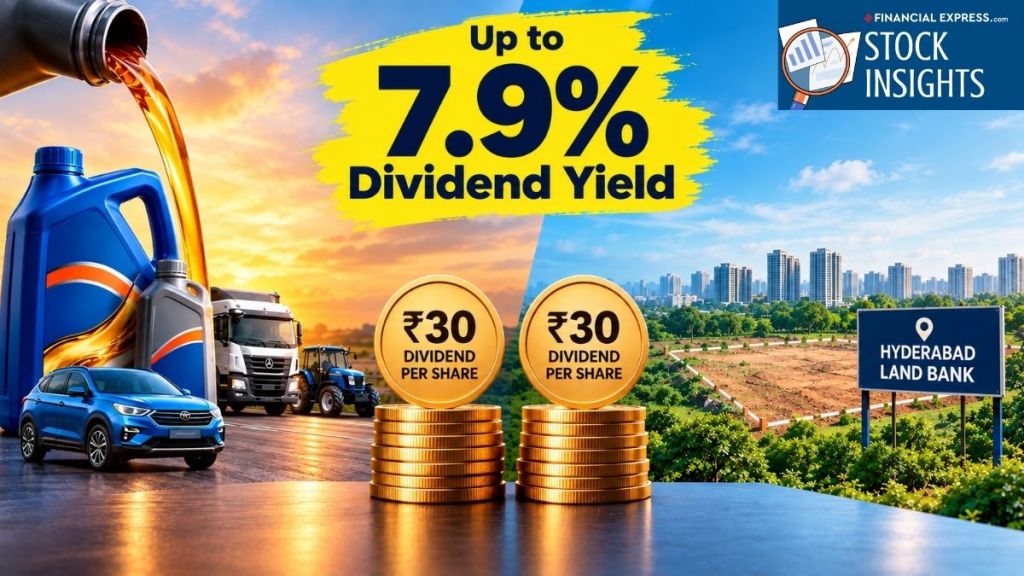
Twelve years on, the two Hinduja Group companies have landed on the same number. For FY26, both boards recommended a final dividend of Rs 30 per share, or 1,500% on a face value of Rs 2. Gulf Oil had already paid Rs 21 as an interim dividend in February, taking its total to Rs 51. At prices on 28th September 2026, that works out to a dividend yield of 7.9% for GOCL and 4.6% for Gulf Oil. Both are far above what most listed companies generally pay.
But a dividend is only as good as the business paying it. One of these payouts comes from a company selling more oil every quarter. The other comes from assets that can only be sold once. Let us dive in.
#1 Gulf Oil Lubricants: The Hinduja Dividend Stock Paying Out of Record Profits
Incorporated in 2008 as Hinduja Infrastructure, Gulf Oil Lubricants India took over its parent’s lubricants business in 2014 and listed on the exchanges on 31st July that year. It sells engine oils for bikes, cars, trucks and tractors, along with industrial and marine oils. It also sells AdBlue, the fluid that modern diesel trucks need to cut emissions, and a growing range of EV fluids.
With a market cap of Rs 5,500 cr, the child is now nearly three times the size of the parent. The promoter, Gulf Oil International (Mauritius), holds 66.85% as of June 2026. In September 2024 it sold about 4.47% of the company to widen the free float, and domestic mutual funds were among the buyers. Domestic institutions now own 8.70% and foreign investors 7.78%.
Margin Squeeze Meets Volume Expansion
The latest quarter was the best in the company’s history. Sales for the June 2026 quarter rose 33% to Rs 1,320 cr. Operating profit climbed to Rs 170 cr and net profit rose 32% to Rs 128 cr.
According to the company’s investor presentation filed with BSE, core lubricant volumes grew 17% over the year, with the retail, carmaker and industrial segments each posting double-digit gains. This came while the West Asia crisis squeezed supply and pushed up crude prices. The strain did show in one place. Gross margin slipped to 41.1% from 42.8% a year earlier, because price hikes take time to reach customers.
5-Year Financials for Gulf Oil Lubricants
| Financial Year | FY21 | FY22 | FY23 | FY24 | FY25 | FY26 | 5Y CAGR |
| Sales (Rs cr) | 1,652 | 2,192 | 2,999 | 3,284 | 3,554 | 3,991 | 19% |
| EBITDA (Rs cr) | 265 | 286 | 343 | 419 | 470 | 510 | 14% |
| Net Profit (Rs cr) | 200 | 211 | 232 | 308 | 362 | 351 | 12% |
Source: Screener.in (standalone figures)
EBITDA here refers to operating profit before other income. Sales have grown faster than profit, and the reason is margins. The operating margin was 16% in FY21 and has settled near 13% since. FY26 profit also dipped slightly because of a one-time charge of about Rs 23 cr linked to the new labour codes. Even so, return on capital employed stands at 27% and return on equity at 24%.
Why the Gulf Oil Dividend Looks Well Covered
This is where Gulf Oil earns its place in a dividend story. The payout ratio has climbed from 40% of profit in FY21 to 72% in FY26. The Rs 51 per share paid for FY26 adds up to roughly Rs 253 cr. Free cash flow in FY26 was Rs 323 cr, and it has stayed above Rs 250 cr in each of the last four years. In plain terms, the business is funding the dividend from its own cash.
One number deserves a watch. Borrowings have risen to Rs 511 cr from Rs 211 cr in FY21. That is still modest against shareholder funds of Rs 1,561 cr, but the direction is worth tracking.
Valuation: A Steady Earner the Market Has Refused to Re-rate
Here is the odd part. Over ten years, Gulf Oil’s profit has compounded at 14% a year, but its share price has compounded at just 4% a year. The five-year record is kinder, at 14% annually. As of closing on 28th September 2026, it traded at Rs 1,110, within a 52-week range of Rs 864 to Rs 1,289.
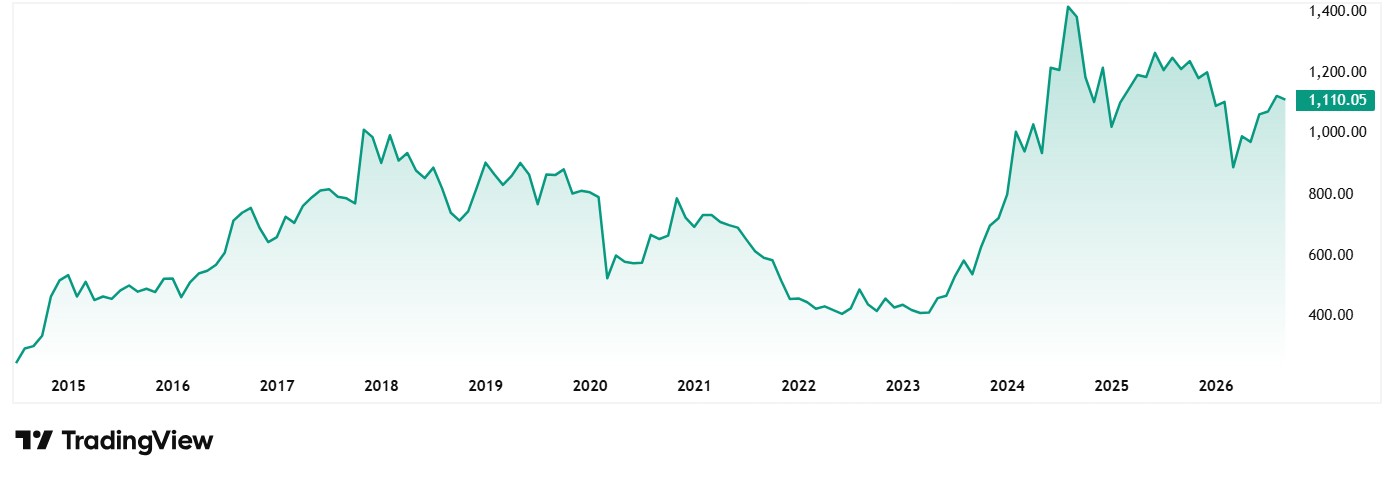
The share is trading at a PE of 14x against the current industry median of about 11x. Its dividend yield of 4.6% is the highest among the listed lubricant makers, ahead of Castrol India at 4.3%. The 10-year median PE for the company is 17x while the industry median for the same period is 15x.
#2 GOCL Corporation: From Explosives to Real Estate Monetization
Incorporated in 1961 as Gulf Oil Corporation, GOCL spent decades making explosives and detonators for India’s mines. That business is now gone. In November 2025 it sold its explosives subsidiary, IDL Explosives, to Apollo Defence Industries for Rs 107 cr. IDL had brought in Rs 623 cr of turnover in FY24, or 87% of the group’s sales that year.
What is left is a Rs 1,881 cr company with a small electronics unit, some property projects, and a large land bank in Hyderabad. The promoter holds 67.82%. That figure fell from 72.82% in the September 2025 quarter, the same quarter in which foreign investors went from 0.16% to 5.12%.
The Kukatpally Windfall Behind a Rs 1,522 Cr Profit
In March 2024, GOCL signed a deal with Squarespace Builders to monetise 264.5 acres at Kukatpally in Hyderabad for Rs 3,402 cr, in stages. According to its filing with BSE on 16th September 2026, 157 acres have been monetised so far. The rest is waiting for a mortgage on the land to be released.
5-Year Financials for GOCL Corporation
| Financial Year | FY21 | FY22 | FY23 | FY24 | FY25 | FY26 | 5Y CAGR |
| Sales (Rs cr) | 416 | 498 | 921 | 610 | 18 | 10 | NM |
| EBITDA (Rs cr) | 9 | 4 | -21 | -22 | -28 | -31 | NM |
| Net Profit (Rs cr) | 79 | 176 | 211 | 48 | 157 | 1,522 | NM |
Source: Screener.in (consolidated figures)
EBITDA here refers to operating profit before other income. None of the growth rates here mean much. Sales collapsed once the explosives unit was moved out of continuing operations.
The core business has made an operating loss every year since FY23. And the Rs 1,522 cr profit in FY26 rests on other income of Rs 1,671 cr, most of it booked in a single quarter. The June 2026 quarter shows the same pattern on a smaller scale: sales of Rs 4 cr, other income of Rs 59 cr, and a profit of Rs 40 cr.
The windfall did clean up the balance sheet. Borrowings fell from Rs 1,092 cr in FY25 to just Rs 1 cr in FY26. Book value now stands at Rs 634 per share, against a share price of Rs 380 as on 28th September 2026. The stock trades at about 0.6 times book.
Why the 7.9% GOCL Dividend Yield Is Already Gone
The Rs 30 dividend cost GOCL roughly Rs 149 cr, just 10% of FY26 profit. The year before, it paid Rs 10. More importantly, the record date for the Rs 30 payout was 22nd September 2026. Anyone who buys the stock now will not receive it. The 7.9% yield on stock screens is a look back, not a promise.
GOCL-HNPCL Merger: A 1,040 MW Power Plant Walks In
The bigger story is what GOCL is about to become. In December 2025, its board approved the merger of Hinduja National Power Corporation (HNPCL), which runs a 1,040 MW thermal power plant in Visakhapatnam, into GOCL. HNPCL shareholders get 206 GOCL shares for every 10,000 HNPCL shares. The promoter’s stake would rise to 74.87%. For scale, HNPCL reported revenue of Rs 2,437 cr in FY25, while GOCL reported Rs 18 cr.
The deal has not been smooth. On 30th July 2026, the NCLT Amaravati bench threw out the first application, citing mismatches in disclosures. Then, as per the company’s BSE filing, the NCLAT set that order aside on 25th September 2026. It directed that shareholder and creditor meetings be held by 5th October 2026.
GOCL has also disclosed corporate guarantees of Rs 1,316 cr given to HNPCL and Hinduja Energy India. These were not first processed as related party transactions and are now being regularised after the fact.
Why GOCL’s 7x PE Ratio is a Misleading Metric
The share price of GOCL was about Rs 266 5 years ago and on the 28th of September 2026 it closed at Rs 379. Over five years, the stock has compounded at 7% a year.
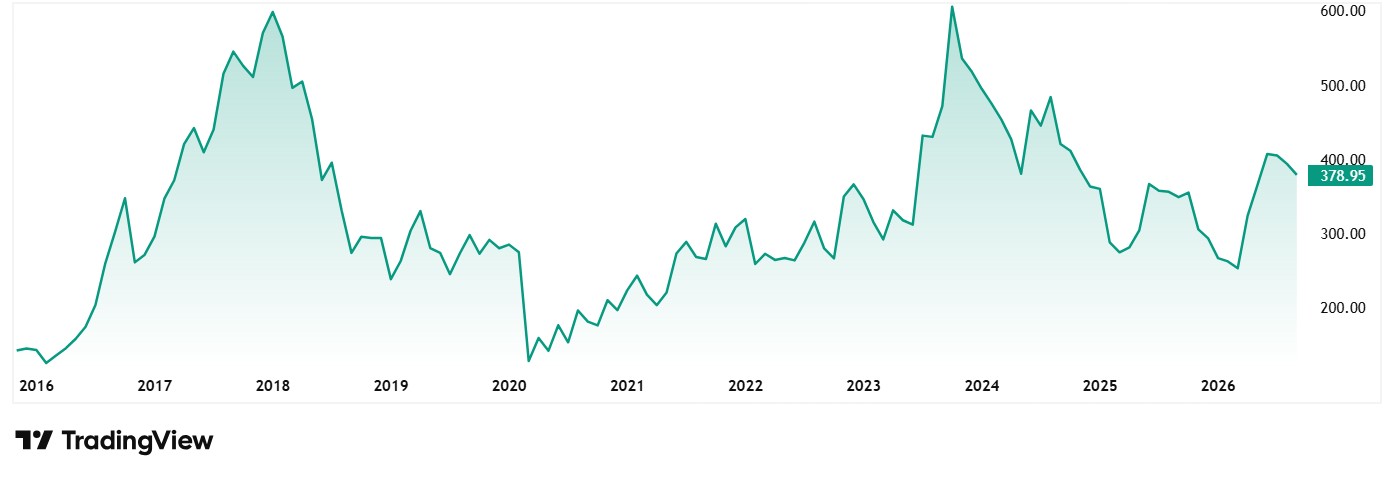
As for valuation, the share trades at a PE of 7x against the current industry median of about 78x. That comparison flatters GOCL, because the company is still classified with explosives makers even though it no longer makes explosives, and its earnings are one-off. The 10-year median PE for the company is 24x while the industry median for the same period is 23x.
Recurring Cash vs One-Time Windfall
Same group, same history, same Rs 30 cheque. Yet one dividend is the product of a business that sells more oil every year and turns most of it into cash. The other is the product of land sales that will eventually run out.
Gulf Oil’s risks are ordinary ones: crude prices, thin margins, and rising debt. GOCL’s are of a different kind. Its future dividends now depend on the rest of the Kukatpally money, and on a thermal power plant that brings its own debt and its own history into the company. Shareholders get their say at the tribunal-ordered meetings due by early October.
A high dividend yield is a good place to start looking, not a reason to stop. It may be worth choosing to add both stocks to a watchlist and track the merger vote and Gulf Oil’s margins over the next few quarters.
Disclaimer
Note: We have relied on data from www.Screener.in and www.trendlyne.com throughout this article. Only in cases where the data was not available, have we used an alternate, but widely used and accepted source of information, including filings made available on the BSE website.
The purpose of this article is only to share interesting charts, data points and thought-provoking opinions. It is NOT a recommendation. If you wish to consider an investment, you are strongly advised to consult your advisor. This article is strictly for educative purposes only.
Suhel Khan has been a passionate follower of the markets for over a decade. During this period, He was an integral part of a leading Equity Research organisation based in Mumbai as the Head of Sales & Marketing. Presently, he is spending most of his time dissecting the investments and strategies of the Super Investors of India.
Disclosure: The writer and his dependents do not hold the stocks discussed in this article.
The website managers, its employee(s), and contributors/writers/authors of articles have or may have an outstanding buy or sell position or holding in the securities, options on securities or other related investments of issuers and/or companies discussed therein. The content of the articles and the interpretation of data are solely the personal views of the contributors/ writers/authors.