



Lithium-based batteries still hold the global electric vehicle (EV) market despite advances in battery chemistry. One of those types is Lithium Iron Phosphate (LFP) batteries, which made up over 55% of global EV battery demand in 2025, according to the International Energy Agency. The reason for their greater adoption is low cost, durability, and safety compared to other options.
But there is a major weakness in the supply chain for LFP batteries. The deployment is still highly dominated by China, which represents nearly 98% of global LFP CAM (cathode active material) production.
This is an opportunity for Indian specialty chemical companies that are looking to enter the battery materials supply chain. But building a scalable LFP manufacturing business isn’t easy. Companies must overcome technology challenges, become cost-competitive, and develop solid manufacturing processes.
Why is LFP Manufacturing Difficult?
While LFP batteries score high on cost-effectiveness, producing them requires precise control over particle size, structure, and processes. The quality of the final material determines how well a battery stores energy.
One of the key parameters to determine battery quality is compaction density, which tells you how much active material you can squeeze into a volume. More compact density means more energy can be stored without increasing the size of the cell.
Chinese manufacturers have reached a cell compaction density of around 2.6 g/cm³ and are working towards 2.7 g/cm³ for high-performance EV applications. Historically, LFPs are known for having low compaction densities of around 2.2 to 2.4 g/cm³.
The technological barrier for new manufacturers is technical know-how to reach these levels. Also, the availability of battery-grade iron phosphate (FePO₄), a key input for LFP cathode material, is another challenge.
How Did China Make It Possible?
China’s cost advantage has partly come from using ferrous sulphate, which is a byproduct of titanium dioxide manufacturing. Producing iron phosphate using this process relies heavily on ammonia-based processes, which generate significant wastewater and ammonium sulphate byproducts.
For manufacturers outside China, developing a cost-effective and environmentally compliant production process is therefore important. This is where Indian specialty chemical companies are trying to build an advantage.
#1. Sudeep Pharma: Betting on Battery-Grade Iron Phosphate
Sudeep Pharma has established a specialized subsidiary, Sudeep Advanced Materials (SAM), for manufacturing battery-grade iron phosphate, a key precursor for LFP cathode active material.
Positioning to Benefit from Global Supply Chain Diversification
The company’s manufacturing differentiation lies in its manufacturing process and sourcing strategy. It has developed a proprietary technology that is less polluting, does not use ammonia, and avoids generating conventional byproducts. This could give it an advantage as global battery manufacturers look for cleaner and more sustainable supply chains.
Sudeep is also positioning the business to meet Foreign Entity of Concern (FEOC) requirements under the US Inflation Reduction Act (IRA). It does not source phosphoric acid from China, relying instead on domestic suppliers and imports from other countries.
Early Commercial Traction
Sudeep has upgraded its existing pharmaceutical facility to manufacture 5,000 MT of battery-grade iron phosphate. It has already secured purchase orders of around 700 MT.
The company is also building a dedicated battery materials facility at Dahej, Gujarat, at an estimated project cost of ₹300 crore, funded through internal accruals and debt. The first phase, with a planned capacity of 25,000 MT, is expected to be commissioned by early 2027.
Global Customer Approvals
SAM is engaging with 44 customers across South Korea, Japan, Europe and the US. At the end of June 2026, it had received eight product approvals and signed memorandums of understanding (MoUs) with two leading South Korean CAM manufacturers.
Management is considering increasing capacity to 200,000 MT by 2030 or 2031, depending on discussions with customers and projected demand. However, the revenue opportunity is dependent on capacity utilization. Management believes that at a production level of 100,000 MT and an estimated selling price of $2 per kg, revenue potential from this business could be in the range of ₹1,600-1,800 crore. This is much higher than the current revenue run-rate.
Strong Core Business Provides an Operating Base
Sudeep has an existing specialty chemicals and nutrition business that gives it a strong base of revenue and profitability.
Annual Financial Performance
| Particulars | FY25 | FY26 | YoY Change (%) |
| Revenue from Operations (₹ cr) | 502.0 | 642.3 | 27.9% |
| EBITDA Margin (%) | 37.8% | 34.6% | -320 bps |
| Net Profit (₹ cr) | 138.7 | 174.3 | 25.7% |
| Return on Capital Employed (%) | 30.03% | 22.52% | -751 bps |
Source: Company Presentation
In FY26, consolidated revenue grew 28% YoY to ₹642.3 crore while Earnings Before Interest, Tax, Depreciation and Amortization (EBITDA) was ₹221.9 crore, translating to a margin of 34.6%, down from 37.8% a year ago.
Return on Capital Employed was down by 751 bps to 22.52% during the period. The company said the decline was due to continuing investments in the greenfield project.
Quarterly Financial Performance
| Particulars | Q1FY26 | Q1FY27 | YoY Change (%) |
| Revenue from Operations (₹ cr) | 124.9 | 158.3 | 26.7% |
| EBITDA Margin (%) | 35.1% | 34.7% | -40 bps |
| Net Profit (₹ cr) | 31.3 | 40.6 | 29.7% |
Source: Company Presentation
The momentum continued in Q1FY27, with revenue growing 27% to ₹158.3 crore and EBITDA margin remaining healthy at 34.7%. For investors, the key monitorable is whether Sudeep can convert its customer approvals and initial orders into repeat commercial volumes.
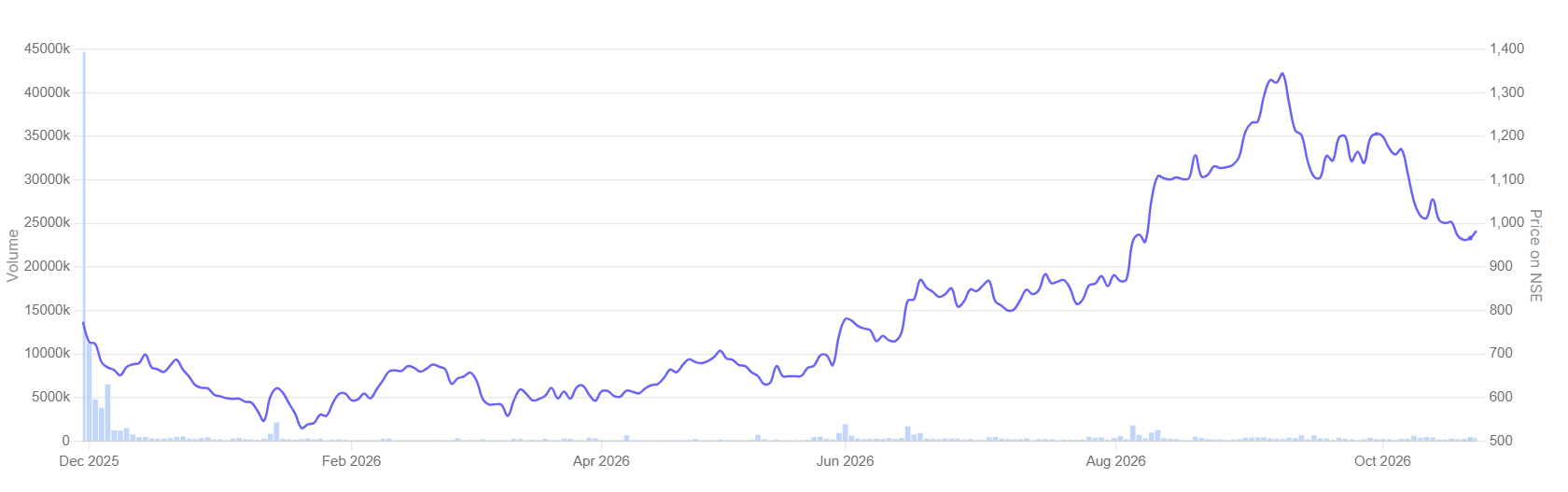
Sudeep Pharma Stock Chart
Source: Screener.in
#2. Gujarat Fluorochemicals: Developing an Integrated Battery Materials Business
Gujarat Fluorochemicals (GFCL) is leveraging its expertise in fluorine chemistry to foray into the battery materials business. Through its subsidiary GFCL EV, the company is building up a portfolio of materials that could contribute to about 70% of the bill of materials cost of an LFP battery cell. It includes cathode active materials, anodes, separators and electrolytes.
This allows GFCL to participate across multiple stages of the battery supply chain as opposed to a single product.
₹6,000 Crore Investment in Battery Materials
GFCL EV has a planned capex of around ₹6,000 crore, and GFL has committed the amount till FY28. The company targets asset turns of 2x and EBITDA margins of over 25% from the business.
GFL has earmarked a total Capex of ₹3,150 crore for FY27, out of which ₹2,300 crore is for battery materials. The investment will support expansion across its current portfolio and the launch of natural graphite anode active materials.
Commercialisation Progressing Across Battery Materials
GFL’s battery materials portfolio is at different stages of customer qualification. Major global electrolyte manufacturers have approved its lithium hexafluorophosphate (LiPF6) and are ramping up commercial sales against contracted orders.
Its LFP cathode samples have also received initial customer approvals, with final qualification expected by the end of Q3FY27. The company is initially focusing on the BESS market with standard-density grades where space constraints are not as critical as in EV applications. The qualification for battery-grade PVDF binder is also nearing completion.
Core Chemicals Business Provides Operating Support
GFL’s existing business continues to generate healthy growth. In FY26, revenue from operations increased by 5.5% to ₹4,996 crore, but EBITDA increased by 11.6%. Return on capital employed (ROCE) improved by 153 bps to 11.93%.
Annual Financial Performance
| Particulars | FY25 | FY26 | YoY Change (%) |
| Revenue from Operations (₹ cr) | 4,737.5 | 4,996.0 | 5.5% |
| EBITDA (₹ cr) | 1,157.0 | 1,291.0 | 11.58% |
| EBITDA Margin (%) | 24.4% | 25.8% | 140 bps |
| Net Profit (₹ cr) | 546.0 | 573.8 | 5.1% |
| Return on Capital Employed (%) | 10.40% | 11.93% | 153 bps |
Source: Company Presentation
Revenue grew 24% YoY to ₹1,588 crore in Q1FY27. Fluorochemicals revenue was up 52% mainly on R32 refrigerants. R32 refrigerant prices have surged massively worldwide, following tightening supply ceilings and surging demand.
Net profit for the quarter was up 20.3% YoY to ₹219 crore. Working capital days also reduced to 149 in Q1FY27 from 192 in FY26, resulting in ROCE reaching 16.63%.
Quarterly Financial Performance
| Particulars | Q1FY26 | Q1FY27 | YoY Change (%) |
| Revenue from Operations (₹ cr) | 1,281.0 | 1,588.0 | 24.0% |
| EBITDA Margin (%) | 27.0% | 27.0% | No Change |
| Net Profit (₹ cr) | 182.0 | 219.0 | 20.3% |
Source: Company Presentation
For investors, the key monitorable is whether GFL can translate its sizeable battery materials investments into commercial volumes. While the existing chemicals business provides an operating base, the returns on the new investments will depend on customer qualifications, capacity utilisation and manufacturing economics.
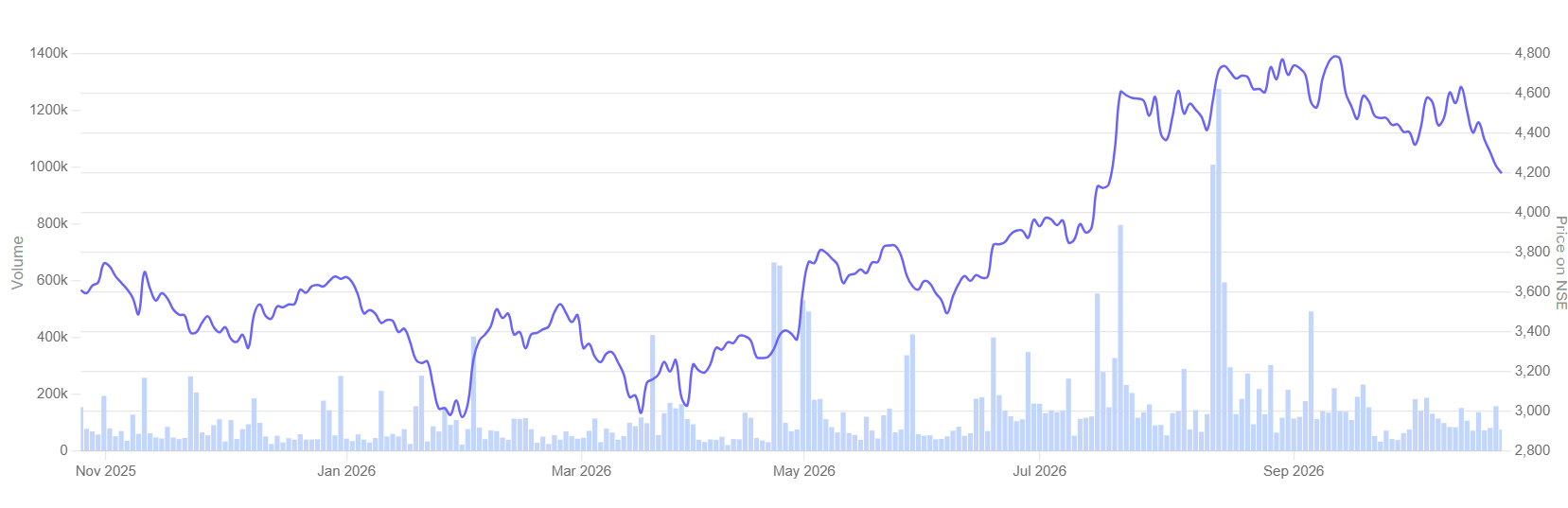
Gujarat Fluorochemicals: 1 Year Stock Chart
Source: Screener.in
Valuation Realities: Are Current P/E Multiples Justified?
Sudeep Pharma trades at 60.8x trailing earnings, against the industry average of 33x. Its existing pharmaceutical, specialty chemicals, and nutrition business currently supports its earnings. The valuation also factors in growth expectations from its battery-grade iron phosphate venture, which is yet to make a sizeable contribution to revenue or profitability.
P/E Trend
| Particulars | Trailing P/E | 5 Yr P/E Median | Industry PE |
| Sudeep Pharma | 60.8 | – | 33 |
| Gujarat Fluorochemicals | 74.6 | 55.9 | 25.2 |
Source: Screener.in (as of 27th October 2026)
Gujarat Fluorochemicals trades at 74.6x, above its five-year median of 55.9x and industry P/E of 25.2x. Its valuation reflects expectations from both its core fluorochemicals business and the emerging battery materials portfolio. In both cases, execution will determine whether the growth expectations embedded in their valuations are justified.
Breaking China’s Grip on the LFP Supply Chain
Geopolitical efforts to diversify battery supply chains away from China, supported by initiatives such as the US Inflation Reduction Act and the EU’s Critical Raw Materials Act, could create opportunities for Indian specialty chemical companies. However, the opportunity alone does not guarantee returns. Investors need to assess whether companies can convert technological capabilities, customer approvals, and planned investments into commercial volumes and profitable growth. Add these stocks to your watchlist and monitor how they execute their growth plans.
Disclaimer
Note: We have relied on data from www.Screener.in throughout this article. Only in cases where the data was not available, have we used an alternate, but widely used and accepted source of information.
The purpose of this article is only to share interesting charts, data points and thought-provoking opinions. It is NOT a recommendation. If you wish to consider an investment, you are strongly advised to consult your advisor. This article is strictly for educative purposes only.
Deepan Datta has spent over a decade studying stocks and mutual funds. His passion is to uncover interesting stories in the financial markets and share them through his writings with investors at large. He is focused on delivering clear, easy to understand and research-backed insights. Deepan began his career as a Research Associate at S&P Global, where he developed a strong foundation in financial research and data analysis.
Disclosure: The writer and his dependents do not hold the stocks discussed in this article.
The website managers, their employees (s), and contributors/writers/authors of articles have or may have an outstanding buy or sell position or holding in the securities, options on securities or other related investments of issuers and/or companies discussed therein. The content of the articles and the interpretation of data are solely the personal views of the contributors/ writers/authors. Investors must make their own investment decisions based on their specific objectives, resources and only after consulting such independent advisors as may be necessary.