




India’s Battery Energy Storage System opportunity is moving into a much larger phase. The government has approved ₹50,000 crore for deploying 50 gigawatt-hours (GWh) of Battery Energy Storage Systems (BESS) under the Green Energy Corridor Phase-III scheme.
The broader ₹1.86 lakh crore programme is designed to support the evacuation of up to 135 GW of renewable energy by FY33. The broader programme also includes ₹1.36 lakh crore for intra-state transmission systems, creating opportunities for transmission companies. We previously covered three transmission stocks positioned to benefit from this spending.
Macro Context: How Green Energy Corridor Phase-III Fuels Grid Stability
But the opportunity is moving beyond transmission. As solar and wind energy capacity expands, BESS is becoming critical to manage intermittency, meet peak-hour demand and supply power during non-solar hours. The ₹50,000 crore allocation for BESS could accelerate investments across the storage ecosystem.
We previously covered three stocks with some of the highest ongoing BESS capacity in India. Building on that theme, this article looks at three other companies positioned to benefit from the BESS opportunity.
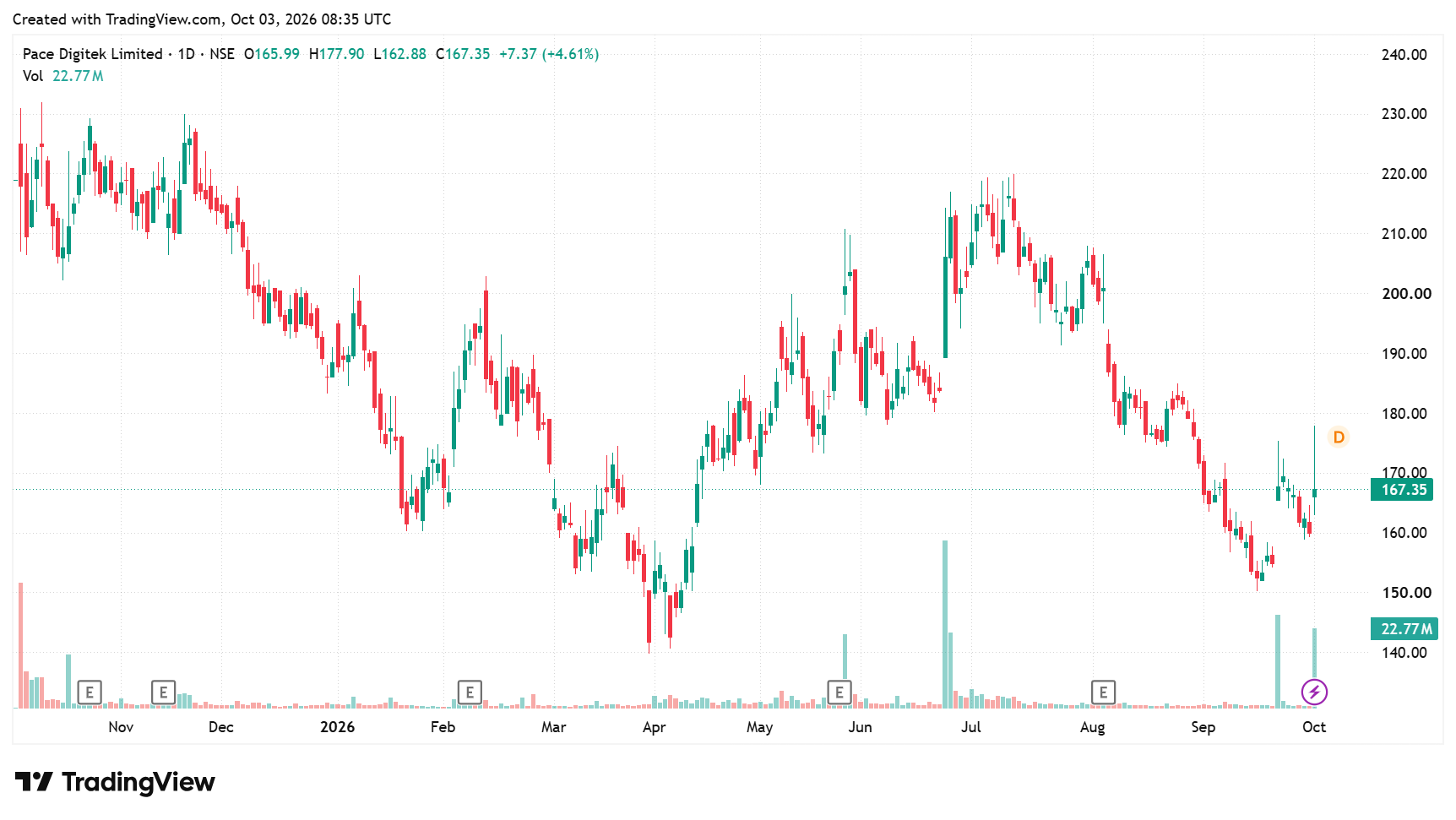
#1 Pace Digitek
Pace Digitek operates across Engineering, Procurement, and Construction (EPC) and Operations & Maintenance within the Telecom & ICT, Energy and BESS sectors. The BESS platform is a primary driver of the company’s growth. It links in-house component and container manufacturing with turnkey project execution and post-commissioning maintenance.
BESS Integration Engine: Why In-House Manufacturing Anchors Pace Digitek’s 10 GWh Push
The company operates a manufacturing capacity of 5 GWh through two 2.5 GWh production lines. Pace Digitek is adding another 5 GWh manufacturing line, which is expected to become operational by the third quarter of FY27. This will bring the company’s total capacity to 10 GWh. BESS products yield an EBITDA (Earnings Before Interest, Tax, Depreciation, and Amortisation) margin of 13% to 15%.
Import Substitution: How ₹300-Cr Container Capex Unlocks a 2,000-Unit Annual Run Rate
Pace Digitek has set up its own container manufacturing facility to substitute imported containers. Production was scheduled to start in September 2026. It will address a bottleneck in domestic supply. The company is investing ₹300 crore across Phase 1, Phase 2, and container fabrication. Pace holds an executable energy order book of ₹8,453 crore (5.10 GWh executable visibility) as of June 30.
The company has manufactured and supplied over 300 grid-scale BESS containers. At full 10 GWh capacity, output will reach 2,000 containers per year. It is ramping up production, which is up from over 90 containers supplied in Q1FY27 to a target of 210 containers in Q2FY27. A BESS container is a ready-made, plug-and-play energy system container.
As of June 30 2026, the company held an order book of ₹10,803 crore. Management has guided for revenue of ₹3,200-3,400 crore for FY27. Following a Q1FY27 revenue of ₹555 crore, execution is expected to step up sharply to ₹900-1,000 crore in Q2. Management further plans to scale revenue to ₹4,000-₹4,200 crore by FY28.
Pace Digitek: Balancing High-Volume Capex Against Blended Margin Pressure
Financially, the company’s revenue grew 51.3% year-on-year to ₹555.4 crore in Q1FY27. This was primarily driven by the Energy business, which contributed 79.5% of revenue due to project execution across BESS and renewable energy deployments. EBITDA increased by 7.5% to ₹86.1 crore in Q1FY27, as margin fell by 630 bps to 15.5%. Net profit grew 14.3% to ₹62.5 crore.
The energy business yields a lower margin (13-15% product EBITDA / 7-10% EPC) than the telecom business (20.5%). Due to the telecom division’s revenue contribution declining to 20.5%, the overall blended operating margin contracted.
#2 Vikram Solar
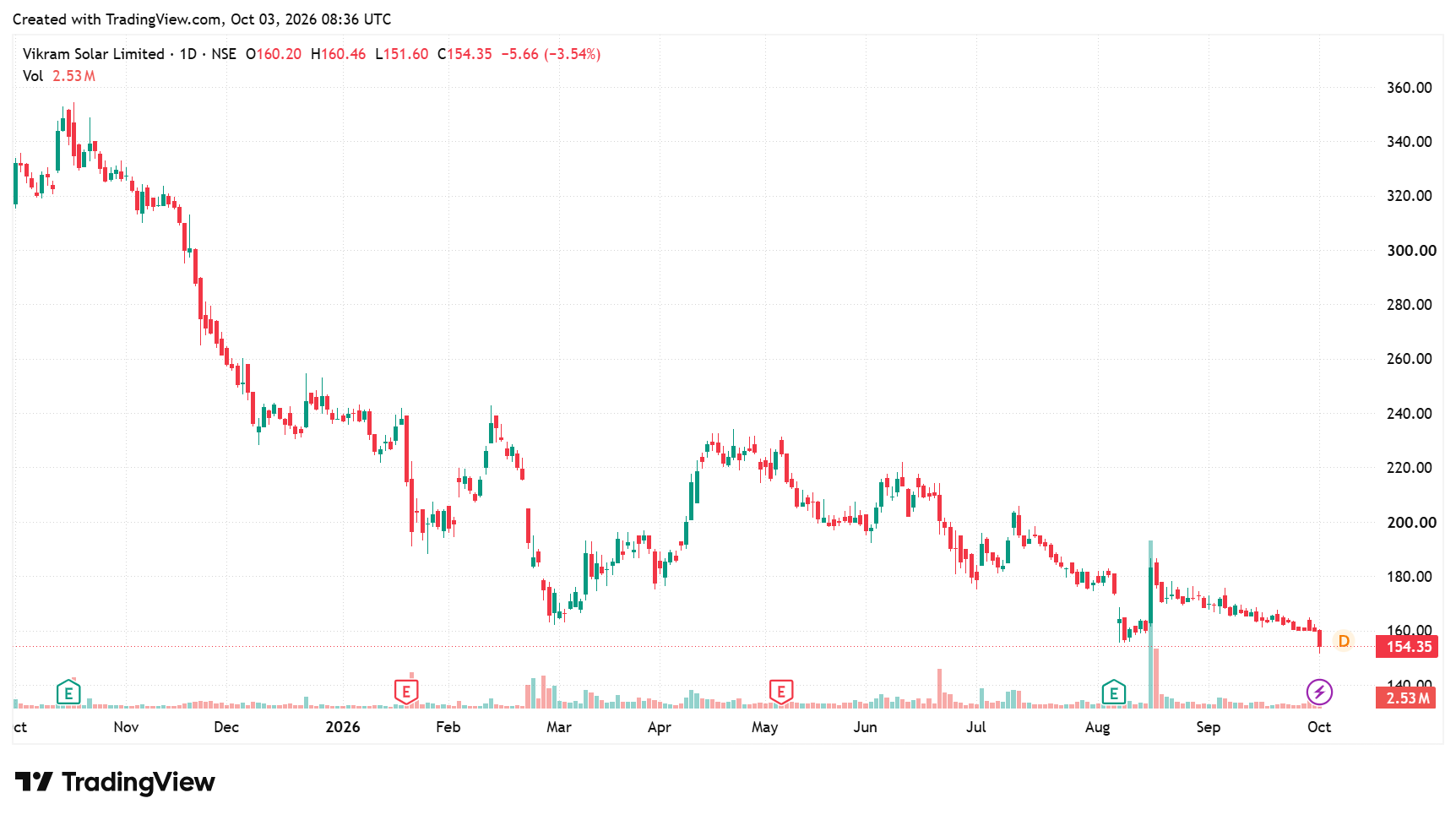
Vikram Solar is a major Indian solar photovoltaic (PV) module manufacturer. It currently has an operational module manufacturing capacity of 15.5 GW. The company is consolidating its manufacturing supply chain into a single contiguous hub at Gangaikondan, Tamil Nadu. In the BESS segment, the company designs, manufactures, assembles, and deploys energy storage systems.
From PV Modules to PowerHive: Why Vikram Solar Is Stacking a 15 GWh BESS Moat
The company’s core offerings include Utility-Scale Storage Solutions. The business has already executed its first 20 megawatt-hour (MWh) utility-scale order. Vikram Solar has entered the commercial and industrial (C&I) and utility-scale energy storage solutions sector through its newly launched brand, “PowerHive.”
The BESS business complements Vikram Solar’s solar PV manufacturing. By offering battery storage with solar modules, it provides complete, dispatchable clean energy solutions. The company aims to build a 15 GWh integrated cell manufacturing and assembly ecosystem by FY30. It plans to capture full in-house value across the storage value chain.
Backwards Integration Timeline: How Ingot-to-LFP Capex Aims to Insulate Supply by FY30
An automated module facility with a capacity of 6 GW was commissioned in June 2026. The 9 GW solar cell facility plans to roll out its first cell in Q4FY27. Management projects 40-50% utilisation for FY28. A further 3 GW Phase 2 cell line with next-gen technology is planned for FY28. The proposed 9 GW wafer and ingot plant is slated for commissioning in FY29.
In-house manufacturing and assembly operations are currently under construction. It is setting up a 15 GWh integrated BESS ecosystem. Of this, a 7.5 GWh BESS assembly plant is scheduled to be commissioned in March 2027. It is also setting up an LFP Cell manufacturing facility.
A 7.5 GWh LFP Gen2 large-format cells manufacturing facility is targeted for Q4FY29. Another 7.5 GWh facility is planned for FY30.
Vikram Solar: Non-DCR Headwinds and the Road to FY28 Recovery
From a financial perspective, revenue rose by 37.8% to ₹1,563 crore, driven by a 31.7% increase in dispatched volume to 1,006 MW. However, EBITDA fell by 47.9% to ₹126 crore as margins contracted by 1,324 bps to approximately 8.1%. Net profit declined by 85.1% to ₹19.8 crore.
Raw material inflation, consumption of higher-cost Chinese cell inventory, policy uncertainty regarding ALMM-2 timelines and intense domestic market competition weighed on margins. Going forward, management anticipates higher-volume dispatches and margin improvements in Q2 and H2FY27.
Domestic cell content requirement (DCR) and cost-reduction measures could support margins. DCR module dispatches (higher realisations) are expected to grow 2x to 2.5x quarter-on-quarter. As of June 30 2026, Vikram Solar’s order book stood at 7.9 GW. The entire order book consists of Non-DCR products.
#3 Premier Energies
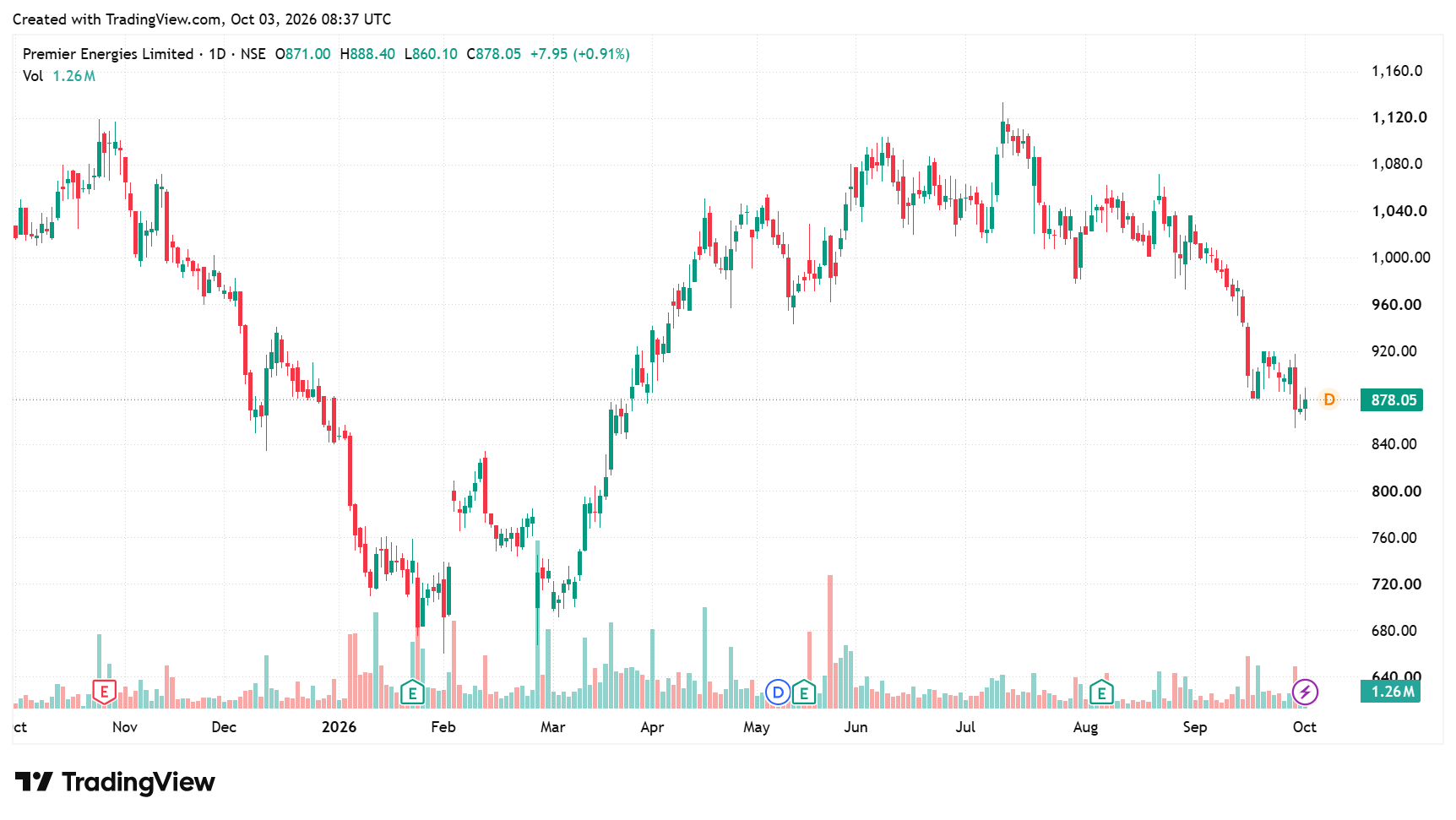
Premier Energies is an integrated solar cell and module manufacturer in India. It operates 3.6 GW of solar cell manufacturing capacity, which is expanding to 10.6 GW. The company also possesses 11.1 GW of solar module manufacturing capacity. Premier assembles DCR-compliant integrated solar modules, which yield higher margins than cell sales.
Upstream Integration Engine: 10 GW Ingot-Wafer Capex
To optimise manufacturing costs, secure raw materials, and capture higher operating leverage, it is expanding into upstream components. It is setting up 10 GW of ingot-wafer manufacturing capacity. The company is also setting up an in-house capacity of 18,000 MT for structural module framing.
Beyond Solar to 12 GWh BESS: How Storage and Transformers Aim for 25% of FY28 Revenue
Premier Energies is expanding strategically into Battery Energy Storage Systems (BESS) as part of its diversification strategy beyond solar cells and modules. The company is building plants with a capacity of 12 GWh for BESS containers. These plants are currently under construction. Construction of the first 6 GWh plant (Phase 1) is currently underway.
It actively seeks a technology partner for its container-based storage solutions. Management plans to finalise the partnership within 2-3 months. Apart from BESS, new growth drivers include transformers and inverters, as well as vertically integrated solar cell/module capacity.
Management estimates related products and services (including BESS and transformers) to contribute approximately 25% to revenue by 2028.
Premier Energies: 29% Operating Margins Anchor Aggressive Downstream Diversification
From a financial perspective, revenue grew 35.3% year-on-year to ₹2,462.6 crore in Q1FY27. Operating EBITDA grew 30.3% to ₹714.4 crore, while margin stood at 29%. Net profit surged 53.3% to ₹471.9 crore. Management has consistently guided to maintain margin in the range of 29% to 30%.
The company’s order book stood at ₹15,000 crore as of Q1FY27. As new cell and transformer capacities come online, management anticipates operational scale and financial performance to improve. Of this, revenue from the upcoming 7 GW TOPCon solar cell facility was expected to begin accruing in September 2026.
A quick look at BESS Capacity, Order Book and Q1FY27 Financial Snapshot:
| Particulars | Pace Digitek | Vikram Solar | Premier Energies |
| BESS Capacity | 10 GWh | 15 GWh | 12 GWh |
| Current BESS status | 5 GWh operational | Under construction | Under construction |
| Planned Capacity | 10 GWh by Q3 FY27 | 15 GWh integrated ecosystem | 12 GWh BESS plants |
| Cell manufacturing | Planned | 7.5 GWh LFP Gen2 | NA |
| Total order book | ₹10,803 crore | 7.9 GW | ₹15,000 crore |
| Q1FY27 Revenue | ₹555 crore | ₹1,563 crore | ₹2,463 crore |
| Q1FY27 EBITDA margin | 15.5% | 8.1% | 29.0% |
| Q1FY27 Net profit | ₹62.5 crore | ₹19.8 crore | ₹471.9 crore |
Together, the three companies are targeting 37 GWh of BESS capacity. This is backed by combined reported order books of ₹25,803 crore plus Vikram Solar’s 7.9 GW order book.
Comparative Multiples: Why Strong ROCE Trumps Trailing Margins
Premier Energies has a higher Return on Capital Employed (ROCE) and Return on Equity than Pace Digitek and Vikram Solar. Valuation-wise, all three companies are now trading at a discount to the industry median. All three lack at least three years of historical data, so we have not assessed their valuations against their historical median.
| Peer Comparison (X) | ||||
| Company | Price-to-Earnings Multiple | Return Ratios | ||
| Company | Industry | ROCE (%) | ROE (%) | |
| Pace Digitek | 12.0 | 13.8 | 21.4 | 17.6 |
| Vikram Solar | 15.5 | 27.2 | 30.6 | 21.4 |
| Premier Energies | 23.9 | 27.2 | 32.7 | 41.0 |
| Source: Screener.in (Data as of October 01 2026) | ||||
BESS is becoming a critical layer of India’s power infrastructure as renewable generation scales up. The policy push could create a sizeable opportunity for companies across the storage value chain. Pace Digitek, Vikram Solar and Premier Energies are approaching this opportunity from different angles.
Pace Digitek is scaling BESS manufacturing and project execution, Vikram Solar is building an integrated storage ecosystem, while Premier Energies is expanding into BESS alongside its solar and transformer businesses. The opportunity now lies in tracking how effectively these companies convert their planned capacities into orders, revenue, margins and profitability.
At the sector level, the biggest risk is that BESS capacity additions take longer than expected to translate into commercial orders. Thus, the allocation does create the opportunity, but the return from the project depends on execution capabilities.
You can keep these names on your watchlist to track their execution.
Disclaimer:
Note: Throughout this article, we have relied on data from http://www.Screener.in and the company’s investor presentation. Only in cases where the data was unavailable have we used an alternative, widely used and accepted source of information.
The purpose of this article is only to share interesting charts, data points, and thought-provoking opinions. It is NOT a recommendation. If you wish to consider an investment, you are strongly advised to consult your advisor. This article is strictly for educational purposes only.
About the Author: Madhvendra has been deeply immersed in the equity markets for over seven years, combining his passion for investing with his expertise in financial writing. With a knack for simplifying complex concepts, he enjoys sharing his honest perspectives on startups, listed Indian companies, and macroeconomic trends.
A dedicated reader and storyteller, Madhvendra thrives on uncovering insights that inspire his audience to deepen their understanding of the financial world.
Disclosure: The writer and his dependents do not hold the stocks discussed in this article.
The website managers, its employee(s), and contributors/writers/authors of articles have or may have an outstanding buy or sell position or holding in the securities, options on securities, or other related investments of issuers and/or companies discussed therein. The articles’ content and data interpretation are solely the personal views of the contributors/ writers/authors. Investors must make their own investment decisions based on their specific objectives, resources, and only after consulting such independent advisors as may be necessary.