



The global green hydrogen market is projected to grow from about $12 billion in 2025 to $231 billion (₹22 lakh crore) by 2035 at a 34% CAGR. This growth reflects the expected demand for cleaner fuels across industries where reducing carbon emissions through electrification can be difficult.
India is also preparing for this transition. Under the National Green Hydrogen Mission (NGHM), the government aims to achieve annual green hydrogen production of 5 million tonnes (MTPA) by 2030. Meeting this target could require substantial additions to renewable power generation, electrolyser manufacturing, storage and transportation infrastructure.
The NGHM also points to sectoral investments of around $89 billion. To support domestic manufacturing and production, the government has introduced the Strategic Interventions for Green Hydrogen Transition (SIGHT) programme, with an outlay of ₹17,490 crore. This includes ₹4,440 crore for electrolyser manufacturing and ₹13,050 crore for green hydrogen production.
The mission also supports pilot projects, research and development, and the development of hydrogen hubs to help establish a domestic supply chain. The opportunity extends beyond companies directly producing green hydrogen. Electrolyser manufacturers and renewable energy developers could also participate in this investment cycle.
Against this backdrop, this article examines 3 companies entering the green hydrogen sector.
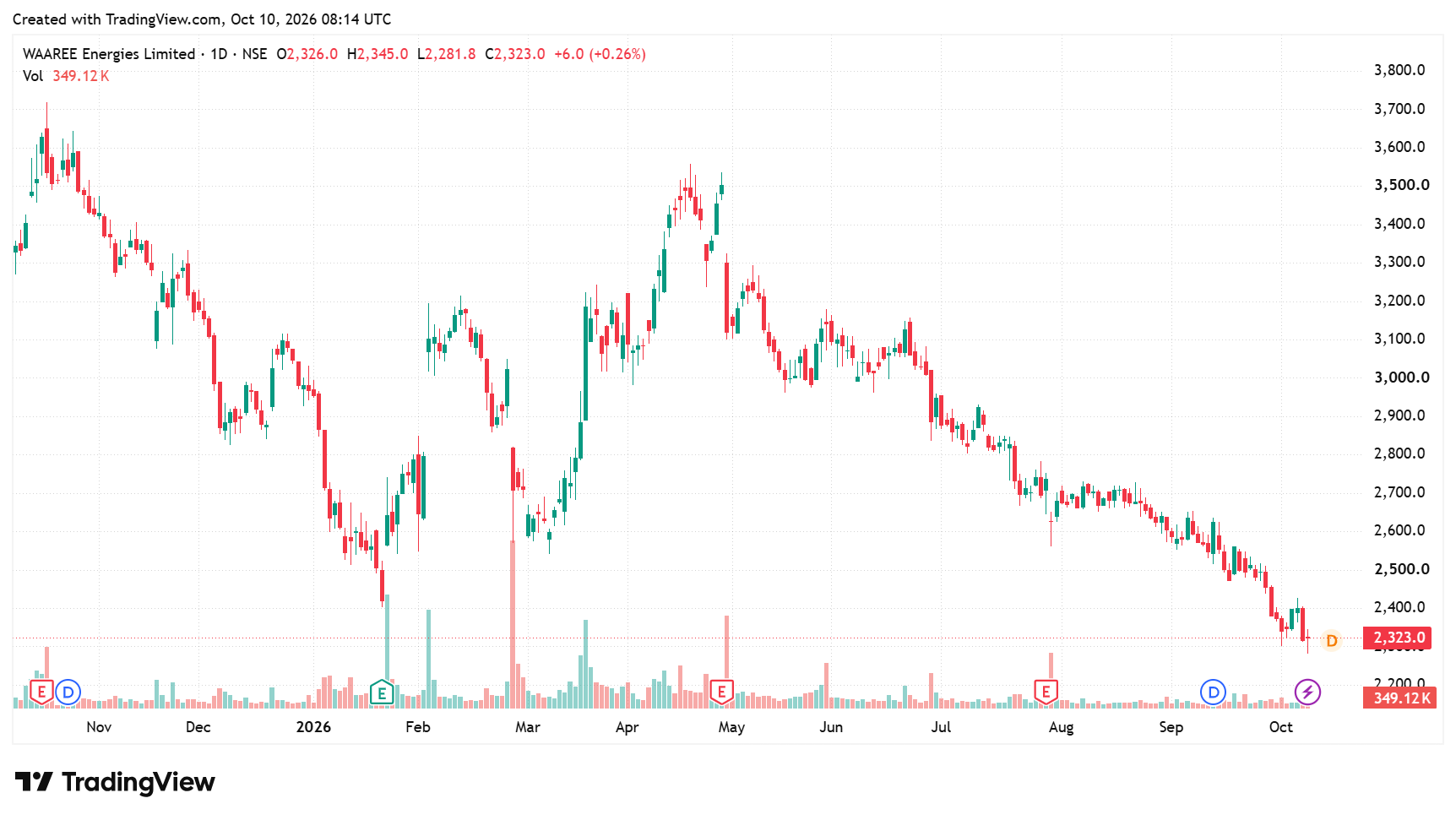
#1 Waaree Energies: Green Hydrogen Manufacturing and Electrolyser Expansion Plans
As part of its transformation from a solar PV manufacturer to a clean energy ecosystem (Waaree 2.0), Waaree Energies launched a green hydrogen business to diversify its operations. This allows Waaree to integrate its growing solar cell and renewable capabilities.
Green Hydrogen Pivot: Inside the ₹676-Crore Gujarat Manufacturing Push
Waaree is building a one GW Electrolyser manufacturing facility. This plant is targeted for commercialisation by FY27. The facility is situated in Dungri, Gujarat. The planned capex for electrolyser (₹676 crore), inverter (₹180 crore), and transformer (₹192 crore) manufacturing totals approximately ₹1,048 crore.
Incentives & Offtake: ₹954 Crore in PLI Wins Backs ₹155-Crore Order Book
Waaree’s strategy is to start with electrolyser manufacturing, then scale into build-own-operate hydrogen projects, and transition to downstream green derivatives production. It has secured government allocations under national incentive frameworks. The government awarded a PLI worth ₹444 crore for 300 megawatt (MW) electrolyser capacity.
Waaree also received ₹510 crore for the 90,000-tonne-per-annum hydrogen production PLI. Notably, it has already secured an initial domestic order book of around ₹155 crore for its green hydrogen offerings. The initial focus would be on sectors aiming for decarbonisation, including Refineries, Fertilisers, Chemicals, Steel, speciality chemicals and Mobility.
The ₹31,500-Crore Blueprint: Scaling Beyond Solar to Capture a $2T Clean Energy Shift
In addition to the electrolyser facility, phase 1 of the inverter and transformer lines is already commercialised in Q1FY27. This is part of Waaree’s larger ₹31,500 crore capital expenditure program under Waaree 2.0. Waaree 2.0 targets a global clean energy transition market estimated at US$ 1 trillion annually, projected to double to US$ 2 trillion by 2030.
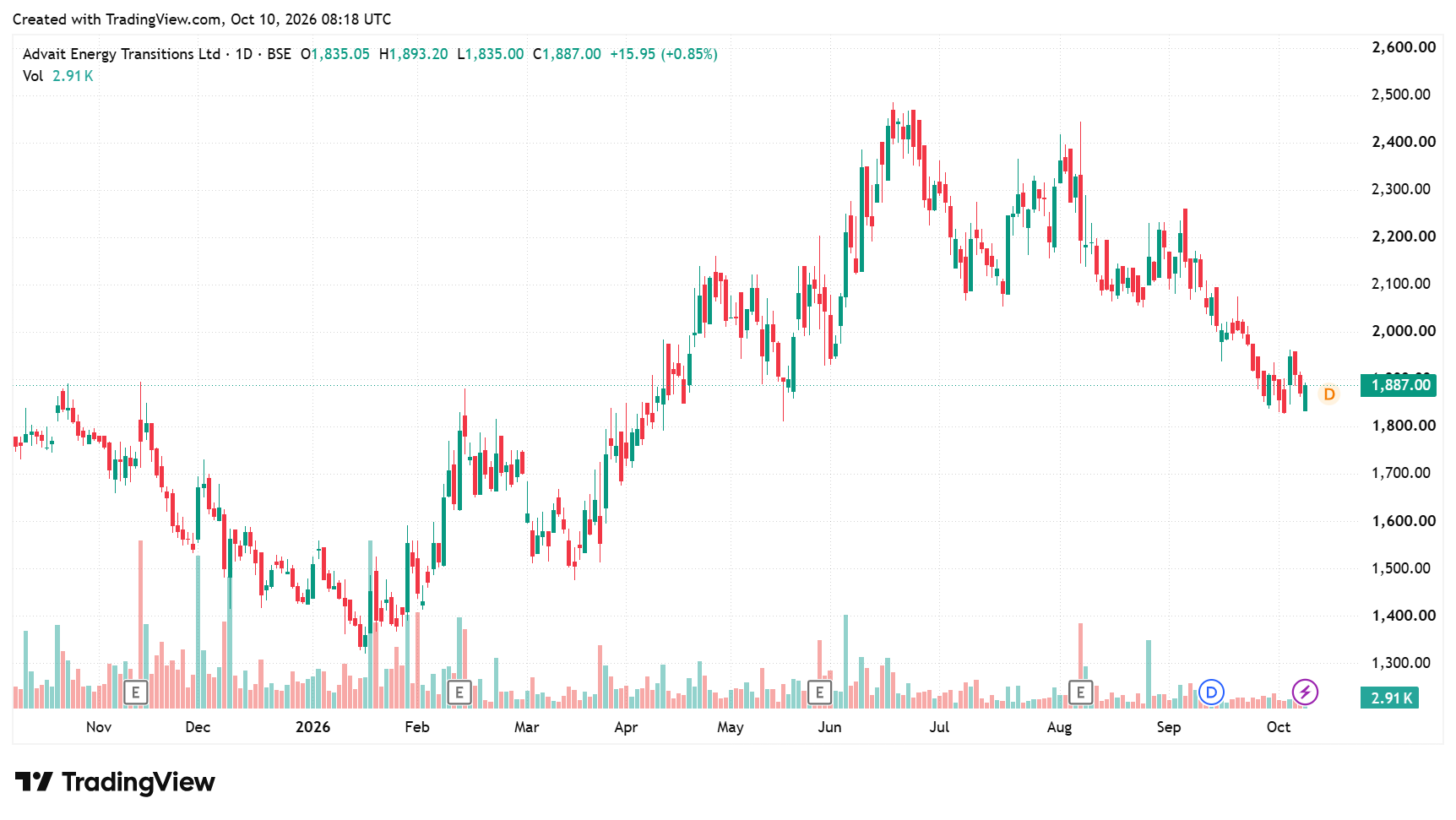
#2 Advait Energy Transitions: Building Indigenous Electrolyser Technology
Advait Energy Transitionspositions Green Hydrogen as a strategic pillar of its New & Renewable Energy (NRE) vertical. The company operates across the green hydrogen value chain, including electrolyser manufacturing, fuel cell integration, green hydrogen EPC, and asset ownership.
Tech Transfer & Modular Stacks: Exclusive Indo-China Tie-Up Powers 100 MW Scaling
Advait, through its partnership with Jiangsu Guofuhee, has exclusive Indian technology transfer, manufacturing, and commercialisation rights for electrolyser technology. It manufactures core electrolyser units in various sizes, ranging from small 250 Kilowatt (kW)-500 kW modules up to large 5 MW units.
For large-scale industrial projects, multiple stacks are linked together like building blocks. These blocks create an integrated system of up to 100 MW in total capacity for green hydrogen and green ammonia production. Advait has also secured an allocation under the Government of India’s PLI scheme for electrolyser manufacturing.
Manufacturing Milestones: Microgrid Proof-of-Concept Backs 95% Localisation Roadmap
Advait commissioned a 30 MW electrolyser semi-assembly unit in Ahmedabad in March 2026. This is basically a working proof of concept prior to a large-scale expansion. Additionally, a dedicated facility for PEM fuel cells is being built to align with domestic procurement patterns.
Advait commissioned India’s first green hydrogen microgrid during FY26. It integrated a 300 kW electrolyser and a 70 kW Proton Exchange Membrane (PEM) fuel cell. Phase 1 of this facility is slated for commissioning in Q4FY27, with full commercialisation targeted by mid-2028. The company plans to localize 95% to align with domestic procurement mandates.
In Q1FY27, Advait became the first Indian firm to conduct live testing of a 5 MW electrolyser test batch for 13+ green hydrogen players. Further, it completed a 1 MW green hydrogen generation EPC project in Bharuch.
Order Pipeline: 200 MW Ammonia Bids Anchor High-Value Fuel Cell Expansion
Advait is actively bidding on green ammonia representing a potential order pipeline of 150-200 MW. It is developing PEM fuel cell solutions for data centers, marine, defence, and critical backup-power applications. The company has collaborated with Norwegian technology provider TECO 2030 and AVL.
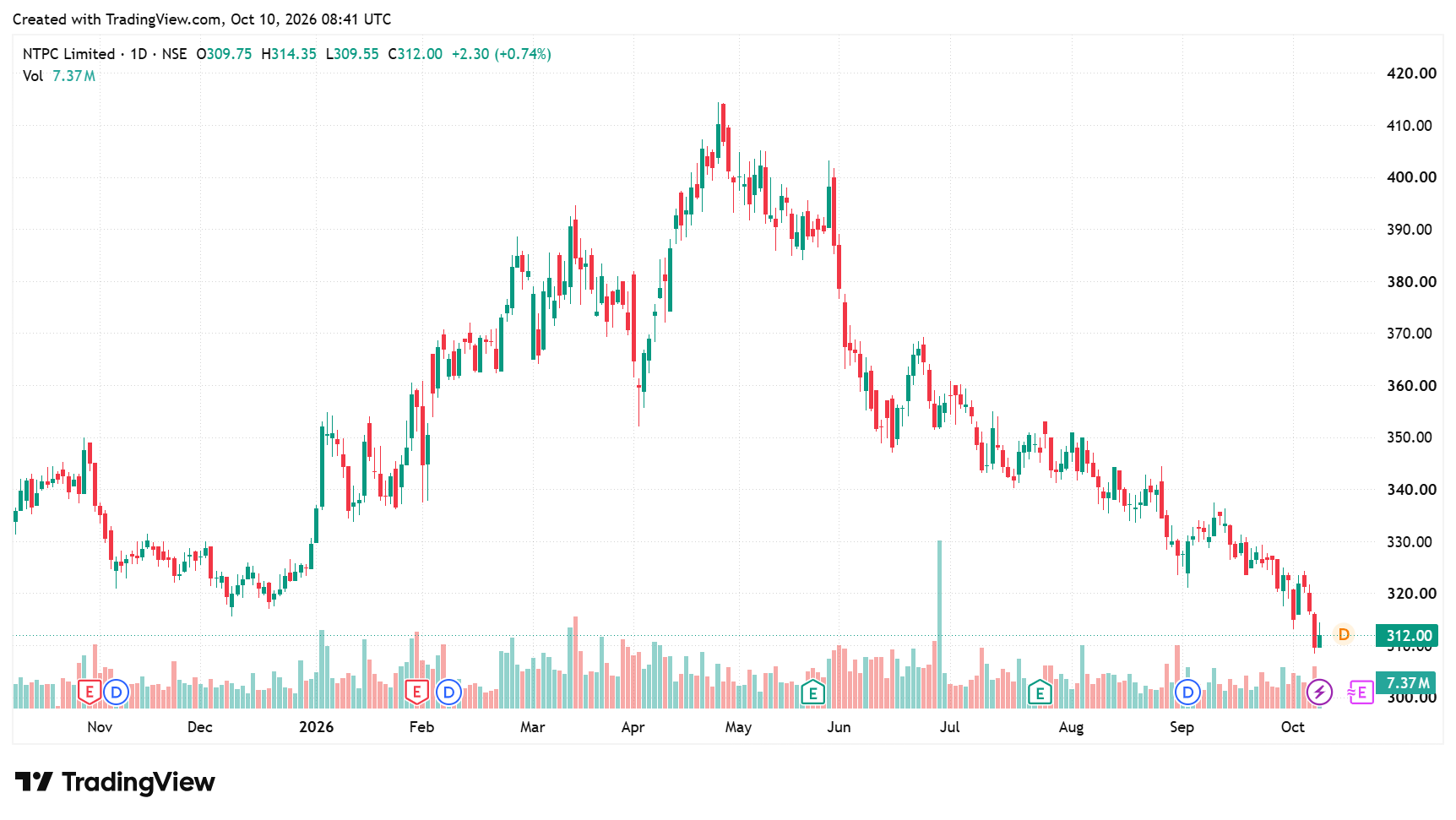
#3 NTPC: Developing Green Hydrogen Hubs for Industrial-Scale Production
NTPCis setting up a major green hydrogen hub at Pudimadakka. It is spread across 1,200 acres. The project involves an envisaged investment of about ₹1 lakh crore. The facility will use roughly 5 GW of Round-The-Clock Renewable Energy to produce about 1,400 tons per day of green hydrogen.
Pilot Proof Points: Surat Blending to Leh Microgrids Anchor High-Risk Bet
The hub is an integrated ecosystem covering hydrogen production, green chemical derivative manufacturing, and export infrastructure. NTPC has implemented several pioneering pilot projects across transportation, gas blending, and microgrids. It has deployed 10 hydrogen fuel cell buses along with 2 filling stations for public transport in Leh and Delhi.
Commercialisation Lag: Why Management Admits Scale Remains a Distant Goal
It has established India’s first green hydrogen blending project in the Piped Natural Gas network at Kawas, Surat. A hydrogen-based microgrid project has also been launched in Ladakh. Management stated that green hydrogen is currently at a critical juncture globally and nationally. However, large-scale commercial operations are still a long way off.
The ₹16.86-Lakh-Crore Pivot: Renewable Allocation Surpasses Core Thermal Assets
To execute this long-term strategy, NTPC projects a cumulative group capital expenditure of ₹16.86 lakh crore over the 11-year period leading up to FY37. This translates to an average ₹1.5 lakh crore annually. Renewable energy accounts for ₹7.2 lakh crore of the allocation, followed by thermal energy (₹4.6 lakh crore).
Evaluating Corporate Valuation Multiples: Return Ratios vs Sector Medians
With faster profitability growth amid industry tailwinds, Waaree’s Return on Capital Employed (ROCE) and Return on Equity (ROE) are higher than Advait and NTPC’s. Advait’s return ratios are also strong, but NTPC lags behind due to a capital-heavy business.
From a valuation perspective, Waaree and NTPC trade at a discount to the industry median, while Advait trades at a premium. Relative to their historical median multiple, Advait and NTPC trade at a discount. Waaree’s historical trading data is limited.
| Peer Comparison (X) | |||||
Company | Price-to-Earnings Multiple | Return Ratios | |||
| Company | 3Y Median | Industry | ROCE (%) | ROE (%) | |
| Waaree | 16.6 | NA | 28.5 | 38.4 | 32.5 |
| Advait | 35.8 | 56.1 | 28.5 | 27.9 | 21.5 |
| NTPC | 10.9 | 14.6 | 20.6 | 8.9 | 15.1 |
| Source: Screener.in (Data as of October 10 2026) | |||||
The valuation gap between these three companies reflects how the market is pricing their green hydrogen ambitions. Waaree Energies combines higher return ratios with an initial ₹155 crore order book, while Advait Energy Transitions carries a premium valuation despite its early-stage commercialisation.
NTPC, meanwhile, has the balance sheet to pursue large projects, but its hydrogen investments will take time to show results. You can keep these names in your watchlist to track their execution.
Disclaimer:
Note: Throughout this article, we have relied on data from http://www.Screener.in and the company’s investor presentation. Only in cases where the data was unavailable have we used an alternative, widely used, and accepted source of information.
The purpose of this article is only to share interesting charts, data points, and thought-provoking opinions. It is NOT a recommendation. If you wish to consider an investment, you are strongly advised to consult your advisor. This article is strictly for educational purposes only.
About the Author: Madhvendra has been deeply immersed in the equity markets for over seven years, combining his passion for investing with his expertise in financial writing. With a knack for simplifying complex concepts, he enjoys sharing his honest perspectives on startups, listed Indian companies, and macroeconomic trends.
A dedicated reader and storyteller, Madhvendra thrives on uncovering insights that inspire his audience to deepen their understanding of the financial world.
Disclosure: The writer and his dependents do not hold the stocks discussed in this article.
The website managers, its employee(s), and contributors/writers/authors of articles have or may have an outstanding buy or sell position or holding in the securities, options on securities, or other related investments of issuers and/or companies discussed therein. The articles’ content and data interpretation are solely the personal views of the contributors/ writers/authors. Investors must make their own investment decisions based on their specific objectives, resources, and only after consulting such independent advisors as may be necessary.