



Porinju Veliyath Goes Shopping for Balance Sheets
Porinju Veliyath rarely buys what is trending. The Kochi-based investor, who runs Equity Intelligence India, built his name on small, overlooked companies that he picks up quietly and then waits on. His September 2026 shareholding filings, now trickling in, carry two moves that fit that habit closely.
The first is a fresh 1.01% stake in TTK Healthcare, the maker of Woodward’s Gripe Water. Just one quarter earlier, Sunil Singhania’s Abakkus Diversified Alpha Fund had bought 2.07% of the same company. By September, Abakkus no longer featured among holders owning more than 1%. One star name slipped off the list as another appeared. The second move is a return to Ansal Buildwell, a small Delhi-based developer, where Porinju now owns 3.18% after his name was missing from the June 2026 list.
The common thread is not growth. Neither company has grown operating profit meaningfully in five years. What both have is a balance sheet that says something different from the share price. In one case, it is a fresh Rs 256 cr cheque. In the other, it is a stock priced at less than half of its book value. Let us dive in.
#1 TTK Healthcare: Porinju Picks Up Where Singhania Left Off
Incorporated in 1958, TTK Healthcare belongs to the Chennai-based TTK group, whose better-known sibling is the cookware maker TTK Prestige. Its brands sit in odd corners of a shop. Woodward’s Gripe Water for babies. Skore condoms. Fryums snacks. Heart valves and orthopaedic implants. Plus, an animal health arm.
With a current market cap of around Rs 1,448cr, Porinju’s stake, held through Equity Intelligence India, is worth roughly Rs 14 cr at the closing price on 14th October 2026. The promoters own 74.56%, a figure that has not budged for years.
The Rs 256 Crore Cheque Has Already Cleared
The timing is what makes this trade interesting. On 23rd July 2026, TTK Healthcare signed agreements to sell its EVA and Good Home brands to Wipro Enterprises for Rs 256 cr plus GST. On 4th September, it informed BSE that the sale was done and the money had been received.
In other words, Porinju bought in the quarter the cash actually landed, not when the deal was still on paper. That one cheque equals about 18% of what the market values the whole company at today.
Five Years of Growth, and Where the Profit Really Comes From
| Financial Year | FY21 | FY22 | FY23 | FY24 | FY25 | FY26 | 5Y CAGR |
| Sales (Rs cr) | 476 | 599 | 725 | 753 | 801 | 857 | 12% |
| EBITDA (Rs cr) | 19 | 22 | 31 | 37 | 35 | 26 | 6% |
| Net Profit (Rs cr) | 46 | 42 | 640 | 63 | 82 | 66 | 7% |
Source: Screener.in
EBITDA is operating profit before other income. Sales have grown at a fair 12% a year, though the starting point is FY21, a year hit by Covid. Operating profit has crept up at just 6%, and the operating margin thinned to 3% in FY26. The jump to Rs 640 cr in FY23 is not a business result. That year’s books carried Rs 643 cr of other income, a one-off.
The figure that matters most is other income. In the twelve months to June 2026, TTK Healthcare earned Rs 67 cr from it, against an operating profit of Rs 38 cr. Put simply, the money sitting on the balance sheet earned more than the brands did. Other assets made up Rs 1,246 cr of the company’s Rs 1,329 cr in total assets as of March 2026.
The June Quarter Showed a Pulse
There was some good news inside the business. Sales in the June 2026 quarter rose 14% from a year ago to Rs 258 cr, the best figure in the last eight quarters. Operating profit came in at Rs 15 cr, up from Rs 3 cr, and the margin improved to 6% from 1.2%.
That quarter, though, still had EVA and Good Home on the books. Those brands earned about Rs 148 cr in FY26, roughly 17% of sales. The September quarter will be the first without them, and will likely carry the gain on the sale too. Separate the two before judging it.
What You Pay for This Stock
The TTK Healthcare share price has compounded at about 8% a year over five years, but is down 12% in the last one. It closed at Rs 1,016 on 14th October 2026, about 19% below its 52-week high of Rs 1,250.
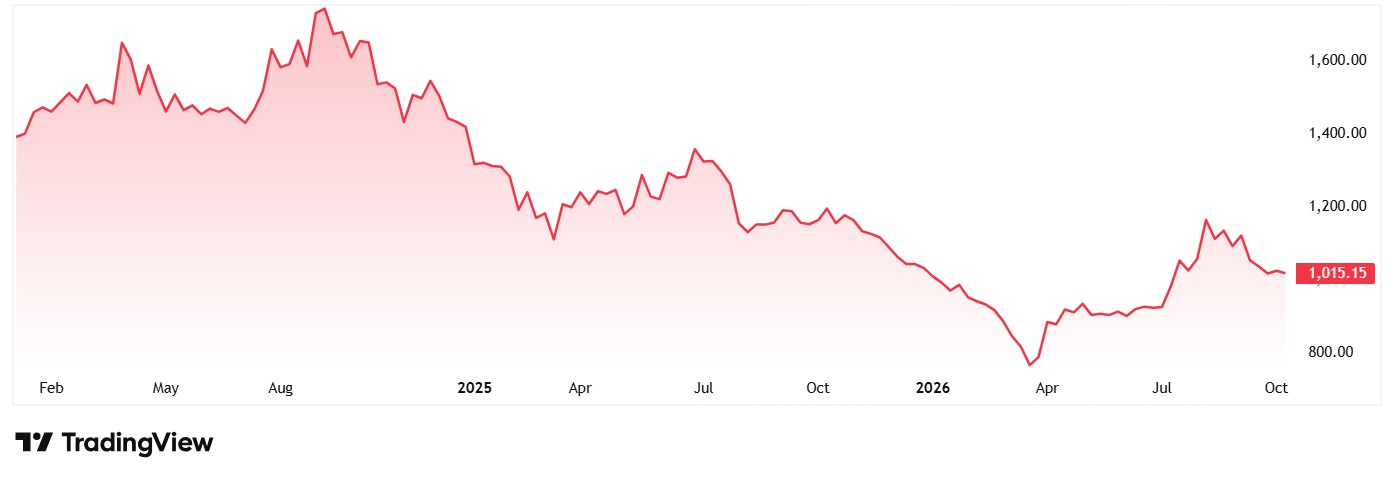
Its PE of around 20x is the same as the current industry median. The 10-year median PE for the company is 33x while the industry median for the same period is 16x. With a book value of Rs 789 per share, the stock sits at about 1.3 times book. The board recommended a Rs 10 dividend for FY26.
The Catch Porinju Is Accepting
Cash from operations has been negative for four straight years, from FY23 to FY26. Working capital days have risen from 86 to 161. Return on equity has averaged about 6.5% over three years. The company has not said what will replace the lost revenue, or what it plans to do with the cash. And because promoters are already near the 75% ceiling, they cannot add more to signal confidence.
Singhania’s quick in-and-out is a reminder that some smart money saw this as a short event trade.
#2 Ansal Buildwell: Porinju Goes Back to a Stock at Half Its Book Value
Incorporated in 1983, Ansal Buildwell builds townships, housing complexes and commercial buildings. Its projects are in Gurgaon, Kochi, Amritsar, Jaipur, Faridabad, Gwalior, Pathankot and Jhansi. One of those, as it happens, is in Porinju’s home city.
This is a micro-cap worth about Rs 64 cr. Porinju first showed up on its shareholder list in September 2025 with 2.7%, nudged that to 2.82% by March 2026, and was absent from the June 2026 list. The September 2026 filing has Equity Intelligence India back with 2,35,000 shares, or 3.18%, worth about Rs 2 cr.
It is a small cheque, even by his standards. What stands out is that he came back while ordinary shareholders kept leaving. Their number has fallen from 6,992 in September 2023 to 5,939 in June 2026.
Rs 62 Crore Market Cap Against Rs 130 Crore of Net Worth
The share closed at Rs 88 on 14th October 2026, against a book value of Rs 176 per share. That is a price-to-book ratio of 0.48. The company’s net worth stands at about Rs 130 cr, more than double its market value.
The balance sheet is large for a company this size. Other assets, which include its unsold project inventory, stood at Rs 500 cr in March 2026, against other liabilities of Rs 373 cr and borrowings of Rs 49 cr.
| Financial Year | FY21 | FY22 | FY23 | FY24 | FY25 | FY26 | 5Y CAGR |
| Sales (Rs cr) | 73 | 188 | 33 | 41 | 48 | 40 | -11% |
| EBITDA (Rs cr) | 14.9 | 22.9 | 2.8 | 18.7 | 14.0 | 5.8 | -17% |
| Net Profit (Rs cr) | 6.7 | 11.4 | -2.8 | 14.5 | 8.0 | 0.8 | -34% |
Source: Screener.in
EBITDA is operating profit before other income. Developers book revenue when projects are handed over, so the numbers swing hard. FY22 sales were more than four times the FY26 figure. All three five-year rates are negative.
The latest quarter was better. In June 2026, sales rose 78% from a year earlier to Rs 17.37 cr and profit came in at Rs 5.06 cr, against Rs 1.29 cr. Yet only two quarters earlier, sales were Rs 1.67 cr and the company lost Rs 3.62 cr.
A Court Order Worth Watching
The biggest variable sits in a subsidiary. Ansal Crown Infrabuild, a wholly owned unit, has been in insolvency proceedings since April 2023. Per the FY26 results filed on BSE, the parent has Rs 34.01 cr of equity and Rs 24.89 cr of advances tied up in it, and their recovery is uncertain. That Rs 59 cr is almost the company’s entire market value.
On 17th July 2026, Ansal Buildwell told BSE that the National Company Law Tribunal in New Delhi had approved a Rs 321.33 cr resolution plan for the unit, submitted by Nanu Ram Goyal & Co. The company has not yet said how much, if anything, comes back to the parent. That answer may decide whether the discount to book is a bargain or a warning.
Decoding the Book Value Discount
The Ansal Buildwell share price has compounded at about 5% a year over five years, and fallen 26% in the last one. It now trades about 43% below its 52-week high of Rs 158.
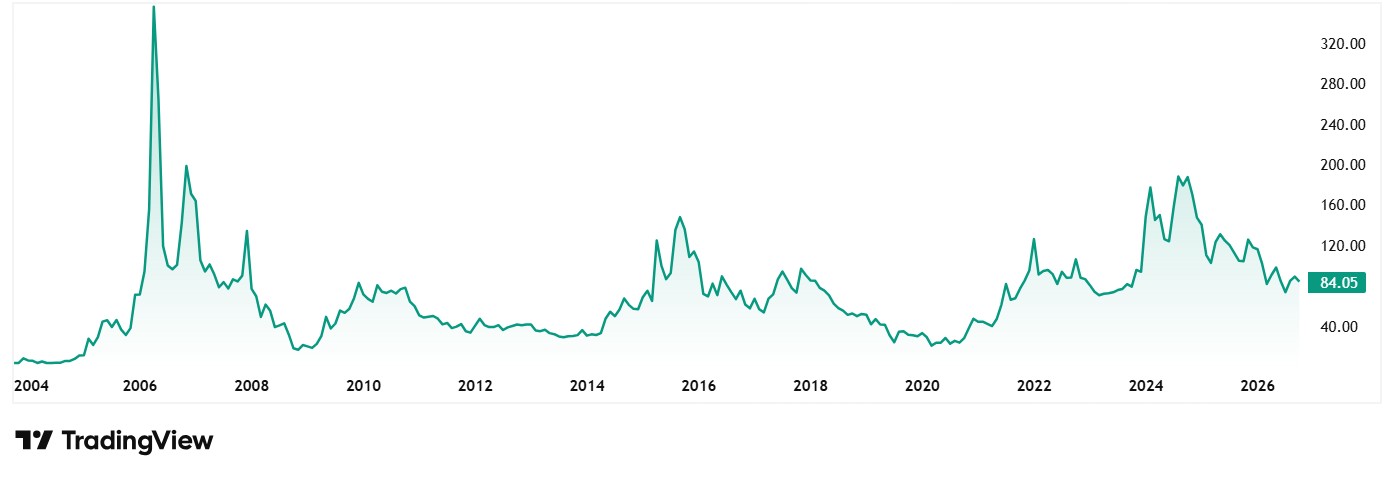
The stock is currently trading at a PE of around 14x and the current industry median is about 24x. A 10-year median PE means little here, since the company lost money in FY17, FY19 and FY23 and barely broke even in FY20 and FY26. Book value is the better yardstick.
The warnings are real. Operating profit of Rs 5.77 cr in FY26 barely covered the interest bill of Rs 4.86 cr. Borrowings have climbed from Rs 29.7 cr in FY22 to Rs 49.3 cr. Contingent liabilities stand at Rs 32.3 cr. The FY26 filing also disclosed fraudulent transactions of Rs 1.45 cr found after the year closed, of which Rs 0.20 cr has been recovered. No dividend was declared for FY26, and the stock trades thinly.
Worthy of Q3 Watchlist?
Put the two side by side and the logic is plain. Porinju is not paying for earnings in either case. He is paying for assets the market has chosen to discount. At TTK Healthcare, the asset is cash that has already arrived. At Ansal Buildwell, it is land, unsold projects and a claim on a subsidiary that a court has only just begun to settle.
The difference lies in how certain each value is. TTK’s cash is real, but the business left behind is thin. Ansal’s book is bigger than its price, but the market plainly does not trust it.
Two events will tell. TTK Healthcare’s September quarter results will be the first without EVA and Good Home. Ansal Buildwell’s next filings should show what the tribunal order means for its own accounts. A sensible step would be to add these stocks to a watchlist and track both closely.
Disclaimer
Note: We have relied on data from www.Screener.in and www.trendlyne.com throughout this article. Only in cases where the data was not available, have we used an alternate, but widely used and accepted source of information, including filings made available on the BSE website.
The purpose of this article is only to share interesting charts, data points and thought-provoking opinions. It is NOT a recommendation. If you wish to consider an investment, you are strongly advised to consult your advisor. This article is strictly for educative purposes only.
Suhel Khan has been a passionate follower of the markets for over a decade. During this period, He was an integral part of a leading Equity Research organisation based in Mumbai as the Head of Sales & Marketing. Presently, he is spending most of his time dissecting the investments and strategies of the Super Investors of India.
Disclosure: The writer and his dependents do not hold the stocks discussed in this article.
The website managers, its employee(s), and contributors/writers/authors of articles have or may have an outstanding buy or sell position or holding in the securities, options on securities or other related investments of issuers and/or companies discussed therein. The content of the articles and the interpretation of data are solely the personal views of the contributors/ writers/authors.