




India’s CCTV market is entering a phase where regulation is becoming as important as demand. The market is projected to reach US$ 14.25 billion (around ₹1.3 lakh crore) by 2031, growing at a 19.88% CAGR between 2026 and 2031. But the opportunity isn’t just about installing more cameras.
Compliance is increasingly shaping who can supply them. CCTV cameras were brought under the government’s security requirements for public procurement in 2024, with Standardisation Testing and Quality Certification (STQC) responsible for security testing.
The change is already visible in government procurement. In March 2026, the government said departments are restricted from buying CCTV equipment that does not meet the prescribed security requirements. This creates a different kind of opportunity for certified domestic players.
Companies that can meet STQC, BIS and other applicable requirements can participate in segments where compliance is becoming a prerequisite. Hardware must be fully cyber-secured and certified by testing laboratories designated by the government of India.
Cybersecurity and control over surveillance data are also becoming part of the buying decision. For government and public infrastructure, the camera is no longer just hardware. Its software, firmware, security architecture and supply chain also matter. For domestic manufacturers, that could expand the addressable market beyond simply selling cameras.
Against this backdrop, this article examines three CCTV players.
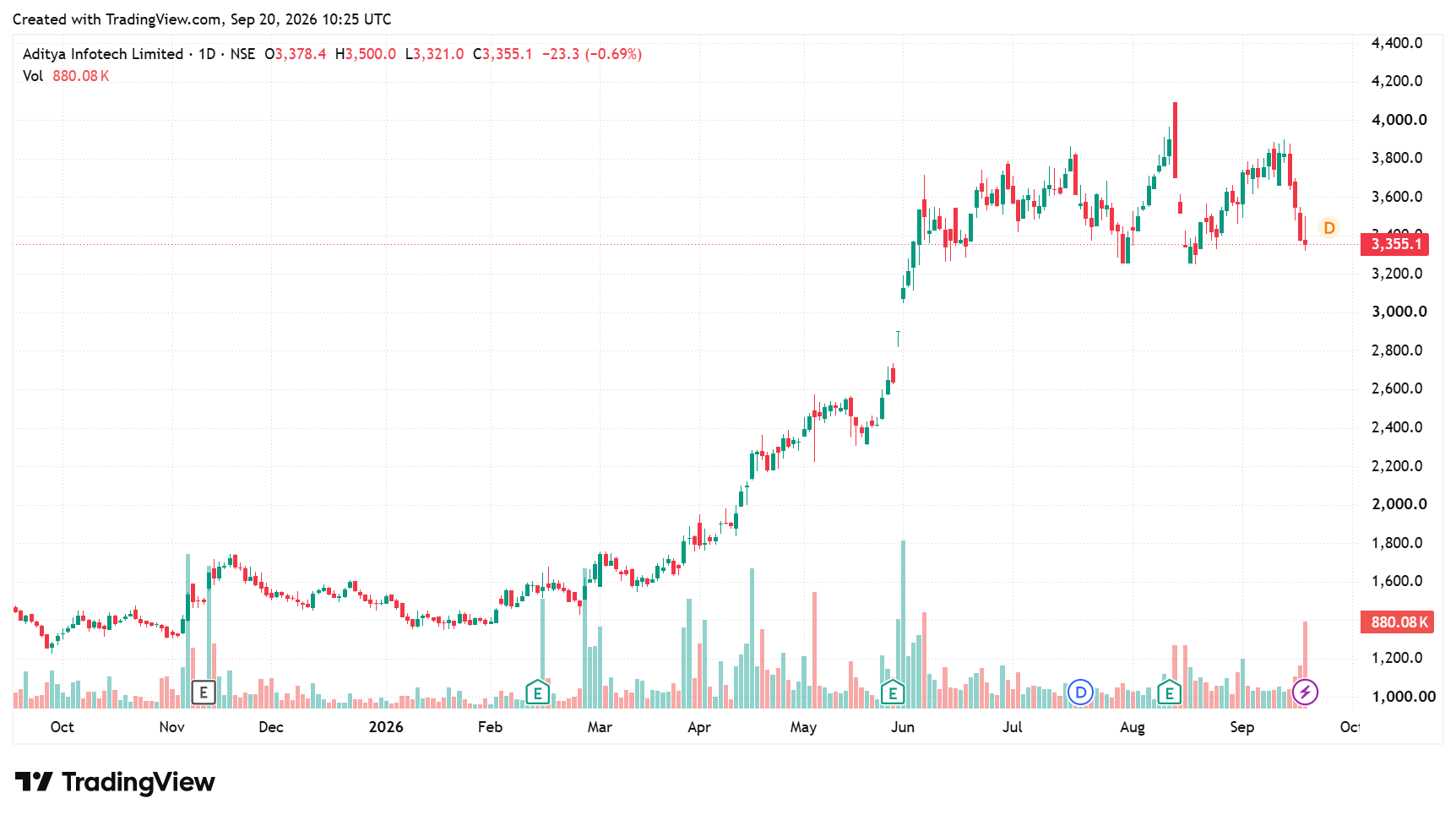
#1 Aditya Infotech: Scaling Capacity, Moving Up the Surveillance Value Chain
Aditya Infotech Limited (AIL) is a leading Indian technology company in the video surveillance and security systems sector. The company operates at a capacity of 25 lakh units per month. Capacity utilisation stands at 85-90%. The company is setting up a Greenfield capacity in Kadapa and a second planned cluster in Greater Noida. This would double capacity over three years.
Doubling Capacity to 50 Lakh Units: Inside AIL’s 43.3% Market Grip
AIL’s market share in the organized Indian video surveillance market effectively doubled to 43.3% in FY26. The company operates primarily through its flagship security brand, CP PLUS, and expanding brands like Nexivue. Internet Protocol accounts for 79% of its portfolio, reflecting a shift toward higher-value AI surveillance solutions.
This reflects the growing demand for intelligent visual AI, high-resolution surveillance, and enterprise storage solutions. The company is also engaging directly with enterprise accounts and government projects to secure empanelment at the design stage. This helps AIL secure larger, higher-value contracts.
Also, AIL sources 100% of its semiconductor System-on-Chips, which represent roughly 35% of the total Bill of Materials from global fabrication partners based in Taiwan. This enables AIL to source 100% compliant products that are legally cleared for sale across India.
Beyond Budget CCTV: How Nexivue and Taiwan R&D Drive Tier-2 Margins
The company is accelerating the rollout of its second brand, Nexivue. This, coupled with CP Plus, enables the company to cover wider price points to penetrate across Tier-2 and Tier-3 markets. It is also working on high-margin products including CP PLUS Pro Series (developed via Taiwan R&D for high-end enterprise/government verticals), Home IoT, and Machine Vision Cameras.
Inside the Q1 FY27 Surge: 332% Profit Jump Powers the ₹6,500-Crore Run-Rate
The company delivered substantial top-line and bottom-line growth in Q1 FY27, driven primarily by CP PLUS. Revenue grew 89.5% year-on-year to ₹1,402.4 crore. EBITDA grew 220% to ₹207.8 crore, while margin expanded by 605 basis points to 14.8%. Net profit jumped 332.5% to ₹142.2 crore. Management aims to reach a revenue of ₹6,000-6,500 crore for FY27.
Balance Sheet Armor: Slashing Debt to 0.07x While Localizing Component Sourcing
The balance sheet strengthened. The cash conversion cycle decreased by 7 days to 64 days. The company’s debt-to-equity ratio decreased to 0.07x from 0.44x in Q1FY26. To shield against rising global component costs, it is implementing gradual price hikes across categories. Management targets a 15-20% price increase by H1FY27, with total hikes reaching 25% over FY27.
The company is building an in-house housing and enclosure expansion facility. This is scheduled to go live by the end of Q3FY27. AIL is also localizing lens, cable (with Orient Cables), and enclosure manufacturing. This will benefit margins. Plans are also underway to localize bare PCBs with third-party partners.
#2 D-Link India: Local Sourcing Meets a Broad EMS-ODM Network
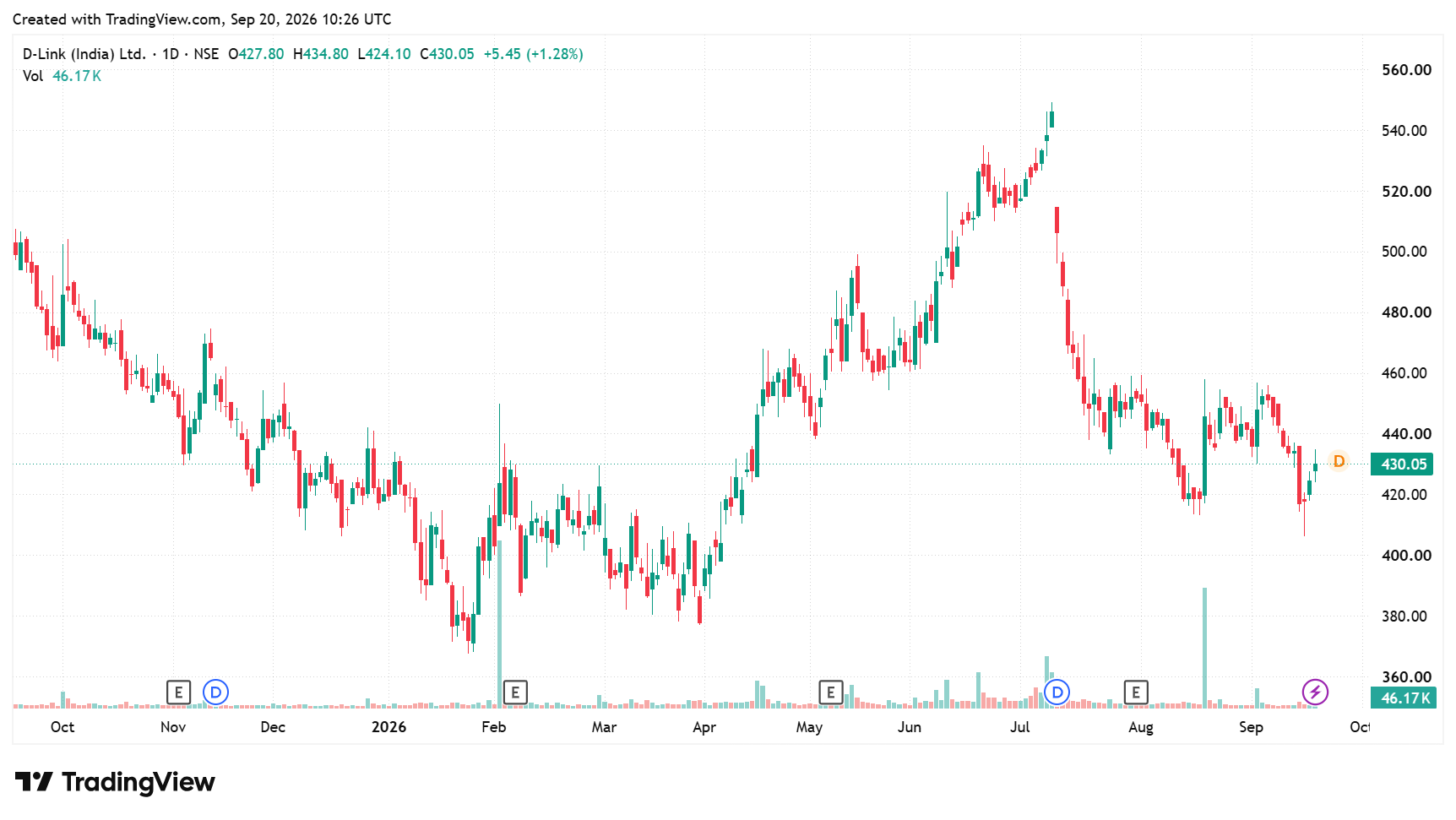
D-Link Indiamarkets and distributes networking products (almost 100% of revenue) across India. It is a major player in the Indian networking market. D-Link India offers surveillance equipment alongside consumer and business wireless solutions, network switches, network racks, and structured cabling.
Two-Thirds Local Sourcing: How D-Link India Built Its 30-Partner EMS Network
The company maintains manufacturing contracts with 30+ Electronic Manufacturing Services and Original Design Manufacturers. They manufacture D-Link’s products under its proprietary designs and quality control. The business remains concentrated in India.
The company has significantly expanded its domestic production capabilities to align with the Make in India initiative. Currently, two-thirds of D-Link India’s product supply is sourced locally. Its reach spans 3 national distributors, 100+ business distributors and 15,000+ resellers.
From CCTV to AI Mesh: Unpacking D-Link’s Three-Tier Surveillance Play
D-Link is a major player in the networking market, offering IP surveillance cameras as a core part of its equipment lineup. These surveillance solutions span three main customer segments. Home networks seeking smart security, small and medium-sized businesses looking for reliable monitoring, and enterprise networks.
To ensure consistent power and connectivity throughout deployments, D-Link supplies essential surveillance parts, including CCTV cables and switched-mode power supplies. It supplies this surveillance equipment alongside other core networking parts, such as AI-powered mesh routers, high-performance data center switches, and high-density structured cabling.
Revenue Hits ₹457 Crore as 100G Switches Target Data Centers
Financially, D-Link consolidated revenue grew by 30.6% year-on-year to ₹457 crore in Q1FY27, driven by a strong domestic market. Operating Profit grew by 20.6% to ₹35 crore with a margin of almost 7.7%. Net profit surged 16.7% to ₹28 crore. D-Link India is expanding its switching capabilities with 10G, 25G and 100G data centre switches.
#3 Prizor Viztech: From Camera Assembly to Backward Integration
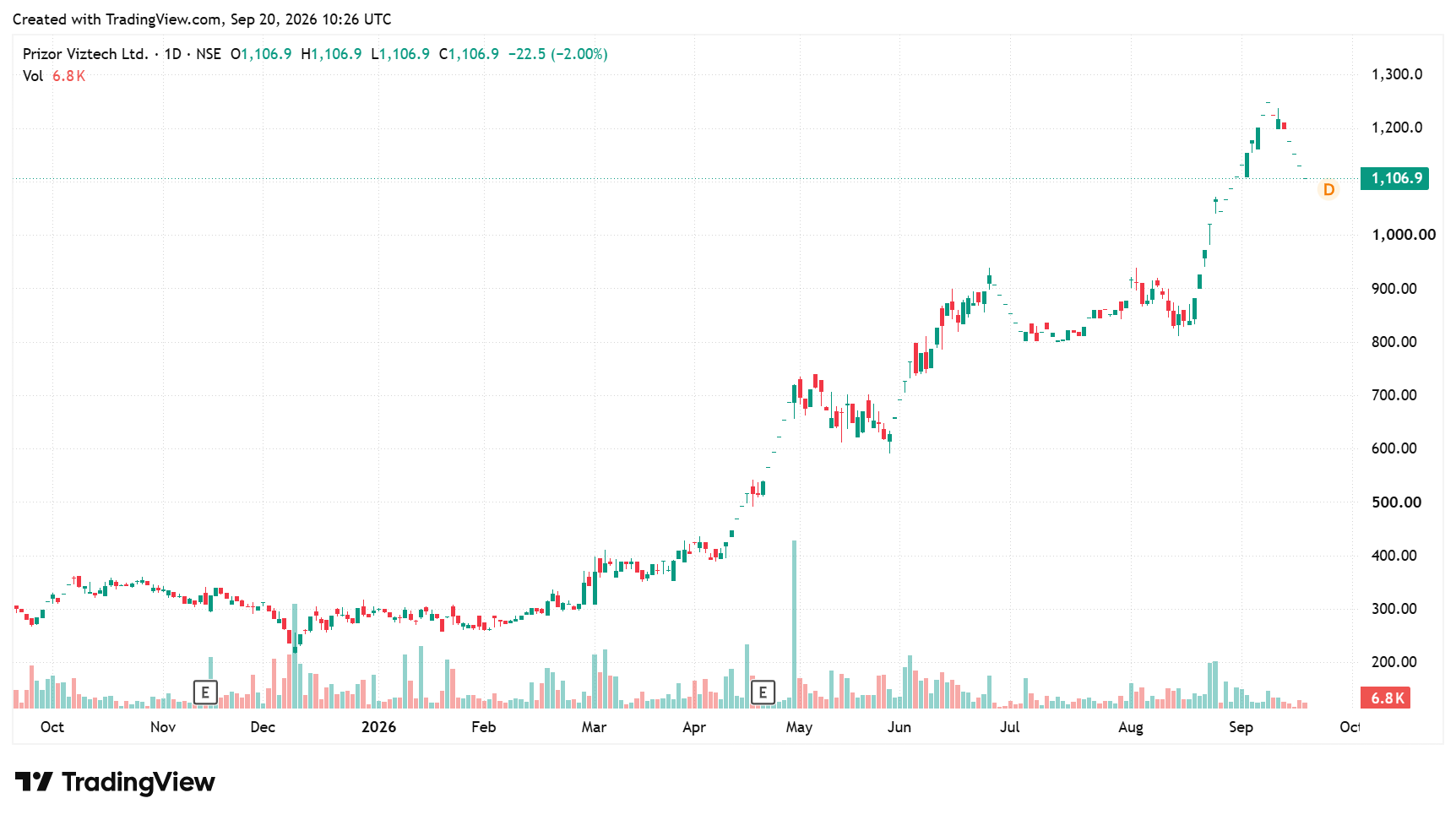
Prizor Viztech is a fast-growing Indian manufacturer of security and surveillance solutions. The company’s asset-light, dealer-led distribution strategy has created a strong competitive moat. Operating across 21 to 22 states, Prizor relies on an extensive network of over 11,000 dealers and 150+ distributors and retailers.
11,000 Dealers Across 3,000 Tehsils: Inside Prizor’s Asset-Light Security Moat
Prizor offers a comprehensive security and display ecosystem. Its core surveillance portfolio includes IP and analog cameras, 4G/stand-alone cameras, and solar cameras. These cameras are complemented by display products such as LED TVs, monitors, and touch panel displays. The company is also shifting focus to high-margin AI-enabled solutions.
Beyond Assembly: Gandhinagar Hub and Indicem MoU Target Chip-Level Indigenization
Prizor operates an integrated manufacturing facility in Gandhinagar, Gujarat, transitioning from an assembly-led model to a fully backward-integrated setup. The plant can produce 16 lakh CCTV cameras annually. This can be scaled to 40 lakh units. Total CCTV camera annual capacity is 50 lakh units.
The company also has a surface-mount technology line capable of producing 50 lakh printed circuit boards. These product links enable fully in-house electronics manufacturing. Third-party partners manufacture Prizor’s display products, which are marketed under the Prizor brand.
To enable backward integration, Prizor has signed an MoU with IndieSemic to develop and supply an indigenous system-on-chip. This will enable it to shift from assembly to chip-level indigenization. It’s also expanding into car dash cameras, video door phones, etc.
H1FY27 Operating Profit Surges 66.7%
Financially, Prizor reported a strong half-yearly result. Revenue grew 35.5% year-on-year to ₹42 crore in H1FY27. Operating profit grew 66.7% to ₹10 crore with margins at 23%. Net Profit surged 50% to ₹6 crore. Prizor expects to benefit from national infrastructure projects, including 250 lakh new homes by 2030, 80 new airports, and smart city mandates.
Competitive Landscape & Growth Outlook: Leader vs. Challengers
Prizor Viztech boasts a strong Return on Capital Employed (ROCE) and Return on Equity (ROE), followed by Aditya Infotech and D-Link. Valuation-wise, Aditya Infotech and Prizor Viztech trade at a premium to the industry median price-to-earnings (P/E) multiple. D-Link, however, trades at a discount to both the 3-year median and the industry median.
Particulars | Price-to-Earnings Multiple (X) | Return Ratios | |||
| Company | 3Y Median | Industry | ROE (%) | ROCE (%) | |
| Aditya Infotech | 83.2 | NA | 35.6 | 25.4 | 28.6 |
| Prizor Viztech | 57.1 | NA | 31.8 | 35.8 | 38.7 |
| D-Link | 14.2 | 16.6 | 24.7 | 18.1 | 25.9 |
| Source: Screener.in (As of 18 September 2026) | |||||
India’s CCTV market is moving toward higher-value IP surveillance, AI-enabled products, local manufacturing and greater control over the electronics value chain. At the same time, STQC requirements and government procurement rules are making compliance an increasingly important entry point for domestic players.
The three companies are approaching this opportunity differently.
Aditya Infotech is expanding capacity while moving deeper into higher-value surveillance products. D-Link India is leveraging its EMS and ODM network while increasing local sourcing. Prizor is moving from assembly toward backward integration, including PCB manufacturing and an indigenous system-on-chip.
Keep these companies on your watchlist to analyse how they capture the market.
Disclaimer:
Note: Throughout this article, we relied on data from http://www.Screener.in and the companies’ investor presentations. We used an alternative, widely accepted source only when the data were unavailable.
The purpose of this article is only to share interesting charts, data points, and thought-provoking opinions. It is NOT a recommendation. If you wish to consider an investment, we strongly advise you to consult your advisor. This article is strictly for educational purposes only.
About the Author: Madhvendra has been deeply immersed in the equity markets for over seven years, combining his passion for investing with his expertise in financial writing. With a knack for simplifying complex concepts, he enjoys sharing his honest perspectives on startups, listed Indian companies, and macroeconomic trends.
A dedicated reader and storyteller, Madhvendra thrives on uncovering insights that inspire his audience to deepen their understanding of the financial world.
Disclosure: The writer and his dependents do not hold the stocks discussed in this article.
The website managers, their employees (s), and contributors/writers/authors of articles have or may have an outstanding buy or sell position or holding in the securities, options on securities, or other related investments of issuers and/or companies discussed therein. The articles’ content and data interpretation are solely the personal views of the contributors/ writers/authors. Investors must make their own investment decisions based on their specific objectives and resources, and only after consulting any independent advisors as necessary.