



India’s fast-growing solar buildout is creating a future waste stream that could underpin a sizeable recycling industry. According to the Council on Energy, Environment and Water (CEEW), India could generate over 11 million tons of solar waste by 2047, which could result in a recycling market worth ₹3,700 crore. If recovered materials are successfully reused, the solar sector could meet up to 38% of its future material needs through recycling, avoiding about 37 million tons of carbon emissions.
The near-term scale is already becoming visible. CEEW estimates that the cumulative waste from India’s existing and new solar capacity deployed between FY24 and FY30 could be about 600 kilotonnes by 2030. Of this, waste from India’s existing installed solar capacity alone is estimated at 340 kilotonnes, while another 260 kilotonnes could come from capacity added during this decade.
However, the investment opportunity needs to be divided into three distinct layers: direct solar-panel recycling, which involves collecting and processing end-of-life photovoltaic (PV) modules; indirect solar exposure, which involves recovering materials such as copper and aluminium used across solar and renewable-energy infrastructure; and adjacent energy-storage recycling, which involves recovering materials from lithium-ion batteries used in electric vehicles and solar-plus-storage or grid-scale energy-storage systems. These markets are related but have different feedstocks, economics and maturity levels.
For the listed recyclers that will be discussed in this article, Jain Resource Recycling and Gravita India, the second and third opportunities are already more visible through their existing or commissioned businesses. Direct solar-panel recycling, however, remains a developing opportunity.
The Waste Wave Is Coming, But Not All at Once
The opportunity is not limited to glass and silicon. A typical crystalline-silicon solar module contains about 8% aluminium and 1% copper by weight, making both metals important recovery streams as panels reach the end of their useful lives.
The Energy and Resources Institute (TERI) estimates India’s photovoltaic waste could rise from around 6 lakh tonnes in 2030 to 1.9 crore tonnes by 2050 under a high solar-growth scenario.
This timing is important. India’s solar installations are growing much faster than its end-of-life panel pool because modules remain operational for years before becoming waste. Therefore, solar capacity additions today create future recycling feedstock rather than an equivalent amount of immediate recycling revenue.
The economic opportunity is also not determined by panel weight alone. Glass and aluminium can account for a substantial share of the physical material recovered, while copper, silicon and silver can have different economic values. CEEW’s 2030 estimate, for instance, indicates that waste from India’s existing solar capacity alone could contain about 10 kilotonnes of silicon, 12-18 tonnes of silver, and 16 tonnes of cadmium and tellurium.
Recovery rates and prevailing commodity prices will therefore matter alongside the total volume of panels reaching end of life.
More importantly, the current economics show why a large future waste pool does not automatically translate into an attractive recycling business today. CEEW’s financial-feasibility assessment indicates that formal solar-module recycling can currently be loss-making under prevailing conditions. Its analysis estimates losses of around ₹10,000–₹12,000 per tonne in current market conditions, highlighting the gap between the long-term material opportunity and present-day recycling economics.
CEEW’s analysis also shows how the economics could change. If modules are available to recyclers at zero cost, mechanical and chemical recycling could generate positive financial benefits, while EPR certificate trading could further improve returns. This means the eventual profitability of solar recycling will depend heavily on who bears collection costs, how waste is priced, the value of recovered materials and whether policy creates an additional revenue stream through EPR mechanisms.
#1 Jain Resource Recycling: Copper Is the Bridge, PV Recycling Is the Option
Jain Resource Recycling Limited (JRRL) is primarily a non-ferrous recycling company. The company currently has an authorised recycling capacity of 3,08,306 MTPA. Its facilities process copper-bearing cables into copper granules, billets and alloys; lead scrap into refined lead and lead alloys; and aluminium scrap into aluminium alloys.
The group also trades commodities including nickel cathode, silicon metal, tin ingots and zinc ingots, giving it exposure to several materials used across electrical and renewable-energy supply chains.
JRRL identifies solar-panel recycling as a potential new recycling vertical alongside e-waste processing, automotive tyre recycling, international scrapyard acquisitions and joint ventures. The opportunity builds on its existing capabilities in copper and aluminium recycling, both widely used in solar installations.
However, readers should not treat JRRL’s existing copper and aluminium revenue as solar-recycling revenue. The company has not separately disclosed how much of its current financial performance is attributable to solar projects, solar equipment or solar-panel waste.
The ₹95-Crore Copper Bet
A more direct link to the solar ecosystem is emerging through Jain Green Technologies Private Limited, JRRL’s 99.99%-owned Indian subsidiary.
The subsidiary is developing a copper manufacturing facility at SIPCOT Industrial Estate, Gummidipoondi, across 6.58 acres. Phase I entails an estimated ₹95 crore investment and a planned capacity of 9,000 tonnes per annum.
The facility will use electrolytic refining to produce high-purity copper cathodes, with potential downstream expansion into products such as wire rods and busbars.
The plant is also planned to have an in-house rooftop solar power facility, enabling renewable electricity to support the manufacturing process and the production of green copper cathodes. JRRL has separately disclosed the procurement of 2.6 MW of solar power.
The significance is broader than direct PV recycling. JRRL is building a copper platform that could benefit from rising demand across renewable-energy infrastructure, while its existing recycling operations provide access to secondary raw materials. However, the company has not quantified how much solar waste could ultimately become a meaningful feedstock.
Q1 Numbers Reveal the Real Earnings Story
JRRL reported consolidated Q1 FY27 revenue from operations of ₹2,724.5 crore, up 75.9% YoY, but down 12.3% QoQ from Q4 FY26.
EBITDA rose 21.5% YoY to ₹109.5 crore, while the EBITDA margin fell to about 4% from 5.8% a year earlier, though it improved from 3.5% in Q4 FY26. PAT rose 22.8% YoY to ₹69.4 crore, against ₹56.5 crore in Q1 FY26 and ₹66 crore in Q4 FY26.
The company attributed the lower margin to the changing product mix and the initial ramp-up of its value-added copper business.
The key question is whether the shift towards higher-value copper products such as cathodes, wire rods and busbars can improve margins and earnings quality.
Copper & Copper Ingots generated ₹1,837.3 crore, up 163.7% YoY, and accounted for roughly 67% of consolidated revenue. Lead & Lead Alloy Ingots contributed ₹785.5 crore, up about 9.8%, while Aluminium & Aluminium Alloys generated ₹71.4 crore, down 19.5%.
Segment EBITDA stood at ₹45.5 crore for copper, ₹60 crore for lead and ₹4.7 crore for aluminium.
The Stock Is Not Yet Pricing a Straight-Line Solar Story
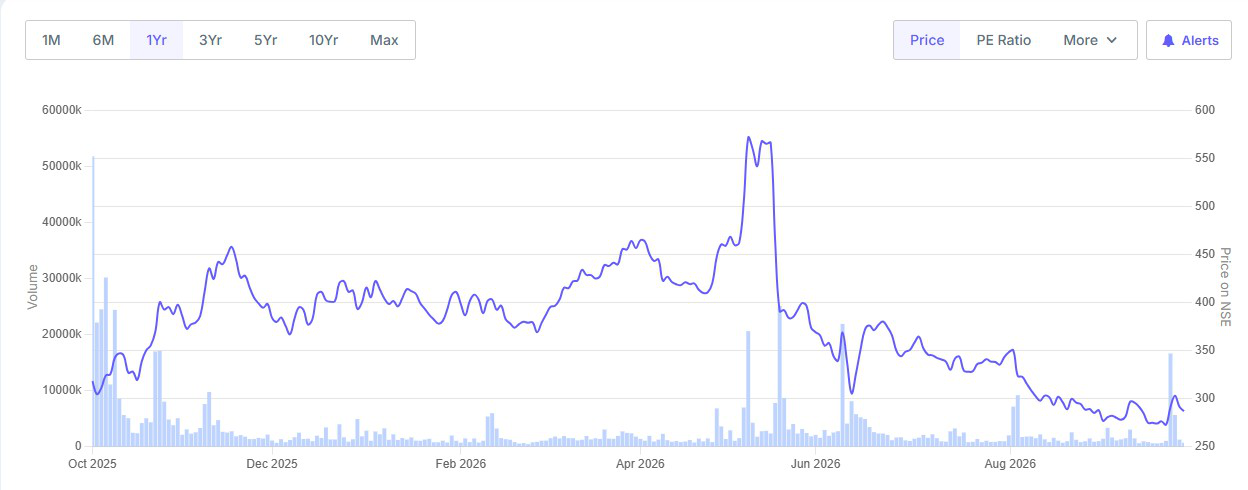
Despite JRRL’s potential, the stock has remained under pressure. Its six-month and year-to-date returns fell by 32.6% and 27.5%, respectively.
The stock is trading at a PE of 28.59, meaning investors are currently paying about ₹28.59 for every ₹1 of the company’s trailing earnings. At this multiple, earnings growth and margin improvement will be important to support the valuation, while weaker-than-expected profitability could increase valuation risk.
Following JRRL’s Q1 FY27 results, Motilal Oswal, in its 4 August 2026 report, maintained its Buy rating but revised the target price to ₹460 from ₹560 earlier. The stock currently trades at ₹287. The brokerage based its valuation on a 25x multiple of FY28E earnings per share (EPS).
#2 Gravita India: The Wider Recycling Platform
Gravita India Limited has built its business around recovering value from end-of-life materials, with its portfolio spanning lead, aluminium, plastics, waste tyres and, since January 2026, lithium-ion batteries.
Its manufacturing footprint includes facilities in India, Sri Lanka and Africa, while the company says its customer network extends across 70+ countries. Gravita also provides turnkey recycling solutions, consultancy and scrap procurement, giving it exposure beyond simply operating recycling plants. The company has executed more than 70 turnkey recycling projects globally.
Gravita’s solar exposure currently comes primarily through materials recycling and energy-storage recycling, rather than a dedicated PV-module recycling business.
Solar Power Is Not the Thesis
By FY25, Gravita had 1,805 kW of solar power capacity at its Indian manufacturing facilities, which generated 1.96 million units of solar electricity during FY25 and helped avoid 1,390 tonnes of CO₂ emissions. Its FY25 annual report separately reports 2.9 MW of total installed solar capacity.
These installations relate to Gravita’s own renewable-power use and should therefore be assessed separately from its recycling business.
Solar modules contain aluminium frames, copper, plastics and other recoverable materials. Gravita already has established capabilities in aluminium and plastic recycling and is expanding into copper recycling. The company identifies copper and copper alloys for applications including solar installations, inverters, wind installations and power-distribution networks.
For readers, this means Gravita’s current exposure is primarily through established aluminium and plastics recycling, expanding copper capabilities and lithium-ion battery recycling, with direct PV-module recovery remaining a potential future layer.
Copper Expansion Changes the Mix
In August 2026, Gravita announced plans to establish a copper recycling plant in Mundra, Gujarat, and in May 2026, another in Mandvi, Gujarat. The company has also entered into definitive agreements concerning Rashtriya Metal Industries Limited, further expanding its non-ferrous-metal platform.
These developments strengthen Gravita’s broader non-ferrous recycling platform rather than creating a solar-specific revenue stream.
Battery Recycling Adds a More Tangible Link
Gravita’s January 2026 entry into lithium-ion battery recycling creates another, more direct connection with renewable energy. Its 6,000 MTPA lithium-ion battery recycling plant at Mundra was commissioned with an investment of about ₹14 crore from internal accruals. The company has stated that the plant uses advanced recycling technology to recover resources from lithium-ion batteries.
Importantly for the solar thesis, Gravita’s stated collection sources for lithium-ion batteries explicitly include energy-storage systems, including solar and grid-scale storage. This gives Gravita a more visible route into the energy-storage side of the renewable-energy circular economy than direct PV recycling at present.
Q1 FY27: Growth Is Visible, But Solar Is Not Yet the Earnings Driver
Gravita India reported consolidated Q1 FY27 revenue from operations of ₹1,475.06 crore, up 41.8% YoY and 25.8% QoQ. PAT increased 14.3% YoY to ₹106.37 crore and 15.8% QoQ.
Management attributed the improvement to capacity additions, a stronger value-added product mix and operating efficiency. The RecycleOne Metal & Industries Limited (RMIL) acquisition also added copper to the consolidated portfolio.
Segment-wise business shows clear potential in the broader recycling opportunity. On a YoY basis:
- Lead revenue was ₹954.75 crore versus ₹928.17 crore, with segment profit at ₹109.51 crore versus ₹115.60 crore.
- Aluminium revenue rose to ₹110.52 crore from ₹94.41 crore, while segment profit increased sharply to ₹11.35 crore from ₹6.61 crore.
- Copper contributed ₹376.05 crore in revenue and ₹15.70 crore in profit, with no Q1 FY26 comparison because RMIL was acquired in March 2026.
The Q1 numbers show a changing business mix: copper has become a meaningful contributor, aluminium profitability has improved sharply, while lead remains the largest disclosed segment.
Solar Is Only Part of the Valuation Story
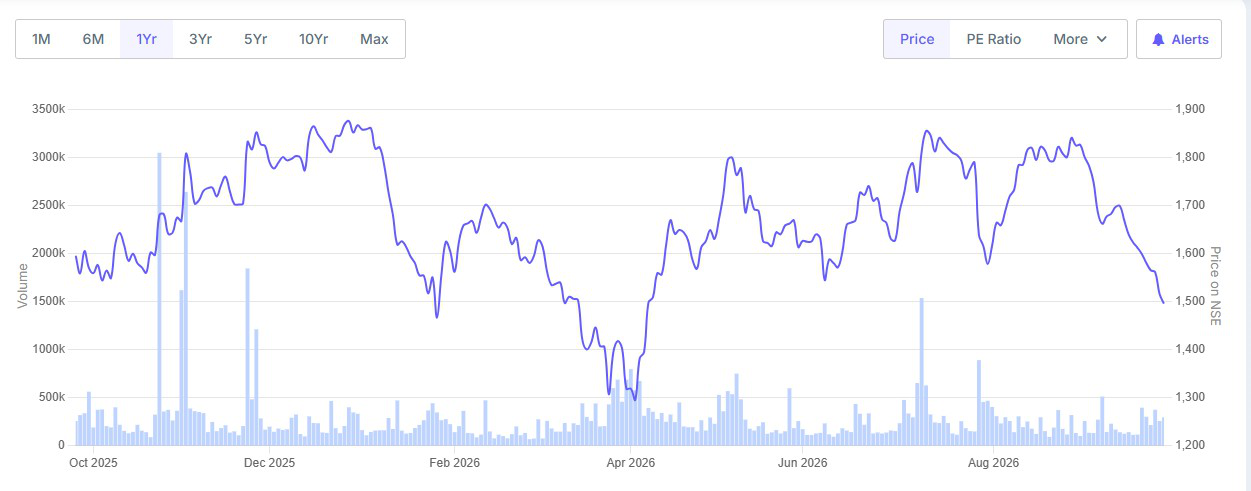
On the price chart, Gravita India saw mixed performance. Its share price rose 10.4% over six months but fell more than 16% year to date, indicating that the recent recovery has not fully reversed the stock’s earlier decline.
The stock is trading at a PE of 29.64. At this multiple, sustained earnings growth and margin improvement will be important to the stock’s valuation.
Motilal Oswal, in its latest FY27 report dated 28 July 2026, retained its Buy rating on Gravita India but lowered its target price to ₹2,100 from ₹2,200. The stock currently trades at ₹1,495.The brokerage expects Gravita’s shift towards a multi-commodity recycling platform to support its long-term growth, with the expansion of its copper, rubber and other recycling businesses gradually reducing the company’s dependence on its traditional lead-recycling operations.
Regulation Could Turn Waste Into Formal Feedstock
India’s solar recycling framework is moving from a largely voluntary activity towards a regulated waste-management market.
The E-Waste (Management) Rules, 2022 explicitly cover solar photovoltaic (PV) modules, panels and cells. Producers are required to register on the CPCB portal, maintain an inventory, file annual returns and store solar PV waste generated up to 2034-35. The government has also established an online EPR portal for e-waste management.
However, the regulatory framework should not be interpreted as a fully developed solar-specific EPR market. CEEW notes that the current EPR targets under the E-Waste Rules are not applicable to solar-module recycling and has recommended dedicated collection and recycling targets for the solar sector. This means regulation provides a foundation, but the commercial incentive structure still needs to evolve.
The Ministry of New and Renewable Energy (MNRE) has also identified solar PV recycling as a priority area under its Renewable Energy Research and Technology Development (RE-RTD) Programme. The Ministry is supporting research projects to recycle and recover materials from solar panels, including critical materials.
The policy opportunity extends beyond panels.
The Battery Waste Management Rules, 2022 establish extended producer responsibility (EPR) for waste batteries, including lithium-ion batteries, with recycling, recovery and recycled-content obligations. NITI Aayog notes that recycled-content obligations for new batteries begin from FY2026-27, potentially creating recurring demand for recovered battery materials.
The Tonnes Matter, But the Yield Matters More
Collection and transportation are critical to the economics of solar-panel recycling because panels are spread across utility-scale projects, commercial installations and rooftop systems. A recycler needs sufficient feedstock density and an efficient collection network to make processing economical.
Processing costs, collection expenses and recovery rates will ultimately determine whether a large waste stream can support attractive recycling economics.
For JRRL and Gravita, existing scrap-procurement networks and non-ferrous recycling capabilities could reduce some barriers to building a completely new recycling platform. However, whether this translates into meaningful solar-related earnings will depend on their ability to secure PV waste and process it economically.
The Solar Recycling Race Will Be Won on Economics
The next phase of the solar-recycling story will depend on execution rather than the headline size of the opportunity. Investors should watch whether companies secure long-term feedstock agreements, build reliable collection channels and demonstrate consistent recovery yields at commercial scale. Predictable offtake contracts could also reduce dependence on volatile spot markets.
Working-capital intensity will be another key monitor because stronger revenue does not necessarily translate into stronger cash generation. Investors should also track capex discipline, project commissioning timelines and funding requirements to assess whether expansion can occur without putting pressure on balance sheets.
Finally, changes in recycling standards, producer-responsibility requirements and material-recovery norms could reshape industry economics, making regulatory implementation as important as capacity creation.
It may be a good idea to add these stocks to your watchlist and keep track to see how they perform in time to come.
Dislcaimer:
Note: We have relied on data from www.Screener.in throughout this article. Only in cases where the data was not available, have we used an alternate, but widely used and accepted source of information.
The purpose of this article is only to share interesting charts, data points and thought-provoking opinions. It is NOT a recommendation. If you wish to consider an investment, you are strongly advised to consult your advisor. This article is strictly for educative purposes only.
Rishabh Sinha is a seasoned financial content creator with over 10 years of experience in BFSI domain. His portfolio spans over 20 of India’s most trusted financial brands. Rishabh brings depth, structure, and a reader-first approach to every piece he crafts.
Disclosure: The writer and his dependents do not hold the stocks discussed in this article.
The website managers, its employee(s), and contributors/writers/authors of articles have or may have an outstanding buy or sell position or holding in the securities, options on securities or other related investments of issuers and/or companies discussed therein. The content of the articles and the interpretation of data are solely the personal views of the contributors/ writers/authors. Investors must make their own investment decisions based on their specific objectives, resources and only after consulting such independent advisors as may be necessary.