


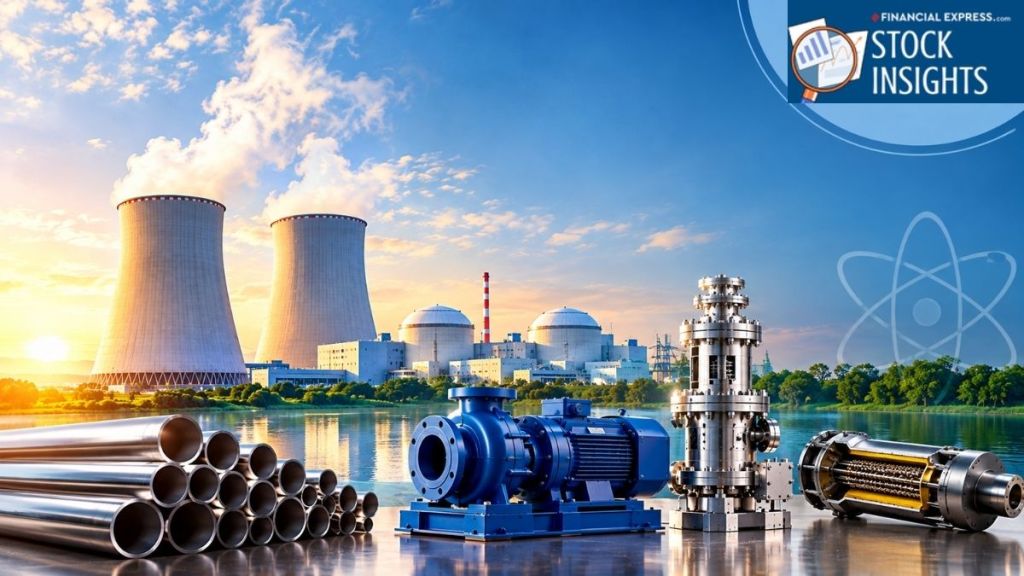

India’s nuclear power build-out is entering a phase where the opportunity is moving from policy announcements to actual project execution. The country is targeting an increase in installed nuclear capacity from around 8.8 gigawatts (GW) today to 22.5 GW by FY32, and 100 GW by 2047.
The pipeline includes 10 indigenously designed 700 MW Pressurised Heavy Water Reactors (PHWRs) being developed in fleet mode. The government has allocated ₹20,000 crore for developing indigenously built small modular reactors under Budget 2026. National Thermal Power Corporation also plans a US$ 62 billion (around ₹ 6 lakh crore) Nuclear expansion.
The SHANTI Act further supports the opportunity by opening India’s nuclear sector to private and foreign participation, unlocking an estimated US$ 214 bn in investment opportunity. Private sector interest is translating into commitments. Six major industrial groups, including Reliance, Tata Power, Adani Power, JSW Energy, and Jindal Steel & Power, have submitted proposals under NPCIL’s Bharat Small Reactor programme.
This could create a major opportunity for companies across the nuclear power value chain. Nuclear projects require specialised stainless steel pipes, nuclear pumps, and other reactor parts, including coolant and fuel systems. Against this backdrop, this article examines three market leaders in the nuclear power value chain.
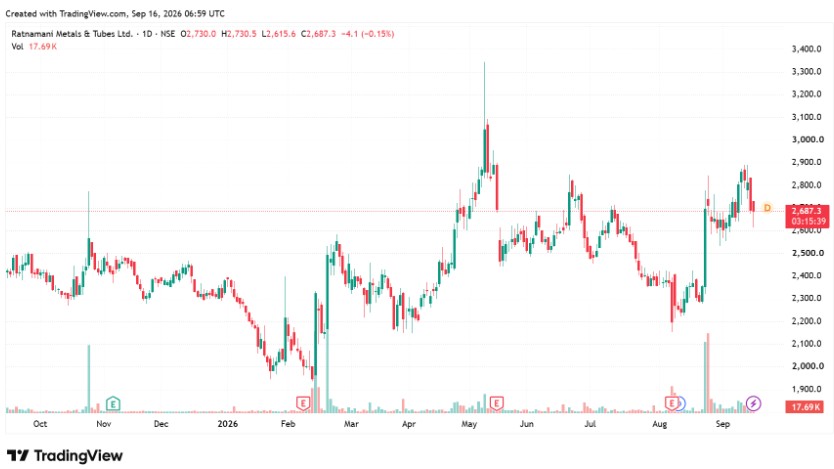
#1 Ratnamani Metals: India’s nuclear pipe and spooling specialist
Ratnamani Metals & Tubes holds a high-barrier position in the nuclear and atomic energy sector across both primary materials and pre-fabricated piping solutions. Ratnamani is approved by the Nuclear Power Corporation of India (NPCIL) for supplying critical instrumentation seamless tubes for primary reactor piping.
The NPCIL Monopoly: Inside India’s Only Certified Nuclear Pipe Spooling Base
Its facility is currently the only nuclear-approved facility in India for NPCIL pipe spooling. Internationally, it has been approved to supply nuclear projects in Egypt, Türkiye and Hungary. Its joint venture, Ratnamani Finow Spooling Solutions (RFSS), is formed with Switzerland-based Technoenergy AG.
Its holding entity, FINOW GmbH (Germany), brings more than a century of expertise in manufacturing nuclear spools. RFSS manufactures nuclear-grade pre-fabricated pipe spools, fittings, hangers, and auxiliary support systems. The company reported revenue of ₹390 crore in FY26, up 600% year on year.
FY26 Financial Surge: Decoding the 600% Topline Spike and Capacity Roadmap
RFSS is expanding its manufacturing capacity from 1,500 metric tonnes (MT) to 4,000 MT with a new dedicated fabrication floor prioritising nuclear applications. The plant will target spool manufacturing for domestic and export nuclear applications. The target timeline for completing this greenfield expansion is December 2026.
RFSS’s strong performance continued in Q1FY27. Revenue grew 54.8% year-on-year to ₹119.6 crore in Q1FY27. Net profit increased to ₹3.9 crore from ₹2.7 crore in Q1FY26. RFSS continues to have an active order book of over ₹300 crore as of Q1FY27. Management has guided for 20-25% revenue growth for RFSS in FY27.
FY32 Expansion Pipeline: Translating India’s Nearly 3x Nuclear Mandate into Order Inflows
Management states that a typical 1 gigawatt (GW) greenfield nuclear power plant requires 4,000-5,000 tons of pipe spools. Coupled with India tripling its nuclear capacity by FY32, this provides multi-year order-pipeline visibility.
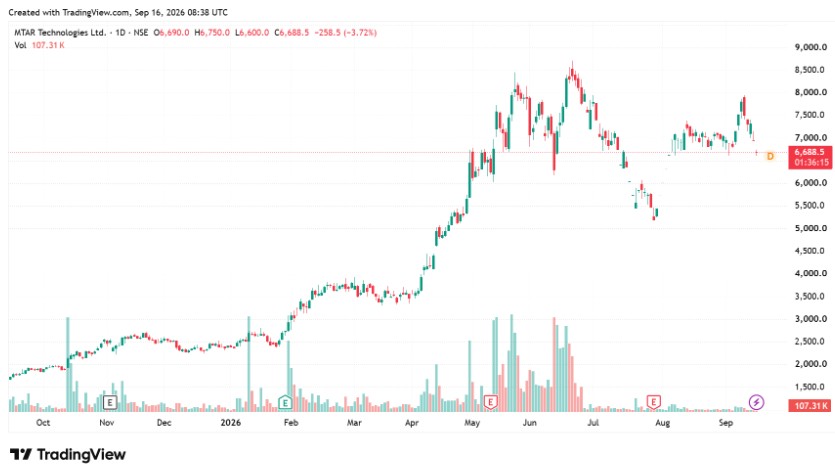
#2 MTAR Technologies: Critical reactor components for India’s nuclear expansion
MTAR Technologies maintains a 60% to 70% order share for reactor components. MTAR manufactures full Fuel Transfer Systems and Fuel Machining Head. It also supplies bridge and column assemblies that move the fuel machining head vertically and sideways. Other products include coolant channel assemblies, control and shutdown mechanisms.
Order Inflows vs Revenue Lag: Navigating the Nuclear Segment’s Cyclical Slump
Civil nuclear revenues have been cyclical in recent years due to long execution cycles and first-article qualifications. Revenue contribution has fallen from 8% of revenue in FY23 to 1% (₹3.2 crore) in Q1FY27. But execution is likely to pick up from H2FY27 onwards. Management expects the nuclear business to deliver consistent and sustainable growth going ahead. This is supported by a record-high order book visibility.
MTAR secured its largest-ever nuclear order inflow of ₹504 crore for Kaiga 5 and 6 projects. With ₹684 crore in orders, civil nuclear power represented 13.3% of all new incoming order receipts in Q1FY27. MTAR expects ₹130-150 crore in new refurbishment orders from reactors due for maintenance and overhauls in FY27.
The ₹800-Crore Milestone: How Short-Cycle Refurbishment Tenders Accelerate Cash Flows
This could take the total refurbishment opportunity to more than ₹200 crore. Unlike long-cycle new reactor components, refurbishment orders have a short execution cycle of within 2 years. Once these refurbishment orders are awarded, MTAR’s nuclear order book will expand from its existing base of ₹684 crore to close to ₹800 crore.
Management expects to execute this order book in 3 to 3.5 years. Going forward, tenders have been issued for 4 reactors at Mahi Banswara under the NTPC-NPCIL partnership. Management expects Mahi Banswara’s order capacity to be much higher than Kaiga 5/6. Order award is expected in FY28.
Mahi Banswara & Breeder Tenders: Securing Dominance in NPCIL’s Next Expansion Wave
For the prototype fast breeder reactor, MTAR supplied most of the critical core assemblies directly to the government. Now, the government is planning additional breeder reactors while preparing additional orders. With a 60-70% order share for reactor components, MTAR may get a bigger share from this opportunity.
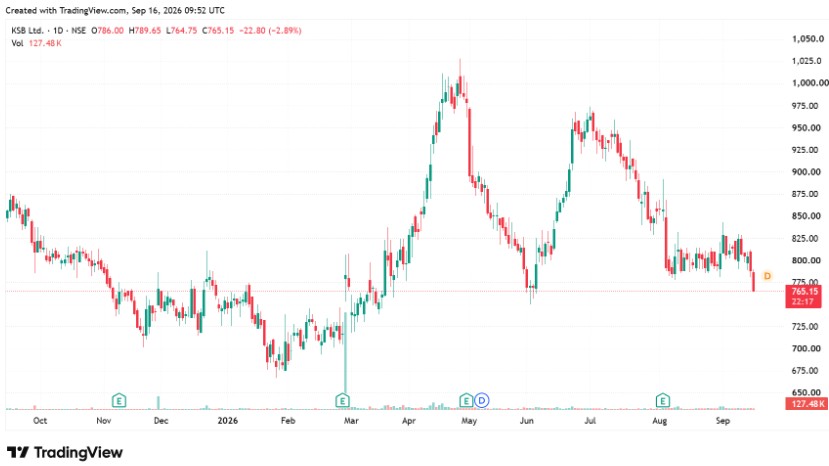
#3 KSB: India’s nuclear pump leader powering the reactor fleet
KSB’s nuclear business operates as a specialised vertical within its Energy Pump Division. KSB, which was formerly called KSB Pumps, is India’s market leader in nuclear pumps, having equipped all PHWRs in the country since Narora (1978/1983).
Monopoly Moat: Equipping India’s PHWR Fleet Since 1978 and Shirwal Capacity Boost
KSB manufactures nuclear pumps at its Shirwal facility in Maharashtra. It has recently expanded the plant capacity by about 20% to accommodate upcoming nuclear and energy orders. KSB was the first pump manufacturer to achieve ISO-19443 certification. The plant adheres to stringent nuclear standards, including ASME Section III NB requirements.
KSB covers end-to-end equipment needed for both the primary (nuclear) and secondary (conventional) circuits across multiple reactor types. It includes the primary coolant pump, reactor water cleanup pump, emergency core cooling, residual heat removal, and volumetric control and safety injection systems.
The ₹1,235-Crore Order Book: Navigating Bharat Small Reactors and ASHVINI Tenders
The company’s nuclear order book stands at ₹1,235.4 crore as of June 2026. The typical contract cycle is 24-36 months. Final physical deliveries to NPCIL average 48 months from the order date due to multi-stage design approvals and nuclear inspections. Primary coolant pumps are among the very first long-lead items ordered alongside steam generators.
Further, near-term tenders are expected for 8 new reactors, including projects under ASHVINI (the NTPC-NPCIL joint venture) such as Mahi Banswara. The Indian government has announced plans for 5 indigenous 220 MW Bharat Small Reactors, an area where KSB is well-positioned due to its existing 220 MW PHWR design heritage.
The company is also seeing demand to refurbish and modernise older operating reactors, such as Tarapur. Current active projects include supply of 100% indigenous primary coolant pumps and export orders for 8 critical safety class 2 pumps. Coolant pump testing is slated to resume around September 2026.
Once the initial 500-hour endurance test completes, dispatches will proceed at 1 pump per quarter, with potential capacity to scale up to 6 pumps per year. Financially, revenue grew 3.6% year on year to ₹691 crore in Q2CY26. Operating profit fell 9.9% to ₹82 crore, while margin fell 200 bps to 11.9%. As a result, net profit fell 18.6% to ₹57 crore.
Margin Squeeze vs H2 Rebound: Input Cost Lags and the CY26 Double-Digit Target
Management expects exports to normalise in H2CY26 after a temporary pause during H1CY26. Further, surging gas prices increased casting costs at supplier foundries. Management usually passes on these costs to customers within a 3-6-month lag. The full benefit in financial margins will reflect thereafter.
KSB aims to achieve double-digit top-line and bottom-line growth for 2026 as operations gain momentum in the second half. KSB operates on a calendar year fiscal cycle.
Execution Watch: Evaluating Bid Conversion and Balance Sheet Risk
KSB stands out for its strong Return on Capital Employed (ROCE) and Return on Equity (ROE), followed by Ratnamani and MTAR. Valuation-wise, all three companies trade at a premium to the industry median P/E multiple and their historical 5-year median valuation.
Particulars | Price-to-Earnings Multiple (X) | Return Ratios | |||
| Company | 3Y Median | Industry | ROE (%) | ROCE (%) | |
| Ratnamani | 43.2 | 35.4 | 21.6 | 12.6 | 17.9 |
| MTAR | 151.0 | 92.9 | 24.3 | 12.6 | 15.2 |
| KSB | 51.0 | 50.4 | 41.5 | 18.4 | 24.7 |
| Source: Screener.in (As of 16 September 2026) | |||||
India’s nuclear expansion is moving into an execution phase, creating a long-duration opportunity for companies supplying critical equipment and components to the sector. Ratnamani Metals, MTAR Technologies and KSB offer different exposure to this opportunity.
Ratnamani is positioned around specialised nuclear pipes, tubes and pre-fabricated spools, with its RFSS joint venture adding fabrication capacity and export potential. MTAR has exposure to critical reactor components, with new orders from Kaiga 5 and 6, refurbishment opportunities and potential orders from upcoming projects such as Mahi Banswara.
KSB, meanwhile, has a long operating history in nuclear pumps and a sizeable nuclear order book. Additional demand is expected from new reactors and refurbishment of the existing fleet.
However, the opportunity will depend on how quickly projects move from tenders to order awards and, eventually, revenue recognition.
Long approval cycles, stringent qualification requirements and extended execution timelines can create a significant gap between order visibility and financial performance. That said, these companies could be worth keeping on your watchlist.
Disclaimer
Note: Throughout this article, we have relied on data from http://www.Screener.in and the company’s investor presentation. We used an alternative, widely accepted source only when the data were unavailable.
The purpose of this article is only to share interesting charts, data points, and thought-provoking opinions. It is NOT a recommendation. If you wish to consider an investment, we strongly advise you to consult your advisor. This article is strictly for educational purposes only.
About the Author: Madhvendra has been deeply immersed in the equity markets for over seven years, combining his passion for investing with his expertise in financial writing. With a knack for simplifying complex concepts, he enjoys sharing his honest perspectives on startups, listed Indian companies, and macroeconomic trends.
A dedicated reader and storyteller, Madhvendra thrives on uncovering insights that inspire his audience to deepen their understanding of the financial world.
Disclosure: The writer and his dependents do not hold the stocks discussed in this article.
The website managers, their employees (s), and contributors/writers/authors of articles have or may have an outstanding buy or sell position or holding in the securities, options on securities, or other related investments of issuers and/or companies discussed therein. The articles’ content and data interpretation are solely the personal views of the contributors/ writers/authors. Investors must make their own investment decisions based on their specific objectives and resources, and only after consulting any independent advisors as necessary.