


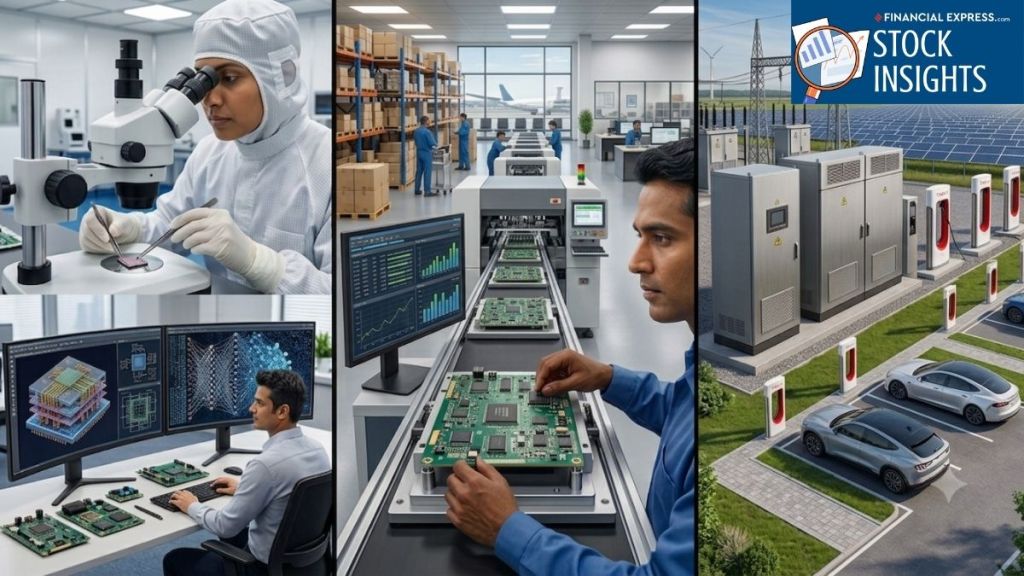

India is doubling down on its semiconductor ambitions.
The government has approved a fresh outlay of nearly ₹1.25 lakh crore under India Semiconductor Mission (ISM) 2.0. This marks one of the country’s biggest industrial policies since the Production-Linked Incentive (PLI) schemes.
The proposed allocation is nearly 1.6 times the ₹76,000 crore approved under the first phase of the ISM in 2021. Unlike the initial phase, which primarily focused on attracting anchor investments, the ISM 2.0 aims to deepen the semiconductor manufacturing ecosystem.
The Structural Architecture of ISM 2.0
The scheme is expected to support semiconductor fabrication plants, Outsourced Semiconductor Assembly and Test (OSAT) facilities, Assembly, Testing, Marking, and Packaging units, compound semiconductors, electronic components, and the broader semiconductor supply chain. The timing is significant.
This could help India reduce its dependence on imports and strengthen its position in a sector that powers everything from smartphones and electric vehicles to defence systems and data centers. The ISM 2.0 is expected to benefit companies with established capabilities across the semiconductor value chain.
In line with this, we discuss three listed Indian companies that are well-positioned to benefit from the scheme.
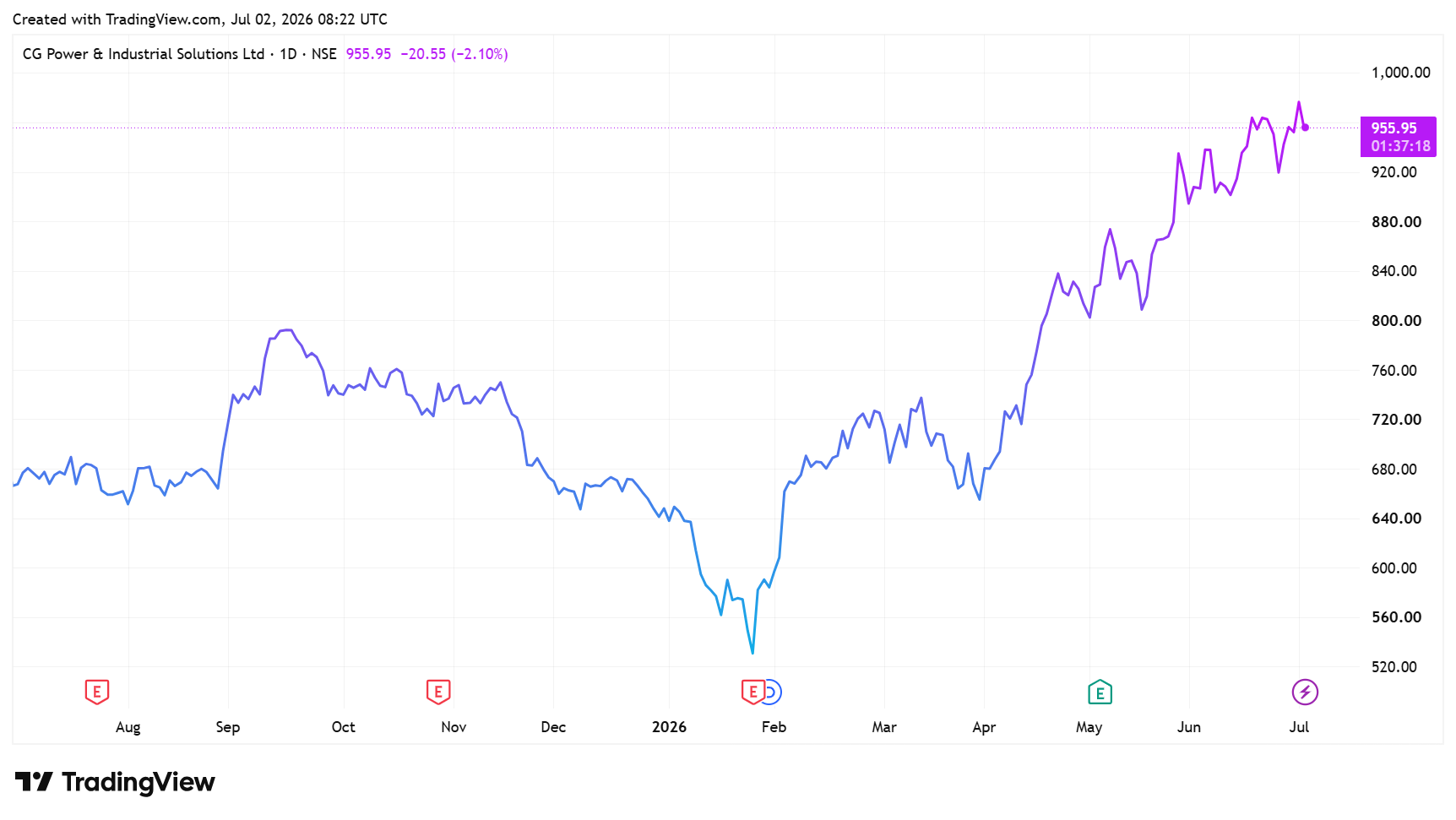
#1 CG Power: 145-lakh Daily Chip Engine
CG Power, part of the Murugappa Group, has aggressively expanded into the semiconductor industry. It has two subsidiaries serving this emerging sector: CG Semi Private Limited and Axiro.
Scaling to 145 Lakh Chips: Inside CG Power’s Massive Gujarat OSAT Expansion
CG Power unveiled India’s first end-to-end OSAT facility in Gujarat in August 2025. This launch positioned CG Semi as a full-service provider offering both traditional and advanced packaging technologies.
The currently operational G1 facility has a peak capacity of 5 lakh units per day. Management is actively working to increase this output soon. A second facility (G2) is under construction and is expected to be completed by the end of 2026. Once operational, it will increase production capacity to approximately 145 lakh chips per day.
Funding a ₹7,584-Crore Bet: Breaking Down ISM Subsidies and Capital Outlay
The total project cost for the OSAT facilities is estimated at ₹7,584 crore. The project is receiving significant government subsidies under the India Semiconductor Mission (ISM) scheme. The central government will provide ₹3,501 crore, and the state government (₹1,400 crore). As of 31 March, 2026, CG Semi has received a grant of ₹601.5 crore.
Designing for AI: Why the Renesas and EdgeCortix Deals Shift the Value Chain
Beyond hardware packaging, CG Power is actively building its semiconductor design capabilities through strategic investments and M&A to stay competitive amid shifting technologies such as Artificial Intelligence.
The company acquired the RF (radio-frequency) fabless semiconductor design business from Renesas Electronics for ₹284.1 crore. This fully operational business operates under the newly formed subsidiary “Exiro.” Further, it invested ₹51.3 crore in EdgeCortix, a fabless startup specializing in edge AI design and development.
High Capex vs. Future Gains: Analyzing the FY26 Segment Loss and Asset Surge
The semiconductor business is already generating substantial revenue, largely driven by Axiro. But it is currently operating at a loss due to heavy initial investments. The semiconductor segment reported revenues of ₹502.8 crore and a loss of ₹107.9 crore in FY26.
Management noted that revenue from the manufacturing of semiconductor chips could reflect within two quarters. The increase in total assets also reflects ongoing investment. As of the end of FY26, assets for the semiconductor segment nearly doubled to ₹1,421.4 crore, up from ₹773.5 crore the previous year.
#2 Kaynes Technologies: Export-focused packaging and PCB integration
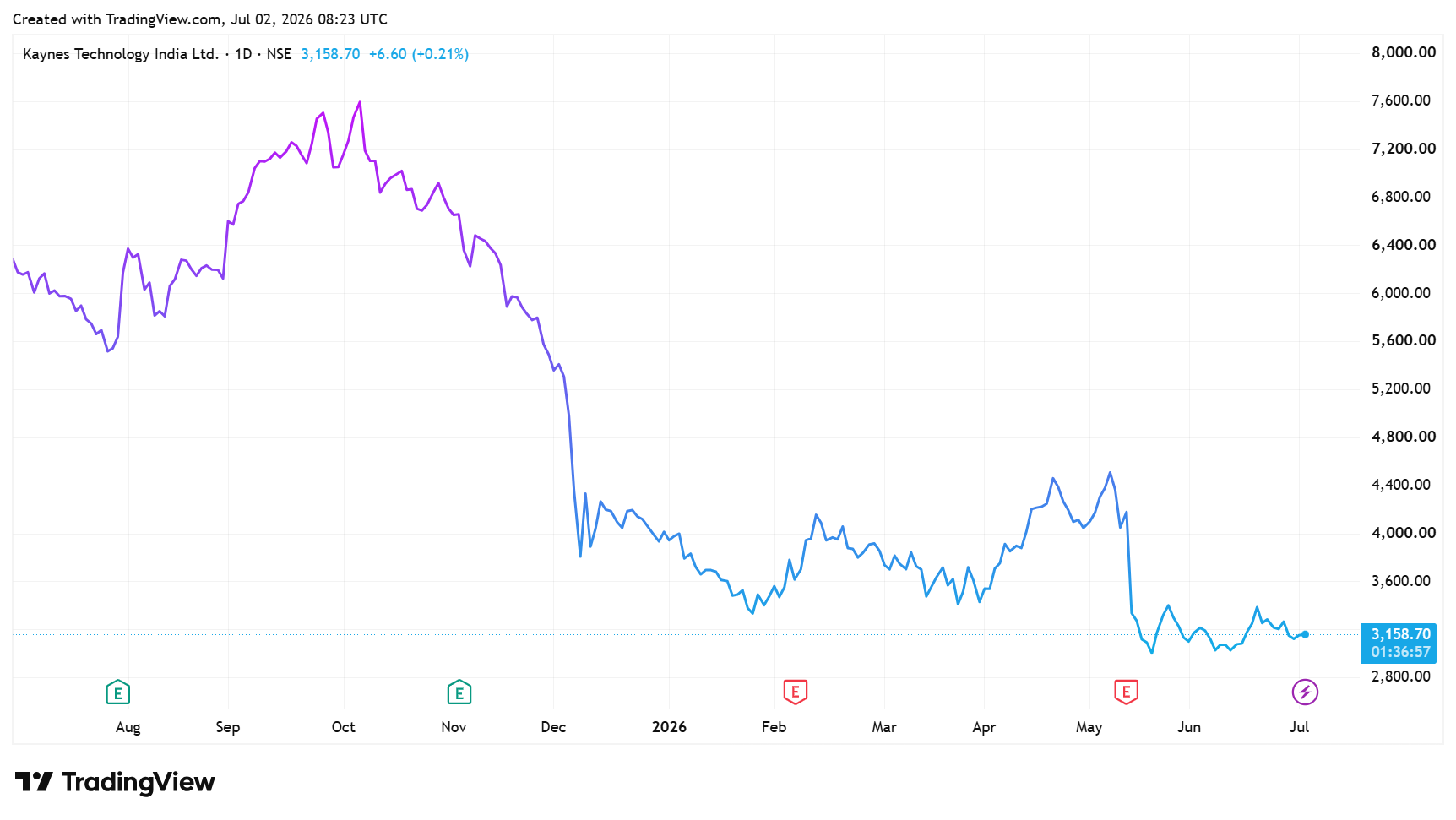
Kaynes Technologies, an Electronic Manufacturing Company, is actively scaling its presence in the semiconductor industry. Kaynes’ OSAT facility is also located in Gujarat. The semiconductor and PCB products are viewed as highly strategic components of Kaynes’ future.
Kaynes is scaling its semiconductor manufacturing. Currently, OSAT Unit 1 is fully operational, and the company expects Unit 2 to reach commercialization by Q2FY27. Management is currently evaluating how much of semiconductor production can be allocated to the company’s own products and how much will be sold to external clients.
Deeper Integration: Positioning OSAT and PCB Hubs for the Export Market
For design-specific, box-build solutions where Kaynes acts as the original design manufacturer, Kaynes aims to use the OSAT and PCB products to secure a competitive edge and technological advantage. Despite plans for full integration, the OSAT business will initially focus on the export market.
Forward Visibility: Evaluating the ₹2,500-Crore Semiconductor Order Pipeline
Kaynes expects to generate revenue of ₹250-300 crore from the OSAT business. The order pipeline for the semiconductor business is robust over both the short and medium term. Kaynes boasts a revenue visibility of over ₹2,500 crore in the OSAT segment over the next five years.
The adjacent PCB manufacturing business is expected to generate an additional ₹300-400 crore in revenue during its first year of operations. With customers already indicating demand beyond the planned capacity, Kaynes has a visible order pipeline and potential for further expansion.
By expanding into both the OSAT and PCB manufacturing, Kaynes is achieving deeper backward integration, enhancing its technological capabilities, and shifting its focus from just traditional electronic manufacturing services to high-value manufacturing. But its execution capabilities remain under scrutiny following a steep revenue miss in FY26.
Execution Reality Check: The FY26 Revenue Guidance Shortfall
Although the company’s operations present a promising opportunity, there are several red flags that investors should carefully consider. First, the company consistently missed its guidance during FY26. Kaynes initially projected revenue of ₹4,500 crore, later lowering it to ₹4,000 crore, but actual revenue came in at just ₹3,626.4 crore.
Structural Pivot: Abandoning Numerical Guidance Amid -₹600 Crore Cash Flows
The management has decided to discontinue providing explicit numerical revenue guidance. Instead, it has committed to growing at roughly twice the pace of the EMS industry, which is expected to expand at around 15-16% annually. A negative operating cash flow of ₹600 crore is another red flag. Kaynes has an order book of over ₹9,000 crore.
#3 RIR Power Electronics: India’s pioneer in infrastructure SiC
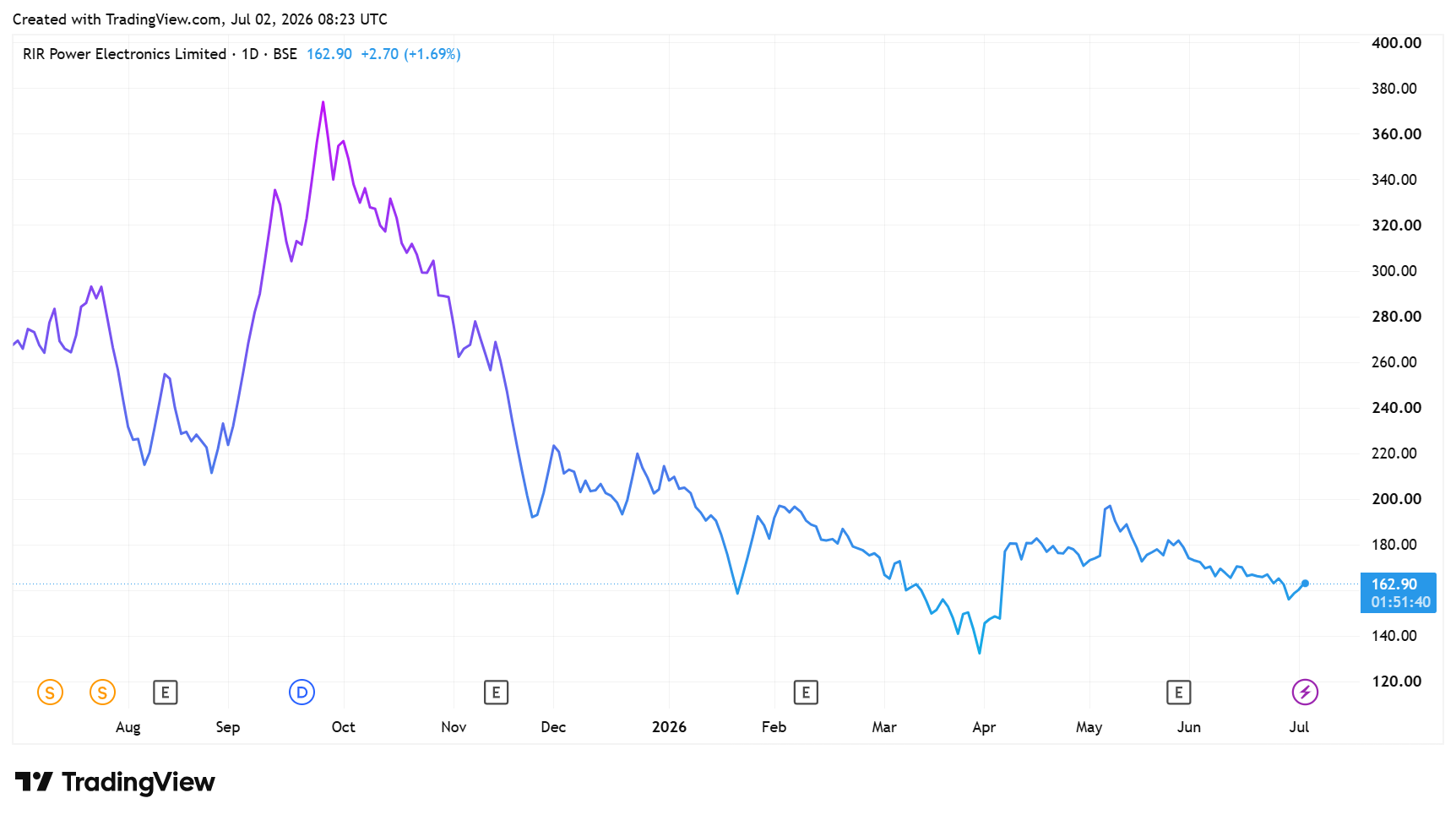
RIR Power Electronics has over 5 decades of legacy in designing and manufacturing high-power semiconductor devices and modules. The company notes that policies such as ISM, along with import curbs, will directly benefit RIR Power.
Target Global Dominance: RIR Play for 25% Share in High-Power Semiconductor Verticals
RIR focuses on medium and high-power semiconductor segments rather than low-power commoditized chips. The management aims to capture a 20-25% global market share in the medium and high-power verticals, including industrial, data center, and railway applications. RIR makes high-reliability devices for control, switching, and rectification applications.
Decoupling from Commodities: Inside RIR Heavy Infrastructure Module Portfolio
This includes Phase-Control Thyristors, Inverter-Grade Thyristors, Standard and Fast-Recovery Diodes, and Diode-Bridge Rectifiers. RIR mixes multiple semiconductor devices into ready-to-use assemblies. Its module portfolio features High Voltage Modules, Diode Bridge Modules, and Starpower Products such as IGBT Modules.
The ₹618-Crore Odisha Bet: Securing a 50% State Subsidy for India’s First SiC Plant
These components form the heart of electrical systems and are widely used in critical infrastructure such as defence, railways, nuclear power, renewables, electric mobility, and green hydrogen. RIR is setting up India’s first silicon carbide (SiC) manufacturing facility in Odisha at a cost of ₹618 crore.
The Engineering Frontier: Understanding the Epitaxial Layer Bottleneck
The epitaxial process is central to RIR’s expansion into SiC technologies. Epitaxy is the process of growing an ultra-thin, defect-free crystalline layer of silicon carbide on top of a SiC wafer. That said, of the said capex, the Government of Odisha has provided 50% as a subsidy.
Two-Phase Execution: Epitaxy Timeline and Q2FY27 Production Milestones
The rollout is structured into two phases: Phase 1 focuses on epitaxy and packaging, while Phase 2 focuses on full fabrication. Cleanroom construction for epitaxy will be completed by June 2026, and installation of plant and machinery is expected by the end of July. RIR expects epitaxy wafer production to begin in Q2FY27.
SiC devices offer high efficiency, fast switching speeds, high voltage tolerance, and low power loss. These properties make them crucial for the next wave of modern technologies, including EV charging, aerospace electronics, power grids, and hydrogen energy systems.
Here’s a side-by-side comparison of the three companies:-
| Parameter | CG Power | Kaynes | RIR Power |
| Semiconductor Focus | OSAT, chip design | OSAT, PCB manufacturing | SiC, epitaxy, power semiconductors |
| Key Project | Gujarat OSAT facility | Gujarat OSAT & PCB plants | Odisha SiC manufacturing facility |
| Government Support | Central & state subsidies | Eligible under the ISM ecosystem | 50% Odisha subsidy for SiC plant |
| Near-term Trigger | G2 capacity expansion | OSAT & PCB commercialization | Epitaxy production in Q2FY27 |
| Long-term Opportunity | Advanced packaging & AI chips | Backward integration & exports | Indigenous SiC ecosystem |
| Key Risk | Capacity ramp-up | Execution and cash flows | Commercialization of SiC |
| Source: Management Commentary, Investor Presentation | |||
The next 12-18 months will be crucial, as each company approaches a major execution milestone that could determine the pace of revenue growth.
Pricing Efficiency: Evaluating High Valuation Multiples Against Industry Medians
CG Power has a higher Return on Capital Employed (ROCE) and Return on Equity (ROE) due to a strong profitability track record. From a valuation perspective, all three players are trading at significant premiums to their respective industry multiples.
Compared with its three-year historical median valuation, CG Power continues to trade at a premium, while RIR Power is valued broadly in line with it. Kaynes, after correcting 50% in the last year, is now trading at almost 50% below its historical valuation.
Notably, on a standalone basis, both CG Power and RIR are trading at historical premium multiples, leaving thin margins for operational execution.
| Peer Comparison (X) | |||||
Company | Price-to-Earnings Multiple | Return Ratios | |||
| Company | 3Y Median | Industry | ROCE (%) | ROE (%) | |
| CG Power | 125.0 | 101.0 | 37.7 | 27.0 | 20.8 |
| Kaynes | 57.9 | 119.9 | 32.0 | 13.2 | 9.6 |
| RIR Power | 182.0 | 181.1 | 30.3 | 7.9 | 5.6 |
| Source: Screener.in (Data as of 01 July 2026) | |||||
This implies that execution will be critical to sustaining the current valuation. Any miss on the financial front, whether in revenue growth, margins, or profitability, could lead to a valuation reset.
To conclude, the ISM 2.0 strengthens India’s long-term semiconductor ambitions, but not every company will benefit equally. Execution will be the defining factor. While the three companies are building meaningful capabilities across packaging, SiC, and semiconductor manufacturing, much of the opportunity is already reflected in valuations.
Investors should closely track project execution, capacity ramp-up, and profitability before pricing in the next leg of growth. For that, these names could be kept in your watchlist to track their execution.
Disclaimer:
Note: Throughout this article, we have relied on data from http://www.Screener.in and the company’s investor presentation. Only in cases where the data was unavailable have we used an alternative, widely used, and accepted source of information.
The purpose of this article is only to share interesting charts, data points, and thought-provoking opinions. It is NOT a recommendation. If you wish to consider an investment, you are strongly advised to consult your advisor. This article is strictly for educational purposes only.
About the Author: Madhvendra has been deeply immersed in the equity markets for over seven years, combining his passion for investing with his expertise in financial writing. With a knack for simplifying complex concepts, he enjoys sharing his honest perspectives on startups, listed Indian companies, and macroeconomic trends.
A dedicated reader and storyteller, Madhvendra thrives on uncovering insights that inspire his audience to deepen their understanding of the financial world.
Disclosure: The writer and his dependents do not hold the stocks discussed in this article.
The website managers, its employee(s), and contributors/writers/authors of articles have or may have an outstanding buy or sell position or holding in the securities, options on securities, or other related investments of issuers and/or companies discussed therein. The articles’ content and data interpretation are solely the personal views of the contributors/ writers/authors. Investors must make their own investment decisions based on their specific objectives, resources, and only after consulting such independent advisors as may be necessary.