




India’s next phase of solar expansion could increasingly take shape on farms, rather than just rooftops and large solar parks. A fresh government proposal could open up new opportunities for companies supplying solar equipment and executing agricultural solar projects.
On 21 October 2026, Financial Express reported that the Center is considering an outlay of around Rs 35,000 crore for PM-KUSUM 2.0, the proposed next phase of its agricultural solarisation programme.
The existing PM-KUSUM scheme has central financial support of approximately Rs 34,422 crore. The proposed second phase could go beyond installing solar irrigation pumps to integrate renewable energy with efficient irrigation and water conservation.
However, the final funding, structure and implementation guidelines are still under discussion.
If implemented at scale, the programme could create demand across the solar value chain. Pump manufacturers could benefit from fresh procurement, engineering and construction companies from agricultural solar projects, and domestic cell and module manufacturers from additional equipment requirements.
But exposure to solar energy alone does not guarantee an investment opportunity. Revenue growth, profitability, capital efficiency and debt levels remain important, particularly for smaller companies operating in a competitive industry.
Against this backdrop, we examine five small-cap solar stocks with return on capital employed (ROCE) above 35%, FY26 revenue exceeding Rs 1,000 crore, net profit of at least Rs 150 crore and revenue growth above 20%, alongside relatively low leverage.
The question is which of these businesses have the financial strength and market exposure to benefit if the proposed Rs 35,000 crore programme translates into actual orders.
#1 Oswal Pumps: 1.19 Lakh Solar Pumps Installed, Rs 236 Crore Repeat Order
Oswal Pumps manufactures solar irrigation systems, including pumps, motors and solar modules. Its established presence under PM-KUSUM provides direct exposure to any expansion in agricultural solarisation.
According to its FY26 annual report, the company had executed 1,19,402 solar pumping systems across 13 states by July 2026. This existing installation network positions it to participate in fresh tenders if PM-KUSUM 2.0 moves forward.
On 30 October, Oswal secured an additional Rs 235.92 crore order from Maharashtra’s electricity distributor for 10,000 solar pumps. Installations must be completed within 60 days of the work order, followed by five years of maintenance and monitoring.
1.2 GW Solar Cell Expansion Targets Domestic Content Requirements
Oswal Pumps plans to invest approximately Rs 456 crore in a 1.2 GW TOPCon solar cell manufacturing facility, targeting commercial production by April 2028. The project is intended to secure domestic cell supplies for government-backed solar schemes. However, the proposed use of IPO proceeds requires shareholder and regulatory approvals.
In FY26, consolidated revenue rose 44.3% YoY to Rs 2,064.4 crore, while net profit increased 34.1% to Rs 376.3 crore. Return on capital employed (ROCE) stood at 36.4% and return on equity (ROE) at 35.2%, with debt-to-equity of 0.14, meeting the financial screening criteria.
The company has yet to declare Q2 FY27 results. Its August earnings call highlighted competitive tender pricing and delayed government payments.
While PM-KUSUM 2.0 could support fresh orders, execution timelines, pricing pressure and working capital requirements remain important considerations.
Oswal Pumps Financial Performance
| Metric | FY26 |
| Revenue | Rs 2,064.4 crore |
| Revenue growth | 44.3% YoY |
| Net profit | Rs 376.3 crore |
| Profit growth | 34.1% YoY |
Source: Oswal Pumps FY26 Annual Report
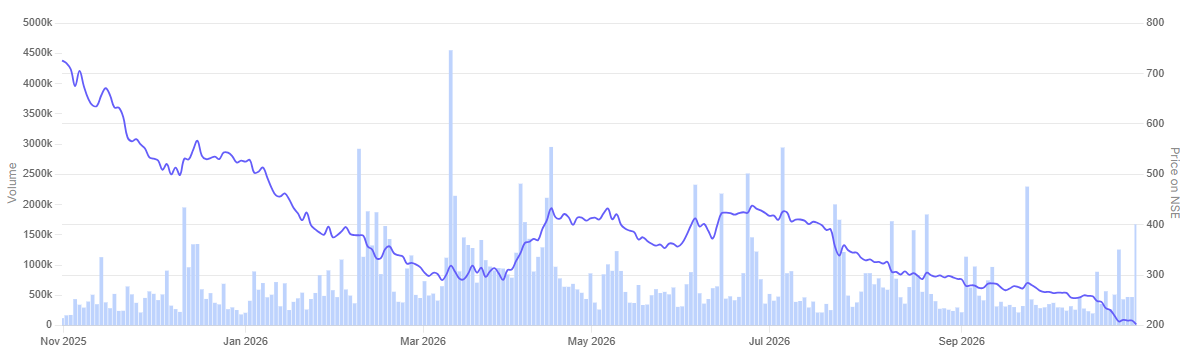
In the past year, the share price of Oswal Pumps tumbled 72.2%.
Oswal Pumps 1-Year Share Price Chart
Source: Screener.in
#2 GK Energy: 61,085 Solar Systems Installed, Rs 330 Crore Pump Order
GK Energy is a solar EPC company specialising in agricultural solar pumping systems. Its experience with government-backed irrigation projects provides direct exposure to opportunities under the proposed PM-KUSUM 2.0.
According to its FY26 annual report, the company installed 61,085 decentralised solar systems, including agricultural pumps and rooftop installations. It also commissioned 276 MW of renewable energy capacity during the year.
On 23 October, GK Energy secured a Rs 330.3 crore order from Maharashtra’s electricity distributor for 14,000 solar pumps. The installations must be completed within 60 days of the work order.
Rs 788 Crore Order Book Supports Expansion Beyond Solar Pumps
The company’s October investor presentation reported an order book of Rs 788 crore, including orders received after September. It also disclosed an order for 100,000 rooftop solar systems and a 150 MW/300 MWh battery storage project.
In FY26, consolidated revenue rose 56.7% YoY to Rs 1,715.3 crore, while net profit increased 53.4% to Rs 204.3 crore. ROCE stood at 40.9%, ROE at 36.8% and FY26 debt-to-equity at approximately 0.23, meeting the financial screening criteria.
In Q2 FY27, consolidated revenue grew 1.1% YoY to Rs 408.6 crore, while net profit rose 5.2% to Rs 49.4 crore. The company installed 19,391 decentralised systems during the quarter.
However, competitive tender pricing and delayed government payments remain concerns. Debtor days reached 204 in September, although subsequent collections have improved.
GK Energy Financial Performance
| Metric | FY26 |
| Revenue | Rs 1,715.3 crore |
| Revenue growth | 56.7% YoY |
| Net profit | Rs 204.3 crore |
| Profit growth | 53.4% YoY |
Source: GK Energy FY26 Annual Report
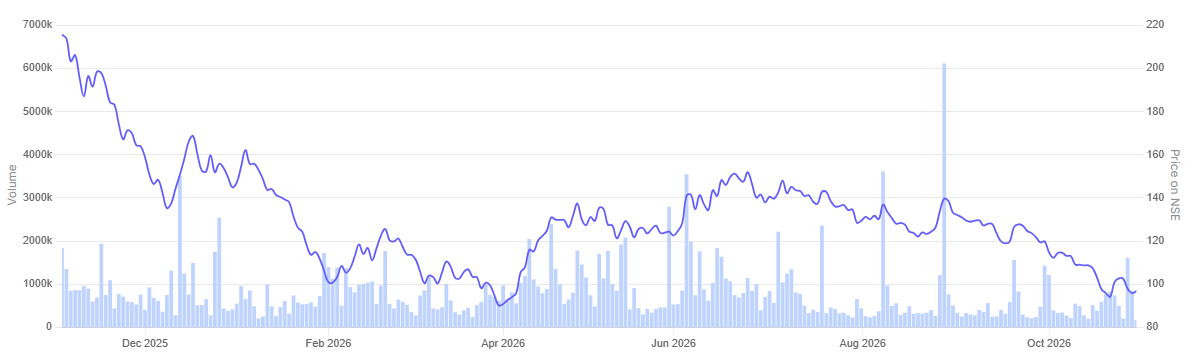
In the past year, the share price of GK Energy tumbled 55.2%.
GK Energy 1-Year Share Price Chart
Source: Screener.in
#3 Bondada Engineering: 1.7 GWp Solar Projects Commissioned, 5.3 GWp Under Execution
Bondada Engineering provides solar engineering, procurement and construction (EPC) services alongside telecom infrastructure. Its solar project execution capabilities make it relevant to potential agricultural solarisation opportunities under PM-KUSUM 2.0.
According to its FY26 annual report, renewable energy accounted for 79% of revenue. The company is expanding beyond EPC into independent power production, which involves developing and operating solar assets.
Bondada has commissioned approximately 1.7 GWp of solar EPC projects, with another 5.3 GWp under execution. The company also provides operations and maintenance services for solar installations.
Solar EPC Expansion Supports Growth, but Execution Risks Remain
Bondada is pursuing utility-scale solar, rooftop and hybrid renewable projects. Its FY26 annual report identifies PM-KUSUM among the government programmes supporting solar EPC demand, although the proposed second phase has yet to be finalised.
In FY26, consolidated revenue rose 81% YoY to Rs 2,842.8 crore, while net profit increased 86.5% to Rs 211.1 crore. ROCE stood at 39.4%, ROE at 35.7% and debt-to-equity at 0.42, meeting the financial screening criteria.
The company reports quarterly earnings but has yet to declare Q2 FY27 results.
While additional agricultural solar tenders could create opportunities, competitive bidding, project execution and working capital requirements remain key considerations.
Bondada Engineering Financial Performance
| Metric | FY26 |
| Revenue | Rs 2,842.8 crore |
| Revenue growth | 81.0% YoY |
| Net profit | Rs 211.1 crore |
| Profit growth | 86.5% YoY |
Source: Bondada Engineering FY26 Annual Report
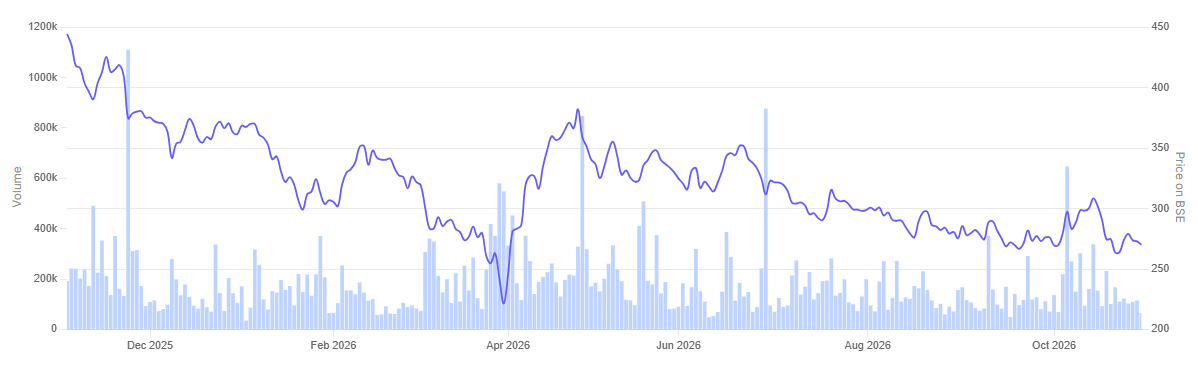
In the past year, the share price of Bondada Engineering tumbled 39.1%.
Bondada Engineering 1-Year Share Price Chart
Source: Screener.in
#4 Websol Energy System: 1.2 GW Solar Cell Capacity, Supplies to PM-KUSUM
Websol Energy System manufactures solar photovoltaic cells and modules. Its domestic manufacturing operations provide exposure to potential equipment demand under PM-KUSUM 2.0.
The company confirmed in its FY26 earnings presentation that it supplies to PM-KUSUM, PM Surya Ghar and other government schemes. It is also an ALMM-approved solar cell manufacturer, supporting its participation in domestic-content-compliant projects. However, scheme-specific sales were not disclosed.
According to NSE filing, Websol had 1.2 GW of solar cell capacity and 550 MW of module capacity in FY26. Its order book stood at Rs 1,161 crore as of March 2026.
2 GW TOPCon Expansion Targets 2027 Commissioning
The FY26 presentation also states that the company plans to upgrade an existing 600 MW cell line to TOPCon technology, increasing capacity to 750 MW. A separate 2 GW integrated cell and module facility is targeted for commissioning in 2027.
In FY26, consolidated revenue rose 82.4% YoY to Rs 1,049.44 crore, while net profit increased 95.8% to Rs 303 crore. ROCE stood at 63.2%, ROE at 66.9% and debt-to-equity at 0.21, meeting the financial screening criteria.
Websol has yet to declare Q2 FY27 results, with its board meeting scheduled for 4 November 2026.
While PM-KUSUM 2.0 could support domestic equipment demand, technology upgrades, pricing pressure and expansion timelines remain key considerations.
Websol Energy System Financial Performance
| Metric | FY26 |
| Revenue | Rs 1,049.44 crore |
| Revenue growth | 82.4% YoY |
| Net profit | Rs 303 crore |
| Profit growth | 95.8% YoY |
Source: Websol Energy System FY26 Annual Report
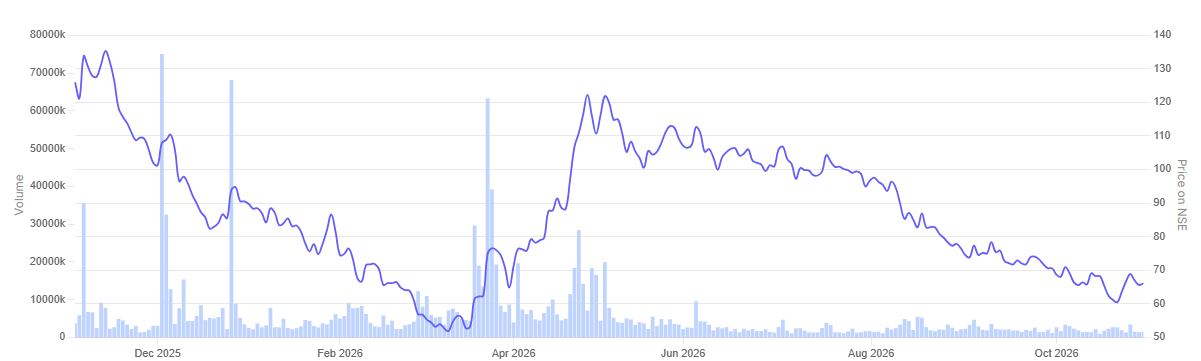
In the past year, the share price of Websol Energy System tumbled 47.5%.
Websol Energy System 1-Year Share Price Chart
Source: Screener.in
#5 Emmvee Photovoltaic Power: PM-KUSUM Module Sales, 10.4 GW Order Book
Emmvee Photovoltaic Power manufactures solar modules and TOPCon solar cells. Its domestic-content-compliant products provide exposure to government-backed schemes, including PM-KUSUM.
In its October earnings call, management said approximately 25% of module sales came from the combined retail and PM-KUSUM market. The company did not disclose PM-KUSUM’s individual contribution.
As of September 2026, its order book stood at 10.4 GW, with 1.5 GW of new orders during Q2. Around 70% of the order book comprised domestic-content-requirement (DCR) projects.
6 GW Manufacturing Expansion Targets March 2027
According to latest investor presentation, Emmvee is undertaking a Rs 5,500 crore integrated expansion. The 6 GW module facility is scheduled for December 2026, followed by the cell facility in March 2027. This would increase total capacity to 16.3 GW of modules and 8.9 GW of cells.
In FY26, consolidated revenue rose 116% YoY to Rs 5,049.9 crore, while net profit increased 193% to Rs 1,081.5 crore. ROCE stood at 44.6%, ROE at 50.7% and debt-to-equity at 0.10, meeting the financial screening criteria.
In Q2 FY27, revenue grew 39.4% YoY to Rs 1,576.4 crore, while net profit rose 60.6% to Rs 382 crore.
While PM-KUSUM 2.0 could support demand, pricing competition, policy changes and timely commissioning of new capacity remain key considerations.
Emmvee Photovoltaic Power Financial Performance
| Metric | FY26 |
| Revenue | Rs 5,049.9 crore |
| Revenue growth | 116% YoY |
| Net profit | Rs 1,081.5 crore |
| Profit growth | 193% YoY |
Source: Emmvee Photovoltaic Power FY26 Annual Report
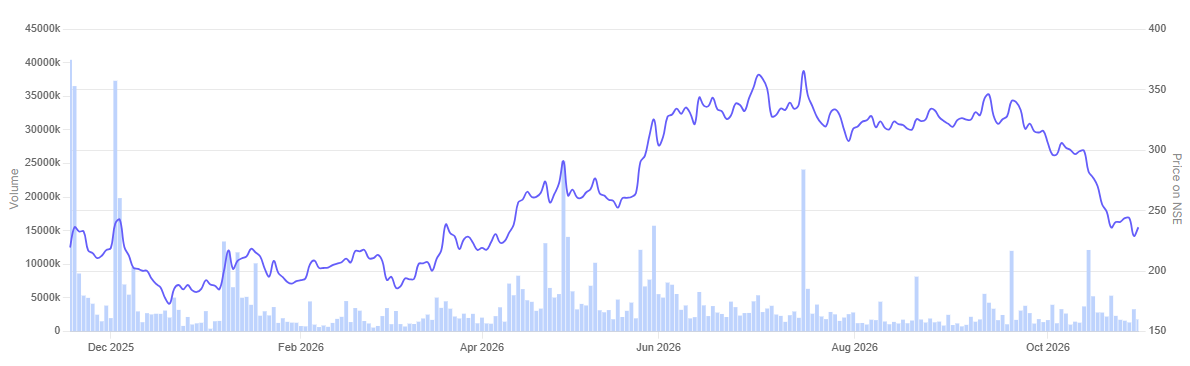
In the past year, the share price of Emmvee Photovoltaic Power is up 7.6%.
Emmvee Photovoltaic Power 1-Year Share Price Chart
Source: Screener.in
Conclusion
The proposed Rs 35,000 crore PM-KUSUM 2.0 programme could create fresh opportunities across India’s agricultural solar value chain. Solar pump manufacturers and project developers may benefit directly from new tenders, while domestic cell and module manufacturers could see higher demand as installations expand.
However, the opportunity is not uniform. Companies with existing PM-KUSUM orders have a clearer link to the scheme, while equipment manufacturers depend on how much additional demand translates into actual sales.
For investors, the key is to look beyond strong revenue growth and high ROCE. Order execution, working capital requirements, competitive pricing and the ability to maintain margins will remain important. Moreover, the proposed scheme is yet to receive final approval, and its eventual benefits will depend on funding, implementation timelines and the allocation of new projects.
You can track how these are progressing by adding stocks to your watchlist.
Disclaimer
Note: We have relied on data from www.Screener.in throughout this article. Only in cases where the data was not available, have we used an alternate, but widely used and accepted source of information.
The purpose of this article is only to share interesting charts, data points and thought-provoking opinions. It is NOT a recommendation. If you wish to consider an investment, you are strongly advised to consult your advisor. This article is strictly for educative purposes only.
Ekta Sonecha Desai has a passion for writing and a deep interest in the equity markets. Combined with an analytical approach, she likes to deep dive into the world of companies, studying their performance, and uncovering insights that bring value to her readers.
Disclosure: The writer and her dependents do not hold the stocks discussed in this article.
The website managers, its employee(s), and contributors/writers/authors of articles have or may have an outstanding buy or sell position or holding in the securities, options on securities or other related investments of issuers and/or companies discussed therein. The content of the articles and the interpretation of data are solely the personal views of the contributors/ writers/authors. Investors must make their own investment decisions based on their specific objectives, resources and only after consulting such independent advisors as may be necessary.