



Recycling is one of those businesses where the economics can be more interesting than the environmental story. In lead, used batteries and scrap provide a recurring source of raw material, while recycled lead goes back into batteries used in automobiles, backup power, telecom and renewable energy storage.
That gives lead recycling an unusual feature. The same ecosystem keeps creating both the raw material and the demand for the finished product. But an attractive industry does not automatically make an attractive stock. The more useful question is whether a company can build an advantage within that industry and grow without becoming increasingly dependent on fresh capital.
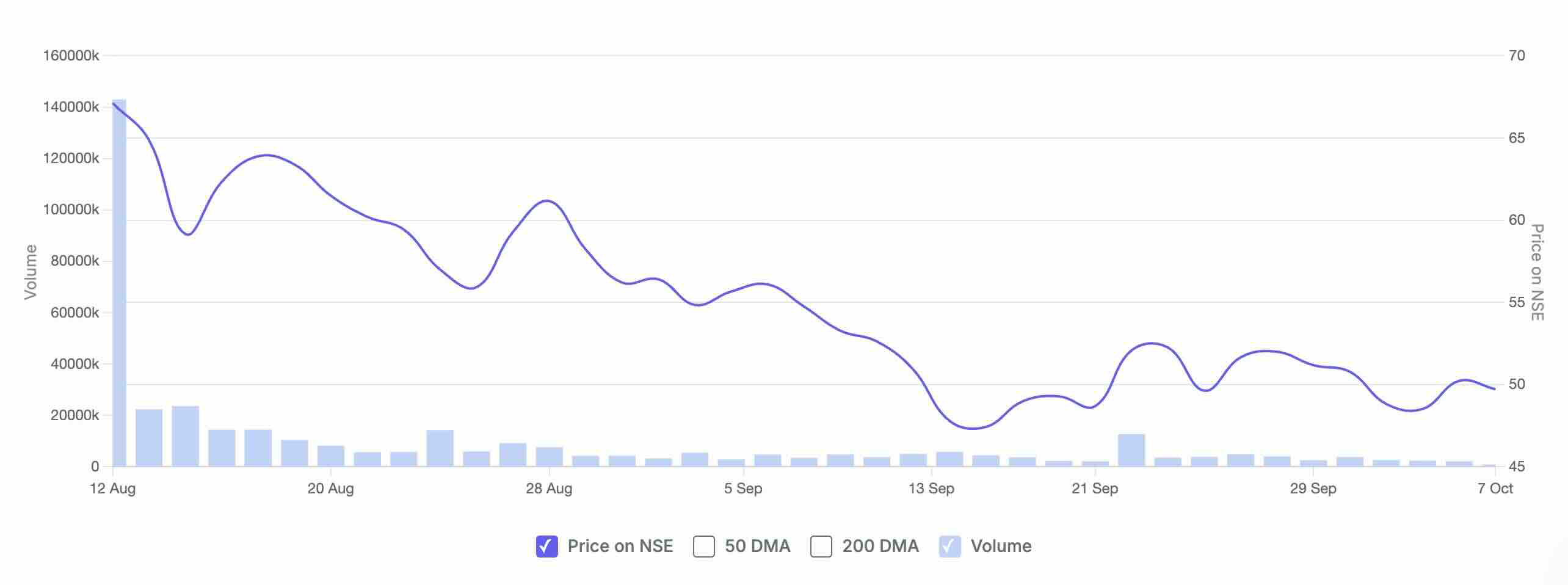
Ardee Industries Share Price Chart
Source: Screener.in
That is where Ardee Industries gets interesting. The company has grown rapidly, exports have become a significant part of the business and, most importantly, it increased installed capacity by 50.9% for around Rs 15 crore through brownfield debottlenecking.
The Rs 15 crore figure is worth pausing over. Adding 51% capacity is one thing. Adding it without spending hundreds of crores is another.
Evaluating the Moat: Why Lead Recycling Benefits From Structural Tailwinds
A commodity business does not usually come with much of a moat. Prices are visible, products can be similar and customers can often move between suppliers.
Recycling is somewhat different. A recycler needs access to scrap, the ability to process it efficiently, consistent product quality, regulatory compliance and long-standing customer relationships. These things take time to build.
The industry also has a structural advantage. Used lead-acid batteries keep coming back into the recycling chain, while demand for batteries continues across automobiles, backup power, telecom and renewable energy storage. Around 80-85% of recycled lead goes into batteries, while recycled lead has an indicative 30-40% cost advantage over primary lead.
But this is an industry advantage, not necessarily a company moat. Ardee still has to prove that its sourcing, processing capability and customer relationships can translate into superior economics.
Capital Efficiency as a Competitive Advantage: Ardee’s 2.09% Market Share
Ardee is among India’s top six manufacturers of pure lead2 and lead alloys, with a 2.09% market share in FY26. It produces high-purity lead with purity levels of 99.97%-99.985% and customised alloys for automotive, renewable energy, telecom, inverter, UPS and industrial applications.
The more interesting part, however, is the way it has expanded capacity.
Brownfield Debottlenecking: How Ardee Scaled Capacity 50.9% for Rs 15 Crore
| Metric | Current |
| Installed capacity | 1,56,950 MTPA |
| Capacity increase | 50.9% |
| Capex | ~Rs 15 crore |
| Current utilisation | ~65% |
| Optimum utilisation | 70-75% |
Source: Company earnings call transcript and investor presentation.
The additional capacity became effective on May 29, 2026, through brownfield debottlenecking at the existing plant, costing around Rs 15 crore. Management says 70-75% is the optimum utilisation and the extra refining capacity is partly a buffer, so it does not need to be filled immediately.
The company has also acquired a 5.56-acre land parcel for future expansion, including possible lead and other metal recycling. There is no immediate expansion plan, though.
Financial Trajectory: 58.8% Revenue CAGR vs Margin Expansion Trade-offs
The past two years have been strong. Revenue increased from Rs 463 crore in FY24 to Rs 742.7 crore in FY25 and Rs 1,167.7 crore in FY26, a 58.8% CAGR.
EBITDA rose from Rs 28.1 crore to Rs 147.1 crore, while EBITDA margin expanded from 6.1% to 12.6%. PAT increased from Rs 9 crore to Rs 84.7 crore, with PAT margin rising from 1.9% to 7.3%.
Revenue has more than doubled, but margin per tonne matters
| FY24 | FY25 | FY26 | |
| Revenue | Rs 463 cr | Rs 742.7 cr | Rs 1,167.7 cr |
| EBITDA | Rs 28.1 cr | Rs 65.9 cr | Rs 147.1 cr |
| EBITDA margin | 6.1% | 8.9% | 12.6% |
| Gross margin per tonne | Rs 29,467 | Rs 33,642 | Rs 38,297 |
*Calculated from reported numbers.
Source: Company earnings call transcript and investor presentation
The gross margin per tonne is particularly useful because this is a metal-linked business. Revenue can move sharply with metal prices, whereas the margin earned on each tonne gives a better sense of the underlying economics.
For now, the long-term trend is encouraging. Gross margin per tonne increased steadily between FY24 and FY26, while EBITDA margin also expanded.
Q1 FY27, however, provides a reality check. Revenue rose 35.2% YoY to Rs 338.8 crore and sales volume increased 13.6% to 17,645 tonnes. But EBITDA was almost unchanged at Rs 33.8 crore, while PAT rose only 5.8% to Rs 19.9 crore.
Q1 revenue is growing much faster than profit
| Metric | Q1 FY26 | Q1 FY27 | YoY change |
| Revenue | Rs 250.6 cr | Rs 338.8 cr | 35.2% |
| EBITDA | Rs 33.9 cr | Rs 33.8 cr | -0.29% |
| EBITDA margin | ~13.5% | 10.0% | Down |
| PAT | Rs 18.8 cr | Rs 19.9 cr | 5.8% |
| PAT margin | ~7.5% | 5.9% | Down |
| Sales volume | 15,529 MT | 17,645 MT | 13.6% |
*Calculated from reported numbers.
Source: Company investor presentation and earnings call transcript.
The distinction is important to note. In a metal-related business, revenue growth can partly reflect changes in metal prices. Volume growth and profitability per tonne tell us more about whether the underlying business is actually getting stronger.
Ardee’s management has also said that its FY27 growth should come from volumes rather than metal-price-related growth. That gives investors a cleaner test of the business.
Global Expansion: LME Empanelment Drives Export Growth to Rs 465.1 Crore
The other important change has been the export business. Export revenue increased from Rs 81.6 crore in FY24 to Rs 131.1 crore in FY25 and Rs 465.1 crore in FY26. Exports accounted for 38.7% of Q1 FY27 revenue, while the company now sells into eight countries.
This is more than a geographical diversification story. Exports can help absorb the additional capacity, broaden the customer base and potentially support better margins.
The Ardee Lead 9997 brand is now empanelled with the London Metal Exchange, which should help the company build credibility with overseas buyers and win new customers. Management says exports can earn better margins, although some markets may require more customer credit.
For now, Ardee is focused on the southern market and exports, using its existing plant’s proximity to ports to serve Southeast Asia without having to build a larger manufacturing footprint.
Working Capital Intensity: Assessing Cash Conversion and Rs 400 Cr+ Gross Requirements
This is where the numbers get less flattering. Management expects working capital to remain at 90-100 days, with FY27 gross requirements of Rs 400 crore-plus. Around Rs 220 crore of IPO proceeds will fund scrap purchases and newer export markets, some of which may need more customer credit.
Cash generation has improved, with free cash flow turning positive in FY26. But PAT of Rs 84.7 crore versus Rs 30 crore of cash from operations shows that the business is still converting profit into cash less efficiently than investors would ideally want.
The balance sheet is much stronger after the IPO
The IPO has materially strengthened the balance sheet. As of August 31, long-term debt was around Rs 20 crore, working-capital borrowing was almost zero and the company held around Rs 150 crore in fixed deposits.
But fresh equity comes with a price: returns on capital will fall as the larger capital base gets deployed. ROCE rose from 16% in FY24 to 49% in FY26, but management itself expects it to settle at 20%-plus.
That is not necessarily a problem. The real test is whether Ardee can earn 20%-plus ROCE on a much larger capital base while generating more cash.
FY27 guidance is deliberately conservative
There is an interesting disconnect in the story. A company that grew revenue at 58.8% CAGR between FY24 and FY26 is now guiding for only 10-20% revenue growth in FY27. Management is similarly targeting 10-20% volume growth, with no growth expected from metal prices.
The reason is geopolitical uncertainty. Ardee imports a significant amount of its raw material, and management said disruption to Middle East routes has affected both procurement volumes and costs.
The company is developing domestic sources through corporate channels and auctions, while also exploring new procurement geographies. Management is more confident about H2 and would be happy to outperform the guidance. But the formal benchmark remains 10-20% growth.
The EBITDA margin guide is around 10%, compared with 12.6% in FY26. That makes margin recovery one of the key triggers for the stock.
Raw material and customer concentration remain risks
Ardee uses LME-linked back-to-back hedging to reduce metal-price risk, but that does not solve the bigger issue of raw-material availability. Much of its scrap is imported, leaving volumes and costs vulnerable to shipping disruptions and higher trade costs, which is why the company is developing domestic sources and new procurement geographies.
Customer concentration is another risk. The share of its largest customer has fallen from around 70% to roughly 40%, but management expects the top four or five customers to continue accounting for a large share of the business. The growing export business could gradually reduce this dependence, but that remains to be proven.
Why the stock has fallen, and what the valuation now says
Ardee’s stock is around Rs 50.2, against a recent high of Rs 73.6, leaving it about 32% below the peak. The fall looks more like a reset in expectations than a rejection of the recycling story: investors are now looking at 10-20% FY27 growth, a 10% Q1 EBITDA margin and a working-capital-heavy business after the earlier surge in earnings.
At about 18.4 times earnings, the stock trades above its five-year median P/E of around 16.4 times. So this is not a bargain just because the price has fallen; the valuation still assumes the company can deliver volume growth, recover margins and generate better cash and returns from its larger capital base.
The stock may be cheaper than it was, but the real question is whether earnings can now catch up with the valuation.
The test is cash and returns, not capacity
Ardee has already answered one question. It has shown that it can add capacity relatively cheaply. A 50.9% increase in refining capacity for around Rs 15 crore is a meaningful achievement for a business that wants to grow without taking on a large capital burden.
It has also built a sizeable export business, with export revenue rising from Rs 81.6 crore in FY24 to Rs 465.1 crore in FY26. The stronger post-IPO balance sheet gives it another leg to the story.
But none of that guarantees shareholder returns.
The next phase is about whether the additional capacity produces higher volumes, whether exports remain profitable, whether working capital stays around the 90-100 day range and whether ROCE can remain above 20% once the IPO money is fully deployed.
That is why Ardee is worth watching. The investment case is not simply that lead recycling is a good industry. It is whether a relatively small recycler can use a capital-efficient operating model to become a much larger business without losing the cash generation and returns that made the model attractive in the first place.
Disclaimer
Note: We have relied on data from www.Screener.in throughout this article. Only in cases where the data was not available, have we used an alternate, but widely used and accepted source of information.
The purpose of this article is only to share interesting charts, data points and thought-provoking opinions. It is NOT a recommendation. If you wish to consider an investment, you are strongly advised to consult your advisor. This article is strictly for educative purposes only.
Manvi Aggarwal has been tracking the stock markets for nearly two decades. She spent about eight years as a financial analyst at a value-style fund, managing money for international investors. That’s where she honed her expertise in deep-dive research, looking beyond the obvious to spot value where others didn’t. Now, she brings that same sharp eye to uncovering overlooked and misunderstood investment opportunities in Indian equities. As a columnist for LiveMint and Equitymaster, she breaks down complex financial trends into actionable insights for investors.
Disclosure: The writer and her dependents do not hold the stocks discussed in this article. The website managers, its employee(s) and contributors/writers/authors of articles have or may have an outstanding buy or sell position or holding in the securities, options on securities or other related investments of issuers and/or companies discussed therein. The content of the articles and the interpretation of data are solely the personal views of the contributors/ writers/authors. Investors must make their own investment decisions based on their specific objectives, resources and only after consulting such independent advisors as may be necessary.