


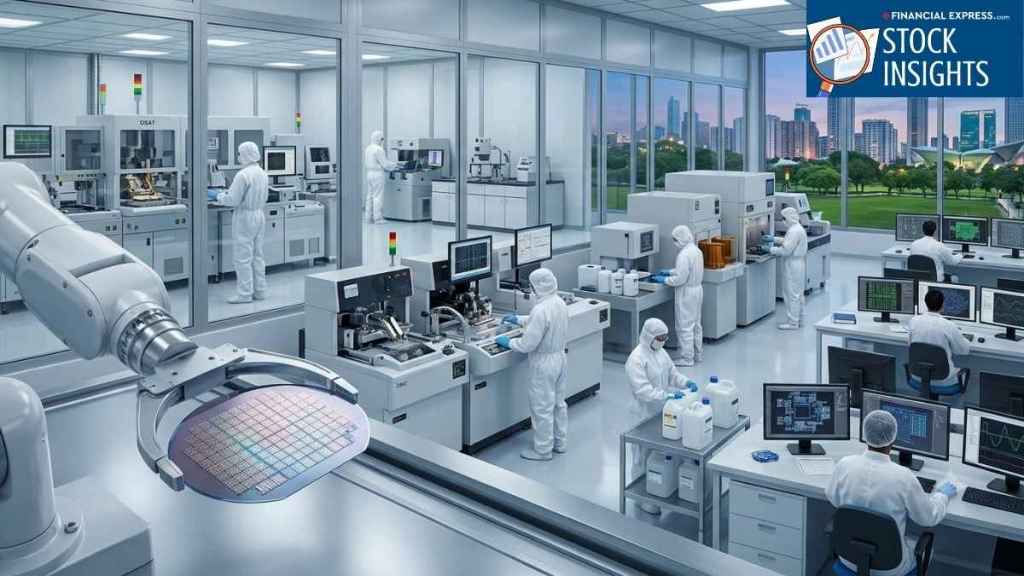

Semiconductors are used across industries, from consumer electronics and automobiles to artificial intelligence and data centres. More than 1.1 trillion chips are produced annually, about 135 per person worldwide. A standard household appliance may contain 10+ chips, while a smartphone uses around 169 chips. Modern automobiles can contain between 1,000 and 3,500 chips.
India is also expanding its domestic semiconductor ecosystem through the India Semiconductor Mission and the Production-Linked Incentives scheme. Corporates have committed ₹1.64 lakh crore in investments as of October 24, 2026. These initiatives support opportunities across chip design, semiconductor packaging and testing, and electronic-grade chemicals.
The opportunity extends beyond chip manufacturing to companies supplying the materials and technologies needed across the semiconductor value chain. However, many businesses still have limited capacity. It will be important to watch how well they convert these investments into revenue and profits.
This article covers three companies across India’s semiconductor ecosystem, their Q2FY27 performance and how their expansion plans are taking shape.
#1 Cyient Semiconductor: Custom ASICs to High-Voltage Power Chips
Cyient’s semiconductor business is a standalone subsidiary named Cyient Semiconductors. The company operates across three main areas:
- Custom Chip Design (Custom ASIC): Building unique chips designed for a single client’s product, such as specialised electric vehicle components or industrial machinery.
- Ready-Made Power Chips (ASSP): Creating their own proprietary chips that control and convert electrical power, which they sell to multiple customers.
- Design Services: Helping other technology companies design their chip layouts or upgrade manufacturing facilities.
Product Architecture: Custom ASICs to High-Voltage Power Chips
Cyient acquired Kinetic Technologies, which gave it a quick inventory of low-power chips used in everyday devices like laptops and smartphones. Cyient is investing heavily to develop its own high-voltage power chips.
These chips manage the heavy electrical demands of AI data centres and electric vehicles. Cyient aims to expand its power management content in consumer platforms (such as laptops) from around US $1 per unit today up to US $5-$10 per unit long term.
Financial Realities: Front-Loaded R&D Deepens Q2 Net Loss to ₹45 Crore
The semiconductor unit earned ₹228.3 crore in FY26. With the inclusion of Kinetic Technologies, revenue reached ₹169.7 crore in Q1FY27 and increased 8.8% to ₹184.7 crore in Q2FY27. EBIT loss stood at ₹28.4 crore in Q1FY27 and ₹30.0 crore in Q2FY27. EBIT margin remained stagnant at -16.7% in Q1FY27 and -16.2% in Q2FY27.
Net loss widened to ₹45.2 crore, up from ₹34.2 crore in Q1FY27. Management states that the daily custom chip design business is self-sustaining and profitable. However, the segment is temporarily unprofitable as Cyient invests in research and development (R&D) to develop new high-voltage chips.
Commercial Pipeline: ₹955-Crore Order Book Anchors FY28 Breakeven Goal
Management expects the business to break even in FY28 as the new high-voltage AI power chips start generating initial commercial revenue. Customer demand remained strong in AI data centres, electric vehicles, industrial power systems, and edge AI applications. As a result, new custom chip (ASIC) order intake increased 50% quarter-on-quarter to ₹955 crore.
However, higher component costs, such as wafer prices, could delay the breakeven timeline.
#2 CG Power and Industrial Solutions: Building India’s ₹7,600-Crore Packaging Hub
CG Power and Industrial Solutions, part of the Murugappa Group, operates its semiconductor activities through subsidiary companies. CG Semi Private Limited is a wholly owned subsidiary set up to build an Outsourced Semiconductor Assembly and Testing (OSAT) facility. The plant will provide chip testing and packaging services.
Fabless Design and Niche Acquisitions: Axiro’s Rapid Footprint
The company also acquired Renesas’s radio frequency components business to form Axiro Semiconductor. Axiro is a fabless semiconductor design company. Axiro holds a portfolio of over 150 IPs in front-end technologies and over 200 chip designs. These have been deployed in more than 60 crore chips worldwide.
For FY26, Axiro generated revenue of ₹502.5 crore and recorded a pre-tax loss of ₹30.8 crore. On August 20, 2026, Axiro acquired 100% of Tosil Systems for ₹16.44 crore. Tosil provides silicon design verification, physical implementation, embedded software and edge AI engineering services.
Capex Blueprint: ₹7,600-Crore OSAT Plant and the 2029 Horizon
On October 29, 2026, Axiro also invested in THINSIC to strengthen its position in Silicon Carbide Power Semiconductors. Meanwhile, CG Semi is building an OSAT facility to offer semiconductor assembly, packaging and testing services. The total project cost for the semiconductor business is ₹7,600 crore. It has invested ₹2,000 crore, including ₹1000 crore from the government.
For FY26, CG Semi recorded revenue of ₹42 lakh and a loss before tax of ₹80.3 crore. The G1 Facility (Mini Plant) is one of India’s earliest operational OSAT facilities. The plant handles end-to-end chip assembly, packaging, testing and post-test services, with a peak operational capacity of 50 lakh chips per day. Renesas Electronics Corporation is the technology partner.
The G2 facility (main plant) is targeted for completion by the end of 2026. Qualification testing for the G2 facility is targeted to begin in mid-2027. Because customer qualification takes two to three quarters, commercial production is expected to begin by late 2028 or 2029. Once complete, total combined capacity will scale to 145 lakh chips per day.
Earnings Cushion: Power Systems Offsets ₹35-Crore Semiconductor Drag
The semiconductor segment is currently in an investment and capability-building phase. In Q2FY27, hiring and capacity building for CG Semi and Axiro reduced consolidated profit before tax (PBT) by ₹35 crore. This expense reduced the consolidated profit margin by 91 bps.
Despite the drag, consolidated PBT margin increased 140 basis points (from 13.3% to 14.7%), supported by strong performance in the core Power Systems division. As a result, CG Power consolidated PBT surged 44% year-on-year to ₹559 crore in Q2FY27. Total revenue grew 30% to ₹3,802 crore in Q2FY27, while net profit rose 44% to ₹409 crore.
#3 Acutaas Chemicals: Inside India’s Sole Electronic-Grade Photoresist Maker
Acutaas Chemicals manufactures ultra-high-purity process chemicals used in semiconductor manufacturing and advanced electronics. This vertical was built to reduce reliance on legacy pharmaceutical intermediates and expand into high-technology growth sectors. Acutaas produces specialised process chemicals across multiple fabrication stages:-
- Photoresist Chemicals: High-purity chemical inputs essential for photolithography patterning on silicon wafers.
- Packaging Materials: Advanced chemical compounds used in semiconductor chip packaging and assembly.
- Etching Materials & Solvents: Precision chemical formulations used for circuit etching, wafer cleaning, and surface preparation.
Dual-Hub Architecture: Domestic Monopoly and South Korea Expansion
The division operates through a dual-hub model: a domestic manufacturing unit in India and an international joint venture in South Korea. This provides it with local access to global electronics manufacturing hubs. Baba Fine Chemicals (in Noida) is India’s only domestic manufacturer of electronic-grade photoresist chemicals. In FY26, the unit generated ₹15.7 crore in revenue.
Acutaas commissioned its new South Korea manufacturing plant ahead of schedule. This site produces high-purity chemicals for photoresists, packaging materials, and etching applications. Management is focusing on sample validation and customer testing in South Korea, Japan, and Taiwan in FY27. Commercial sales ramp-up is projected for FY28.
Capex Blueprint: The ₹100-Crore Bet on 81,000 MT Bulk Capacity
Additionally, Acutaas is expanding its electronic chemicals portfolio into high-volume bulk electronic chemicals. Management is investing ₹100 crore to build manufacturing capacity of up to 81,000 metric tons of electronic-grade chemicals and ultra-pure solvents. Plant construction will take approximately 1.5 years.
Commercial production is targeted to commence in H1FY29. Management targets an asset turnover ratio of at least 3x for this electronic chemicals business line. Overall, the company’s high-purity standards are expected to provide a competitive advantage when domestic demand emerges.
Valuation Divergence: P/E Premiums Leave Little Margin for Error
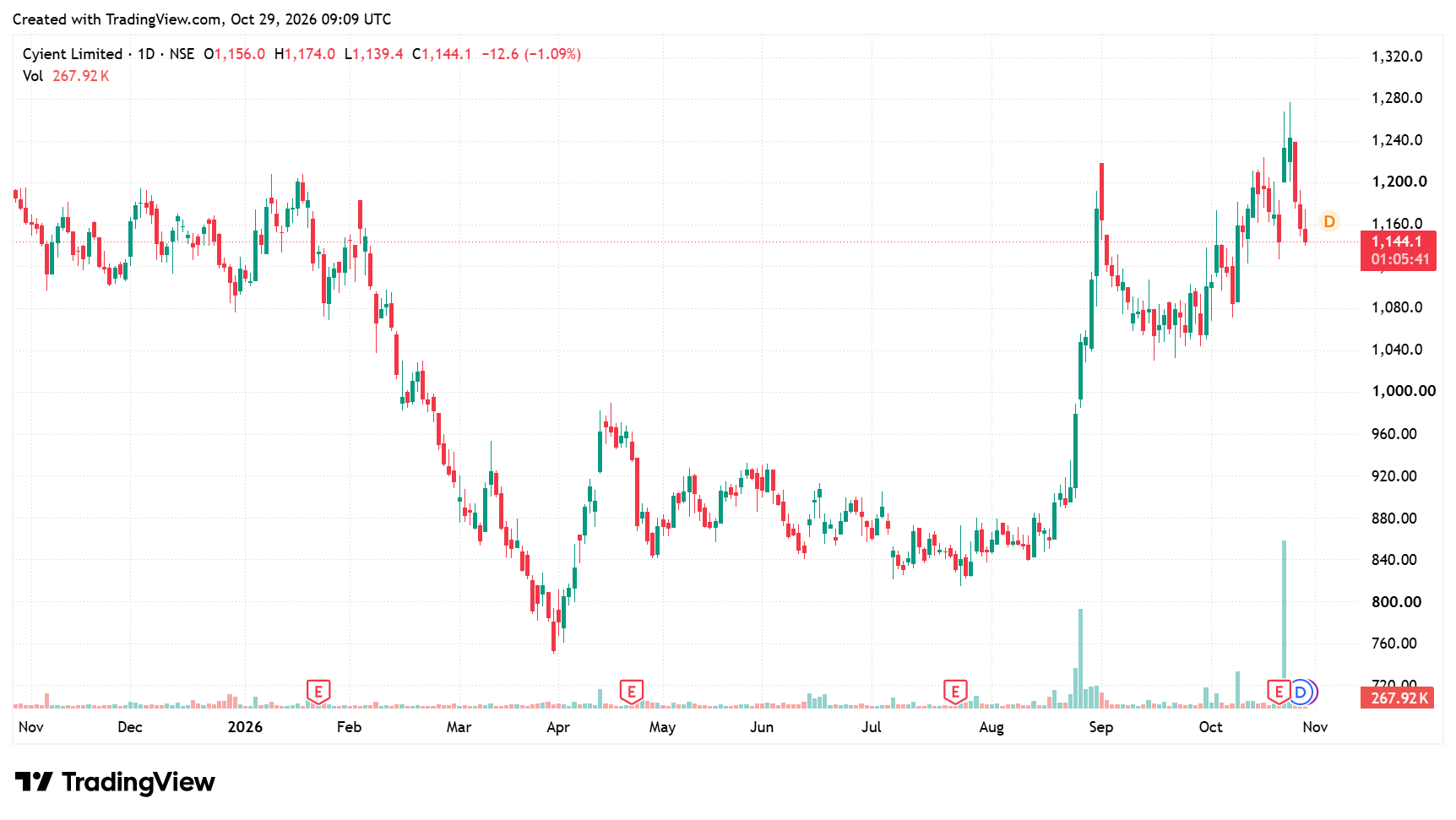
Cyient, Acutaas and CG Power trade at significant premiums to their respective five-year median valuation multiples. Cyient trades at 30.9x earnings, compared with its five-year median of 23.4x and industry median of 19.6x.
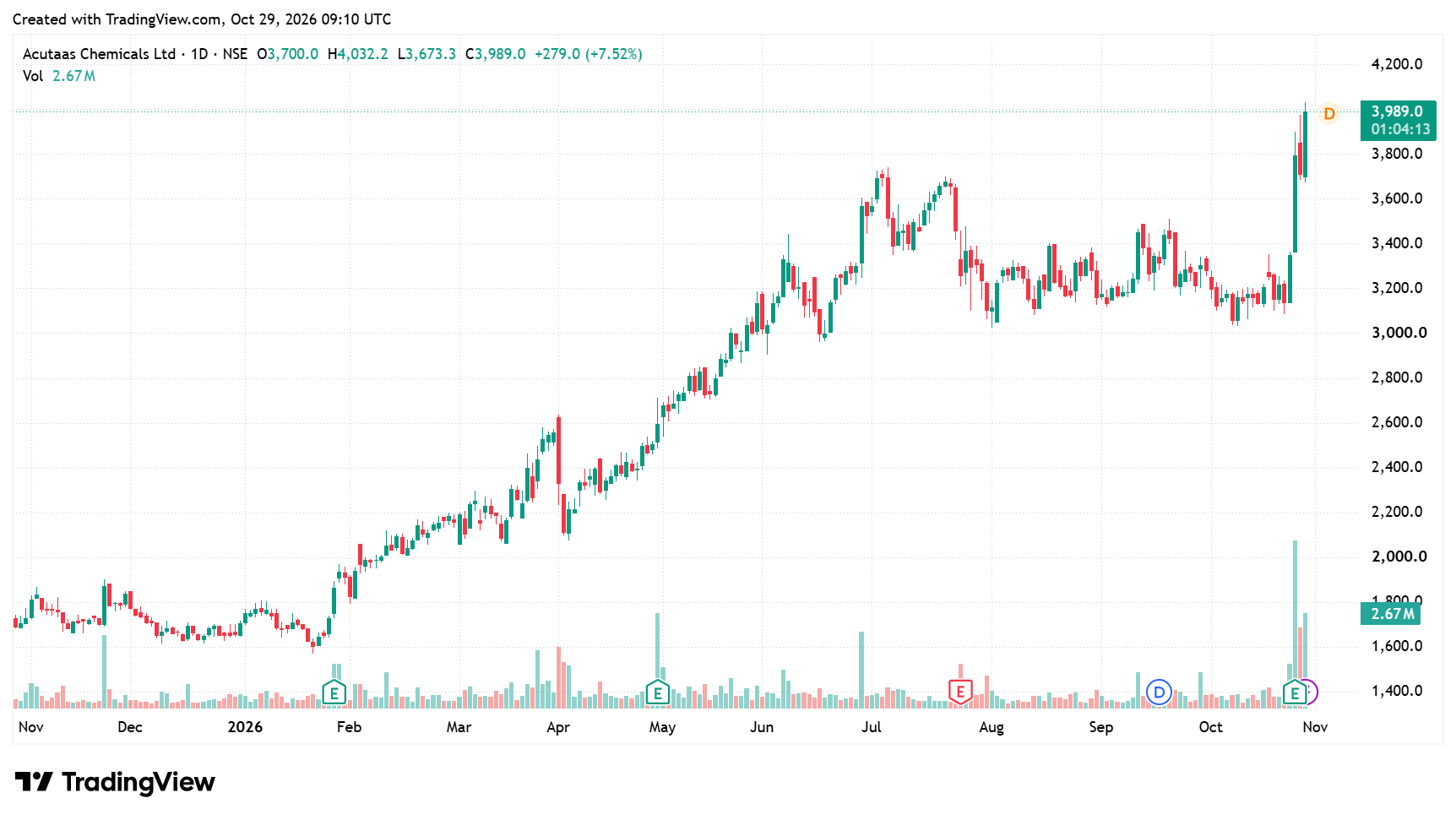
Its Return on Capital Employed ROCE of 12.3% indicates reasonable capital efficiency, although its Return on Equity of 8.6% suggests relatively modest returns for shareholders. Acutaas’ multiple is 74.5x, a premium to both the 5-year median and the industry. A strong ROCE of 31.6% and ROE of 24.0% support the premium.
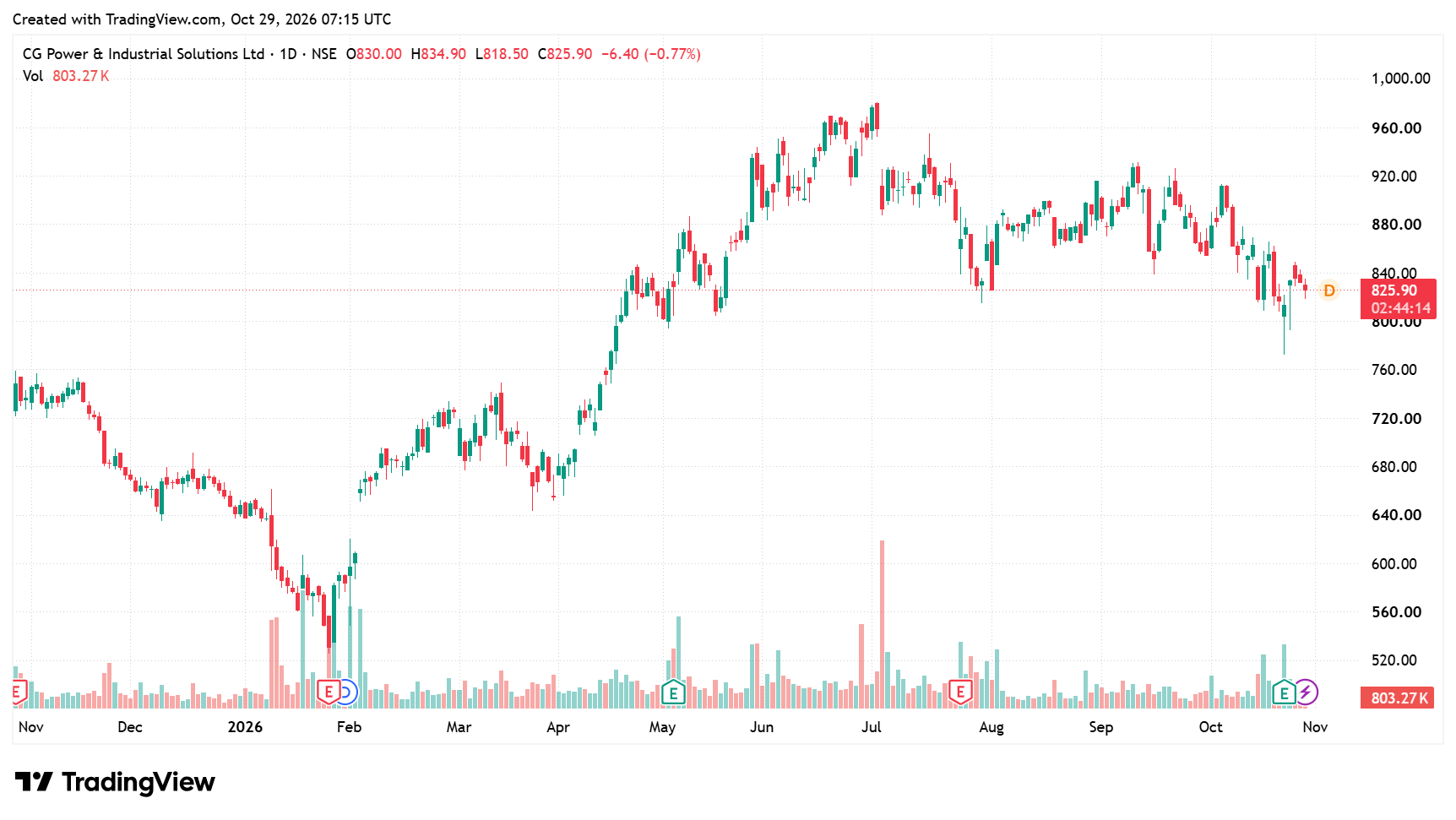
However, sustaining this performance will be essential to justify its high valuation. CG Power also trades at a premium to both its five-year and industry median. If earnings growth is slower than expected, the premium valuation leaves room for disappointment.
| Valuation Comparison (X) | |||||
Particulars | Price-to-Earnings Multiple | Return Ratios | |||
| Company | Industry | 5Y Median | ROCE (%) | ROE (%) | |
| Cyient | 30.9 | 19.6 | 23.4 | 12.3 | 8.6 |
| Acutaas | 74.5 | 34.5 | 60.7 | 31.6 | 24.0 |
| CG Power | 93.7 | 31.5 | 87.7 | 26.7 | 20.5 |
| Source: Screener.in (Data as of October 29, 2026) | |||||
Overall, the three companies discussed are at different stages in the semiconductor value chain. Cyient Semiconductors is investing in high-voltage power chips, with management targeting breakeven in FY28.
CG Power is building its semiconductor packaging and testing capacity, though commercial production at its main facility is still some time away. Acutaas is expanding its electronic-grade chemicals business, with commercial sales from its South Korea operations expected to ramp up in FY28. The important thing to track for now is when revenue starts coming in.
Keep these stocks on your watchlist to see how they scale up their businesses.
Disclaimer:
Note: Throughout this article, we have relied on data from http://www.Screener.in and the company’s investor presentation. We used an alternative, widely accepted and widely used source of information only when the data were unavailable.
This article is meant only to share interesting charts, data points, and thought-provoking opinions. It is NOT a recommendation. If you wish to consider an investment, you are strongly advised to consult your advisor. This article is strictly for educational purposes only.
About the Author: Madhvendra has been deeply immersed in the equity markets for over seven years, combining his passion for investing with his expertise in financial writing. He simplifies complex concepts and shares honest perspectives on startups, listed Indian companies, and macroeconomic trends.
A dedicated reader and storyteller, Madhvendra thrives on uncovering insights that inspire his audience to deepen their understanding of the financial world.
Disclosure: The writer and his dependents do not hold the stocks discussed in this article.
The website managers, its employee(s), and contributors/writers/authors of articles have or may have an outstanding buy or sell position or holding in the securities, options on securities, or other related investments of issuers and/or companies discussed therein. The articles’ content and data interpretation are solely the personal views of the contributors/ writers/authors. Investors must make their own investment decisions based on their specific objectives, resources, and only after consulting such independent advisors as may be necessary.