


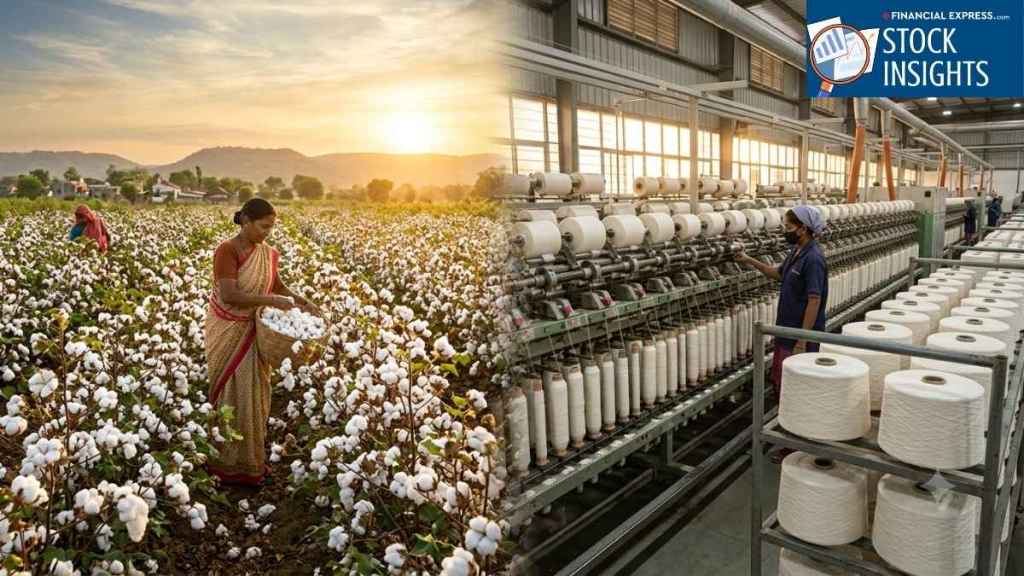

India’s textile industry is facing a fresh raw-material challenge. Cotton production is falling, demand remains strong, and manufacturers could become increasingly dependent on imports to meet their requirements.
The numbers highlight the scale of the problem.
The 5-Million Bale Deficit
According to Reuters, India’s cotton production is expected to fall below 29 million bales in 2026–27, against demand exceeding 34 million bales. This points to a supply shortfall of more than five million bales.
Such a gap could keep domestic cotton prices elevated, putting pressure on textile manufacturers that rely heavily on the fiber.
However, some relief could be on the way.
On 26 October, Reuters reported that the government may extend the existing exemption from the 11% cotton import duty until December 2026. The current exemption expires on 31 October, and the proposed extension has not yet been officially announced.
Policy Shifts and Margin Realities
For textile manufacturers, an extended duty-free import window could help contain procurement costs and reduce pressure on operating margins. But the benefits may not be equal across companies.
Some manufacturers depend heavily on imported cotton, while others source most of their requirements domestically. Existing inventories, raw-material consumption, yarn selling prices and product mix could also influence how much of the relief translates into higher profitability.
More importantly, lower cotton procurement costs do not automatically mean better margins. Companies must also maintain selling prices and manage inventory costs effectively.
This creates an interesting situation for investors. Textile manufacturers operating in the same industry could see very different outcomes from the same policy decision.
But how do we identify the companies most exposed to these changes?
Rather than looking at textile stocks simply because they operate in the sector, we have narrowed our focus to four listed companies with substantial, documented raw-cotton consumption. Their financial disclosures provide a basis for examining actual cotton dependence, while differences in import exposure, inventory positions and sourcing strategies make for a more meaningful comparison.
The selection is not exhaustive. Instead, it focuses on companies where cotton procurement is an important business consideration and where the available disclosures allow us to assess the potential impact of the proposed relief.
Let’s take a closer look.
#1 Vardhman Textiles: Rs 4,031 Crore Cotton Consumption Makes Duty Relief Critical
Vardhman Textiles is one of India’s largest integrated textile manufacturers, with 1.25 million spindles. Its operations span yarn, fabrics and garments, making cotton procurement central to its profitability.
According to its FY26 annual report, cotton consumption stood at Rs 4,031 crore, accounting for 76.5% of standalone raw-material consumption of Rs 5,267 crore. This substantial exposure makes the company sensitive to cotton price movements.
Duty-Free Imports Offer Relief, but Management Warns of Margin Pressure
Chairman S.P. Oswal has advocated keeping cotton imports “open and duty-free on a permanent basis”, citing uncertainty caused by temporary exemptions.
During the July earnings call, Managing Director Neeraj Jain confirmed that the company was evaluating imported cotton purchases during the duty-free window.
However, he cautioned, “As those inventories are finishing, definitely, there will be some reduction happening”, referring to margins supported by cheaper cotton inventories.
Rs 3,660-Crore Expansion Underway Despite Profit Decline
Vardhman’s investment programme covers spinning modernisation, fabric processing and technical textiles. Its Budhni expansion added 31 million metres of annual processing capacity.
In FY26, consolidated revenue increased 0.9% YoY to Rs 9,869 crore, while profit attributable to shareholders declined 15.6% to Rs 745 crore.
Q2FY27 results are yet to be declared. In October, Vardhman signed agreements for 27 MW of captive renewable power.
Duty relief could ease procurement costs. However, sustainable margin improvement will depend on cotton prices, inventory costs and yarn realisations.
Vardhman Textiles Financial Performance
| Metric | FY26 |
| Consolidated revenue | Rs 9,869 crore |
| Revenue growth | 0.9% YoY |
| Profit attributable to shareholders | Rs 745 crore |
| Profit growth | -15.6% YoY |
| Cotton consumption (standalone) | Rs 4,031 crore |
| Cotton share of raw materials (standalone) | 76.5% |
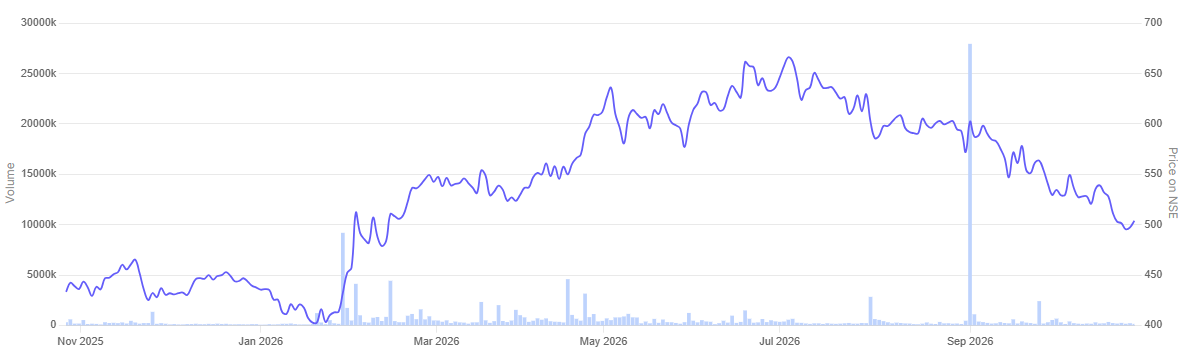
In the past year, the share price of Vardhman Textiles is up 17.5%.
Vardhman Textiles 1-Year Share Price Cart
#2 GHCL Textiles: 25–30% Cotton Imports Make Duty Relief Important
GHCL Textiles is a cotton-yarn and fabric manufacturer with 2.25 lakh ring spindles. Its substantial cotton requirements make procurement costs important to profitability.
According to its FY26 annual report, the company reported Rs 806.3 crore of cotton commodity exposure across 48,662 tonnes. It typically procures 70–80% of annual cotton requirements between October and March, when prices are generally lower.
25–30% Imported Cotton, but Inventory Gains May Fade
During the April 2026 earnings call, CEO Marshal Sonavane said imports accounted for 25–30% of cotton requirements, with domestic purchases covering the balance.
In the July earnings call, he said, “we are well-covered till the beginning of new season, which will be about November-December.”
However, Sonavane cautioned, “there will be a gradual increase in the cotton price”, as lower-cost inventories are consumed. Higher yarn prices must also be accepted by customers to protect spinning margins.
Fabric Expansion Supports Growth, While Cotton Prices Remain a Risk
The company commissioned 25,000 spindles and 15 knitting machines in FY26. It also plans a Rs 350–400 crore fabric project at Tamil Nadu’s PM MITRA Park, targeting commissioning in 2028.
In FY26, revenue increased 13.6% YoY to Rs 1,318.6 crore, while net profit rose 25.7% to Rs 70.37 crore.
In August, a warehouse fire caused estimated stock damage of Rs 27 crore. The stock was insured and production remained unaffected. Q2FY27 results are yet to be declared, with board consideration scheduled for 5 November.
Duty relief could reduce procurement pressure, but margin gains will depend on inventory replacement costs and yarn realisations.
GHCL Textiles Financial Performance
| Metric | FY26 |
| Revenue | Rs 1,318.6 crore |
| Revenue growth | 13.6% YoY |
| Net profit | Rs 70.37 crore |
| Profit growth | 25.7% YoY |
| Cotton commodity exposure | Rs 806.27 crore |
| Imported cotton share | 25–30% |
In the past year, the share price of GHCL Textiles rallied 56.7%.
GHCL Textiles 1-Year Share Price Chart
#3 KPR Mill: 1 Lakh-Tonne Cotton Yarn Capacity Faces Raw Material Price Test
KPR Mill is an integrated textile manufacturer operating across cotton spinning, knitting, fabric processing and garment manufacturing.
The company has an annual capacity of 1,00,000 tonnes of cotton yarn, 40,000 tonnes of knitted fabric and 204 million garments. Its large spinning operations and direct dependence on cotton make it relevant to India’s growing raw material supply concerns.
KPR’s FY26 annual report identifies cotton prices as a key determinant of spinning margins. The company exports textile products to more than 65 countries, making raw material costs and global price competitiveness important to its operations.
Can the 11% Cotton Duty Waiver Protect KPR’s Spinning Margins?
KPR’s annual report highlights how rising cotton prices have narrowed yarn-fibre spreads, squeezing spinning margins. On import costs, the company states, “For sustained parity with global cotton, the abolition of import duty is essential.” A weaker rupee and higher freight charges have further restricted access to cheaper overseas cotton.
The government’s temporary 11% import-duty exemption offers potential relief. A further extension through December 2026, as reported by Reuters, could help contain input costs.
However, the benefit will depend on actual cotton procurement prices, inventory levels and the company’s ability to maintain yarn margins. Its disclosed information does not establish the proportion of raw cotton sourced through imports.
Rs 1,225 Crore Expansion Targets Rs 2,000 Crore Additional Turnover
KPR’s August investor presentation outlines seven expansion and modernisation projects involving Rs 1,225 crore of investment.
The largest is a Rs 450 crore garment facility in Odisha, with annual capacity of 45 million garments. Another Rs 250 crore will go towards a processing facility in Perundurai. Upgrades to spinning and knitting facilities are also planned.
Management expects these projects to generate approximately Rs 2,000 crore in turnover. The investment will be funded entirely through internal accruals, with completion schedules extending into FY28.
In FY26, consolidated revenue increased 4.1% YoY to Rs 6,650.4 crore. Net profit rose 6.3% to Rs 866.50 crore, according to the annual report.
The company’s Q2FY27 results, declared on 28 October, showed stronger growth. Consolidated revenue increased 18.9% YoY to Rs 1,939.7 crore, while net profit rose 58.2% to Rs 345 crore.
Textile segment revenue increased 16.6% to Rs 1,478.7 crore, while segment profit rose 54.1% to Rs 368.26 crore. The sugar business also contributed to improved profitability.
However, sustained earnings growth will depend on cotton procurement costs, export demand and capacity utilisation. Any sharp rise in cotton prices could pressure spinning margins despite the company’s integrated manufacturing operations.
KPR Mill Financial Performance
| Metric | Q2FY27 |
| Revenue | Rs 1,939.7 crore |
| Revenue growth | 18.9% YoY |
| Net profit | Rs 345 crore |
| Profit growth | 58.2% YoY |
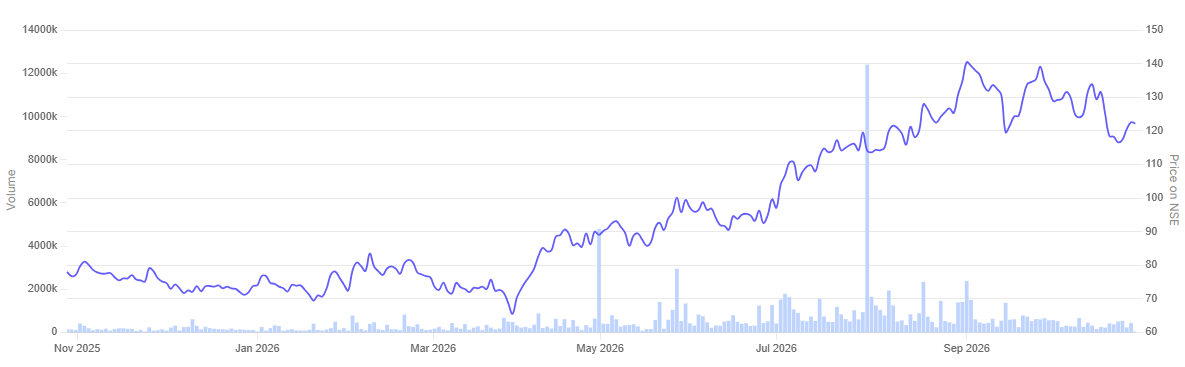
In the past year, the share price of KPR Mill is down marginally by 0.4%.
KPR Textiles 1-Year Share Price Chart
#4 Ambika Cotton Mills: Rs 363 Crore Cotton Consumption Puts Raw Material Costs in Focus
Ambika Cotton Mills manufactures premium cotton yarn and knitted fabrics, with a strong focus on speciality products and export markets.
Its dependence on high-quality raw cotton sourced from India and overseas makes the proposed extension of the 11% cotton import-duty exemption relevant to its business.
Can Duty-Free Cotton Imports Protect Ambika’s Yarn Margins?
Ambika consumed Rs 363.11 crore worth of raw cotton in FY26, accounting for approximately 77% of its total material consumption of Rs 472.59 crore.
According to its FY26 annual report, the company sources high-quality cotton from India, the US, Australia, Africa and Egypt. However, it does not disclose the proportion sourced through imports.
Raw-material inventory stood at Rs 286.37 crore in March 2026, compared with Rs 322.04 crore a year earlier. These figures include materials other than cotton. Existing stocks could therefore influence how quickly changes in cotton procurement costs affect profitability.
At the company’s September 2026 AGM, Chairman and Managing Director P.V. Chandran highlighted its strategy of focusing on speciality products rather than manufacturing volumes alone.
As he stated in his AGM address:
“We do not believe in simply selling spindle capacity. We believe in selling differentiated products.”
This distinction matters because Ambika’s margin performance depends not only on cotton prices but also on the premium customers are willing to pay for specialised yarn.
Can Modernisation and Export Growth Strengthen Profitability?
Ambika’s export turnover increased 10.1% to Rs 545.50 crore in FY26, accounting for approximately 72.9% of turnover.
The company also commissioned 6,480 additional spindles in September 2026, taking installed capacity to 120,816 spindles.
In FY26, Ambika’s revenue from operations increased 11.2% YoY to Rs 780.9 crore from Rs 702.1 crore. Net profit rose 8.9% to Rs 71.6 crore from Rs 65.7 crore. However, net profit margin narrowed slightly to 9.16% from 9.36%, indicating that revenue growth did not translate into a proportionate improvement in profitability.
Its AGM statement outlined a further Rs 135–138 crore modernisation programme. This involves replacing approximately 43,000 existing spindles with 45,000 newer spindles by March 2027, primarily to improve productivity and automation.
Ambika’s strong export presence, premium yarn positioning and modernisation plans provide opportunities for growth. Its debt-free balance sheet also offers financial flexibility.
However, without disclosure of its imported-cotton share, the direct benefit from an extension of duty-free imports remains difficult to quantify. Global yarn demand, selling prices and existing cotton inventories will ultimately determine whether cheaper procurement improves margins.
Ambika Cotton Mills: FY26 Financial and Cotton Exposure
| Metric | FY26 |
| Revenue (Rs crore) | 780.96 |
| Net profit (Rs crore) | 71.56 |
| Raw cotton consumed (Rs crore) | 363.11 |
| Raw-material inventory (Rs crore) | 286.37 |
| Net profit margin | 9.16% |
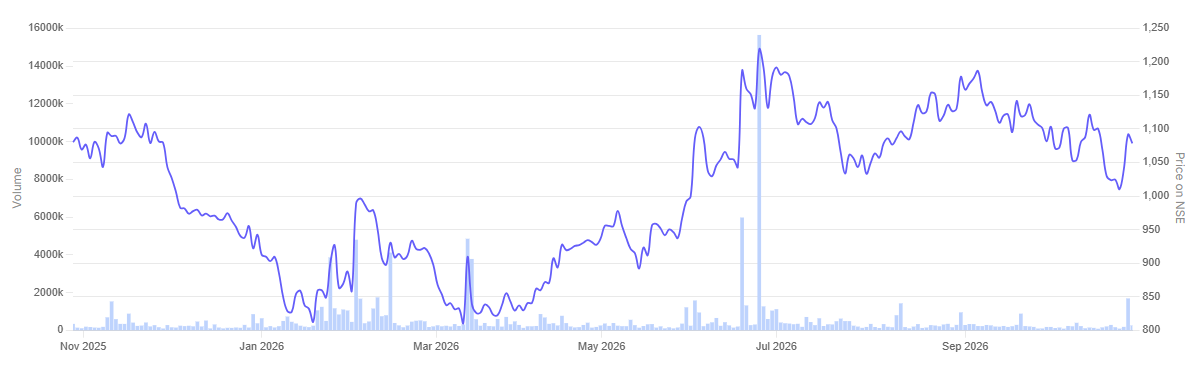
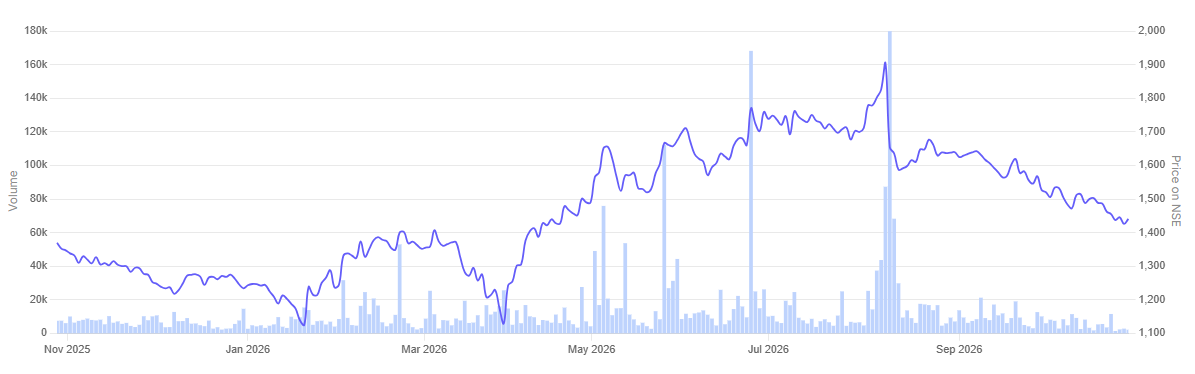
In the past year, the share price of Ambika Cotton Mills is up 5.4%.
Ambika Cotton Mills 1-Year Share Price Chart
Conclusion
India’s widening cotton supply gap makes import-duty relief important for textile manufacturers. However, the benefits may not be uniform across the four companies.
Vardhman Textiles and GHCL Textiles have clearer documented exposure to imported cotton. KPR Mill and Ambika Cotton Mills consume substantial quantities of cotton, but their exact import dependence remains unclear.
The proposed duty extension is yet to be officially confirmed. Even if approved, existing inventories could delay the benefit of cheaper imports. Yarn selling prices, export demand and product mix will also influence margins.
Investors should watch cotton procurement costs, inventory levels, operating margins and upcoming quarterly results.
Ultimately, lower cotton costs alone do not guarantee higher profits. The real test will be how much of the potential savings these companies can retain, rather than pass on to customers through lower selling prices.
You can track how these are progressing by adding stocks to your watchlist.
Disclaimer
Note: We have relied on data from www.Screener.in throughout this article. Only in cases where the data was not available, have we used an alternate, but widely used and accepted source of information.
The purpose of this article is only to share interesting charts, data points and thought-provoking opinions. It is NOT a recommendation. If you wish to consider an investment, you are strongly advised to consult your advisor. This article is strictly for educative purposes only.
Ekta Sonecha Desai has a passion for writing and a deep interest in the equity markets. Combined with an analytical approach, she likes to deep dive into the world of companies, studying their performance, and uncovering insights that bring value to her readers.
Disclosure: The writer and her dependents do not hold the stocks discussed in this article.
The website managers, its employee(s), and contributors/writers/authors of articles have or may have an outstanding buy or sell position or holding in the securities, options on securities or other related investments of issuers and/or companies discussed therein. The content of the articles and the interpretation of data are solely the personal views of the contributors/ writers/authors. Investors must make their own investment decisions based on their specific objectives, resources and only after consulting such independent advisors as may be necessary.