



The Cost of Capital: How Two Mid-Cap Firms Erased Their Borrowings
Every annual report carries a line marked borrowing. For most Indian manufacturers it turns up each year like a standing order, taking its cut before anything reaches the owners. Two companies recently erased that line in FY26. One took more than ten years. The other took weeks.
The similarity ends there. Rolex Rings carried Rs 615 cr of borrowings in FY16 and paid it down out of its own cash, handing roughly Rs 285 cr to lenders in interest along the way. Sunshield Chemicals carried Rs 100 cr into FY26 and wiped it out with a rights issue that raised Rs 130 cr from its own shareholders. One extinguished debt with earnings. The other converted it into equity.
Both beat their industry on returns. Rolex earns a return on capital employed (ROCE) of 21% against an industry median of 16%. Sunshield earns 20% against an industry median of 14%. Which raises the only question that matters. When the interest bill hits zero, where does the money go? Let us dig into both.
#1 Rolex Rings: Reaching Zero Debt Through Organic Cash Flow
Incorporated as a partnership firm in Rajkot in 1980 by Rupesh D. Madeka, Rolex Rings became a public limited company in 2021 and listed that August. It ranks among India’s top five forging companies, making hot rolled forged bearing rings and automotive components for passenger vehicles, industrial machinery, wind turbines and railways. Manesh D. Madeka and family run it today.
The current market capitalisation of the company is Rs 4,510 cr and it has clientele like Ford, ABC bearings Ltd, SKF, Automotive Axles Ltd, Schaeffler, Carraro Group, etc.
The Price of Deleveraging: Inside Rolex Rings’ ₹615 Crore Repayment
Rolex went through a corporate debt restructuring in 2013. In FY 16 it carried Rs 615 cr of borrowings and paid Rs 58 cr in interest, swallowing 53% of operating profit. By FY23 borrowings were Rs 82 cr. By FY25, Rs 14 cr. In FY26, zero.
It left the restructuring in 2022 with no term debt, but one claim survived. Lenders keep a right of recompense, letting them recover concessions granted at the time. On 31st March 2026 Rolex settled it in full, paying Rs 101 cr to a consortium led by Union Bank of India. It is why FY26 profit looks weak.
Margins, PAT, and Five-Year Growth Trends
| Financial Year | FY21 | FY22 | FY23 | FY24 | FY25 | FY26 | 5Y CAGR |
| Sales (Rs cr) | 616 | 1,010 | 1,179 | 1,222 | 1,155 | 1,144 | 13% |
| EBITDA (Rs cr) | 109 | 229 | 261 | 262 | 241 | 230 | 16% |
| Net Profit (Rs cr) | 87 | 132 | 198 | 156 | 174 | 141 | 10% |
| Borrowings (Rs cr) | 250 | 223 | 82 | 18 | 14 | 0 | – |
Source: Screener.in
EBITDA here refers to operating profit before other income. FY26 net profit carries an exceptional charge of Rs 51.6 cr tied to the settlement. Take that out and adjusted profit was Rs 192.7 cr, a five-year CAGR of 17% rather than 10%. The FY21 base is flattered by a tax writeback.
The three-year trend is the worry, not the five-year one. Sales have slipped from Rs 1,179 cr in FY23 to Rs 1,144 cr in FY26, operating profit drifting down with them. The deleveraging is real. The growth has stalled.
June 2026 reads better. Revenue of Rs 304 cr, up 4%. Operating profit of Rs 69 cr at a 23% margin. Net profit of Rs 60 cr, up 22%. Interest, nil. Auto components grew 13.5% to Rs 163 cr while bearing rings fell 6%.
Promoter Holding and Buyback Strategy: A ₹180 Crore Signal
Rolex has never paid a dividend, its payout ratio zero in all eleven years on record. Instead, in April 2026 the board cleared a buyback of 1 crore shares at Rs 180 each, worth Rs 180 cr. They were extinguished on 31st July 2026.
The promoters chose not to tender, and that detail carries weight. The full Rs 180 cr went to non-promoter shareholders, and the promoter stake rose without the family buying a share. Management has since said it is weighing a formal dividend policy, closing March 2026 with cash and investments of Rs 367 cr.
Share Price Target & Valuation vs. Industry Median
The share price of Rolex was about Rs 107 in September 2021; as of closing on 11th September 2026 it was Rs 172. In the past six months, the stock price has seen a jump of 55% from Rs 111 to Rs 172.
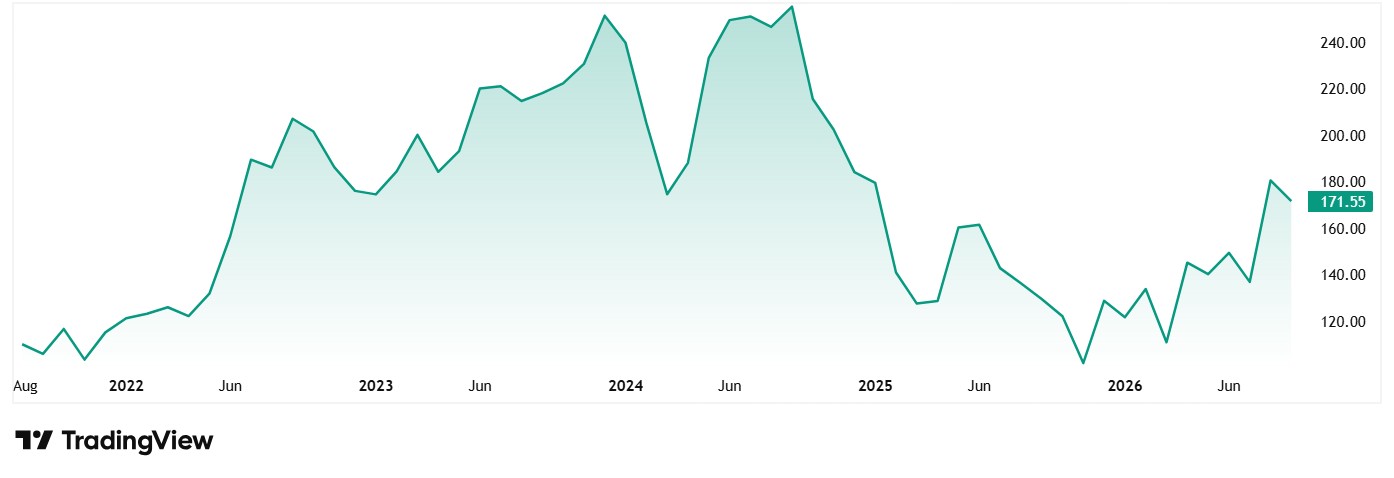
When you look at valuations, the share trades at a PE of 23x against the current industry median of 29x. The 10-year median is unavailable, because the shares have only traded since August 2021.
The counterweight sits in the ratios. Working capital days jumped from 89 in FY25 to 213 in FY26, though the cash conversion cycle barely moved, 157 days to 164. Management guides to an FY27 EBITDA margin of 21% to 22% and has flagged ocean freight running two-and-a-half to three times higher since mid-June. For a heavy exporter, no small thing.
#2 Sunshield Chemicals: Restructuring Debt Through Rights Issues
Incorporated in 1986, Sunshield Chemicals makes surfactants, ethoxylates and antioxidants at Rasal in Maharashtra. Its chemistry ends up in home and personal care, paints and coatings, agrochemicals and lubricants. Belgium’s Solvay owned it for most of the last decade, selling its 62.36% holding to Mumbai-based Indus Petrochem in 2021.
With a current market cap of Rs 1,055 cr, the company’s clientele includes Lubrizol India, Elantas Europe SRL, Indian Additives, Elantas Beck India, CJS Specialty Chemicals, Solvay Specialities, Godrej Industries, Asian Paints, etc.
Debt Retired, Not Repaid
Sunshield closed FY25 with borrowings of Rs 100.38 cr. Interest cost Rs 9 cr against a pre-tax profit of Rs 18 cr. Half of what the business earned before tax went to its lenders.
In September 2025 it went to its owners, offering 14,41,776 shares at Rs 901 each, 10 for every 51 held, on a record date of 24th September 2025. The issue raised Rs 129.90 cr for repayment of borrowings. By March 2026 the line read zero, unsecured loans from the parent included.
This is a different transaction from the one Rolex ran, and the difference matters. A rights issue does not make debt disappear. It moves the claim from a bank to the shareholder. Holders who took up their entitlement paid Rs 901 a share. Those who did not were diluted. The interest saving is real. So is the wider equity base every future rupee of profit must spread across.
Decoding the 29% Net Profit Surge
| Financial Year | FY21 | FY22 | FY23 | FY24 | FY25 | FY26 | 5Y CAGR |
| Sales (Rs cr) | 199 | 244 | 245 | 283 | 366 | 441 | 17% |
| EBITDA (Rs cr) | 30 | 31 | 31 | 40 | 34 | 52 | 12% |
| Net Profit (Rs cr) | 14 | 27 | 14 | 19 | 15 | 30 | 16% |
| Borrowings (Rs cr) | 88 | 79 | 77 | 85 | 100 | 0 | NA |
Source: Screener.in
EBITDA here refers to operating profit before other income. FY22 net profit includes Rs 19 cr of other income that has not repeated since, so comparisons drawn against that single year will mislead.
Here the three-year picture beats the five-year one, the exact reverse of Rolex. Between FY23 and FY26, sales compounded at about 22%, operating profit at 19% and net profit at 29%. FY26 revenue rose 20% to Rs 441 cr and net profit doubled to Rs 29.60 cr, though a meaningful slice of that came from the interest line rather than the shop floor.
June 2026 was the best quarter the company has printed. Revenue of Rs 127 cr, operating profit of Rs 20 cr at a 16% margin, net profit of Rs 13 cr, interest nil. The board raised the FY26 final dividend to Rs 3 from Rs 2.50.
Share Price Performance & PE Multiples
The share price of Sunshield was about Rs 335 in September 2021 and as of closing on 11th September 2026 it was Rs 1,200. In the past 6 months, the stock price has seen a jump of 57% from Rs 765 to its current price of Rs 1,200.
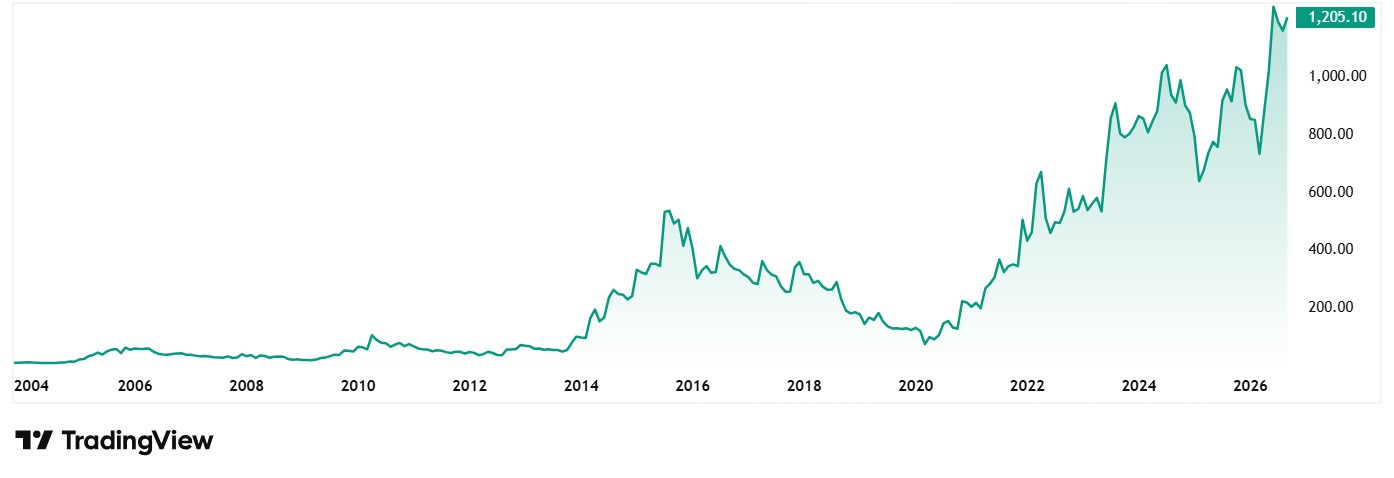
Sunshield trades at a PE of about 29x against an industry median of 30x. The 10-year median PE for the company is 40x while the industry median for the same period is 28x.
The company lost money in FY15, FY16 and FY17 and earned close to nothing for three years after, so half that series carries no usable multiple.
Two things deserve caution. Operating cash flow fell to Rs 10 cr in FY26 from Rs 48 cr, and free cash flow turned negative as working capital days swung from minus 45 to plus 71. Growth is eating cash. The stock is also thin. With promoters at 66.54% and foreign investors at 9.13%, the float is under a quarter of the company, held by roughly 5,300 shareholders.
Do They Merit a Watchlist Spot?
Set the two balance sheets side by side and they read the same. Borrowings: nil. The road there was not the same at all.
Rolex earned its way out. Over eleven years it retired Rs 615 cr of debt and paid roughly Rs 285 cr in interest doing it, without asking shareholders for money. Then it handed Rs 180 cr back, promoters standing aside so the whole cheque went to the public. A loud signal from a company that has never declared a dividend.
Sunshield took the faster road. It asked shareholders for Rs 130 cr and cleared Rs 100 cr of debt inside one year. The interest line went to zero, profit doubled, the dividend went up. But the money came from the owners rather than the business, and free cash flow was negative in the year it happened.
Neither route is wrong. Rolex is a mature cash generator whose revenue has gone nowhere for three years, priced at half the industry multiple because of it. Sunshield is smaller and growing faster but has not yet learned to fund that growth itself.
So, the useful test is not which company is debt-free. Plenty are. It is what the balance sheet is now free to do, and whether management has shown any sign of doing it. One answered with a buyback, the other with a bigger dividend. Both answers are on the record, more than most freshly deleveraged smallcaps can say. The sensible step is to add them to a watchlist and judge them on what the money does next.
Disclaimer
Note: We have relied on data from http://www.Screener.in and http://www.trendlyne.com throughout this article. Only in cases where the data was not available, have we used an alternate, but widely used and accepted source of information.
The purpose of this article is only to share interesting charts, data points and thought-provoking opinions. It is NOT a recommendation. If you wish to consider an investment, you are strongly advised to consult your advisor. This article is strictly for educative purposes only.
Suhel Khan has been a passionate follower of the markets for over a decade. During this period, he was an integral part of a leading Equity Research organisation based in Mumbai as the Head of Sales & Marketing. Presently, he is spending most of his time dissecting the investments and strategies of the Super Investors of India.
Disclosure: The writer and his dependents do not hold the stocks discussed in this article. The website managers, its employee(s), and contributors/writers/authors of articles have or may have an outstanding buy or sell position or holding in the securities, options on securities or other related investments of issuers and/or companies discussed therein.