



India’s drug-discovery and contract research market is moving towards higher-value work as global pharmaceutical companies increasingly outsource early-stage research, pre-clinical studies and discovery chemistry. This work is typically carried out by Contract Research Organisations (CROs), which provide research services to pharmaceutical and biotechnology companies without developing the drugs themselves. The opportunity becomes broader when companies also offer development and manufacturing services. Contract Development and Manufacturing Organisations (CDMOs) support drug development, scale-up and manufacturing, while Contract Research, Development and Manufacturing Organisations (CRDMOs) combine research, development and manufacturing under one platform.
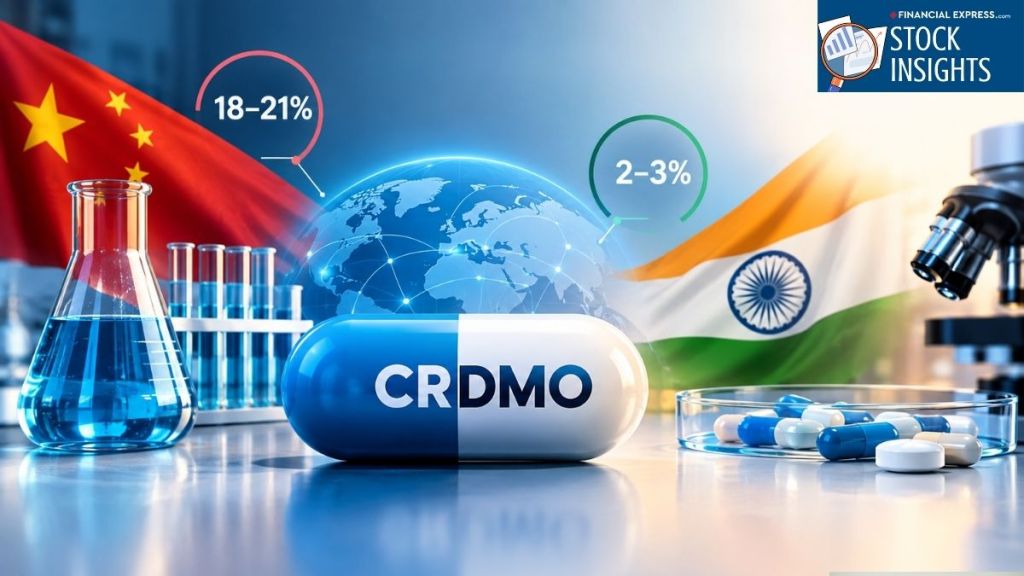
The distinction is important because an integrated CRDMO can potentially remain involved as a molecule moves from discovery towards development and manufacturing, creating a longer revenue opportunity from a single customer programme. ICRA’s February 2026 assessment expects India’s CRDMO industry to grow at about 15% annually over the next decade, although India currently accounts for only 2–3% of the global innovator-drug CRDMO market.
Within this broader opportunity, India’s drug-discovery technologies market was estimated at USD 576.8 million in 2025 and is projected to reach USD 963.9 million by 2030, implying a 10.8% CAGR, according to MarketsandMarkets. The CRO segment is projected to grow faster, from USD 247.3 million in 2025 to USD 442.9 million by 2030, representing a 12.4% CAGR.
The shift towards integrated research and development is creating a different opportunity for two Indian companies: Jubilant Pharmova and Sai Life Science.
#1 Jubilant Pharmova: A Diversified Pharma Business With a Growing Discovery Engine
Jubilant Pharmova is not a pure-play drug-discovery company. It operates across radiopharma, allergy immunotherapy, CDMO sterile injectables, CRDMO, generics and proprietary novel drugs. Its CRDMO business combines Drug Discovery Services with Active Pharmaceutical Ingredient (API) manufacturing, with discovery operations conducted through research centres in Bengaluru and Noida.
The company is also advancing JBI-802 in Phase I/II trials and JBI-778 in Phase I trials, giving it an in-house drug-development component alongside its contract research activities.
Discovery Growth Is Outpacing the Wider CRDMO Segment
Jubilant’s Q1 FY27 consolidated revenue was ₹2,229 crore, up 17% year on year (YoY) but down 2.7% quarter on quarter (QoQ). Profit after tax (PAT) declined 45% YoY to ₹56 crore and 53% QoQ. The decline was linked to the temporary unavailability of high-margin SPECT radiopharmaceutical products, incremental remediation costs at the Montreal facility, negligible third-party revenue in the Montreal business and higher depreciation following the Spokane Line 3 investment. The company expects margins to improve from H2 FY27 as SPECT supplies normalise.
Against this broader earnings picture, Drug Discovery Services showed a different trajectory.
CRDMO revenue was ₹309 crore, up 2% YoY from ₹302 crore, while overall Drug Discovery Services revenue increased 8% YoY to ₹174 crore from ₹161 crore in Q1 FY26. Discovery earnings before interest, taxes, depreciation and amortisation (EBITDA) increased 43% YoY to ₹45 crore, taking the margin to 26% from 20%.
The key point is that the discovery business is showing stronger profitability growth than revenue growth, while the wider CRDMO segment is growing more slowly. The numbers therefore point towards improving operating performance within discovery, but they do not establish that discovery alone is large enough to determine Jubilant’s consolidated earnings trajectory.
Capacity Expansion Meets a Bigger Balance-Sheet Test
Jubilant Pharmova is increasing capacity at its Greater Noida and Bengaluru sites and developing a new site at Devanahalli, Bengaluru. Its stated capacity plan is to increase full-time equivalent employees (FTEs) from 1,000 in FY25 to 2,000 by FY28 and 4,000 by FY30. The planned capex is US$150 million, with expected return on capital employed (ROCE) above 20%.
The expansion now needs to be viewed alongside the company’s balance sheet. Jubilant Pharmova’s net debt increased from ₹1,952 crore in March 2026 to ₹2,338 crore in June 2026, while net debt-to-EBITDA rose from 1.5x to 1.8x. Net debt-to-equity stood at 0.33x and interest coverage at 6.0x in Q1 FY27.
This does not by itself indicate financial stress, but it makes capital productivity more important as the company expands.
Jubilant has also added biologics capabilities through its strategic partnership with Pierre Fabre, covering monoclonal antibodies and antibody-drug conjugates. This expands the range of services available to customers and its European footprint.
Five Years Show Growth, But Earnings Have Been Uneven
| Particulars | FY22 | FY23 | FY24 | FY25 | FY26 |
| Sales (₹ in crores) | 6,130 | 6,282 | 6,703 | 7,234 | 8,280 |
| Operating Profit (₹ in crores) | 1,150 | 779 | 901 | 1,173 | 1,260 |
| Net Profit (₹ in crores) | 413 | (65) | 73 | 836 | 398 |
Source: Screener.in
The numbers show that revenue has grown over the period, but profit has been considerably less consistent. That makes earnings quality an important consideration. A single year’s PAT cannot, by itself, represent the company’s underlying earnings power when the five-year record shows such large fluctuations.
The Stock Price Needs to Be Read Against Earnings Volatility
Source: Screener.in; Price as of 1 October 2026
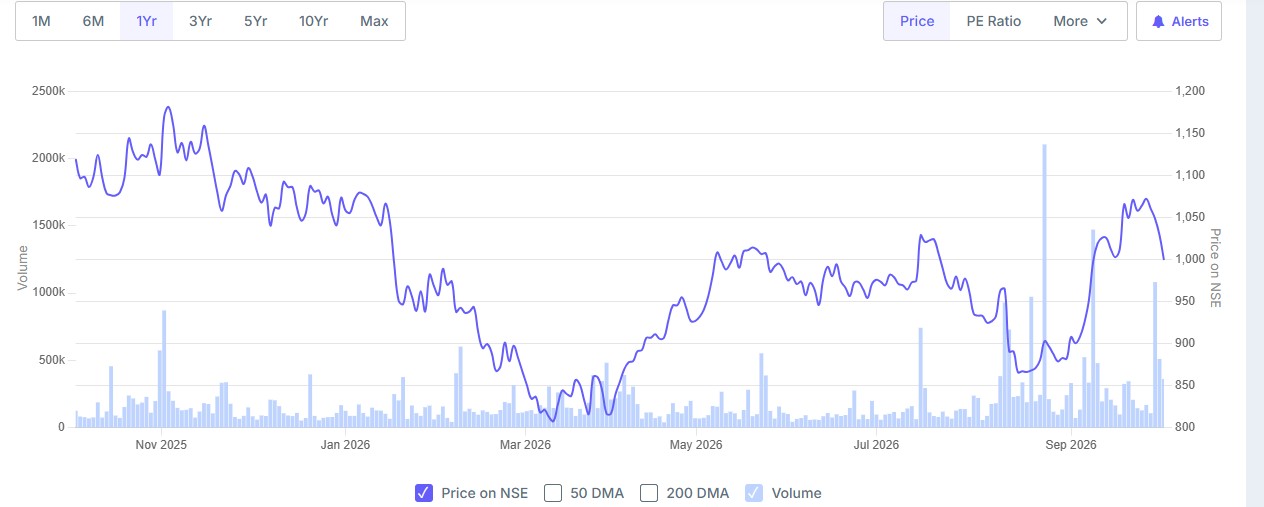
Jubilant Pharmova’s stock had risen more than 22.5% over six months but remained down more than 6% year to date. The stock was trading at a price-to-earnings (PE) ratio of 41. On 1 October 2026, it closed at ₹999.30 on the National Stock Exchange (NSE). Nuvama had reiterated its Buy rating in May 2026 and revised its 12-month target to ₹1,140 while reducing near-term estimates because of issues at the Montreal facility.
The important issue is therefore not simply the difference between ₹999.30 and ₹1,140. The more fundamental question is whether earnings normalisation, discovery growth and the broader expansion programme can improve the company’s earnings base enough to support its valuation.
#2 Sai Life Science: Discovery Growth Is Becoming a Larger Earnings Driver
Sai Life Science has a more directly integrated CRDMO model, with its discovery business covering medicinal and synthetic chemistry, biology, drug metabolism and pharmacokinetics (DMPK), pharmacology and toxicology. Its Integrated Drug Discovery platform supports programmes from target validation and hit identification through candidate nomination and Investigational New Drug (IND)-enabling studies.
The company has supported more than 300 discovery programmes across the US, Europe, the UK and Asia, with more than 40 programmes advancing into clinical phases from IND to Phase III. It has also reported an 18-month turnaround from hit/lead to candidate nomination.
Sai has expanded beyond conventional small-molecule discovery into antibody-drug conjugates (ADCs), peptides, oligonucleotides, targeted protein degradation and related emerging modalities, adding chemistry, analytical, process-development and scale-up capabilities for these therapies.
The significance of this model is that discovery is not necessarily the end point of the customer relationship. A programme that begins with discovery can potentially move into development and manufacturing, allowing the company to participate across multiple stages of a molecule’s journey. That creates a longer potential revenue pathway than a standalone laboratory assignment.
CRO Is Growing Twice as Fast as the Overall Business
Sai started FY27 with consolidated revenue from operations of ₹554 crore, up 12% YoY. PAT increased 22% to ₹73 crore from ₹60 crore, while PAT margin improved from 12% to 13%.
When it comes to the discovery business, CRO revenue increased 24% YoY, twice the rate of consolidated revenue growth. The segment represented 40% of Q1 FY27 revenue, implying approximately ₹222 crore on the ₹554-crore quarterly revenue base. Discovery revenue had reached ₹775 crore in FY26, up 24% from ₹626 crore in FY25.
More than 65% of Discovery customers used more than one Discovery service during FY23-FY26. This suggests that the business is increasingly serving customers through broader integrated programmes rather than isolated laboratory assignments.
The Larger CDMO Business Gives Discovery a Longer Route
CDMO remained the larger contributor, accounting for 60% of Q1 FY27 revenue, or approximately ₹332 crore. Sai’s Chemistry, Manufacturing and Controls (CMC) pipeline included 33 active commercial molecules and 14 late-phase molecules.
During the quarter, production began for three of the four molecules added to the pipeline in the previous year. Sai also expanded a relationship with a top-tier pharmaceutical customer into an end-to-end engagement covering discovery through commercial supply.
Heavy Capex Puts Execution at the Centre
Sai Life Science incurred ₹263 crore of capex in Q1 FY27 and has budgeted ₹1,100–1,300 crore for FY27. Around 70% is earmarked for capacity expansion and 30% for capabilities, artificial intelligence and new technology. Around 75% of the planned spend is directed towards CDMO and 25% towards CRO.
The company’s balance sheet provides an important counterpoint to the size of this investment programme. Sai had already repaid ₹720 crore of debt using proceeds from its initial public offering (IPO), materially reducing its leverage. Its FY26 net debt-to-EBITDA stood at just 0.04x, while net debt-to-equity was 0.01x. The company has therefore entered this large capex cycle with considerably lower financial leverage than before the IPO.
But lower leverage does not remove the need for operating discipline. Sai reported 65% capacity utilisation in Q1 FY27, leaving room to generate more revenue from its existing asset base even as the company invests in additional capacity. The key question is therefore whether customer demand can keep pace with the capacity being added.
There are signs that the company is building that demand base alongside the expansion. Sai reported more than 90% pipeline visibility against its FY27 targets at the end of Q1, while it is also expanding into peptides, ADCs and oligonucleotides and building an integrated peptide platform spanning discovery through manufacturing. It also plans to add a Drug Product facility alongside its API-development capabilities.
These pipeline and capability additions are important because they provide potential demand for the capacity being created.
Five Years Reveal a Stronger Profit Expansion
| Particulars | FY22 | FY23 | FY24 | FY25 | FY26 |
| Sales (₹ in crores) | 870 | 1,217 | 1,465 | 1,695 | 2,192 |
| Operating Profit (₹ in crores) | 126 | 169 | 287 | 410 | 634 |
| Net Profit (₹ in crores) | 6 | 10 | 83 | 170 | 349 |
Source: Screener.in
In terms of financial progress, operating profit grew much faster than revenue over this period. That indicates a substantial improvement in the company’s operating profitability in the figures presented.
The next question is whether this level of profitability can be sustained while the company enters a much larger capex cycle
A Premium Valuation Makes Delivery More Important
Source: Screener.in; Price as of 1 October 2026
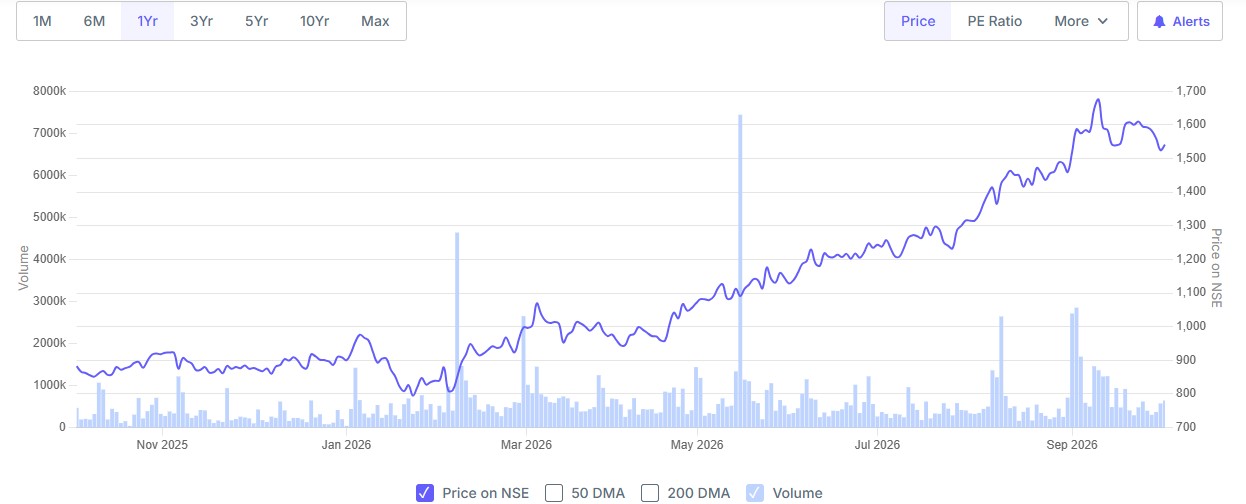
Sai’s stock had risen around 58% over six months and more than 70% during 2026. Jefferies maintained its Buy rating in August 2026 with a ₹1,610 target price. On 1 October 2026, the stock closed at ₹1,541.20 on the NSE, ₹68.80 below that target, equivalent to about 4.46% upside. The brokerage highlighted 24% YoY CRO growth, better-than-expected margins, order coverage and opportunities in peptides and ADCs.
The important point is that the stock has already experienced substantial price appreciation. That makes execution more important: discovery growth, pipeline conversion, capacity utilisation, and profitability need to develop alongside the expansion programme for the operating story to remain aligned with market expectations.
The Drug-Discovery Opportunity Has Risks Beyond Scientific Failure
The growth outlook does not remove the structural risks of the business. Drug discovery is inherently dependent on scientific outcomes. A molecule can fail during hit identification, lead optimisation, toxicology, pharmacokinetics or clinical development. For a CRO or CRDMO, termination of a client programme can remove future work even when the contracted laboratory work has been executed successfully. This is why the quality and duration of the project pipeline matter alongside its headline size.
AI is also changing the economics of early-stage discovery. AI-enabled virtual screening, molecular design and predictive modelling can reduce the amount of experimental work required for some programmes. One company in this segment, Syngene International, for example, has highlighted gigascale virtual screening and AI-based de novo molecule design. For Indian CROs, the opportunity is therefore two-sided: AI can improve scientific productivity, but companies also need to invest in computational chemistry, data capabilities and scientists who can validate AI-generated hypotheses.
China remains another competitive benchmark. India’s CRDMO companies compete not only on cost but increasingly on scientific depth, speed, capacity and integrated infrastructure. ICRA notes that China currently accounts for 18–21% of the global CRDMO market, compared with India’s 2–3%.
For Jubilant and Sai, the implication is that adding laboratory capacity alone is unlikely to be sufficient. The longer-term competitive test is whether deeper scientific capabilities, broader modalities, strong customer relationships and sufficient utilisation accompany new facilities.
Government Support Is Building the R&D Base, Not Removing Commercial Risk
India’s government support for drug discovery is increasingly focused on research, innovation and technology translation. The most directly relevant programme is the Promotion of Research and Innovation in Pharma MedTech Sector, or PRIP, which has a total outlay of ₹5,000 crore for the scheme period, including ₹4,200 crore for industry R&D and ₹700 crore for Centres of Excellence. The programme covers areas including new chemical entities, new biological entities, gene and stem-cell therapies, complex generics and biosimilars.
The revised framework also distinguishes between early-stage and later-stage projects. Early-stage assistance is focused on startups and micro, small and medium enterprises (MSMEs), while later-stage projects at Technology Readiness Levels (TRLs) 4, 5 or 6 can receive assistance of up to 35% of project cost, rising to 50% for strategic-priority innovations, subject to the scheme’s conditions.
It is worth noting that the government support should be treated as an industry-level tailwind rather than a substitute for company-level execution. The commercial outcome will still depend on customer demand, programme success, capacity utilisation, pricing, margins and the return generated on capital invested.
The Next Catalyst Is No Longer Just Discovery
For readers, the drug-discovery opportunity should be assessed through execution rather than growth projections alone. For Jubilant Pharmova, the key markers are recovery in earnings, normalisation of SPECT supplies, improvement in the Montreal facility, growth in Drug Discovery Services and whether planned capacity expansion generates adequate returns without putting further pressure on the balance sheet.
For Sai Life Science, readers should track CRO growth, conversion of its visible pipeline, capacity utilisation and the returns generated from its ₹1,100–1,300 crore FY27 capex programme. Its expansion into peptides, ADCs and oligonucleotides also warrants monitoring.
Across both companies, readers should watch customer programme wins, repeat business, margins, utilisation and cash generation, rather than judging the opportunity solely by revenue growth. The broader industry also faces scientific, AI-driven and China-related competitive risks. Government support can strengthen India’s R&D ecosystem, but company-level execution will ultimately determine commercial outcomes.
It may be a good idea to add these stocks to your watchlist and keep track to see how they perform in time to come.
Disclaimer
Note: We have relied on data from www.Screener.in throughout this article. Only in cases where the data was not available, have we used an alternate, but widely used and accepted source of information.
The purpose of this article is only to share interesting charts, data points and thought-provoking opinions. It is NOT a recommendation. If you wish to consider an investment, you are strongly advised to consult your advisor. This article is strictly for educative purposes only.
Rishabh Sinha is a seasoned financial content creator with over 10 years of experience in BFSI domain. His portfolio spans over 20 of India’s most trusted financial brands. Rishabh brings depth, structure, and a reader-first approach to every piece he crafts.
Disclosure: The writer and his dependents do not hold the stocks discussed in this article.
The website managers, its employee(s), and contributors/writers/authors of articles have or may have an outstanding buy or sell position or holding in the securities, options on securities or other related investments of issuers and/or companies discussed therein. The content of the articles and the interpretation of data are solely the personal views of the contributors/ writers/authors. Investors must make their own investment decisions based on their specific objectives, resources and only after consulting such independent advisors as may be necessary.