


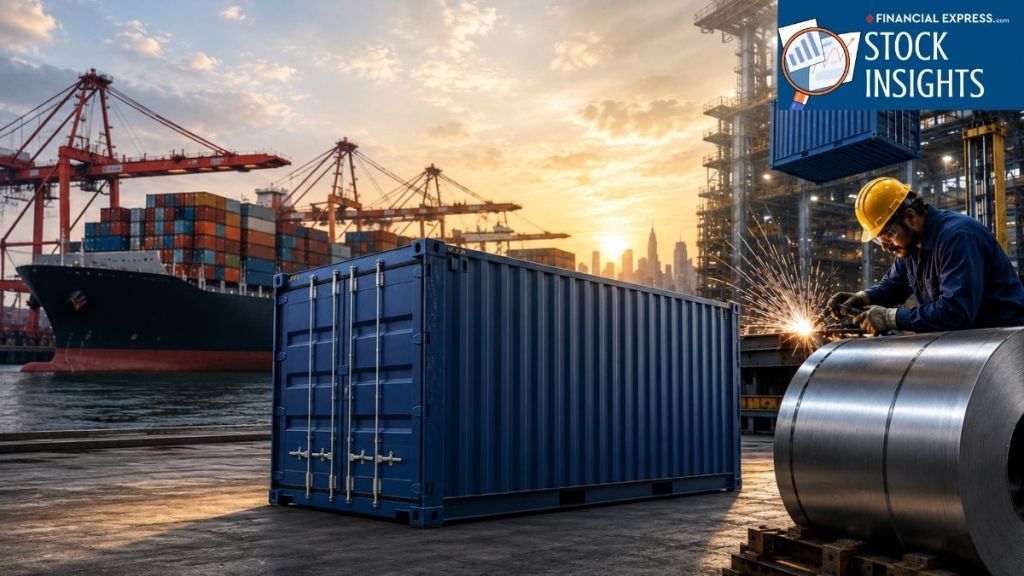

China builds nearly 90% of the world’s shipping containers, making it the undisputed backbone of global trade. For years, India has depended on these imports to keep its export-import (EXIM) logistics moving.
That dependence came at a cost during the pandemic, when container shortages disrupted supply chains and sent freight rates higher. Now, India is trying to build self-dependency. In the Budget FY27, the government unveiled the ₹10,000 crore Container Manufacturing Promotion Scheme (CMPS).
CMPS aims to create a globally competitive domestic container manufacturing ecosystem. The scheme targets a tenfold increase in production capacity, with annual output expected to reach 750,000 Twenty-foot Equivalent Units. This is equal to nearly 10% of global annual container demand.
To achieve this, the government aims to provide capital support for new and expanded manufacturing plants, along with incentives to bridge the significant cost disadvantage. Today, manufacturing a 40-foot shipping container in India costs around ₹3.5-4 lakh, compared with ₹1.5-2 lakh in China, making policy support critical for the industry’s viability.
The momentum is already visible. On 3 July 2026, India unveiled its first Made-in-India EXIM shipping container at the Inland Container Depot in Dadri, marking a key milestone in the country’s push for self-reliance. The commercial opportunity is substantial.
Alone, Container Corporation of India procures around 8,000 containers every year, spending ₹200 crore annually. As domestic manufacturing scales up, this demand could increasingly shift to Indian manufacturers, creating opportunities across the value chain.
Against this backdrop, two companies are emerging as key beneficiaries of India’s container manufacturing drive.
#1 Jupiter Wagons: How a 10% PLI Subsidy Aims to Counter Chinese Import Edge
Jupiter Wagons’ (JWL) containers are primarily manufactured at the Indore facility, which has an annual capacity of 4,500 Twenty-foot Equivalent Units. Production is currently focused mainly on specialized containers. At present, its container manufacturing plant is fully utilised.
Diversifying into Clean Energy and Modular Container Solutions
In addition to traditional freight containers, JWL utilizes container structures for its clean energy business. Through its subsidiary Jupiter Electric, it has developed and deployed modular Energy Storage Systems housed within containers. These containers are used for solar integration, mobile energy storage, and the replacement of traditional diesel generators.
PLI Tailwinds: Bridging the Structural Cost Disparity with China
The demand for containers is also rising, as seen by rising deliveries. During FY26, the company handled 1,460 container units, up from 1,012 in FY25. It also mentions the PLI scheme for container manufacturing with a ₹10,000 crore budget as a major booster.
This policy tailwind is exactly what JWL needs to expand into the marine container market. The company states that barriers have been pricing as it has historically been unsustainable for Indian manufacturers to compete with cheaper container imports from China.
JWL anticipates that the PLI scheme will provide a subsidy of 8-10%. Management believes this subsidy will bridge the cost gap between Indian and Chinese container prices, making JWL’s marine containers globally competitive.
JWL expects to double its container revenues in FY27. To capture this growth, the company is undertaking several strategic initiatives. It plans to expand its manufacturing capacity. It is in advanced discussions with a few global shipping lines to supply them with containers once the new capacities and subsidies are in place.
Evaluating the Fiscal 2027 Margin Trajectory
Regarding the company’s financials, revenue declined by 26.4% year-on-year to ₹2,916 crore. Operating profit fell by 37% to ₹363 crore, while the margin fell 220 bps to 12.4%. Net profit more than halved to ₹166 crore, down from ₹380 crore in FY25. Shortages of wheelsets and disruptions in LPG availability affected its manufacturing operations.
The company enters FY27 with an order book totalling ₹ 4,675 Crore as of 31 March 2026. This includes strong pipelines across railway wagons, commercial vehicle bodies, and containers. JWL has an ambitious long-term goal of achieving a revenue of ₹10,000 crore with a margin of at least 15% by 2030.
#2 SAIL: How ‘SAILCOR’ Anchors India’s EXIM Supply Chain
SAIL has positioned itself as a key supplier to address raw material shortages. A major challenge in container manufacturing has been the availability of the primary raw material: Corten steel (a rust- and weather-resistant steel).
Indigenous ‘SAILCOR’ Steel Challenges Chinese Import Dominance
SAIL’s Bokaro Steel Plant has a license for weather-resistant structural steel. The license also covers the indigenous equivalent of Corten steel, which is mainly used in shipping container manufacturing. The Bokaro plant regularly produces this weather-resistant steel in hot- and cold-rolled coils, plates, and sheets under the brand name “SAILCOR.”
Furthermore, SAIL has successfully developed and commercialized wider-gauge variants (1600 mm & above), which are also used in the manufacturing of railway wagons. SAIL’s domestic steel production is viewed as a foundational step toward eliminating India’s dependence on China in the EXIM supply chain.
In terms of core performance, SAIL achieved its highest-ever annual sales volume of nearly 19.9 million tons (MT), up 11% year-on-year. For FY27, management has guided for 22 to 22.5 MT in sales volume. The company has earmarked significant capex for the coming years, following spending of about ₹9,100 crore in FY26.
Decoupling Capex Demands from Near-Term Return Profiles
SAIL plans to spend ₹15,000 crore in FY27. This is expected to increase to ₹18,000 crore (lower band) in FY28 and to ₹20,000 crore annually as major plant expansions take off. Expansions have been cleared for three major plants: IISCO (in advanced tendering stages), Bokaro, and Bhilai. These new capacities are expected to start coming online around 2030-2031.
Financial Review: Higher Sales Volumes Secure 51% PAT Jump
Coming to its financials, revenue increased by 8% year-on-year to ₹109,966 crore. Operating profit grew by 11.9% to ₹13,146 crore, while the margin rose 40 bps to 12.0%. Net profit grew by 51% to ₹3,233 crore, up from ₹2,148 crore in FY25.
Decoding Corporate Valuation Multiples: Return Ratios vs Sector Medians
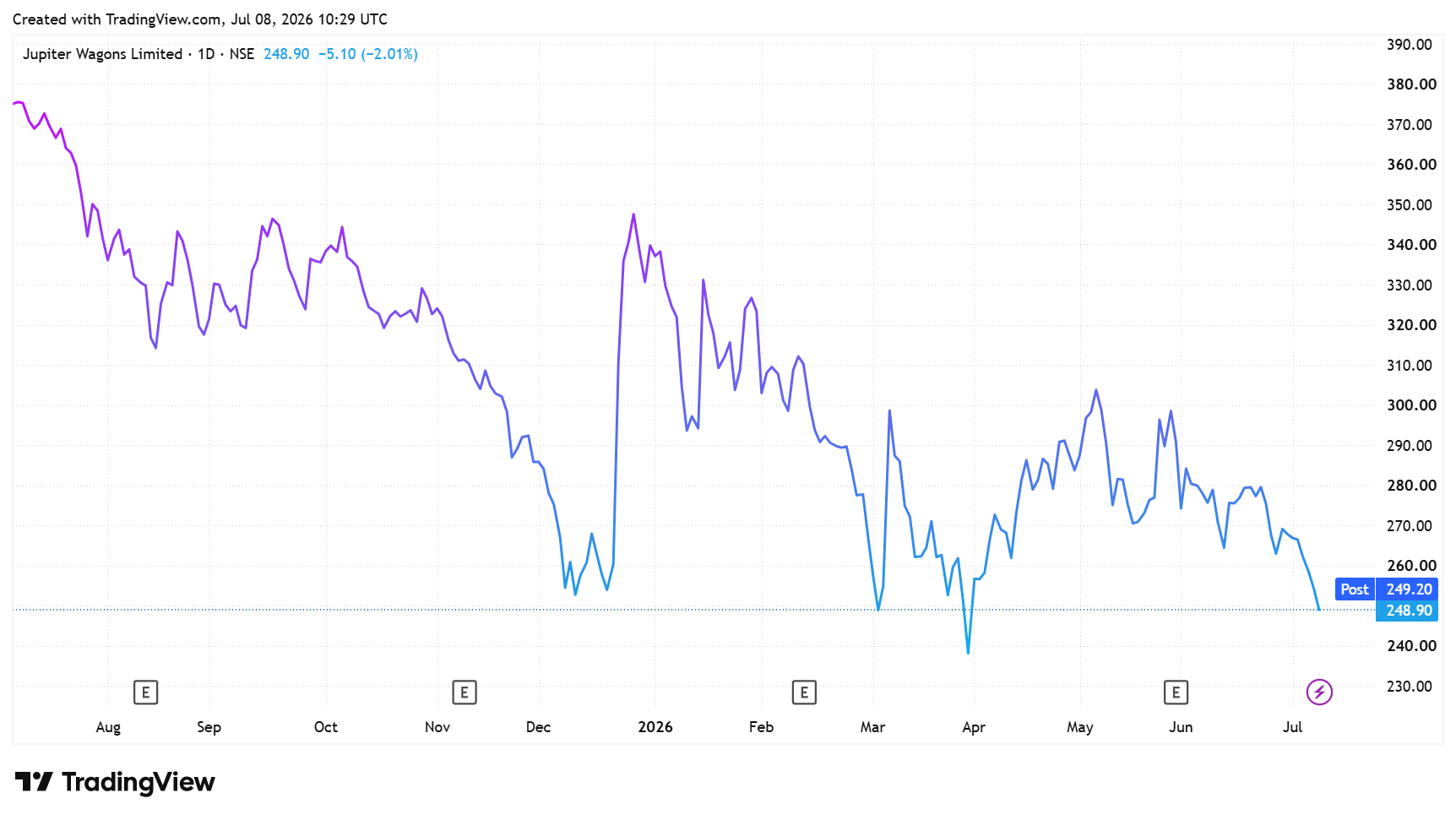
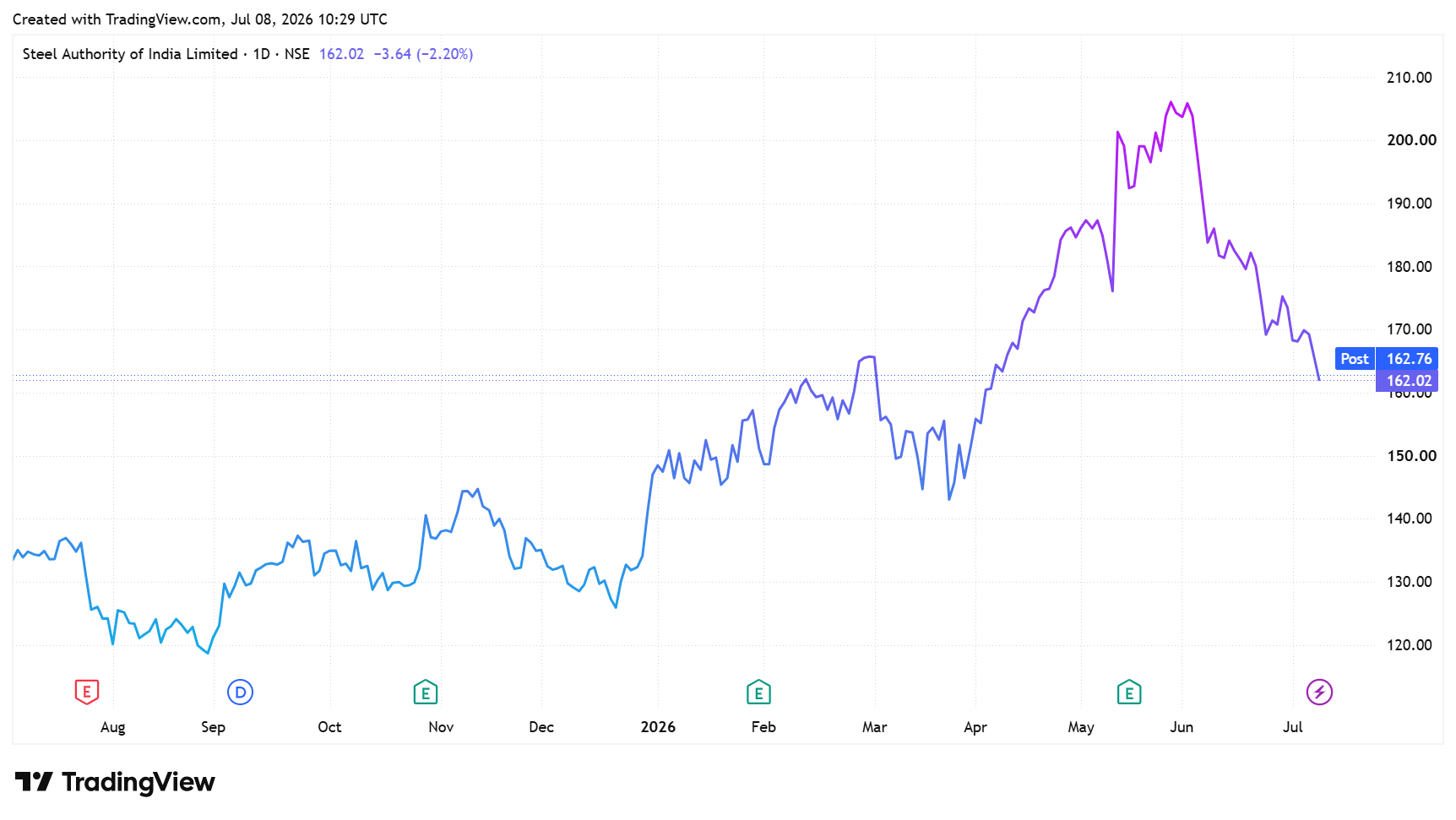
The return ratios, Return on Capital Employed (ROCE) and Return on Equity (ROE), of both companies are moderate due to inconsistent profitability. From a valuation perspective, SAIL is trading at a premium to its 5-year historical median but in line with industry multiples. In contrast, Jupiter continues to trade at a premium to both the historical and industry median.
| Peer Comparison (X) | |||||
Company | Price-to-Earnings Multiple | Return Ratios | |||
| Company | 5Y Median | Industry | ROCE (%) | ROE (%) | |
| SAIL | 17.6 | 14.9 | 17.7 | 7.8 | 6.6 |
| Jupiter | 58.0 | 45.0 | 45.2 | 9.2 | 6.4 |
| Source: Screener.in (Data as of 08 July 2026) | |||||
India’s container manufacturing push is still in its early stages, but the ₹10,000 crore CMPS could reshape the domestic ecosystem over the coming years.
While Jupiter Wagons offers direct exposure to manufacturing, SAIL provides an upstream play through specialised steel. Both names could be kept in your watchlist.
Disclaimer:
Note: Throughout this article, we have relied on data from http://www.Screener.in and the company’s investor presentation. Only in cases where the data was unavailable have we used an alternative, widely used, and accepted source of information.
The purpose of this article is only to share interesting charts, data points, and thought-provoking opinions. It is NOT a recommendation. If you wish to consider an investment, you are strongly advised to consult your advisor. This article is strictly for educational purposes only.
About the Author: Madhvendra has been deeply immersed in the equity markets for over seven years, combining his passion for investing with his expertise in financial writing. With a knack for simplifying complex concepts, he enjoys sharing his honest perspectives on startups, listed Indian companies, and macroeconomic trends.
A dedicated reader and storyteller, Madhvendra thrives on uncovering insights that inspire his audience to deepen their understanding of the financial world.
Disclosure: The writer and his dependents do not hold the stocks discussed in this article.
The website managers, its employee(s), and contributors/writers/authors of articles have or may have an outstanding buy or sell position or holding in the securities, options on securities, or other related investments of issuers and/or companies discussed therein. The articles’ content and data interpretation are solely the personal views of the contributors/ writers/authors. Investors must make their own investment decisions based on their specific objectives, resources, and only after consulting such independent advisors as may be necessary.