




Rising passenger traffic, airport expansion and improving regional connectivity are creating opportunities across the wider aviation ecosystem. As more aircraft take to the skies, the supporting infrastructure around them also needs to grow—from charter services and pilot training to simulation, maintenance and other specialised aviation services.
In our recent SME series, we have looked at smaller businesses participating in India’s infrastructure expansion, the railway supply chain and, most recently, the country’s shipping and port push. We now turn to another part of India’s investment cycle: aviation beyond the airlines.
However, a strong sectoral tailwind alone is not enough, particularly in the SME space. Smaller companies can carry higher liquidity, execution and business-concentration risks. Financial quality therefore remains an important filter.
We screened SME companies for return on capital employed (ROCE) above 15% and average three-year ROCE above 15%, along with debt-to-equity below 0.5, positive operating cash flow and positive free cash flow over three years. Companies also needed three-year sales and profit growth above 10%, operating margins above 10%, promoter holding above 30% with no decline, zero promoter pledging, debtor days below 150 days and market capitalisation above Rs 100 crore.
Two aviation-linked SMEs passed this screen. One operates in private air-charter services, while the other is part of India’s aviation training and simulation ecosystem.
Let’s take a closer look at these two companies and how they are participating in India’s expanding aviation ecosystem.
#1 FlySBS Aviation: Expanding Private Charter Capacity And Global Reach
Incorporated in 2020, FlySBS Aviation is a private jet chartering company in India.
FlySBS Aviation’s three-year sales compounded annual growth rate (CAGR) of 111% helped it qualify for the aviation shortlist. Profit CAGR was 160%, while ROCE stood at 32.5%. FY26 operating margin was 22%. Debt-to-equity was about 0.12 times and debtor days stood at 44.
The Chennai-based company operates private, non-scheduled air-charter services. It holds a DGCA-issued Air Operator Permit and an approved continuing airworthiness framework. Corporate clients contributed 92.17% of FY26 revenue. Repeat customers accounted for 87.84%. FLYSBS AR FLYSBS AR
Fleet Expansion and International Reach
Expansion is centred on adding aircraft under long-term dry leases. The FY26 annual report says FlySBS earmarked Rs 80.47 crore of IPO proceeds for six pre-owned aircraft. Of this, Rs 68.81 crore had been deployed by March 2026.
At year-end, it operated two Embraer Legacy aircraft under long-term dry leases. Further aircraft deliveries were delayed by conditions in West Asia. The company has retained the undeployed IPO proceeds in fixed deposits pending induction.
International operations are already a major part of the business. FlySBS has flown across six continents and international travel generated 86.7% of FY26 revenue. According to a press release in September 2026, it also signed a long-term aviation fuel supply agreement with HPCL to support fuel availability and future fleet and network expansion.
Strong Revenue and Profit Growth
FY26 revenue from operations rose 64.3% to Rs 318.5 crore from Rs 193.9 crore over a year. Profit after tax increased 113.9% to Rs 60.7 crore from about Rs 28.41 crore.
Promoter holding remained at 32.47% between September 2025 and March 2026, with no promoter pledging. The number of shareholders increased to 3,136 by March 2026.
The expansion brings execution risk. Aircraft additions increase fixed costs before utilisation catches up. The business also depends on regulatory compliance, skilled crew and aircraft availability. As an SME stock, liquidity and price volatility remain additional risks. Financial results are reported half-yearly rather than quarterly, increasing the gap between operating updates.
FlySBS Aviation Financial Performance
| Metric | FY26 |
| Revenue | Rs 318.53 crore |
| Revenue growth | 64.3% YoY |
| Net profit | Rs 60.77 crore |
| Profit growth | 113.9% YoY |
Source: FlySBS Aviation FY26 annual report
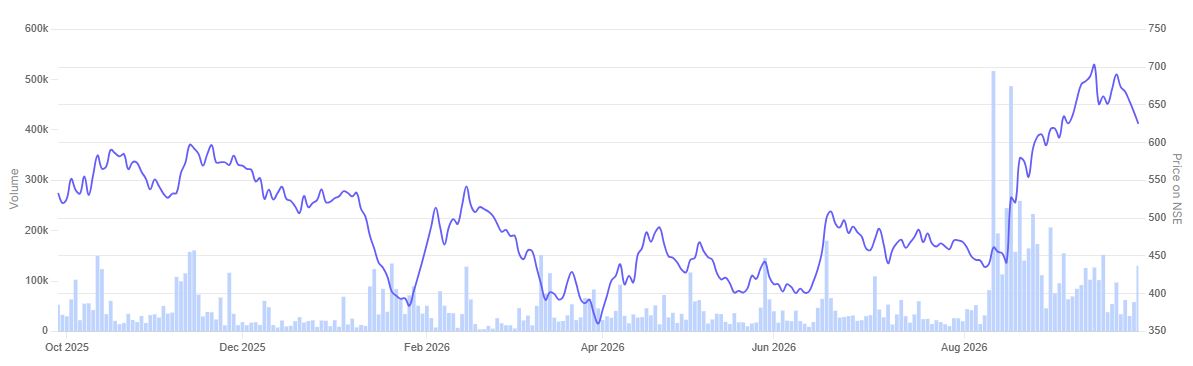
In the past year, the share price of FlySBS Aviation is up 19%.
FlySBS Aviation 1-Year Share Price Chart
Source: Screener.in
#2 Flywings Simulator Training Center: Building Simulator Capacity And Aviation Training Infrastructure
Incorporated in 2011, Flywings Simulator Training Centre is engaged in Aviation Training located in Gurgaon.
Flywings Simulator Training Centre’s three-year sales CAGR of 33% helped it qualify for the aviation shortlist. Profit CAGR was 39%, while ROCE stood at 33.2%. FY26 operating margin was 64%. Debt-to-equity was about 0.12 times and debtor days stood at 144.
The Gurugram-based company provides simulator-led aviation training and also operates an aviation MRO business. Its training covers cabin crew, pilots and safety-related programmes. The company is DGCA-approved.
Mumbai Expansion and New Simulator Capacity
Expansion is now centred on a new training facility at Taloja MIDC near Mumbai. Management said in the earnings call transcript, the centre will house full-flight simulators, cabin-crew simulators and a water-survival training pool.
Two Airbus A320 simulators are expected first. Management expects DGCA “ready for training” certification by December, with revenue targeted from January 2027. The simulators will be leased rather than purchased outright.
The company is also developing a Flight Training Organisation at Dholera airport. Management said the project was awaiting final award formalities from the Ministry of Civil Aviation at the time of the FY26 call.
Revenue Growth and MRO Expansion
Revenue from operations rose 21.3% to Rs 24.51 crore in FY26 from Rs 20.21 crore. Profit after tax increased 6.1% to Rs 11.43 crore from Rs 10.78 crore.
MRO is another growth leg. The FY26 annual report shows that Flywings has a long-term arrangement with IndiGo for wheel and brake work. Management expects component-MRO revenue to reach Rs 20-25 lakh a month by mid-2027. Flywings TR
Promoter holding remained at 59.87% between December 2025 and March 2026. As an SME stock, liquidity and sharp price movements remain risks. The expansion also depends on DGCA approvals, simulator commissioning and utilisation. Investors should therefore avoid extrapolating the historical growth rates.
Flywings Simulator Financial Performance
| Metric | FY26 |
| Revenue | Rs 24.51 crore |
| Revenue growth | 21.3% YoY |
| Net profit | Rs 11.43 crore |
| Profit growth | 6.1% YoY |
Source: Flywings FY26 annual report
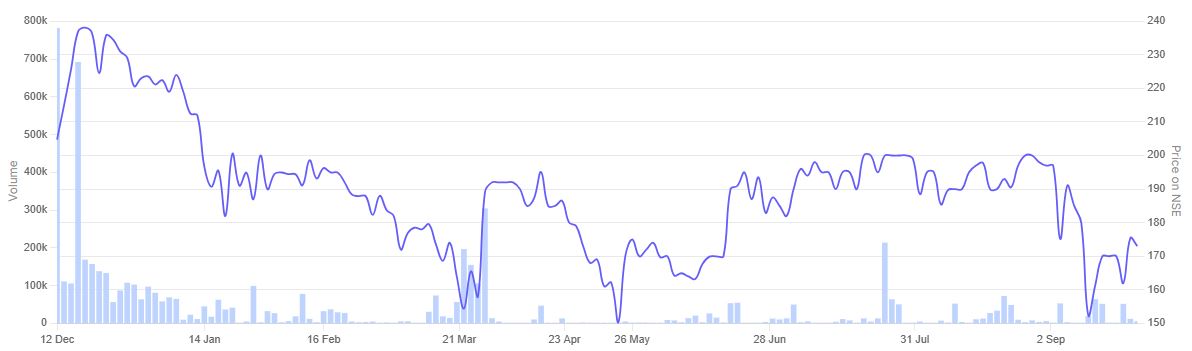
In the past year, the share price of Flywings Simulator Training Centre is up 19%.
Flywings Simulator Training Centre 1-Year Share Price Chart
Source: Screener.in
Conclusion
India’s aviation expansion is creating opportunities beyond listed airlines. Charter services, simulator training and aviation support businesses can benefit as traffic, fleet sizes and training requirements rise.
The two SMEs highlighted here passed the same financial-quality screen, but their growth drivers are different. FlySBS is betting on fleet expansion and higher utilisation, while Flywings is adding simulator capacity and building its MRO and pilot-training businesses. Execution will matter in both cases.
SME stocks also carry higher liquidity and price-volatility risks. Investors should therefore track whether planned capacity additions translate into revenue, cash flows and sustained returns, rather than relying on the aviation theme alone.
Two Aviation Ecosystem SMEs: Growth and Operating Performance
| Metric | FlySBS Aviation | Flywings Simulator Training Centre |
| Three-year sales CAGR | 111% | 33% |
| Three-year profit CAGR | 160% | 39% |
| FY26 operating margin | 22% | 64% |
| FY26 debtor days | 44 | 144 |
| FY26 operating cash flow (Rs crore) | 31.54 | 8.93 |
Sources: Supplied Screener data for growth, operating margins and debtor days. Operating cash flow from the FY26 annual reports of FlySBS Aviation and Flywings Simulator Training Centre. FlySBS reported FY26 net cash from operating activities of Rs 31.54 crore.
You can track how these are progressing by adding stocks to your watchlist.
Disclaimer
Note: We have relied on data from www.Screener.in throughout this article. Only in cases where the data was not available, have we used an alternate, but widely used and accepted source of information.
The purpose of this article is only to share interesting charts, data points and thought-provoking opinions. It is NOT a recommendation. If you wish to consider an investment, you are strongly advised to consult your advisor. This article is strictly for educative purposes only.
Ekta Sonecha Desai has a passion for writing and a deep interest in the equity markets. Combined with an analytical approach, she likes to deep dive into the world of companies, studying their performance, and uncovering insights that bring value to her readers.
Disclosure: The writer and her dependents do not hold the stocks discussed in this article.
The website managers, its employee(s), and contributors/writers/authors of articles have or may have an outstanding buy or sell position or holding in the securities, options on securities or other related investments of issuers and/or companies discussed therein. The content of the articles and the interpretation of data are solely the personal views of the contributors/ writers/authors. Investors must make their own investment decisions based on their specific objectives, resources and only after consulting such independent advisors as may be necessary.