




The Hidden 1.5% Stake: What the Screeners Missed
Ashish Kacholia entered two August listings. In one, his firm Bengal Finance holds more than he does. Both face a September anchor unlock.
The August 2026 shareholding filings put Ashish Kacholia inside two companies that had been listed for a matter of days. The freshest is a lead recycler that came to the main board on 12th August 2026. And the other is a healthcare logistics firm that listed on NSE Emerge (SME Board) on 20th August 2026.
In the lead recycler, his name sits against 1.20%. Two rows above it, Bengal Finance and Investment Pvt Ltd holds 1.50%. Bengal Finance is one of Kacholia’s own investment vehicles, and the pair have bought together for years. Add them and the real position is 2.70%, worth about Rs 47.4 cr. Anyone screening for his name alone sees less than half of it.
That is the first thing worth knowing. The second is what both companies have said in their own filings since listing. Let us dive in to find out.
#1 Ardee Industries: The Circular Economy Play
Incorporated in 1993, Ardee Industries melts down dead car batteries. It buys used lead acid batteries and non-ferrous scrap, refines the metal, and sells high purity lead and lead alloys back to battery makers. A circular economy business, with a current market cap of Rs 1,736 cr.
The plant sits at Naidupeta in Andhra Pradesh. Capacity was raised by 50.9% to 1,56,950 tonnes a year with effect from 29th May 2026, which is close to three times the FY24 level. Exports have gone from about Rs 81.6 cr in FY24 to Rs 465 cr in FY26, and the company now ships to eight countries.
The Anchor Book Strategy: How Kacholia Built a 2.70% Position
Kacholia used two of his vehicles, and both paid the same price.
His personal block was bought before the offer opened, in secondary tranches on 24th and 27th July 2026 at Rs 53 a share. Bengal Finance came in through the anchor book, taking 47,17,147 shares at Rs 53, worth Rs 25 cr. That anchor allotment works out to exactly the 1.50% now showing in the filing, which tells you the position has not been touched.
The combined 2.70% cost roughly Rs 45.1 cr. Note who else was in that anchor book, because it is easy to misread. Winro Commercial took an identical 47.17 lakh shares, but that is the Kothari group, not Kacholia. Bank of India Small Cap Fund took the same again.
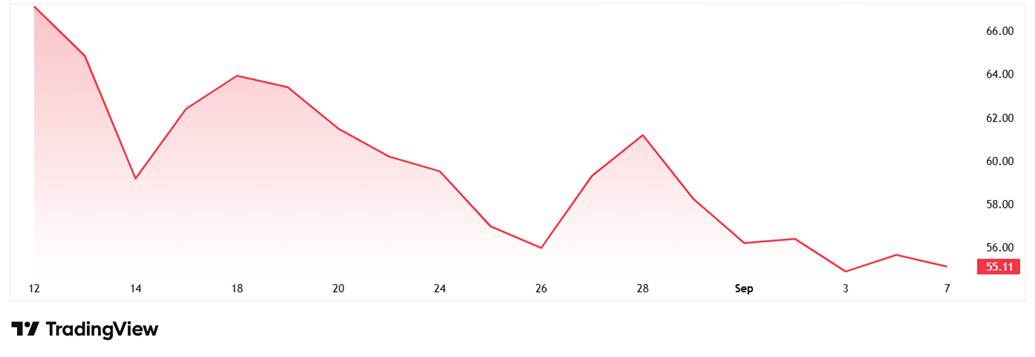
The offer was subscribed 133 times. The stock listed at Rs 73.6 on 12th August 2026, a 39% premium. The stock was at Rs 55 in the morning of 7th September 2026, well below the listing price, but slightly higher than what Kacholia paid.
Triple Margins and 9x Profits: The Numbers Drawing the Retail Crowd
Let us look at the financials to try and find out what Kacholia saw in this stock.
| Financial Year | FY23 | FY24 | FY25 | FY26 | 3Y CAGR |
| Sales (Rs cr) | 412 | 463 | 743 | 1,168 | 41.5% |
| EBITDA (Rs cr) | 23 | 28 | 66 | 147 | 85.6% |
| Net Profit (Rs cr) | 9 | 9 | 33 | 85 | 111.4% |
| EBITDA Margin | 5.6% | 6.0% | 8.9% | 12.6% | – |
EBITDA here refers to operating profit before other income. A five-year table is not available because the company listed only in August 2026 and the published series begins at FY23. The compounded rates shown are three-year figures calculated from audited year-end numbers.
Earnings per share has been left out because equity capital moved from Rs 3 cr to Rs 51 cr across the period, which makes the per-share series misleading.
Read on its own, that table is the reason retail money followed him in. Margins tripled. Profit went up nine times in three years.
Q1 Reality Check: Freight Costs, Flattened Margins, and Lower Guidance
Then came the first quarter as a listed company, and the transcript filed with both exchanges on 3rd September 2026 is worth reading in full.
Revenue for the June 2026 quarter rose 35.2% to Rs 338.8 cr. Operating profit was Rs 33.8 cr against Rs 33.9 cr a year earlier. Flat. The margin fell from 13.5% to 10%, a drop of about 355 basis points.
Net profit rose 5.9% to Rs 19.9 cr. Volumes were up 13.6% but fell against the previous quarter, and gross profit per tonne slipped to about Rs 34,500 from Rs 38,000 in the March quarter.
Management was direct about why. War-related disruption has pushed up freight, blocked some Middle East routes and raised the cost of imported scrap. Domestic scrap costs more and brings its own problems in an unorganised market.
More important is what they guided to. Revenue growth for FY27 was put at 10% to 20%, against a two-year compounded rate of 58.8%. On margins, asked whether the 13% of FY26 would hold or the 10% of the June quarter, the answer was that the 10% range was the safer guide.
The 81% ROE Illusion: Why Management Says Returns Will Plunge
Here is the line that matters most, and it came unprompted.
The screens show return on equity of 80.9% and return on capital employed (ROCE) of 49.1%. Those are extraordinary figures and they are exactly what draws a crowd. Management explained on the call that the numbers looked high because the capital base was historically small, that with fresh equity on the books the return ratios will come down, and that the aim now is to hold a 20-plus range.
So, the 81% is real, and it is also about to become history. A reader who buys on the screen figure is buying a ratio the company has already told the market will fall by three quarters.
Valuation and the Looming September Supply Shock
The stock trades at a PE of roughly 20x against the current industry median of 25x. On that basis Ardee is not expensive. A ten-year median comparison, which I would normally run, is not possible on a stock less than a month old.
Capacity utilisation is around 65%. Management does not expect to reach the optimum 70% to 75% until FY28. Working capital runs at 90 to 100 days, and Rs 220 cr of the issue proceeds is earmarked for it.
The balance sheet has improved sharply on the way in. Long-term debt is around Rs 20 cr, working capital limits are close to unused, and about Rs 150 cr of the issue money sits in deposits. Customer concentration is the other thing to track. The largest single customer has come down from 70% of revenue to roughly 40%, though management was clear that four or five clients will always account for most of the book.
One date belongs in the diary. Anchor shares unlock in two halves, 30 days and 90 days after allotment. Ardee allotted on 10th August 2026, so half the anchor book, close to 3.8% of the company, becomes sellable on 9th September 2026, with the rest freed in early November. Bengal Finance’s entire stake is anchor stock. Kacholia’s own block, bought in July, carries a longer lock-in.
#2 Credent Connect N Care: The Specimen Logistics Bet
Incorporated in June 2015, Credent Connect N Care moves blood samples. It collects specimens from homes and collection centres, keeps them between 2 and 8 degrees, and gets them to a laboratory before they spoil. Around that it sells workforce services, courier aggregation and software support to diagnostic chains. The current market cap of the company is Rs 583 cr.
Per the investor presentation filed with the exchange on 20th August 2026, it works with more than 2,500 laboratories, runs a field force of over 6,000, and served around 280 customers in FY26.
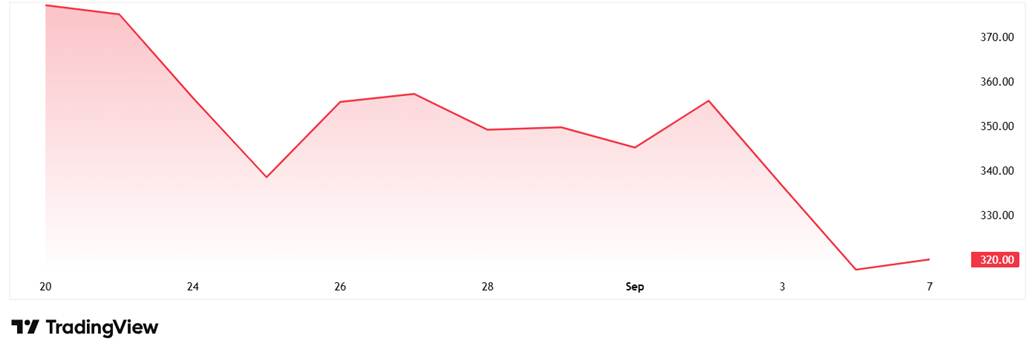
Kacholia came in through the anchor book again. The company placed 14,04,000 shares with ten anchors for Rs 26.54 cr at Rs 189 a share. He took 267,600 of them, about 19% of the book, alongside Abakkus, Motilal Oswal and 360 ONE. The stock listed at Rs 359.10, a 90% premium, and was at Rs 320 on the morning of 7th September 2026.
The 736% Profit Surge (And the Accounting Nuance Behind It)
| Financial Year | FY24 | FY25 | FY26 | FY26 vs FY25 |
| Sales (Rs cr) | 75.7 | 77.9 | 214.2 | 175% |
| EBITDA (Rs cr) | 4.3 | 5.0 | 28.5 | 470% |
| Net Profit (Rs cr) | 2.7 | 2.2 | 18.4 | 736% |
EBITDA here refers to operating profit before other income. FY24 and FY25 are standalone and FY26 is consolidated, so a compounded rate across the series would not be a like-for-like comparison. A five-year table is not available because the company has only just listed. Earnings per share has been left out because the pre-issue and post-issue share counts differ.
That FY26 column needs unpacking. The company’s own service-wise disclosure shows logistics, the original core, went from Rs 50.4 cr to Rs 54.1 cr, growth of about 7%. Healthcare services went from Rs 9.5 cr to Rs 92.2 cr. The jump is mostly wholly owned subsidiaries arriving in the consolidated accounts. Logistics was 65% of revenue a year earlier and is now a quarter of it. In FY25 the standalone business earned less than it had in FY24.
Where Did the Cash Go? The Rs 28.4 Cr Receivables Spike
Credent made operating profit of Rs 29.3 cr before working capital movements in FY26. Trade receivables then rose by Rs 28.4 cr, swallowing almost all of it. Cash from operations came in at negative Rs 6.6 cr. Receivables went from Rs 17.9 cr to Rs 58.8 cr, borrowings from Rs 7.4 cr to Rs 22.0 cr, and cash at the year-end was Rs 2.2 cr.
The share price of Credent has logged about a 10% drop since the listing.
The stock trades at a PE of about 32x, against a peer median near 19x. Its anchor allotment was on 18th August 2026, which puts half that book, close to 3.9% of the company, into play around the middle of September.
The SME Risk: Liquidity and Lighter Governance
Credent is on NSE Emerge, and that board works differently. Results come twice a year, so a problem surfacing in April may not reach shareholders for months. Shares trade in fixed lots, pushing the entry ticket into lakhs. Liquidity leans on a designated market maker, and on a bad day that support has limits. Governance rules are lighter, with exemptions from parts of the listing regulations that main board companies must follow.
The Insider’s Cushion: Why You Cannot Replicate Kacholia’s Entry Price
Kacholia got into both at prices the market never offered afterwards. Rs 53 in one, Rs 189 in the other, both before the shares traded freely. That cushion is the whole difference between his position and a reader’s.
In both, the number that pulled the crowd in is not the number that decides the outcome. Ardee’s 81% return on equity is a small-capital artefact the company has already said will fall. Credent’s 175% revenue growth describes a change in what is being counted more than a change in trading, and the cash has gone out rather than in.
And both carry a September supply date, because anchor money that was locked at listing starts becoming free this month.
None of that makes either business bad. Ardee has real capacity, a growing export book and a hedging discipline it explained in detail. Credent is doing genuine work in a market that is expanding. The point is narrower. A star investor’s entry tells you a professional liked the odds at his price, with his ability to wait. It does not tell you the odds are the same at yours, and in these two cases the companies themselves have already published the reasons why.
A good idea would be to add these stocks to a watchlist and read the margin line and the cash flow line before the price chart.
Disclaimer
Note: We have relied on data from http://www.Screener.in and http://www.trendlyne.com throughout this article. Only in cases where the data was not available, have we used an alternate, but widely used and accepted source of information.
The purpose of this article is only to share interesting charts, data points and thought-provoking opinions. It is NOT a recommendation. If you wish to consider an investment, you are strongly advised to consult your advisor. This article is strictly for educative purposes only.
Suhel Khan has been a passionate follower of the markets for over a decade. During this period, he was an integral part of a leading Equity Research organisation based in Mumbai as the Head of Sales & Marketing. Presently, he is spending most of his time dissecting the investments and strategies of the Super Investors of India.
Disclosure: The writer and his dependents do not hold the stocks discussed in this article. The website managers, its employee(s), and contributors/writers/authors of articles have or may have an outstanding buy or sell position or holding in the securities, options on securities or other related investments of issuers and/or companies discussed therein. The content of the articles and the interpretation of data are solely the personal views of the contributors/writers/authors. Investors must make their own investment decisions based on their specific objectives, resources and only after consulting such independent advisors as may be necessary.