


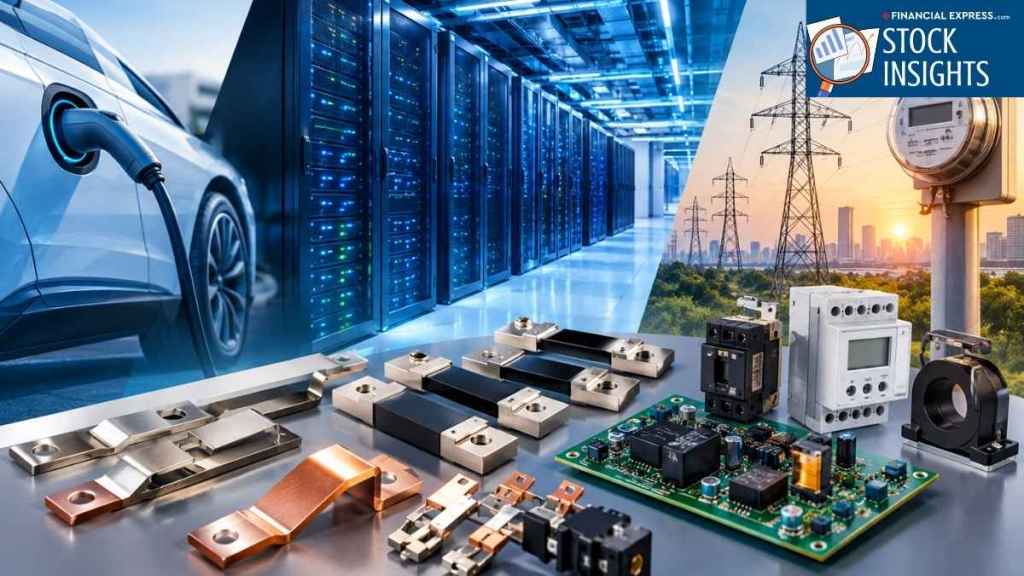

As Artificial Intelligence workloads expand, data centres are becoming more than computing hubs. They are turning into large power consumers, putting pressure on grids, power equipment and electricity monitoring systems.
The global data centre power infrastructure market is expected to grow at around 15% CAGR through 2035, crossing $45 billion (around ₹4.3 lakh crore). At the same time, Deloitte estimates that AI data centre power demand could rise by 30X by 2035, increasing the need for reliable power distribution and monitoring.
This shift is also creating opportunities for Indian manufacturers supplying specialised electrical components. One company is seeing demand for its bimetals and low-ohmic shunts as data centre expansion and urban grid upgrades increase globally.
Another supplies energy meters, digital instrumentation and current transformers that help measure electricity consumption and monitor electrical currents across power infrastructure. Together, these businesses sit at different points of the same trend. As data centres consume more power, the need to distribute, measure and manage that electricity also grows.
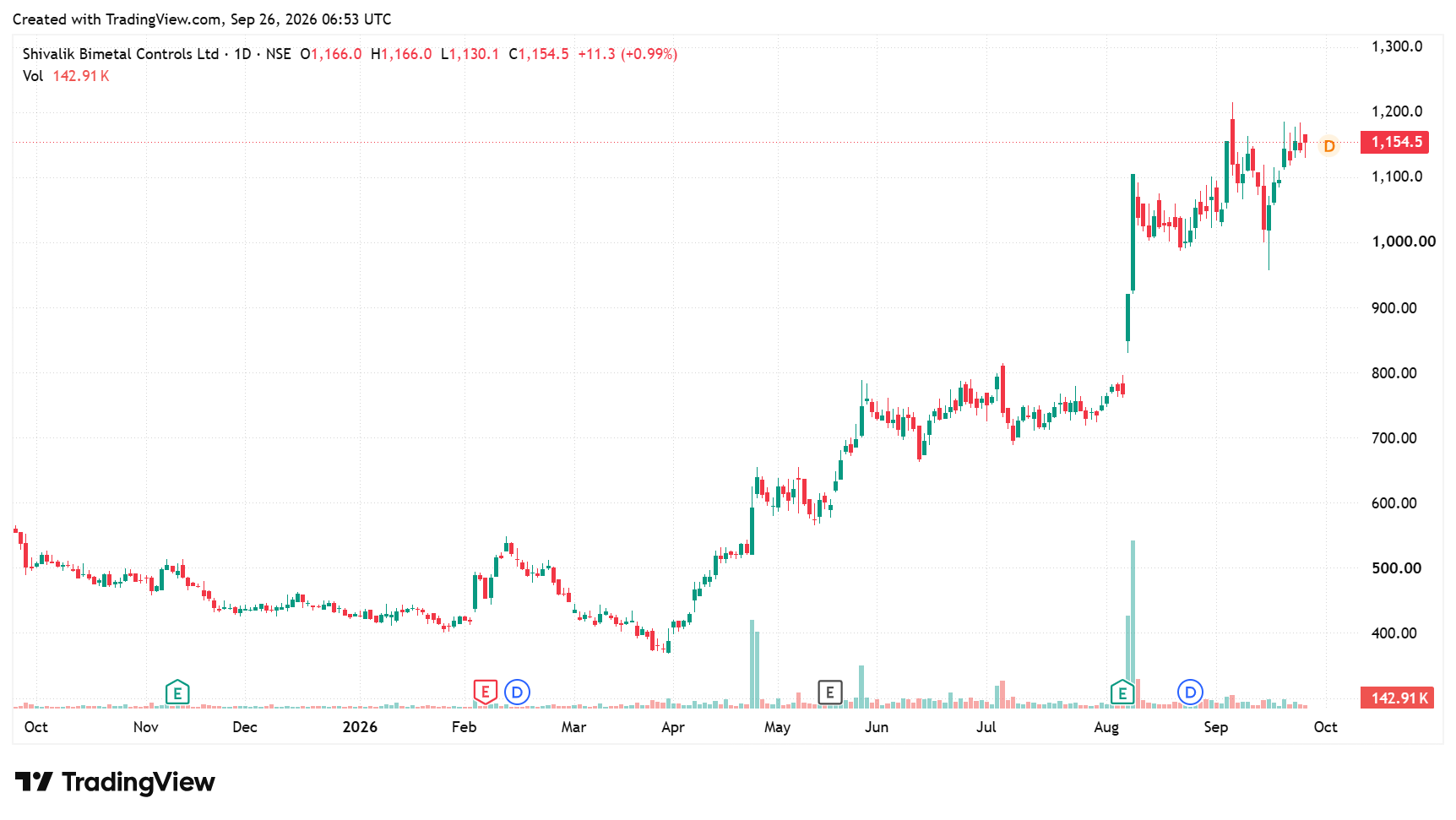
#1 Shivalik Bimetal Controls: The EV Supplier Powering Global Data Centres
Shivalik Bimetal Controls (SBCL) makes the hidden, ultra-precise safety guards, speedometers, switches, and power highways that sit inside modern electrical devices, electric vehicles (EVs), smart meters, and household appliances. The product includes Thermostatic Bimetals, Shunt Resistors, Silver Electrical Contacts, bus bar connectors and PCBA assemblies.
Product Mix Transformation: Shifting from Raw Strips to High-Margin Assemblies
Shunt resistors accounted for 37% of Q1FY27 revenue, followed by thermostatic bimetals (35%) and electrical contacts (28%). Exports accounted for 54% of revenue. SBCL is transitioning away from supplying low-margin ready-to-use raw strips toward manufacturing high-precision finished components and sub-assemblies.
In the shunt resistors segment, strip sales dropped to nearly one-third of past volumes as SBCL converted raw materials into finished parts. Surging demand for electric two-wheelers and global EV platforms is driving fast-track adoption of Electron Beam-welded shunts and battery management systems.
India’s national smart meter rollout and global grid upgrades continue to drive demand for precision current-sensing shunt and latching relay components. Smart-meter-related revenue nearly doubled to ₹75-80 crore in FY26 and continues to expand in FY27.
Beyond Automotive: Capitalising on the Data Centre and Smart Meter Boom
The data centre is a natural extension of SBCL’s existing businesses, given its expertise in electric vehicles and smart grids. Low-resistance EB-welded shunts and high-current bus bars are used in power distribution units, inverters and power modules. This helps provide ultra-precise current sensing and energy measurement.
In addition, high-pressure diffusion-bonded bimetals provide the thermal protection and circuit interruption required in switchgear and circuit breakers. Management views data centre power infrastructure as a second major structural pull alongside EV battery systems. SBCL already manufactures and qualifies these exact components.
Thus, the key signal to track through FY27 is the pace at which these technical qualifications convert into formal commercial program wins with global OEMs.
Financial Outperformance: Operating Leverage Expands EBITDA Margins to 23.7%
Financially, revenue grew 33.4% year-on-year to ₹182.2 crore in Q1FY27. The top-line growth was value-led rather than volume-driven. EBITDA (Earnings Before Interest, Tax, Depreciation, and Amortisation) surged 35.3% to ₹43.2 crore, with margins at 23.7%. Net profit grew 44.9% to ₹33 crore. Working capital days also improved by 13 days to 245 days.
Capacity Runway: A ₹1,300-Crore Revenue Ceiling Without Greenfield Capex
Looking ahead, management expects consolidated revenue to expand 20% to 30% in FY27. The commissioning and Phase 1 operationalisation of the Pune R&D and Cell Contacting System facility could help with forward integration. This plant can generate revenue of ₹300-400 crore within three years.
SBCL’s total installed asset base can support up to ₹1,300 crore in annual revenue without any major greenfield investments. Management expects multi-year growth in the US as orders resume at higher value-addition levels. EV content per vehicle expansion is also a growth driver as EVs carry 3x the shunt value of an internal combustion engine vehicle.
#2 Rishabh Instruments: The Instrument Maker Supplying AI Data Centres
Rishabh Instruments designs, develops, and manufactures solutions to measure, monitor, control, record, analyse and optimise electrical and energy parameters. In data centres, mainly for AI-driven and energy-intensive digital infrastructure, Rishabh provides specialised electrical measurement, monitoring, and power management solutions.
The company supplies energy meters and digital instrumentation to accurately measure and track electricity consumption across the infrastructure. Additionally, it supplies low-voltage (and expanding medium-voltage) analog and digital current transformers. These are integrated with energy meters to monitor high electrical currents.
Data Centre Inroads: Capturing AI Infrastructure and High-Voltage Monitoring
Rishabh secured its first landmark data centre order. The company subsequently won projects for another 3-4 data centre orders. Rishabh is currently bidding for approximately 10 additional data centre projects. Data centres are a primary structural tailwind for Rishabh’s Electrical and Electronics Instrumentation segment.
The group operates primarily under two divisions: Electrical & Electronic Instruments (77.7% of Q1FY27 revenue) and High Pressure Die Casting (22.3%). The EEI division is the company’s main growth engine. The division covers a broad range of products and integrated solutions.
Through its Polish subsidiary, Lumel Alucast, High Pressure Die Casting (HPDC) makes aluminium die-cast components and sub-assemblies. The business serves automotive and non-automotive industrial applications.
Segment Performance: EEI Drives Earnings as Lumel Alucast Rationalises Contracts
Electrical & Electronic Instruments (EEI) revenue increased 34% to ₹154 crore in Q1FY27. EBITDA increased 72.8% to ₹36.8 crore, while margins remained at 23.9%. Segment net profit also increased 59.5% to ₹25.3 crore. Growth was driven by robust global demand for current transformers, renewable energy products, industrial automation and data centre applications.
Meanwhile, the high-pressure die casting (HPDC) segment is making a conscious exit from old low-margin agreements. HPDC revenue fell 41.2% to ₹44.3 crore but still achieved operating breakeven. Management projects a return to double-digit EBITDA margins within 2 years as capacity is filled with higher-margin, profitable production programs.
Financial Overview: Margin Expansion Offsets Higher Depreciation
Nevertheless, consolidated revenue rose 4.2% year-over-year to ₹198.3 crore. EBITDA increased 17.3% to ₹33.3 crore, while margins expanded 190 bps to 16.8%. However, net profit fell 1.4% to ₹19.4 crore due to higher depreciation. Management maintains guidance for 20% revenue growth and EBITDA margins of 20-22% for FY27.
Manufacturing Scale: Nashik Commissioning Sets Up a 2.5x Capacity Runway
The company is also focusing on capacity expansion. Low-voltage current transformer (CT) capacity is being expanded from 5,000-6,000 units per day to 8,000-10,000 units/day. This is supported by expansion into medium-voltage CTs. Rishabh plans to launch 15+ products in FY27.
It has also partially commissioned a new manufacturing facility in Nashik. This facility directly addresses space constraints at the old plant while also improving production quality, lead times, and operational efficiency. The increased space provides the foundation for expanding total production capacity by more than 2.5x over the next four to five years.
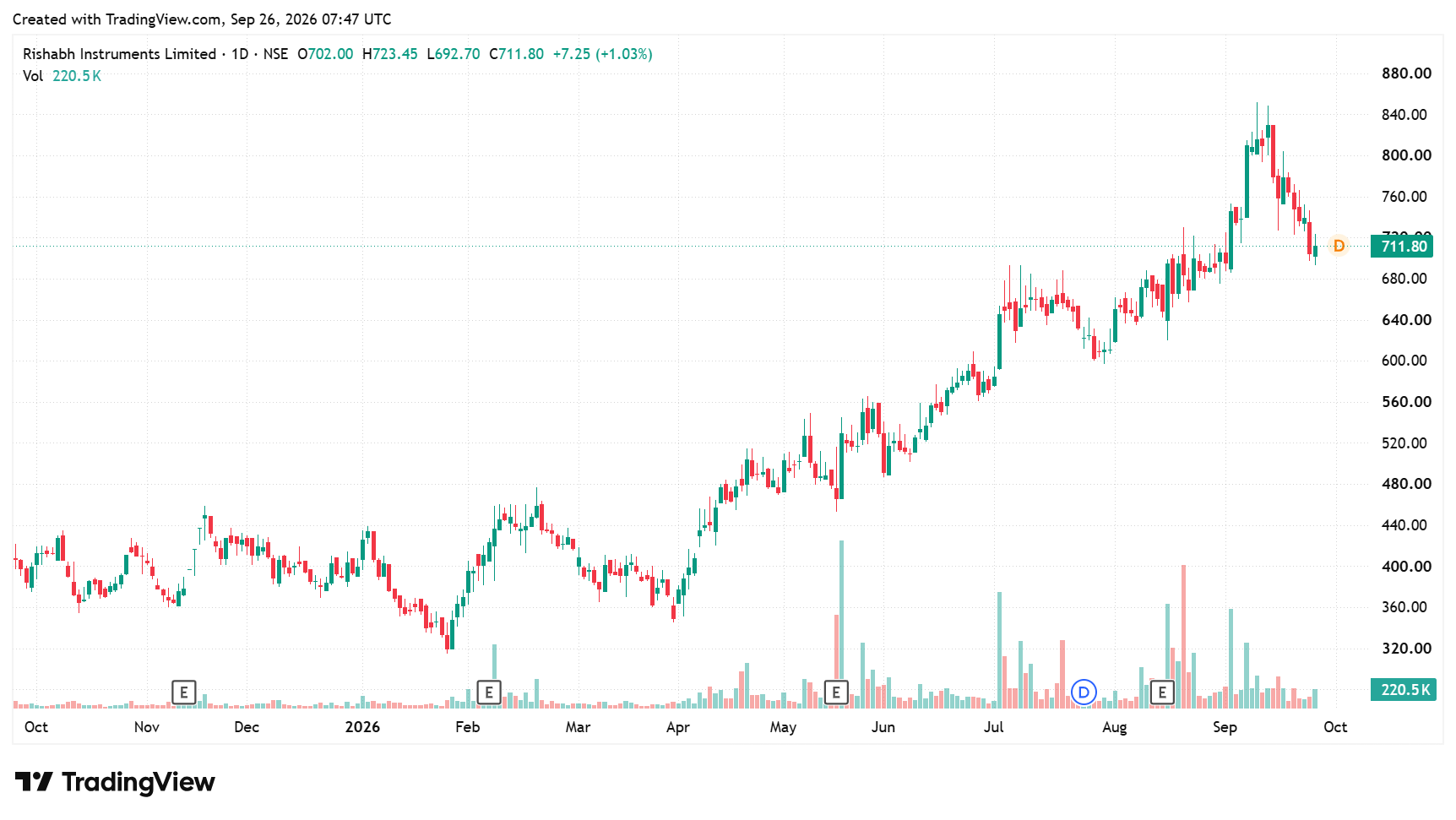
Rishabh Instruments Share Price
Valuation Realities: Price-to-Sales Multiples and Unit Economics Compared
Shivalik Bimetal has a higher Return on Equity (ROE) and Return on Capital Employed (ROCE). Rishabh Instruments, however, boasts moderate return ratios dragged down by its High Pressure Die Casting business.
In terms of valuation, both companies have recently gained significantly and now trade at a premium to the industry price-to-earnings multiple. Meanwhile, compared to their respective 3-year historical median, Rishabh is trading at a discount, while Shivalik trades at a premium.
Particulars | Price-to-Earnings Multiple (X) | Return Ratios | |||
| Company | 3Y Median | Industry | ROE (%) | ROCE (%) | |
| Rishabh Instruments | 34.1 | 35.2 | 24.8 | 12.0 | 14.5 |
| Shivalik Bimetal | 62.4 | 39.1 | 24.5 | 21.8 | 26.6 |
| Source: Screener.in (As of 25 September 2026) | |||||
As AI workloads push electricity consumption higher, the need for components that distribute, measure and manage power is also increasing. Shivalik Bimetal Controls is positioned through its shunts, bimetals and other precision components used in power distribution and current sensing.
Meanwhile, Rishabh Instruments addresses the measurement side through energy meters, digital instrumentation and current transformers used to monitor electrical loads. For both companies, the opportunity will depend on how quickly data-centre projects translate into commercial orders. You can keep these companies on your watchlist.
Disclaimer:
Note: Throughout this article, we relied on data from http://www.Screener.in and the companies’ investor presentations. We used an alternative, widely accepted source only when the data were unavailable.
The purpose of this article is only to share interesting charts, data points, and thought-provoking opinions. It is NOT a recommendation. If you wish to consider an investment, we strongly advise you to consult your advisor. This article is strictly for educational purposes only.
About the Author: Madhvendra has been deeply immersed in the equity markets for over seven years, combining his passion for investing with his expertise in financial writing. With a knack for simplifying complex concepts, he enjoys sharing his honest perspectives on startups, listed Indian companies, and macroeconomic trends.
A dedicated reader and storyteller, Madhvendra thrives on uncovering insights that inspire his audience to deepen their understanding of the financial world.
Disclosure: The writer and his dependents do not hold the stocks discussed in this article.
The website managers, their employees (s), and contributors/writers/authors of articles have or may have an outstanding buy or sell position or holding in the securities, options on securities, or other related investments of issuers and/or companies discussed therein. The articles’ content and data interpretation are solely the personal views of the contributors/ writers/authors. Investors must make their own investment decisions based on their specific objectives and resources, and only after consulting any independent advisors as necessary.