




Ask investors what makes a good investment, and you will usually hear some version of the same answer: strong fundamentals, healthy growth, and a reasonable valuation.
But finding all three together is harder than it sounds.
A company can have a strong balance sheet but trade at an expensive valuation.
Another may be growing rapidly but carry too much debt…and some stocks look cheap simply because the underlying business is deteriorating.
That is why the interesting opportunities often lie in the companies that combine financial strength with valuations that are still below their historical levels.
This doesn’t necessarily mean these stocks are overlooked or that the market has got them completely wrong. It simply means there could be a mismatch between the quality of the business and the valuation investors are currently paying for it.
To find such companies, we screened the market using a combination of profitability, balance-sheet strength, growth, and valuation filters.
We screened for companies trading at a price-to-earnings ratio below 70% of their 3-year historical PE and below their 5-year historical PE, while maintaining operating profit-to-interest coverage above 3 and a positive net worth.
On profitability, companies had to have an average ROCE above 15% and average ROE above 15% over the past three years, along with a current ROE above 12%. We also looked for companies with sales-to-average net block above 1x, indicating efficient utilisation of their asset base.
For growth, companies needed to deliver more than 10% sales growth and more than 10% profit growth over the past three years, while maintaining an EV/EBITDA below 35x.
Finally, we required promoter holding above 40%, pledged shares below 30%.
Here are the five stocks that make the cut with a combination of good valuation and good fundamentals.
Take a look…
#1 Varun Beverages
First on the list is Varun Beverages, one of PepsiCo’s largest franchisees outside the US and the largest in India, operating an integrated beverage and snacks platform that accounts for over 90% of PepsiCo’s beverage sales volume in India.
The company produces, bottles, and distributes an extensive product portfolio spanning carbonated soft drinks (including Pepsi, Mountain Dew, Seven-Up, Mirinda, Sting, and Evervess), non-carbonated beverages (Slice, Tropicana, Seven-Up Nimbooz).
Gatorade, CreamBell value-added dairy, and CALPIS fermented dairy), packaged drinking water (Aquafina), and PepsiCo snack brands such as Cheetos in select international markets.
It holds exclusive franchise rights across 26 states and 6 union territories in India, along with franchise and distribution operations across 13 international markets including Nepal, Sri Lanka, Morocco, Zambia, Zimbabwe, South Africa, the Democratic Republic of Congo (DRC), Kenya, Lesotho, Eswatini, Namibia, Botswana, Mozambique, and Madagascar.
Coming to its financial performance, the company has delivered a top-line growth of 18% compounded annual growth rate (CAGR) over 3 years and a net profit CAGR of 24%. The last 3-year return on equity (ROE) has been 21%.
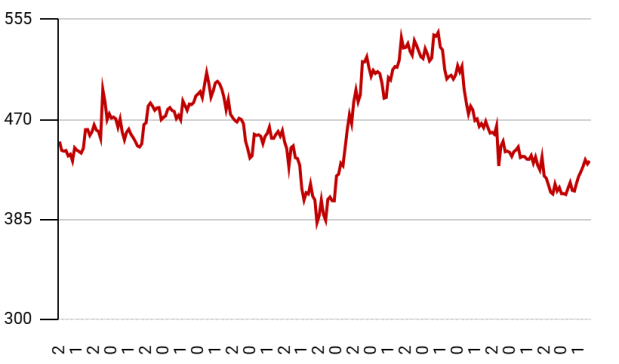
The company trades at a PE of 43 times, below its five-year median of 59.2.
Varun Beverages Stock Price – 1 Year
Data Source: Ace Equity
Regarding its outlook, management maintains strong growth confidence supported by observed in-season volume growth run-rates exceeding 20% post-June, expecting double-digit revenue growth driven by deepening domestic penetration and a rapidly expanding international footprint.
The company’s expansion is backed by aggressive capital expenditure and strategic growth initiatives, including 1H net capitalised capex of Rs 9,500 m covering Rs 2,000 m in India brownfield expansion (such as the Supa value-added dairy line), Rs 1,000 m for a snack manufacturing plant in Zimbabwe, and Rs 4,000 m for market infrastructure like visi-coolers and distribution vehicles.
Additionally, Varun Beverages maintains Rs 4,900 m in capital work-in-progress for a CSD line in Kenya and South Africa expansion, alongside Rs 11,314 m in inorganic capex for acquiring a 100% stake in Twizza in South Africa, following its acquisition of BevCo.
This builds upon recently commissioned greenfield plants at Prayagraj, Buxar, Damtal, and Mendipathar, backward integration facilities in India and the DRC, new snack production lines in Morocco, and Zimbabwe, and an exclusive distribution agreement with Carlsberg Breweries in select African markets.
Long-term growth optionality is further reinforced by the extension of VBL’s exclusive PepsiCo bottling agreement in India until April 2049, which eliminates prior SPV restrictions and provides operational flexibility to pursue broader beverage opportunities.
For more details, see the Varun Beverages company fact sheet and quarterly results.
#2 Havells India
Coming second on the list is Havells India, a leading Fast Moving Electrical Goods (FMEG) and consumer durables company operating across 24 product verticals and 6 distinct brands, namely Havells, Lloyd, Havells Crabtree, Standard, REO, and Havells Studio.
It manufactures products for residential, commercial, and industrial markets across switchgears, cables, lighting, electrical consumer durables, consumer electronics, and emerging renewables such as solar rooftop solutions and EV chargers.
Coming to its financial performance, the company has delivered a top-line growth of 10% CAGR over 3 years and a net profit CAGR of 16%.
The last 3-year ROE has been 19%.
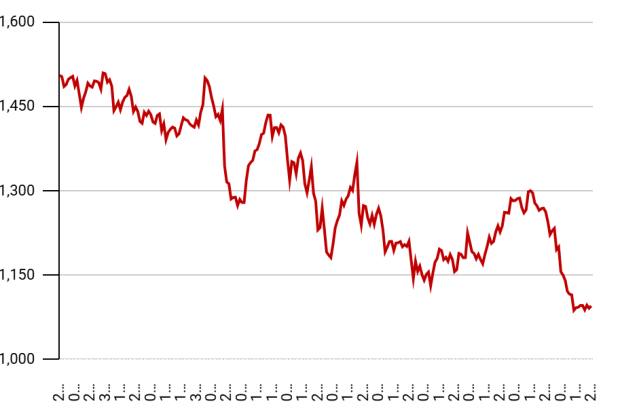
The company trades at a PE of 40.6 times, versus a 5-year median of 68.9.
Havells India Stock Price – 1 Year
Data Source: Ace Equity
Regarding its outlook, management maintains a policy of not providing specific annual growth guidance due to market volatility but remains optimistic about volume and margin improvements driven by resilient domestic demand.
The company’s long-term outlook is backed by substantial capex and expansion plans, committing nearly Rs 14 bn in capital expenditure for FY27, with approximately Rs 8 bn allocated to expanding cables and wires capacity and Rs 2 bn towards a new R&D centre.
This builds upon ongoing capacity expansions – Rs 7 bn invested in cables capacity across Alwar and Tumakuru along with the acquisition of 158,200 sq. m. of land at Alwar, the commissioning of an integrated refrigerator manufacturing plant at Ghiloth, the acquisition of 50 acres of land near the new Noida International Airport for future appliance manufacturing, and strategic investments in solar partnerships like Goldi Solar.
For more details, see the Havells India company fact sheet and quarterly results.
#3 Indian Railway Catering & Tourism Corporation (IRCTC)
Indian Railway Catering and Tourism Corporation (IRCTC) is a Navratna Central Public Sector Enterprise under the Ministry of Railways, Government of India.
It serves as the exclusive hospitality, tourism, and online ticketing arm of Indian Railways across four core business segments: Internet Ticketing, Catering and Hospitality, Travel and Tourism, and Packaged Drinking Water under the ‘Rail Neer’ brand.
Its Internet Ticketing segment functions as a dominant digital travel platform accounting for nearly 89% of reserved railway ticket bookings in India, processing an average of 1.453 m tickets per day via its website and IRCTC Rail Connect mobile application.
Coming to its financial performance, the company has delivered a top-line growth of 14% CAGR over 3 years and a net profit CAGR of 12%.
The last 3-year ROE has been 37%.
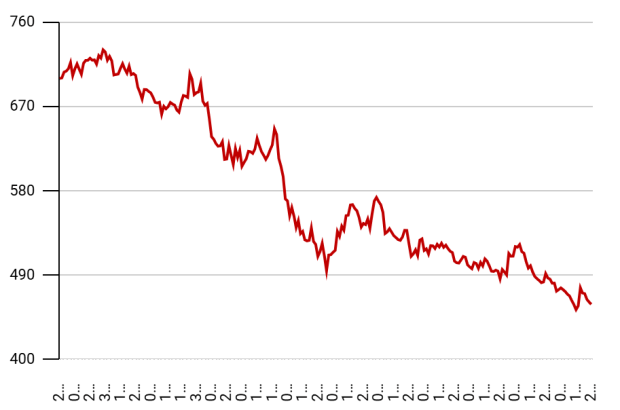
The stock trades at a PE of 26.3 times against a 5-year median of 54.6 and a 3-year median of 48.5.
IRCTC Stock Price – 1 Year
Data Source: Ace Equity
Looking ahead, management maintains strong growth expectations supported by 8% passenger traffic growth across Indian Railways and expanding tourism demand, projecting tourism vertical revenue to cross Rs 10+ bn in the upcoming year.
Growth will come from the introduction of 20 Vande Bharat Sleeper trains over the next year expansion of e-pantry services to 100 Mail/Express trains, engagement of branded kitchen partners, and the development of new static catering and hospitality units across 1,337 redeveloped stations.
In digital infrastructure, IRCTC is investing Rs 1.5 bn in a Next Generation e-Ticketing (NGeT) infrastructure refresh to expand capacity beyond 0.1 m bookings per minute.
It’s setting up an active-active disaster recovery site at Secunderabad, deploying Face Authentication Technology (FAT) anti-bot measures, launching a revamped UX/UI portal, and commercialising its payment aggregator subsidiary, IRCTC Payments Ltd (iPay), pending final RBI license approval.
For more details, see the IRCTC company fact sheet and quarterly results.
#4 Gillette India
Fourth on the list is Gillette India, a subsidiary of The Procter & Gamble Company, USA (which holds a 75% indirect equity stake), operating across two primary business verticals: Grooming (accounting for 82.05% of turnover) and Oral Care (accounting for 17.95% of turnover).
In its Grooming segment, the company offers blades, razors, shaving products, toiletries, female grooming products and appliances under brands such as Gillette Guard, Mach3, Fusion, Labs, Venus and Trimmers, retaining market leadership in Blades and Razors.
In Oral Care, it manufactures manual and electric toothbrushes under the Oral-B brand, including its Sensitive Care, Kids and premium iO ranges.
Coming to its financial performance, the company has delivered a top-line growth of 11% CAGR over 3 years and a net profit CAGR of 31%.
The last 3-year ROE has been 49%.
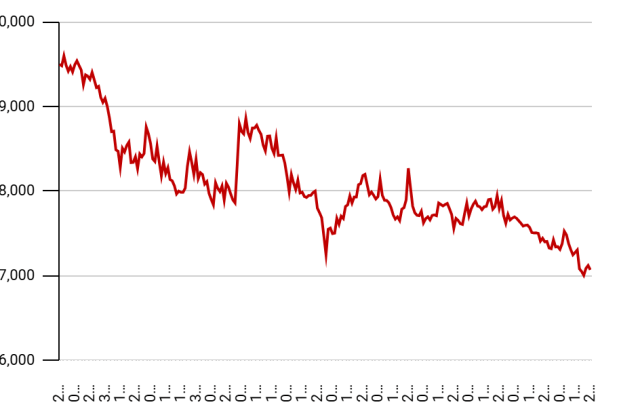
The company trades at a PE of 34.1 times, below its 5-year median of 56.6.
Gillette India Stock Price – 1 Year
Data Source: Ace Equity
Looking ahead, management expects steady domestic growth and improving FMCG demand but have avoided specific revenue or profit guidance.
Long-term growth is expected to come from product innovation, productivity, disruption, and stronger execution across general trade, modern retail, e-commerce, and quick commerce.
With R&D supported by parent Procter & Gamble, the company is focusing capital on manufacturing efficiency, digital capabilities and cost productivity, which delivered Rs 380 m in annual savings. FY26 capex stood at Rs 432.8 m.
Growth initiatives include the Gillette Guard 3-in-1, the expanding Gillette Trimmers range, 20%+ growth in Venus, and plans to double Oral-B Power Oral Care sales over 3 years, alongside AI-led assortment optimisation and continued domestic manufacturing at its Bhiwadi and Baddi plants.
For more details, see the Gillette India company fact sheet and quarterly results.
#5 Jeena Sikho Lifecare
Fifth on the list is Jeena Sikho Lifecare is one of India’s leading integrated Ayurveda healthcare platforms operating under the ‘Shuddhi’ brand.
It offers a holistic healthcare ecosystem that pairs clinical care with an extensive range of Ayurvedic products across 119 centres, 61 hospitals (including 50 NABH-accredited facilities), 58 clinics and day-care centres across 23 states in over 100 cities.
The company operates two synergistic business verticals: Ayurvedic Healthcare Services, which provides in-patient treatment, out-patient consultations, and specialised Panchakarma therapies, as well as Ayurvedic Products/Medicines, which manufactures and distributes a B2C and OTC portfolio of over 330 SKUs spanning preventive care, wellness, and chronic disease management.
Coming to its financial performance, the company has delivered a top-line growth of 58% CAGR over 3 years and a net profit CAGR of 88%.
The last 3-year ROE has been 49%.
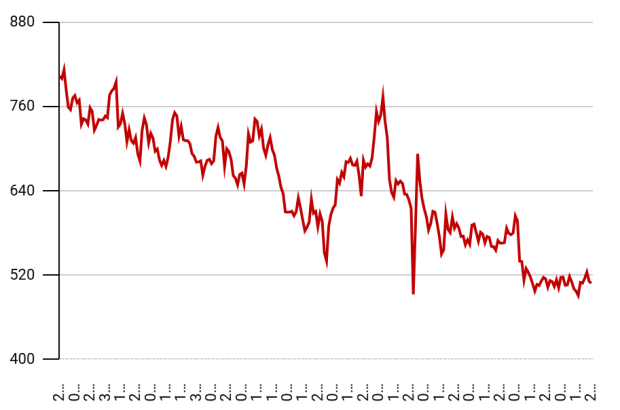
The company trades at a PE of 26.7, below its 5-year median of 44.6 and 3-year median PE of 54.8.
Jeena Sikho Lifecare Stock Price – 1 Year
Data Source: Ace Equity
Looking ahead, management has targeted a 30% YoY growth rate to achieve a revenue turnover of Rs 30 bn and a profit after tax of Rs 10 bn within 3-5 years, supported by increasing bed occupancy from 59% toward 75%–80% and strong operating leverage.
The company’s expansion roadmap is centred on a capital-light, highly scalable operational model where setting up a 100-bed hospital facility requires a low capex of Rs 25 m to Rs 35 m.
Backed by a 3-year average ROCE of approximately 46% and a debt-free balance sheet, Jeena Sikho plans to expand its operational capacity to 3,000–3,500 beds in FY27 and scale to 7,000–10,000 beds over the next 3-5 years, with 450+ beds currently in the pipeline.
Growth optionality is further reinforced by expanding OTC retail and B2C product distribution, widening cashless insurance linkages, integrating technology-enabled preventive care via the Jeena Sikho Health Card, and pursuing international expansion opportunities.
For more details, see the Jeena Sikho company fact sheet and quarterly results.
Conclusion
The five stocks on this list highlight a combination of strong earnings growth, healthy return ratios, and valuations that remain below their historical averages.
Each demonstrated solid financial performance, while their current PE multiples remain below their respective historical benchmarks.
That said, trading below historical valuations does not automatically make a stock cheap. Investors should look beyond the PE multiple and assess earnings sustainability, future growth, capital allocation, and business-specific risks before making any investment decision.
As always, conduct thorough research on financials and corporate governance before making investment decisions, ensuring they align with your financial goals and risk tolerance.
Disclaimer: This article is for information purposes only. It is not a stock recommendation and should not be treated as such. Learn more about our recommendation services here…
The website managers, its employee(s), and contributors/writers/authors of articles have or may have an outstanding buy or sell position or holding in the securities, options on securities or other related investments of issuers and/or companies discussed therein. The content of the articles and the interpretation of data are solely the personal views of the contributors/ writers/authors. Investors must make their own investment decisions based on their specific objectives, resources and only after consulting such independent advisors as may be necessary