




You may have noticed how the placement of headlights has changed in modern cars. In many models, the main headlamps now sit just above the bumper, while slimmer LED daytime running lights (DRLs) occupy the space higher up, near the bonnet.
This is more than a design change. Signature lighting has become a way for automakers to distinguish premium models, while LED technology is gradually replacing conventional halogen lamps. The result is a rise in the value of lighting fitted to each vehicle, creating an opportunity for suppliers to grow even without a sharp increase in vehicle sales.
India’s automotive lighting market is expected to grow from about $1.83 billion in 2026 to $2.44 billion by 2031, according to Mordor Intelligence, implying annual growth of 5.9%. But the bigger opportunity lies in the changing product mix. As cars get more sophisticated lighting systems, suppliers can earn more from each vehicle.
A Slow-growing Market, a Fast-changing Product Mix
Two forces are shaping the automotive lighting opportunity: premiumisation and rising vehicle production. As LEDs replace halogen lamps and automakers adopt more sophisticated lighting systems, the value of lighting fitted to each vehicle increases. This shift in product mix could drive growth even if vehicle production slows.
Production growth provides an additional tailwind. India’s automobile industry produced a record 96.9 lakh units in Q1FY27, up 22% YoY, according to figures cited on Uno Minda’s earnings call. The momentum continued into Q2FY27. Maruti reported a 26.4% increase in sales to 6.96 lakh units, while Tata Motors Passenger Vehicles recorded a 40% YoY jump in domestic sales to 2.01 lakh units.
Tighter Safety Standards
Regulations are also shifting lighting design and performance. Automobile Research Association of India has been harmonizing the lighting standards. AIS-198 and AIS-199 are harmonized with UN regulations and global standards. These standards are mainly focused on safety and compliance, pushing car manufacturers toward better lighting technology. This provides an opportunity for component manufacturers to add value to lighting systems supplied per vehicle.
Lumax Industries and UNO Minda offer the most direct exposure to play this shift. Both are positioned to benefit from the transition to LED lighting and rising demand for premium lighting systems. Neolite ZKW Lightings, another player in the segment, has received SEBI approval for its proposed ₹600 crore IPO, although the IPO dates have not been finalised.
Lumax Industries: The Direct Play on LED Adoption
LED lighting continues to be one of the key growth drivers for Lumax. The company reported a record consolidated revenue of ₹4,184 crore for FY26, up 23% YoY. LED products accounted for 61% of those sales, versus 58% a year ago. The trend continued in Q1FY27, with revenue growing 32.6% to ₹1,223 crore, with LED products contributing 63% of the total sales. Earnings Before Interest, Tax, Depreciation, and Amortisation (EBITDA) margin remained stable at 9.2% for the period.
Lumax Industries: Financial Performance
| Period | Q1FY26 | Q1FY27 | YoY Change (%) |
| Revenue from Operations (₹ crore) | 922.5 | 1,223.2 | 32.6% |
| EBITDA (₹ crore) | 84.50 | 113.00 | 33.7% |
| EBITDA Margin (%) | 9.20% | 9.20% | No Change |
| Net Profit (₹ crore) | 36.2 | 51.1 | 41.2% |
Source: Company Presentation
The Order Book & Content Per Vehicle Potential
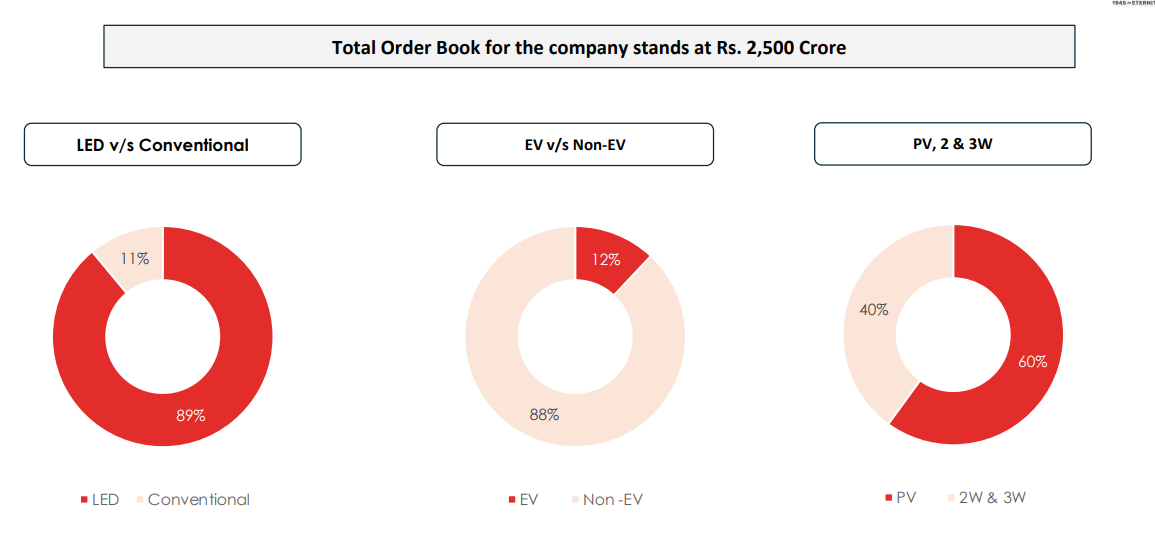
The order book at the end of Q1FY27 stood at ₹2,500 crore, up from ₹2,200 crore at the end of FY26. The order book breakdown offers a glimpse of where growth could come from next. Nearly 90% of the order book comprises LED-based products.
Management expects this shift could help them to grow revenue by 15-20% annually over the next three to five years, targeting more than ₹9,000 crore by FY31. Higher content per vehicle (CPV) and vehicle volumes will be key to achieving this target. Lumax expects its lighting content per passenger vehicle to rise from ₹15,000-20,000 currently to ₹22,000-25,000 over the next four to five years. At the midpoint, that represents an increase of about 34%.
Lumax Industries: Order Book Composition
Source: Company Presentation
The Tooling Catalyst
Another factor could influence Lumax’s near-term revenue and margins: tooling. As automakers introduce new models and facelifts, suppliers must develop customised moulds and specialised equipment to manufacture components for those vehicles. Shorter design cycles can therefore create recurring tooling opportunities.
Management expects mould sales to rise to ₹250-300 crore in FY27, up from ₹180-185 crore in FY26, with most of the revenue expected in the second half of the financial year. This could provide meaningful lift to the margin.
The Margin Question
Management is targeting an EBITDA margin of 10.5- 11% in FY27, and more than 13% over the next three to four years. The expected growth in tooling revenue in the second half is one part of the near-term recovery. In the long term, the company is focusing on increasing localisation of electronic components, including printed circuit boards (PCBs) used in automotive lighting, which management expected to add 70- 90 bps to margins.
The gap between the current 9.2% margin and the long-term target of more than 13% is substantial. Lumax’s rising LED mix and order book provide a foundation for growth. But the key metric to watch is whether margins begin to improve alongside sales, and whether the improvement persists beyond the timing-related boost from tooling.
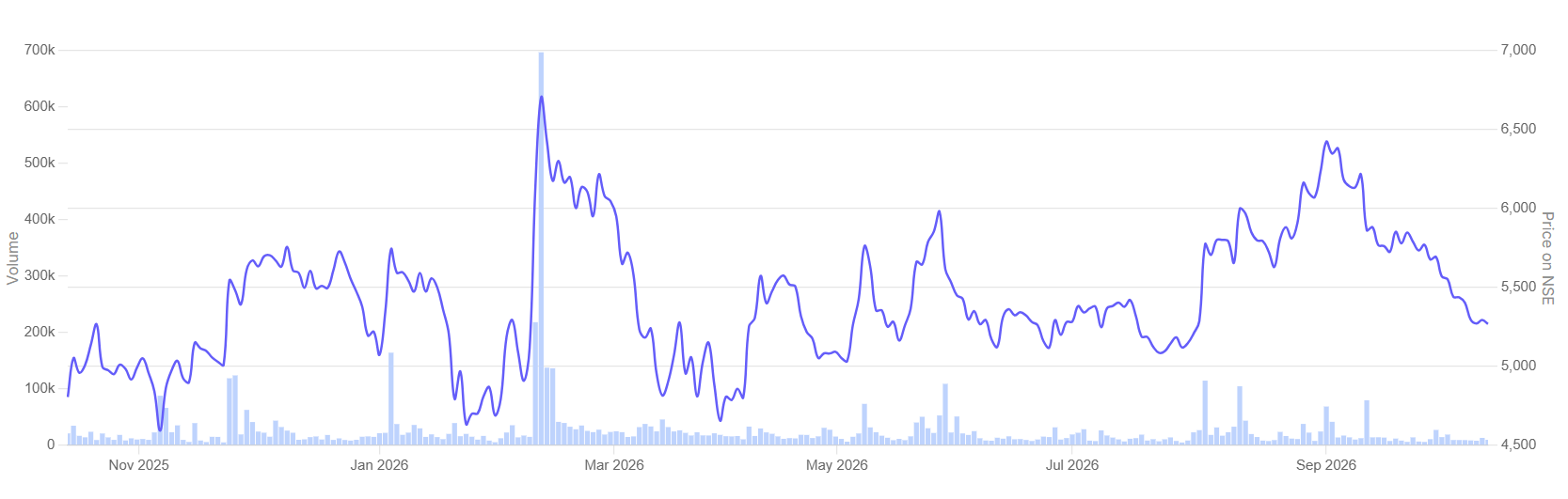
Lumax Industries: 1 Year Stock Chart
Source: Screener.in
Uno Minda: A Broader Route to Higher Lighting Content
For Uno Minda, the opportunity goes beyond replacing halogen lamps with LEDs. Lighting is part of a much broader portfolio that allows the company to bundle advanced lighting with other high-value components to maximize overall content per vehicle.
In Q1FY27, its lighting division reported revenue of ₹1,153 crore, up 14% year on year and accounting for about 21% of consolidated revenue. In FY26, the share of the lighting division was 22% and consolidated revenue grew nearly 17% to ₹19,589 crore.
Uno Minda: Financial Performance
| Period | Q1FY26 | Q1FY27 | YoY Change (%) |
| Revenue from Operations (₹ crore) | 4,420.0 | 5,557.0 | 25.7% |
| EBITDA (₹ crore) | 474.0 | 572.0 | 20.7% |
| EBITDA Margin (%) | 10.7% | 10.3% | -40 bps |
| Net Profit (₹ crore) | 258.0 | 316.0 | 22.5% |
Source: Company Presentation
Demand for interior ambient lighting adds another premiumisation lever, allowing automakers to differentiate models beyond their exterior design. Uno Minda is also expanding its customer base. It has received its first domestic passenger-vehicle lighting order from a global OEM. The new two-wheeler lighting order has peak annual revenue potential of ₹450 crore, and production is scheduled to start in H2FY28.
Increasing Capacity to Support Growth
Uno Minda is in the middle of an aggressive capacity expansion phase to tap into cross-selling opportunities and rising vehicle content. It will spend around ₹1,750 crore in capex in FY27, with another ₹2,000 crore earmarked for its broader project pipeline over the next 8-24 months.
In the current fiscal year alone, seven of the company’s 11 ongoing expansion projects are slated to begin production or begin ramping up. In lighting, the company is investing ₹170 crore to consolidate and expand its North India two-wheeler operations at Kharkhoda. A ₹320 crore greenfield plant in Chhatrapati Sambhajinagar will support its entry into passenger-vehicle seating systems.
The investment case depends on these new facilities generating enough incremental revenue to absorb fixed costs and improve margins. Until utilisation rises, however, capacity additions can weigh on capital efficiency.
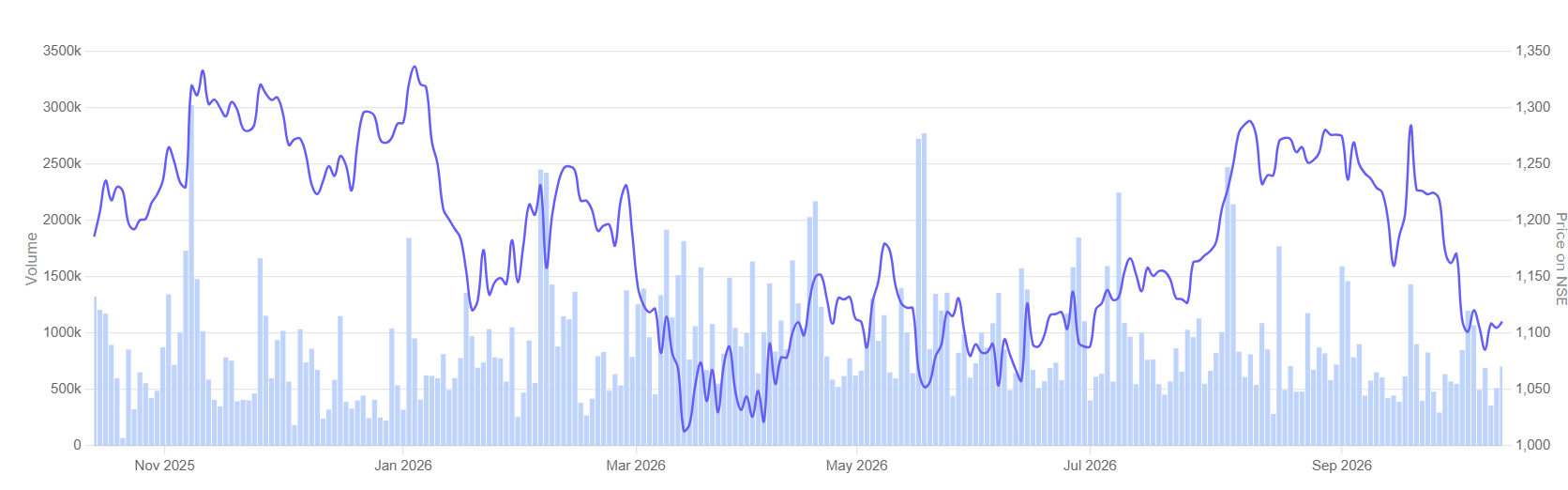
Uno Minda: 1 Year Stock Chart
Source: Screener.in
Valuation Test: The Next Leg Depends on Execution
Lumax Industries trades at 24.9 times earnings, above its five-year median of 22 times but below the industry multiple of 29.5 times. Its 15% ROCE provides a reasonable base, but the next leg of growth will depend on how long it takes to meet the long-term margin target of 13%. A further re-rating would require evidence that the planned margin expansion can lift earnings sustainably.
Valuation Trend
| Metrics | P/E | 5-yr Median | Industry P/E |
| Lumax Industries | 24.9 | 22.0 | 29.5 |
| Uno Minda | 52.0 | 59.9 |
Source: Screener.in (As of 14th October 2026)
Capital Efficiency
| Metrics | ROE | ROCE | ||
| FY25 | FY26 | FY25 | FY26 | |
| Lumax Industries | 16.0% | 22.0% | 12.0% | 15.0% |
| Uno Minda | 18.6% | 17.7% | 18.9% | 18.3% |
Source: Company Presentation
Uno Minda trades at a higher valuation than Lumax Industries, at 52 times earnings; however, it is below its five-year median of 59.9 times. Because of multiple growth levers, Uno Minda is being valued differently than Lumax Industries. The key test will be how quickly new programmes ramp up and generate returns on the capital invested. Sustained growth across lighting and other components could support its premium.
Going forward, Lumax’s performance will hinge on margin expansion within a more focused lighting business, while Uno Minda’s will depend on profitable growth across a broader portfolio.
Premiumisation Must Deliver on Profits
India’s automotive lighting opportunity is shifting from selling more lights to earning more from each vehicle. Lumax Industries offers a clearer read on this shift through its rising LED mix and order book, while Uno Minda has a wider set of growth levers across lighting and other components. The real differentiator will be how much of this higher content translates into lasting margin gains. Until that shows up in earnings, premium lighting remains a growth opportunity, not a guarantee of better returns. Add these stocks to your watchlist and monitor how they execute their growth plans.
Disclaimer
Note: We have relied on data from www.Screener.in throughout this article. Only in cases where the data was not available, have we used an alternate, but widely used and accepted source of information.
The purpose of this article is only to share interesting charts, data points, and thought-provoking opinions. It is NOT a recommendation. If you wish to consider an investment, you are strongly advised to consult your advisor. This article is strictly for educational purposes only.
Deepan Datta has spent over a decade studying stocks and mutual funds. His passion is to uncover interesting stories in the financial markets and share them through his writings with investors at large. He is focused on delivering clear, easy-to-understand, and research-backed insights. Deepan began his career as a Research Associate at S&P Global, where he developed a strong foundation in financial research and data analysis.
Disclosure: The writer and his dependents do not hold the stocks discussed in this article.
The website managers, their employees (s), and contributors/writers/authors of articles have or may have an outstanding buy or sell position or holding in the securities, options on securities or other related investments of issuers and/or companies discussed therein. The content of the articles and the interpretation of data are solely the personal views of the contributors/ writers/authors. Investors must make their own investment decisions based on their specific objectives, resources and only after consulting such independent advisors as may be necessary.